

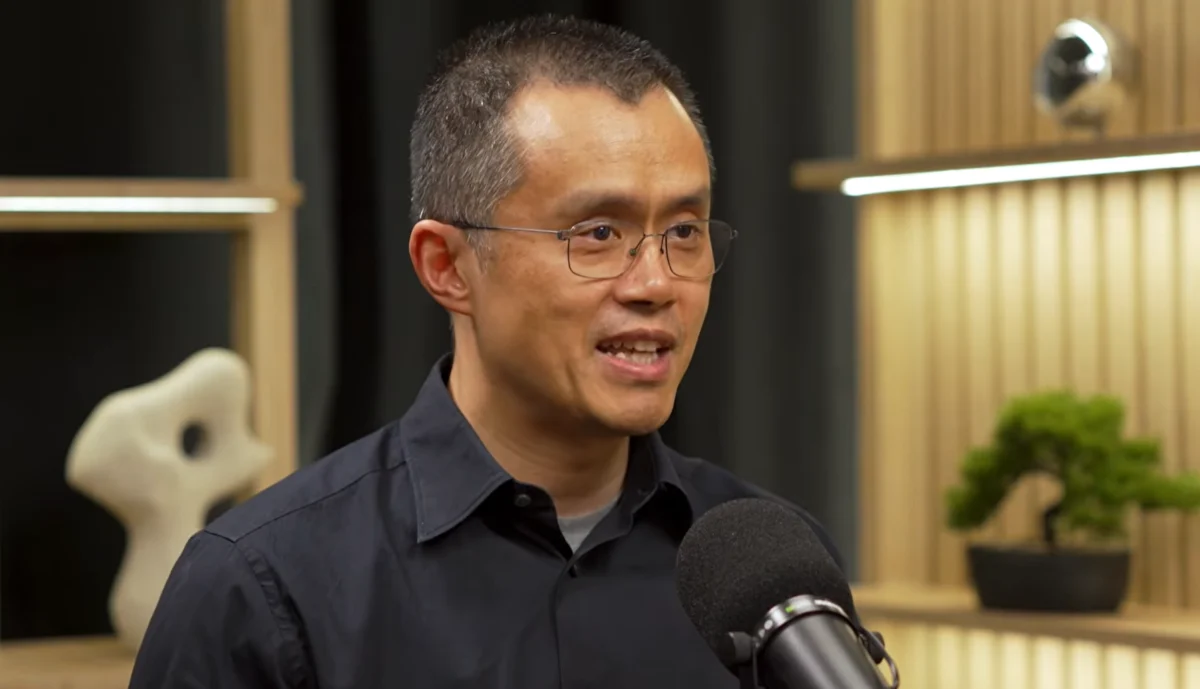
The intersection of quantum computing, network governance, and the foundational philosophy of blockchain technology has erupted into a fierce debate across the cryptocurrency landscape. The spark for this latest intellectual firestorm was a theoretical scenario floated by Binance founder Changpeng "CZ" Zhao during a recent podcast appearance. Zhao outlined a hypothetical roadmap where unmoved, legacy Bitcoin—including the legendary, untouched cache attributed to Bitcoin’s pseudonymous creator, Satoshi Nakamoto—could be frozen to protect the network from future quantum-enabled theft.
While the prospect of quantum computers capable of cracking modern cryptography remains years, if not decades, away, the debate touches on the very core of Bitcoin’s value proposition: the delicate balance between absolute immutability and systemic self-preservation.
Main Facts: The Core of the Controversy
To understand the debate sparked by Zhao, it is necessary to separate the technical realities of Bitcoin’s architecture from the sensationalized headlines that often follow high-profile commentary.
What CZ Actually Said
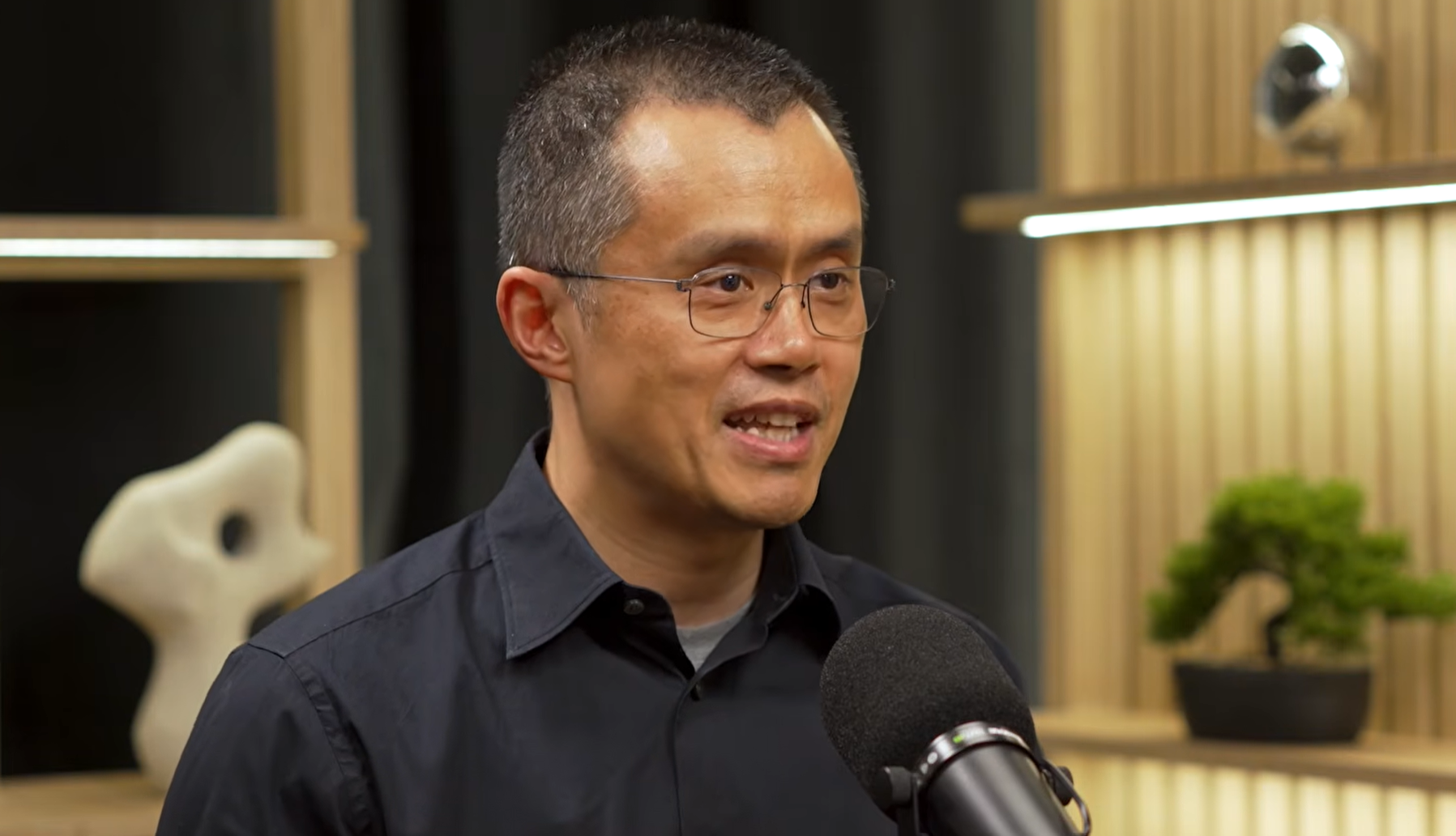
During a June 18 appearance on the Galaxy Brains podcast, Changpeng Zhao discussed long-term existential risks facing the cryptocurrency industry. Among these, he highlighted the threat that quantum computing poses to current cryptographic signature schemes.
Zhao did not claim to possess the power to freeze Bitcoin, nor is there any active, official proposal within the Bitcoin developer community to execute such a maneuver. Instead, he floated a theoretical governance path: if Bitcoin were to migrate to quantum-resistant cryptography in the future, the network could establish a designated "migration window." During this period, active users would move their funds from legacy addresses to new, quantum-safe addresses. Once the window closed, any remaining, unmoved coins would be frozen to prevent a malicious actor with a quantum computer from claiming them.
The Vulnerability of Legacy Addresses
The technical heart of this issue lies in how early Bitcoin transactions were structured. The earliest Bitcoin addresses utilized a format known as Pay-to-Public-Key (P2PK). In a P2PK transaction, the user’s public key is directly exposed on the blockchain’s public ledger.
Later iterations of Bitcoin addresses, such as Pay-to-Public-Key-Hash (P2PKH) and modern SegWit/Taproot formats, obscure the public key by hashing it. In these newer formats, the public key is only revealed to the network when a transaction is initiated and spent.
Because early addresses—including those holding the estimated 1.1 million BTC mined by Satoshi Nakamoto—expose their public keys directly on-chain, they are uniquely vulnerable to Shor’s algorithm, a quantum computing algorithm capable of finding the prime factors of an integer, which could theoretically derive a private key from a known public key.
Chronology of the Quantum-Bitcoin Debate
The conversation surrounding quantum vulnerability is not new, but it has evolved from an academic curiosity into a pressing governance question.
+-----------------------------------------------------------------------------+
|                                  TIMELINE                                   |
+-----------------------------------------------------------------------------+
|                                                                             |
|  2009: Bitcoin Network Launches                                             |
|  Satoshi Nakamoto designs Bitcoin using the Elliptic Curve Digital          |
|  Signature Algorithm (ECDSA). Early transactions use P2PK, exposing public  |
|  keys on-chain.                                                             |
|                                                                             |
|  2010: Transition to P2PKH                                                  |
|  Recognizing the privacy and security benefits, the network transitions     |
|  primarily to P2PKH, which hashes public keys, adding a layer of            |
|  protection against premature exposure.                                     |
|                                                                             |
|  2016: NIST Initiates Post-Quantum Cryptography Standardization             |
|  The U.S. National Institute of Standards and Technology (NIST) begins      |
|  a global campaign to identify and standardize quantum-resistant public-key |
|  cryptographic algorithms.                                                  |
|                                                                             |
|  2019: Google Claims "Quantum Supremacy"                                    |
|  Google's Sycamore processor completes a specific calculation in minutes    |
|  that would take classical supercomputers thousands of years, bringing      |
|  quantum computing into the public consciousness.                           |
|                                                                             |
|  June 18: CZ on "Galaxy Brains"                                             |
|  Binance founder CZ floats the concept of a migration window and            |
|  subsequent freeze of legacy coins to mitigate quantum theft risks,         |
|  reigniting the governance debate.                                          |
|                                                                             |
+-----------------------------------------------------------------------------+
Supporting Data and Technical Context
To evaluate the feasibility of both the threat and the proposed solutions, we must look at the quantitative data surrounding quantum development and Bitcoin’s ledger distribution.
The Math Behind the Threat
Bitcoin currently relies on the Elliptic Curve Digital Signature Algorithm (ECDSA), specifically the secp256k1 curve, to generate public-private key pairs.
- Classical Security: To brute-force a
secp256k1private key using standard modern supercomputers would require approximately $2^128$ operations—an astronomical number that would take longer than the age of the universe. - Quantum Threat (Shor’s Algorithm): A quantum computer running Shor’s algorithm can break ECDSA in polynomial time. Research indicates that a quantum computer with approximately 2,000 to 4,000 stable, error-corrected qubits could successfully crack a
secp256k1signature in a matter of hours or even minutes.
Quantifying the Vulnerable Supply
How much Bitcoin is actually at risk? Because hashing protects unspent P2PKH and Bech32 addresses, only addresses with exposed public keys are immediately vulnerable to a quantum attack.
| Address Type | Public Key Status | Estimated BTC Held | Quantum Vulnerability |
|---|---|---|---|
| Legacy P2PK | Exposed on-chain | ~1.5 to 2.0 million BTC | High (Immediate target for Shor’s Algorithm) |
| Spent P2PKH (Reused addresses) | Exposed upon first spend | ~1.0 million BTC | High (If funds remain in reused addresses) |
| Unspent P2PKH / SegWit | Hidden behind cryptographic hash | ~16+ million BTC | Low (Safe until a transaction is broadcast) |
As shown above, roughly 2.5 to 3 million BTC (representing 12% to 15% of the total circulating supply) could be vulnerable to a quantum exploit the moment a cryptographically relevant quantum computer (CRQC) becomes operational. This includes Satoshi Nakamoto’s estimated fortune, which has remained untouched for over a decade.
Official Responses and Community Reaction
The suggestion of freezing or altering the rules governing legacy Bitcoin addresses has drawn sharp criticism and deep analytical counterarguments from developers, cryptographers, and philosophers within the Web3 space.
The Developer Perspective: Technical Feasibility vs. Social Consensus
Many Bitcoin Core contributors emphasize that implementing a "freeze" is technically possible but socially catastrophic. In blockchain governance, changing the state of unspent transaction outputs (UTXOs) without a valid signature from the owner requires a hard fork or an extremely controversial soft fork.
Some developers have pointed out that Satoshi Nakamoto himself anticipated cryptographic obsolescence. In the early days of Bitcoin, Satoshi wrote:
"If [SHA-256 or ECDSA] are broken, we can transition to something else. But we don’t have to do it until it’s actually needed."
However, the mechanism of that transition is where consensus breaks down. If a hard fork is executed to freeze coins, it risks splitting the network into two competing chains: one that preserves absolute immutability (even at the risk of quantum theft) and one that prioritizes security by freezing dormant assets.
The Philosophical Backlash: "Not Your Keys, Not Your Coins"
For Bitcoin maximalists and civil liberties advocates, the proposal to freeze coins—even under the guise of security—is an existential threat to the network’s credibility.
- The Slippery Slope of Censorship: Critics argue that if the Bitcoin community agrees to freeze Satoshi’s coins to "protect" the market, the precedent is set. Governments or regulatory bodies could later pressure developers to freeze addresses associated with illicit activity, political dissidents, or sanctioned nations.
- The Definition of Ownership: Under Bitcoin’s original design, ownership is defined solely by the possession of the private key. If the protocol can unilaterally invalidate or freeze UTXOs without a signature, the system ceases to be decentralized and trustless, transforming instead into a system governed by social consensus, much like traditional fiat networks.
Implications and Future Outlook
The debate initiated by CZ is far more than a academic exercise; it outlines the primary governance challenge that the cryptocurrency sector will face over the next two decades.
The Path to Post-Quantum Cryptography (PQC)
The most likely path forward for Bitcoin does not involve arbitrary freezes, but rather a proactive upgrade to Post-Quantum Cryptography (PQC). Organizations like NIST are already finalizing standards for quantum-resistant signature schemes, such as:
- CRYSTALS-Dilithium
- Falcon
- SPHINCS+
Integrating these signature schemes into Bitcoin, however, presents significant engineering challenges. Quantum-resistant signatures are substantially larger than ECDSA signatures. Implementing them would drastically increase the size of transactions, leading to higher fees, slower confirmation times, and reduced network throughput unless accompanied by significant layer-2 scaling optimizations.
The "Satoshi Dilemma"
Even if Bitcoin successfully transitions to quantum-resistant addresses, the "Satoshi Dilemma" remains. If Satoshi Nakamoto is deceased, or has lost access to his keys, those 1.1 million coins will never be migrated by their owner.
If the network chooses to do nothing, those coins will eventually be claimed by the first entity to develop a cryptographically relevant quantum computer. The sudden liquidation of over a million coins would not only devastate the market price of Bitcoin but would also transfer a massive portion of the network’s wealth to a potentially hostile actor (such as a state-sponsored cyberwarfare unit).
Conversely, if the network votes to freeze or burn those coins, it permanently alters the maximum circulating supply of Bitcoin, effectively deleting billions of dollars in value by developer decree.
Conclusion: A Test of Decentralized Governance
Ultimately, CZ’s comments highlight a hard truth: Bitcoin cannot remain stagnant forever. The threat of quantum computing will eventually force the community to choose between two of its most sacred tenets: absolute immutability (the promise that no one can ever touch your coins without your key) and systemic security (the promise that the network will adapt to survive existential threats). How the network navigates this trade-off will be the ultimate test of decentralized governance.
