

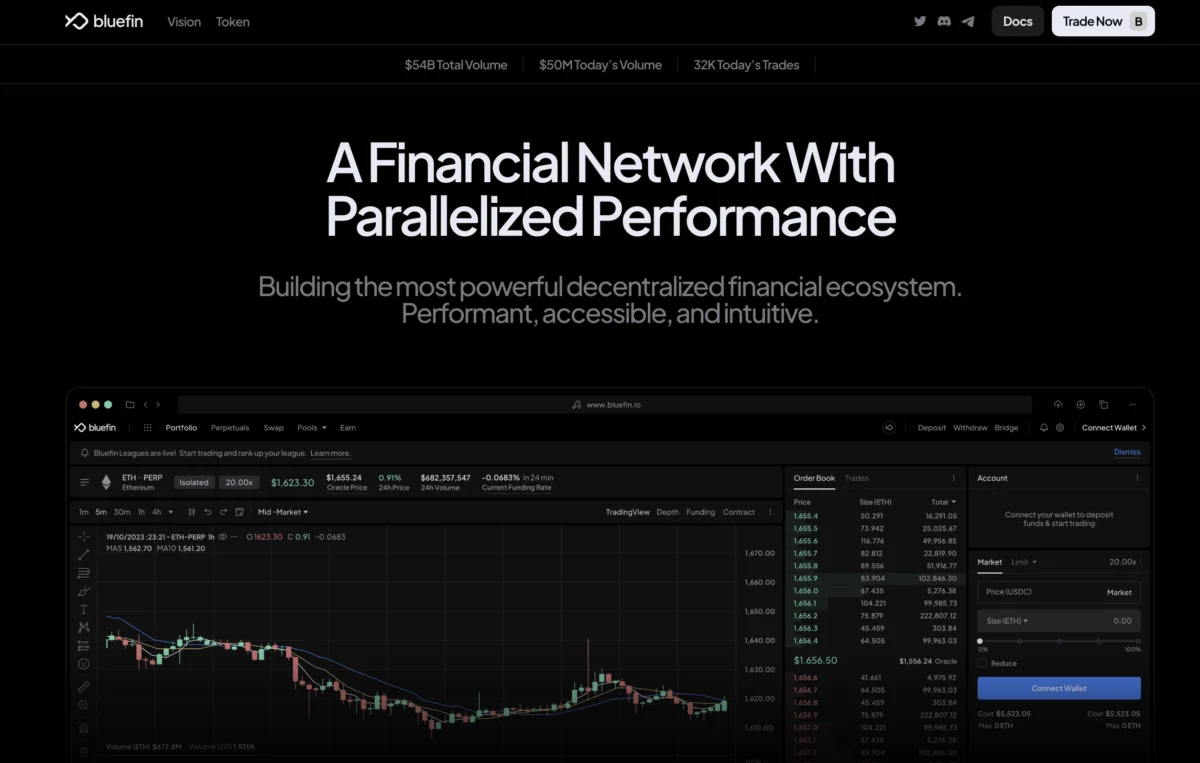
In a significant move that underscores the growing intersection between public equity markets and decentralized finance (DeFi), Nasdaq-listed investment holding company SUI Group Holdings Limited (ticker: SUIG) has announced a substantial expansion of its lending agreement with the decentralized exchange (DEX) Bluefin. The deal, which increases the total outstanding loan to 6 million SUI, marks a pivotal moment for liquidity management within the Sui blockchain ecosystem.
By providing this capital, SUI Group is directly facilitating the strategic acquisition of Suilend—the Sui ecosystem’s premier lending and DeFi protocol—by Bluewater Labs. This arrangement highlights a broader trend of institutional entities seeking structured, revenue-generating exposure to on-chain financial infrastructure.
Main Facts: The Anatomy of the Deal
The core of the announcement centers on an amendment to an existing credit facility between SUI Group Holdings and Bluefin. The transaction includes several key components that redefine the relationship between the Nasdaq-listed holding company and the DeFi protocol:
- Loan Expansion: SUI Group has injected an additional 4 million SUI into the arrangement, bringing the total outstanding principal to 6 million SUI.
- Revenue Participation: The economics of the deal have shifted in favor of SUI Group. The company’s revenue share has been more than doubled, rising from 5% to 11%. This revenue is paid out in SUI tokens, transforming the loan from a static debt instrument into a dynamic, performance-linked asset.
- Maturity Timeline: The maturity date for the loan facility is set for September 30, 2028, providing a long-term horizon for the capital deployment.
- Strategic Purpose: The primary utility of these funds is to finance Bluewater Labs’ acquisition of Suilend, a move designed to consolidate and strengthen the financial stack of the Sui network.
Chronology of the Strategic Pivot
To understand the weight of this development, one must look at the progression of SUI Group’s involvement in the ecosystem.
Phase 1: Initial Engagement
SUI Group Holdings began its entry into the Sui ecosystem by establishing a foundational lending arrangement with Bluefin. At this stage, the goal was to provide market-making liquidity and establish a foothold in the rapidly growing Sui DeFi space. The initial 5% revenue share acted as a proof-of-concept for the firm’s treasury strategy.
Phase 2: The Bluewater Labs Acquisition Announcement
Late last year, market observers noted the consolidation plans between Bluewater Labs and Suilend. Suilend, recognized as the largest lending platform on the Sui blockchain, sought a partner to scale its infrastructure. The announcement of the acquisition sent signals that the Sui ecosystem was moving toward a more integrated model, where trading (Bluefin) and lending (Suilend) services would operate under a unified strategic umbrella.
Phase 3: The Capital Injection (Current Event)
Recognizing the potential of the combined Bluefin-Suilend entity, SUI Group opted to scale its commitment. By increasing the loan to 6 million SUI, the company has effectively become a major institutional underwriter for the merger. This capital deployment ensures that the newly merged platform has the necessary liquidity to maintain competitive APYs and trading volumes as it scales.
Supporting Data: Why the Sui Ecosystem Matters
The Sui blockchain has consistently demonstrated high performance, characterized by low latency and high throughput. However, for a network to mature, it requires deep financial infrastructure. The data surrounding this deal suggests that institutional investors are beginning to favor "ecosystem-native" growth.
The Financial Architecture
- Suilend’s Market Position: As the leading lending protocol on Sui, Suilend acts as the "bank" of the ecosystem. It holds the largest share of Total Value Locked (TVL), which is essential for collateralizing trades on Bluefin.
- The Revenue Shift: The jump from 5% to 11% in revenue sharing is a clear indicator of the perceived risk-to-reward ratio. SUI Group is essentially betting that the integration of lending (Suilend) and trading (Bluefin) will catalyze a "flywheel effect," where increased trading volume leads to more lending demand, and vice-versa, ultimately increasing the total fee revenue generated by both protocols.
The "SUIG" Distinction: Clarifying the Corporate Entity
A critical aspect of this story is the strict separation between SUI Group Holdings Limited and the Sui Foundation or Mysten Labs.
In the crypto-native world, there is often confusion regarding the origin of capital. Market participants must understand that SUI Group Holdings (SUIG) is a Nasdaq-listed entity. This means the company is subject to SEC reporting standards, fiduciary duties to shareholders, and standard corporate governance.
This is not a "grant" from the Sui Foundation, nor is it a protocol-level change initiated by the developers at Mysten Labs. It is a corporate capital allocation decision. For institutional investors watching the crypto space, this distinction is vital. It signals that traditional financial actors are now using their own balance sheets to engage with DeFi, rather than relying on philanthropic grants or ecosystem subsidies.
Implications for the DeFi Landscape
1. Ecosystem Consolidation
The Bluefin-Suilend integration represents a trend toward "Super-Apps" in DeFi. Instead of users hopping between disparate lending protocols and decentralized exchanges, the Sui ecosystem is trending toward a unified user experience. If successful, this could significantly lower the barrier to entry for retail and institutional traders alike.
2. The Rise of "Institutional DeFi"
For years, the promise of DeFi was the removal of intermediaries. However, the current cycle is proving that while the protocols remain decentralized, the liquidity providers are becoming increasingly institutionalized. SUI Group’s involvement serves as a template for how public companies can gain exposure to decentralized markets without managing the underlying code themselves.
3. Revenue-Share Models as a Standard
The move to an 11% revenue share payable in SUI tokens creates a direct feedback loop between the success of the DeFi platform and the financial performance of the holding company. If the platforms perform well, the revenue share provides a non-dilutive return on capital for SUI Group shareholders. If they fail, the holding company assumes the risk of the underlying token’s volatility.
Risks and Market Considerations
While the expansion is bullish for the ecosystem, it is not without risk. Investors should consider:
- Execution Risk: The integration of two complex DeFi protocols is technically demanding. Any smart contract vulnerabilities or failure to achieve operational synergy could impact the revenue-sharing projections.
- Market Volatility: Since the revenue share is paid in SUI tokens, the value of the deal to SUI Group is tethered to the price of the SUI token. A market downturn would simultaneously decrease the value of the principal loan and the value of the revenue payments.
- Regulatory Scrutiny: As a Nasdaq-listed company, SUI Group’s involvement in DeFi will be closely monitored by regulators. The company must ensure that its lending activities comply with evolving digital asset regulations in every jurisdiction it operates.
Conclusion: A New Chapter for Sui
The expansion of the lending agreement between SUI Group Holdings and Bluefin is a bellwether for the maturation of the Sui ecosystem. By providing the capital necessary for the Suilend acquisition, SUI Group is doing more than just lending tokens—it is investing in the infrastructure that will define the future of the Sui blockchain.
As the industry moves toward 2028, the success of this 6-million SUI loan will likely serve as a case study for how traditional capital markets can fuel the growth of decentralized finance. Whether this leads to a broader trend of institutional DeFi participation remains to be seen, but for now, the message is clear: the financial architecture of the Sui ecosystem is entering a period of rapid, institutional-backed growth.
Disclaimer: This report is for informational purposes only and does not constitute financial advice. Investors are encouraged to conduct their own research and consult with financial professionals before making investment decisions regarding digital assets or public equities.
