

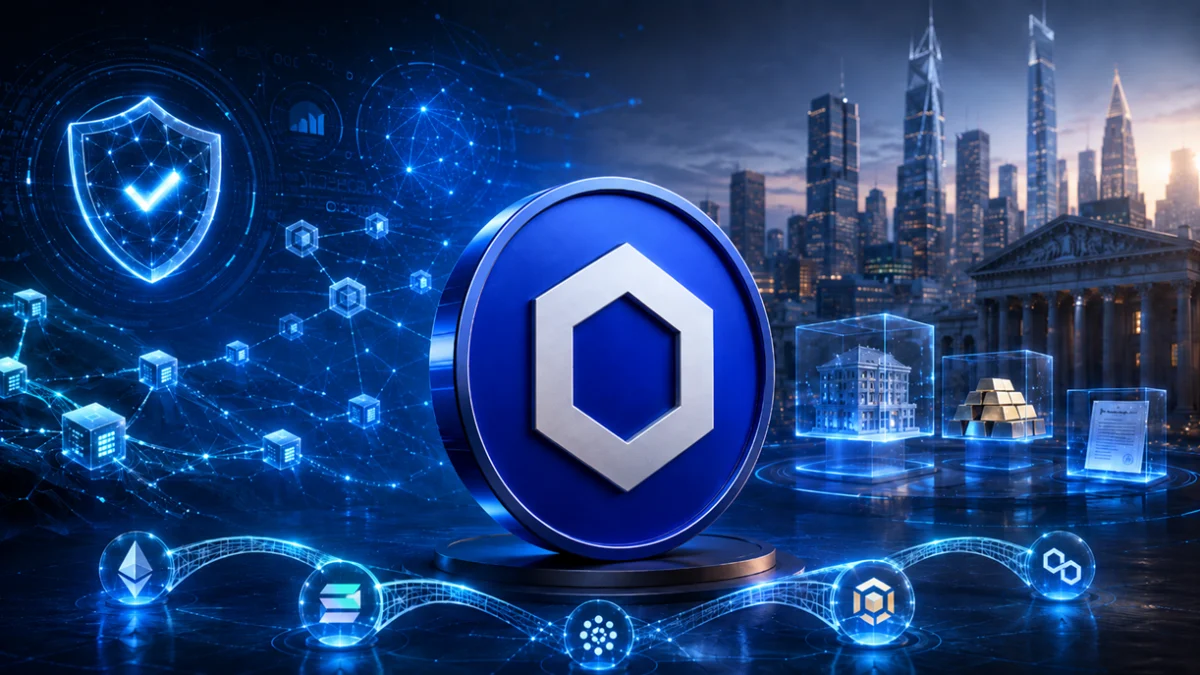
The altcoin market has faced a challenging and highly volatile macroeconomic environment throughout 2026. While speculative trading volumes and price fluctuations often dominate public discourse, underlying network health metrics frequently paint a vastly different picture.
In a striking demonstration of fundamental resilience, Chainlink (LINK), the industry-standard decentralized oracle network, recently recorded its most significant wallet growth burst of the year. Over a forty-eight-hour period, the network added over 6,100 new wallet addresses. This sudden acceleration in network participation suggests that institutional and retail interest in the Chainlink ecosystem remains robust, even as the native token navigates a broader market consolidation phase.
1. Main Facts: The 48-Hour Network Expansion
The core of this development lies in a sharp, localized spike in on-chain activity. According to data aggregated from blockchain analytics platforms, Chainlink logged more than 6,100 new wallet addresses within a consecutive two-day window. This surge represents the fastest rate of address generation the network has experienced so far in 2026.
Chainlink (LINK) On-Chain Snapshot:
┌──────────────────────────────────────┬────────────────────────────────────────┐
│ Metric                               │ Value / Status                         │
├──────────────────────────────────────┼────────────────────────────────────────┤
│ New Wallets Created (48-Hour Burst)  │ 6,100+                                 │
│ Growth Milestone                     │ Strongest 2-day expansion of 2026      │
│ Primary Utility Drivers              │ CCIP, RWA Tokenization, Oracle Feeds   │
│ Market Context                       │ Low-volatility consolidation phase     │
└──────────────────────────────────────┴────────────────────────────────────────┘
To understand the significance of this milestone, it is necessary to examine Chainlink’s structural role within the Web3 ecosystem:
- Infrastructure-First Valuation: Unlike speculative meme coins or highly narrative-driven layer-1 protocols, Chainlink’s value proposition is fundamentally tied to its technical utility. It functions as the primary bridge between off-chain data sources and on-chain smart contracts.
- Multi-Pronged Ecosystem: The project operates at the intersection of several high-growth sectors, including Decentralized Oracle Networks (DONs), cross-chain communication via the Cross-Chain Interoperability Protocol (CCIP), secure data delivery, and the rapidly expanding Real-World Asset (RWA) tokenization space.
- Participation vs. Speculation: While a token’s price can fluctuate wildly based on centralized exchange liquidity and macroeconomic sentiments, wallet growth serves as a direct proxy for ecosystem onboarding. An expansion of the wallet base indicates that new entities—whether retail investors, developers, or institutional partners—are actively establishing touchpoints with the LINK token and its native infrastructure.
2. Chronology: The Path to the 2026 Milestone
To properly contextualize this sudden influx of new wallets, we must look at the sequence of market events that led to this mid-2026 milestone:
The Q1 2026 Accumulation Phase
Following a period of macroeconomic uncertainty and stagnant price action across the broader altcoin market in late 2025, Chainlink entered a prolonged consolidation channel. Despite flat price action, developers continued to roll out upgrades to CCIP, focusing on secure bilateral messaging between traditional financial systems and public blockchains.
Mid-Q2 2026: Institutional Integrations Gain Traction
Several major banking consortia and global asset managers announced successful pilot programs utilizing Chainlink’s oracle network to track tokenized fund performances. These announcements, while structurally positive, did not immediately trigger retail price rallies, leading to a disconnect between institutional adoption and market valuation.
The 48-Hour Surge (Recent Days)
On-chain data monitors detected a sudden, non-linear departure from the baseline wallet creation rate. Within a 48-hour window, the creation of new addresses spiked, culminating in the 6,100-wallet milestone. This occurred during a week of relatively muted price movement for LINK, highlighting a clear divergence between technical market structures and actual on-chain utilization.
3. Supporting Data & On-Chain Metrics
Evaluating the health of a decentralized network requires looking beyond raw address creation numbers. Analysts must examine the quality, activity, and composition of these new wallets to determine whether this burst represents sustainable growth or a temporary anomaly.
Wallet Composition and Wealth Distribution
A critical question surrounding the 6,100 new wallets is their ownership profile. On-chain analytical firms indicate that the growth was distributed across several tiers:
- Retail Accumulation (0.1 to 100 LINK): A steady increase in smaller balance addresses suggests that retail investors are taking advantage of the depressed price levels to accumulate assets, viewing the current range as a favorable long-term entry point.
- Ecosystem and Developer Wallets: A portion of the newly generated addresses has been linked to smart contract deployments. As more decentralized applications (dApps) integrate Chainlink’s Price Feeds and CCIP, developers must establish contract-controlled wallets funded with LINK to pay for oracle gas fees.
- Institutional Custody and Exchange Inflows: While major institutions typically use established custodian addresses, the creation of new intermediate wallets by digital asset custodians indicates preparation for broader client distribution.
The Divergence Phenomenon
In financial markets, a "divergence" occurs when an asset’s price moves in the opposite direction of a fundamental indicator.
Price vs. Network Growth Divergence:
Price Action:     ▼ Sluggish / Consolidation
Network Wallets:  ▲ Accelerating (6,100 New Addresses)
Historically, sustained periods of address growth during flat or declining price trends have served as leading indicators for eventual market reversals. When utility and adoption expand while price remains suppressed, the asset often builds a strong fundamental floor, reducing the likelihood of further downward capitulation.

4. Official Responses and Ecosystem Perspectives
While Chainlink Labs—the core development entity behind the protocol—rarely comments directly on short-term token metrics or wallet spikes, their ongoing strategic communications align closely with the patterns observed in the data.
Focus on Real-World Assets (RWAs)
Chainlink co-founder Sergey Nazarov has consistently emphasized that the future of the protocol lies in bridging the multi-trillion-dollar traditional financial industry with decentralized ledgers. Speaking on the integration of legacy banking infrastructure with public chains, Nazarov has noted:
"The true scaling of Web3 will not come from speculative retail cycles alone, but from the systemic migration of real-world assets onto blockchain networks. This transition requires a highly secure, universally accepted standard for cross-chain data and capital movement."
Analytical Commentary
Market analysts from top-tier on-chain intelligence firms have offered a balanced interpretation of the 6,100-wallet milestone. Speaking on the condition of anonymity, a lead on-chain analyst at a prominent blockchain research firm stated:
"A 48-hour surge of this magnitude in a sideways market is highly constructive. It tells us that despite the lack of immediate price gratification, the network’s pull factor remains intact. However, the market must exercise caution. For this to translate into sustained upward price pressure, we need to see these new wallets transition into active transaction nodes, rather than remaining dormant holding addresses."
5. Strategic Implications for Chainlink and the Broader Market
The rapid expansion of Chainlink’s wallet base carries several key implications for the protocol’s future, its valuation models, and the wider digital asset landscape.
┌────────────────────────────────────────────────────────────────────────┐
│                        STRATEGIC IMPLICATIONS                          │
├──────────────────────────────────────┬─────────────────────────────────┤
│ The Infrastructure Token Dilemma     │ High utility does not always    │
│                                      │ equal immediate token demand.   │
├──────────────────────────────────────┼─────────────────────────────────┤
│ Institutional Readiness              │ New addresses signal pre-funding│
│                                      │ for enterprise dApp integrations│
├──────────────────────────────────────┼─────────────────────────────────┤
│ Technical Confirmation Needed        │ Watch for transaction volume    │
│                                      │ and active smart contract calls.│
└──────────────────────────────────────┴─────────────────────────────────┘
1. The Infrastructure Token Dilemma
Chainlink remains a premier example of an "infrastructure token." Unlike layer-1 tokens that act as primary gas currencies for entire ecosystems, or governance tokens with limited utility, LINK’s value is tied directly to its payment mechanics within decentralized oracle networks.
This creates a unique market dynamic: the technology can be widely adopted and deeply integrated into major financial institutions, yet the token price remains subject to broader market liquidity cycles. The addition of 6,100 wallets highlights this dilemma. It proves that network adoption is scaling up, but reminds investors that value capture mechanisms require time to reflect in spot prices.
2. Preparing for Enterprise and CCIP Scalability
As financial institutions transition from pilot phases to production-grade mainnet deployments, their interaction with the Chainlink network requires dedicated address architecture. The sudden creation of new wallets may point to corporate and institutional entities setting up their initial on-chain footprints. To interact with CCIP securely, institutions must manage private keys and operational wallets, a process that naturally leads to a spike in clean, newly generated addresses.
3. Key Metrics to Watch Next
For market participants monitoring Chainlink’s trajectory following this wallet surge, several supporting metrics will determine whether this growth translates into tangible momentum:
- Active Address Ratio: Are these 6,100 new wallets actively sending and receiving transactions, or did they perform a single setup transaction and go dormant?
- CCIP Fee Revenue: An increase in fees paid to Chainlink node operators in LINK is one of the most direct indicators of organic protocol demand.
- Exchange Outflows: If the new wallets are associated with non-custodial storage, a corresponding outflow of LINK from centralized exchanges to private wallets would confirm a strong accumulation trend.
Summary
Ultimately, Chainlink’s record-setting 48-hour wallet expansion serves as a reminder that network fundamentals can quietly strengthen during periods of market apathy. While not a guaranteed precursor to an immediate price rally, this surge in participation demonstrates that the market’s foundational layer continues to scale, positioning Chainlink as a critical infrastructure pillar for the next generation of decentralized finance and tokenized legacy systems.
