

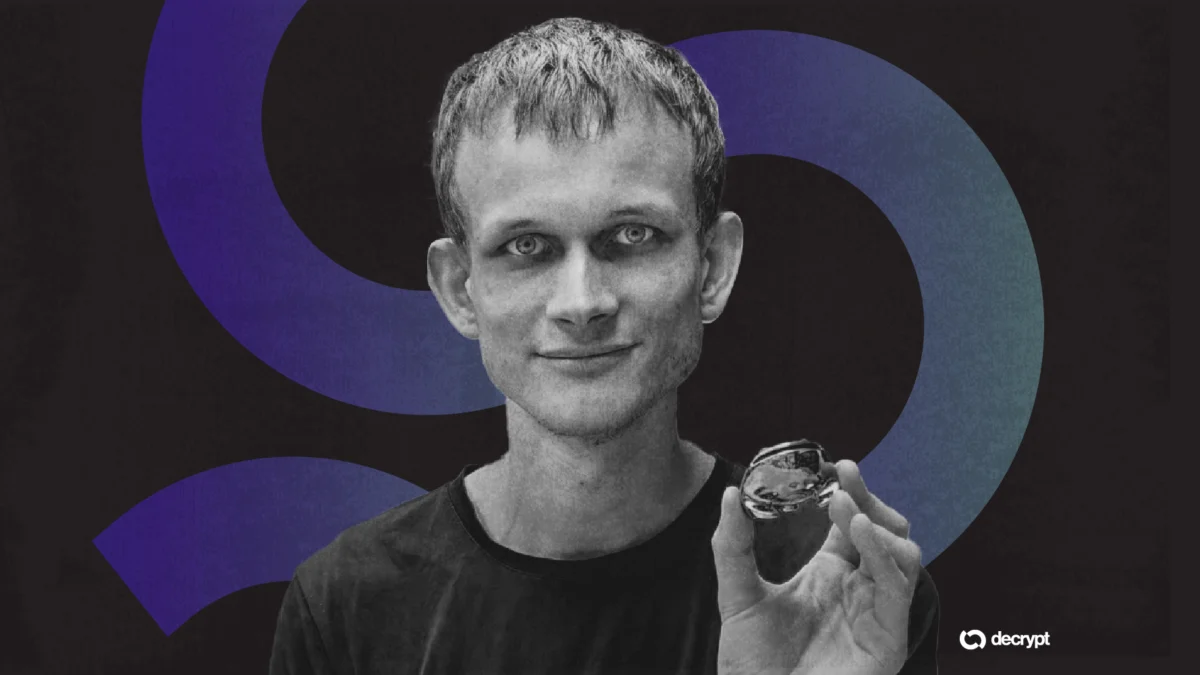
In a move that promises to redefine the landscape of decentralized finance and blockchain architecture, Ethereum co-founder Vitalik Buterin has unveiled an ambitious, multi-year roadmap for the network. Billing this transition as the most significant technical evolution since the 2022 transition to proof-of-stake, Buterin describes the project—dubbed "Lean Ethereum"—as a comprehensive "reinvention" of the protocol.
The proposal, which emerged from a series of high-level summits in Svalbard and Berlin, suggests that almost every core component of the Ethereum mainnet will be replaced or fundamentally upgraded over the next three to five years. By prioritizing efficiency, cryptographic robustness, and massive scalability, the Ethereum Foundation aims to secure the network’s dominance for the next decade.
A Chronology of the Lean Era
The "Lean Ethereum" initiative is not a sudden pivot but the culmination of years of iterative development. The timeline, as outlined by Buterin, moves away from the legacy structures of the early Ethereum era toward a streamlined, high-performance future.
The Foundation (2022–2025)
The journey began with The Merge, which successfully decoupled Ethereum from energy-intensive mining. Following this, the network focused on scaling through Layer-2 rollups and the introduction of "blobs" (EIP-4844), which lowered transaction costs for L2s significantly.
The Transition (2026–2027)
We are currently entering a transitional phase. According to Buterin, the upcoming Hegotá fork is expected to serve as the final major upgrade before the "Lean" era officially commences. Prior to this, the Glamsterdam upgrade will focus on immediate throughput improvements, specifically targeting a significant increase in the network’s gas limit to handle higher transaction volumes.
The Lean Overhaul (2027–2030+)
The next four years will see a systematic replacement of legacy protocol elements. By 2030, the network aims to move toward a dual-storage model, separating dynamic, complex state data from high-capacity, restrictive storage designed for tokens and simple financial transactions. This period will also see the phase-out of traditional EVM operations in favor of more performant instruction sets, such as RISC-V.
Core Technical Pillars: State Verification and Consensus
At the heart of the "Lean" vision is a radical shift in how the network achieves trust. Currently, Ethereum relies on nodes to re-execute every transaction, a process that is secure but computationally expensive and slow.
The Rise of Recursive STARKs
Buterin is pushing for the "enshrinement" of Zero-Knowledge proofs as a core protocol component. By utilizing recursive STARKs (Scalable Transparent Arguments of Knowledge), the network can move toward a system where nodes no longer need to verify the entirety of the chain’s history manually. Instead, they will verify a compact, mathematically rigorous proof that the state change is valid. This change effectively moves Ethereum from a "re-execution" model to a "verification" model, drastically lowering the hardware requirements for participants.
Simplification of Consensus
Beyond execution, the consensus mechanism itself is slated for an upgrade. Buterin has proposed a "one or two-round finality" model, designed to reduce the time required for a block to become immutable. Combined with multidimensional gas pricing—which allows the network to price different types of resource consumption (storage, compute, bandwidth) independently—the protocol will become more granular, efficient, and resistant to the congestion bottlenecks that have historically plagued the network during high-activity periods.
Quantum Safety, Privacy, and Data Architecture
As the threat of "Q-Day"—the hypothetical moment when quantum computers become powerful enough to break existing cryptographic standards—looms over the broader crypto industry, Ethereum is moving to insulate itself.
Quantum Resistance
Buterin has indicated that all cryptographically vulnerable components of the Ethereum protocol are slated for replacement. Work on quantum-resistant "blobs" is already underway, ensuring that as the network matures, it does not become a target for future-state adversarial computing.
Privacy as a First-Class Citizen
Historically, privacy solutions on Ethereum have been treated as "add-ons" or external applications. In the Lean era, privacy is being reclassified as a "first-class goal." This involves deep-level changes to the mempool (the waiting area for pending transactions) and the state tree (the structure that holds account data). By embedding privacy features into the core, the protocol aims to provide user confidentiality by default, rather than relying on third-party mixers or specialized Layer-2 privacy solutions.
The 2030 Storage Paradigm
Perhaps the most disruptive element of the roadmap is the overhaul of data storage. By 2030, Buterin envisions a bifurcated storage model:
- Dynamic State (2TB): Reserved for complex smart contracts and decentralized exchange logic, maintaining the flexibility that defines current Ethereum development.
- Scalable State (100TB): A new, more restrictive storage tier optimized for tokens, NFTs, and high-frequency payments.
While migrating to this new storage will not be mandatory, the efficiency gains will be massive. Buterin estimates that re-writing an ERC-20 token to utilize this optimized storage could reduce transaction fees by a factor of ten, effectively commoditizing simple asset transfers.
Implications for the Ecosystem
The "Lean Ethereum" roadmap carries profound implications for developers, stakers, and the broader blockchain industry.
Impact on Developers and Existing Apps
One of the most critical promises made by Buterin is the commitment to backward compatibility. The "Lean" transition is intended to occur without forcing existing decentralized applications (dApps) to migrate. Through careful protocol design, the Foundation aims to provide a "path of least resistance" for developers to adopt new features while allowing legacy smart contracts to continue functioning within a wrapped, emulated, or bridged environment.
Organizational Realities
The announcement comes at a precarious time for the Ethereum Foundation. Having recently undergone a 20% staff reduction and a tightening of its operational budget, the Foundation is under pressure to prove that it can deliver on this ambitious roadmap without the runaway timelines that characterized previous upgrades like The Merge or the "Difficulty Bomb" delays.
The "Lean" approach is, in many ways, an admission that the current version of Ethereum has become bloated. By trimming the fat and focusing on a more modular, "enshrined" architecture, the Foundation is betting that it can outpace newer, faster, but less decentralized competitors.
The Long-Term Competitive Landscape
If successful, these changes could bridge the gap between the security of a decentralized base layer and the performance of centralized databases. By reducing the cost of token transactions and securing the network against quantum threats, Ethereum is positioning itself not just as a platform for DeFi, but as a robust, permanent infrastructure for the global internet economy.
However, the path forward is not without risks. Moving from a proven execution model to a recursive STARK-verified one is an immense engineering challenge. Any unforeseen vulnerabilities in these cryptographic primitives could jeopardize the billions of dollars in value currently locked in the network.
Conclusion: A New Chapter
Vitalik Buterin’s vision for a "Lean Ethereum" signals a maturity phase for the blockchain. Having survived the volatile "Wild West" of early crypto and the complex technical hurdles of the post-mining era, Ethereum is now focusing on the "boring" but essential work of optimization, safety, and long-term viability. As the protocol prepares for the upcoming Hegotá and Glamsterdam upgrades, the eyes of the developer community are firmly fixed on whether this roadmap can be executed with the precision it demands.
The promise is clear: a faster, cheaper, and more secure Ethereum that serves as the bedrock for the next decade of digital innovation. The reality will depend on the ability of the global Ethereum core developer community to deliver on a vision that is, quite literally, rewriting the rules of the blockchain.
