

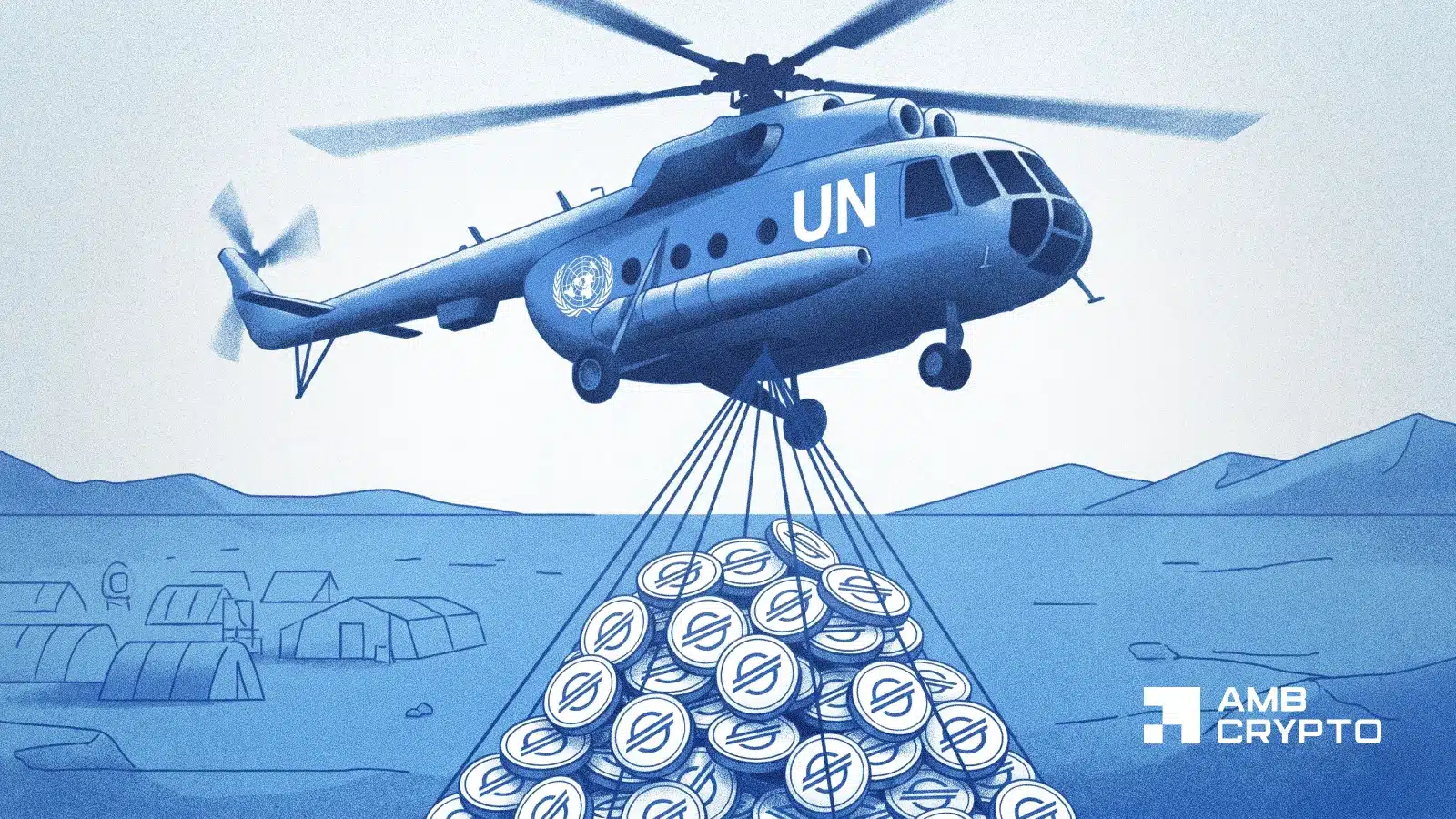
In the high-stakes world of humanitarian relief, the speed and efficiency of capital delivery are matters of life and death. For decades, international NGOs and the United Nations have struggled with the "last-mile" problem: how to reliably deliver financial assistance to vulnerable populations in regions crippled by failing infrastructure, hyperinflation, or conflict. Today, a paradigm shift is underway as stablecoins and blockchain-based payment rails transition from experimental projects to essential components of global aid architecture.
The recent decision by the United Nations Development Programme (UNDP) to scale its partnership with the Stellar Development Foundation marks a watershed moment. After a successful 16-month pilot program, the organizations are moving beyond proof-of-concept, signaling that blockchain is no longer just a financial trend—it is a critical tool for humanitarian resilience.
The Evolution of Aid: From Traditional Banking to Blockchain Rails
The traditional model of humanitarian aid is inherently flawed by its reliance on legacy banking systems. When the UN or other NGOs move money, they often navigate a maze of correspondent banks, intermediaries, and local financial institutions, each taking a cut in fees and adding days to the settlement time. In crisis zones like Syria, Haiti, or Kenya, where traditional banking infrastructure is often non-existent or inaccessible, these delays can be catastrophic.
The collaboration between the UNDP and Stellar, a public blockchain network, was designed to bypass these inefficiencies. By utilizing stablecoins—digital assets pegged to fiat currencies—aid organizations can transmit funds directly to beneficiaries with near-instant settlement. This removes the friction of "middlemen" who frequently extract high transaction fees and complicate the oversight process.
A Chronology of the UNDP-Stellar Pilot
- Early 2023: The UNDP Alternative Finance Lab and the Stellar Development Foundation initiate a pilot program to test blockchain-based payments in challenging environments.
- Mid-2023: Testing begins across diverse geographies including Haiti, Syria, Guatemala, and Kenya, focusing on cash-for-work stipend transfers.
- Late 2023 – Early 2024: Pilots are conducted in areas with extremely low cellular network connectivity, testing the robustness of the Stellar network in "offline-first" scenarios.
- Q3 2024: Following a 100% success rate in transfer completion, the UNDP formally announces the scaling phase of the partnership, integrating these rails into broader humanitarian operations.
Supporting Data: Efficiency and Impact
The transition to blockchain rails is not merely an ideological preference; it is a data-driven decision. According to findings released by the UNDP, the shift from conventional financial systems to blockchain-based rails resulted in a drastic reduction in transaction costs.
Key Performance Indicators
- Cost Efficiency: Transfer costs plummeted from an industry-standard 10% (via traditional money transfer services) to just 2% using blockchain rails. This 80% reduction in overhead means more funding goes directly to aid recipients rather than administrative or financial fees.
- Reliability: The pilot achieved a 100% success rate in transactions, even in environments characterized by intermittent or poor cellular coverage.
- Speed: Unlike traditional bank transfers that can take several business days to clear—a luxury that displaced or hungry families do not have—blockchain transactions settle in seconds or minutes.
These metrics are particularly vital in the context of recent global economic trends. A report by Market Impact highlights that U.S. humanitarian aid support has seen a reduction of 88%, forcing aid organizations to maximize the utility of every dollar. In an environment of austerity, the ability to reclaim 8% of lost capital through lower transaction fees is a game-changer for humanitarian budgets.
Official Perspectives: Bridging the Last Mile
The success of the initiative has drawn praise from both the development community and the private sector. Robert Pasicko, lead of the UNDP Alternative Finance Lab, has been a vocal proponent of this technology, emphasizing its role in financial inclusion.
"We have shown that digital payments can reach the people that conventional systems miss, and in some of the hardest places to operate," Pasicko stated. His perspective underscores the reality that for millions of unbanked people, traditional financial inclusion is a distant prospect, whereas mobile-based blockchain wallets offer an immediate, low-barrier entry point into the digital economy.
Candace Kelly, Legal Chief at the Stellar Development Foundation, views the results as a validation of the technology’s design philosophy. "These pilots showed what open, public blockchain infrastructure can do when it is built around the realities of the last mile," she noted. By prioritizing accessibility, the Stellar network has proven that blockchain can function effectively even in the most resource-constrained environments on Earth.
The Dual-Edged Sword: Aid vs. Geopolitics
While the humanitarian benefits are undeniable, the integration of crypto-assets into international relief is not without controversy. The same borderless, permissionless nature that makes stablecoins ideal for aid in unstable regimes—such as Sudan or Afghanistan during the Taliban takeover—also makes them a target for regulatory scrutiny.
The Problem of Misuse
The potential for sanctioned entities or terrorist organizations to exploit blockchain rails for capital flight or funding is a primary concern for the U.S. Treasury and international regulators. The freezing of over $1 billion in Iranian crypto assets linked to alleged terrorist financing serves as a stark reminder of the risks involved.
Critics argue that the transparency of public ledgers is a double-edged sword: while it allows for the traceability of funds, it also provides a roadmap for illicit actors to move assets if the off-ramps are not sufficiently regulated. The challenge for organizations like the UNDP is to maintain the "humanitarian space"—the neutrality and access required to deliver aid—while strictly adhering to international Anti-Money Laundering (AML) and Counter-Terrorism Financing (CTF) protocols.
Future Implications: The New Humanitarian Paradigm
The scaling of the Stellar-UNDP partnership suggests that the future of international aid will be increasingly digitized. As humanitarian organizations face growing pressure to demonstrate transparency and fiscal responsibility, blockchain offers an immutable ledger that can provide donors with real-time, auditable proof that funds have reached their intended destinations.
Overcoming Challenges
Despite the successes, significant barriers remain:
- Digital Literacy: Providing the technology is only half the battle. Aid organizations must invest in educating beneficiaries on how to secure their digital wallets and safely convert stablecoins to local currency.
- Regulatory Fragmentation: Each country has a different approach to crypto-assets. For global aid organizations, navigating this patchwork of regulations in dozens of jurisdictions remains a legal hurdle.
- Connectivity Infrastructure: While the pilots proved success in low-connectivity zones, widespread adoption requires ongoing investment in mobile telecommunications infrastructure in developing nations.
Conclusion
The integration of stablecoins into humanitarian aid is a testament to the transformative power of decentralized technology. By slashing costs, increasing speed, and reaching populations ignored by the traditional banking system, the UNDP and Stellar have provided a blueprint for the future of development work.
However, the path forward must be navigated with caution. As the humanitarian sector leans further into blockchain, the focus must remain on robust security, user education, and a delicate balance between innovation and compliance. If these hurdles can be cleared, blockchain-based aid may prove to be one of the most effective tools in the global effort to eradicate poverty and provide relief in the face of inevitable crisis. The "last mile" is no longer the final obstacle; it has become the first step toward a more efficient and transparent humanitarian future.
