

The cryptocurrency market is currently navigating a period of profound contradiction. In the span of a few short weeks, the digital asset sector has shaken off the lingering malaise of a brutal bear market, driven by a surge in institutional interest. However, beneath this veneer of "greed," a deeper analysis of liquidity metrics, regulatory headwinds, and macroeconomic constraints suggests that the recent 20% rally in Bitcoin may be premature—or perhaps even detached from the grim reality of the current financial landscape.
Main Facts: The Institutional Catalyst
The primary engine behind the recent market euphoria is the sudden, high-profile interest from traditional finance (TradFi) giants. The filing for a Bitcoin spot Exchange-Traded Fund (ETF) by BlackRock, the world’s largest asset manager, served as a lightning rod for sentiment. Fidelity, another titan of the investment world, quickly followed suit, signaling that the "smart money" is finally looking to bridge the gap between legacy portfolios and digital assets.
Simultaneously, the launch of EDX Markets—a new exchange backed by a consortium of financial powerhouses including Citadel Securities, Fidelity, and Charles Schwab—has bolstered the narrative that the industry is professionalizing. EDX currently supports trading in Bitcoin, Ether, Litecoin, and Bitcoin Cash, providing a compliant pathway for institutional capital to enter the space.
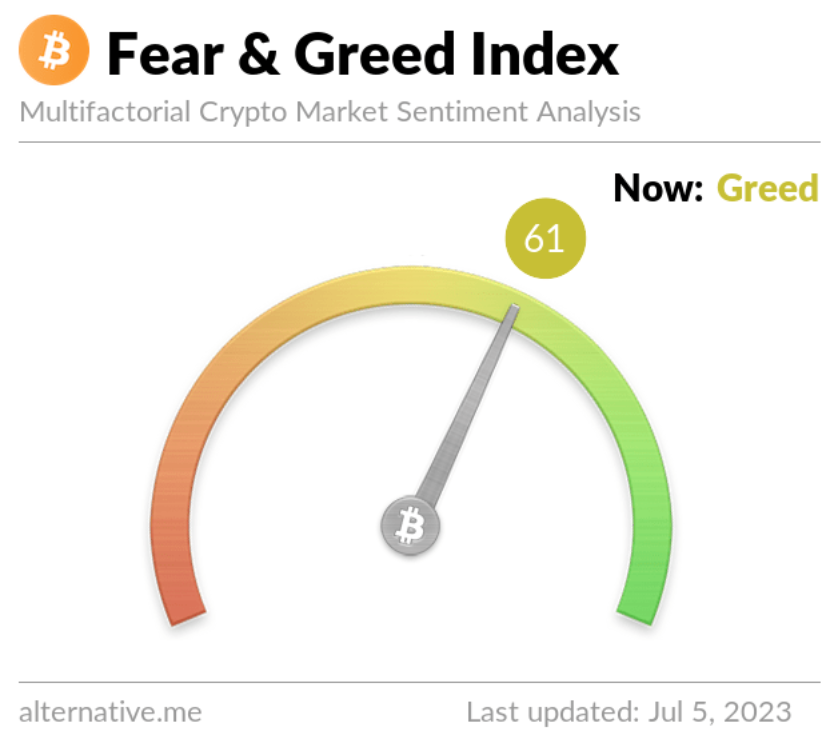
Despite these positive signals, Bitcoin has breached the $30,000 threshold, and Ether has climbed toward the $2,000 mark. The Fear and Greed Index, a barometer for market sentiment, has shifted into "greed" territory with a score of 61. Yet, for seasoned observers, this rapid ascent in the face of persistent regulatory and liquidity challenges raises a critical question: Is this a genuine recovery, or just another "crypto-native" reflexive rally?
A Chronology of Recent Turbulence
The timeline of the last month illustrates just how volatile the intersection of regulation and price action has become:
- Early June: The U.S. Securities and Exchange Commission (SEC) dropped a bombshell, filing lawsuits against the world’s two largest cryptocurrency exchanges: Binance and Coinbase.
- Mid-June: Amidst the regulatory carnage, BlackRock and Fidelity initiated their spot ETF applications, acting as a "circuit breaker" that halted the downward price pressure.
- Late June: The SEC informed Nasdaq and the CBOE that the initial ETF filings were "inadequate," citing a lack of clarity regarding "surveillance-sharing agreements."
- Early July: Exchanges moved to refile applications with added detail, keeping the hope of approval alive while the market continued its upward momentum.
- Current Outlook: The market remains in a state of suspense, waiting for the SEC to provide a definitive signal on whether they are willing to greenlight a product they have consistently rejected for nearly a decade.
Supporting Data: The Liquidity Drought
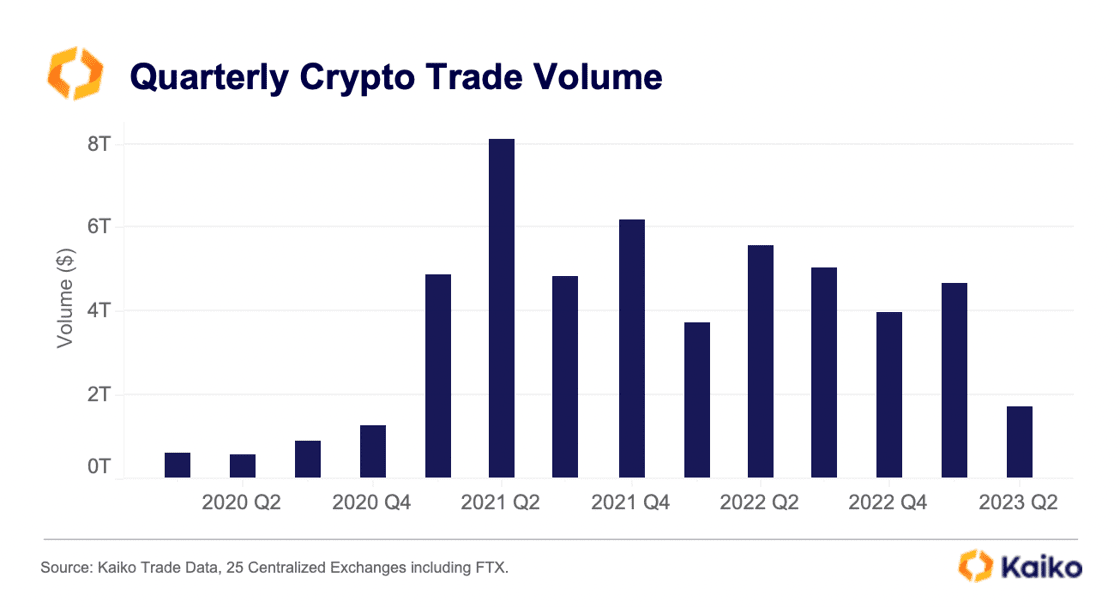
While price action paints a picture of a bull market, the underlying plumbing of the crypto economy tells a different story. According to data from Kaiko, trading volumes on centralized exchanges have plummeted to their lowest levels since 2020. This lack of liquidity is a double-edged sword: it makes it easier for prices to move upward on relatively low buying pressure, but it also leaves the market vulnerable to sudden, violent volatility.
The "stablecoin exodus" further confirms this fragility. The total balance of stablecoins held on exchanges has cratered by 60% over the last six months, representing an outflow of approximately $26 billion. When liquidity leaves the ecosystem, the capacity for sustained, organic growth diminishes significantly.
While derivative markets have shown some resilience compared to the spot market, the overall trend remains concerning. The spot market appears to be struggling under the weight of regulatory enforcement, while the derivatives sector remains a speculative playground, detached from the fundamental demand for the underlying assets.
Official Responses and Regulatory Friction
The SEC’s stance remains the single most significant variable in the equation. The regulator’s rejection of previous attempts—such as Fidelity’s January 2022 application—serves as a reminder that institutional prestige does not guarantee regulatory approval.
The lawsuits against Binance and Coinbase further complicate this. While the Binance suit focuses on alleged operational malfeasance—including wash trading and the commingling of customer funds—the Coinbase case is a philosophical and legal battle over what constitutes a "security." By naming a slew of altcoins as securities, the SEC has effectively placed a target on the back of the entire industry.
The absurdity of the situation is not lost on market participants: the SEC allowed Coinbase to proceed with its IPO in 2021, only to turn around two years later and suggest that the company’s core business model is illegal. This regulatory schizophrenia creates an environment of profound uncertainty, where innovation is stifled by the threat of retroactive enforcement.
Implications: The Macroeconomic Reality
Beyond the crypto-specific news, the macroeconomic environment remains arguably the most important headwind. Federal Reserve Chair Jerome Powell has been clear: the "pause" in interest rate hikes is not the same as a pivot. The Fed’s messaging is unambiguous—further rate increases are likely to be necessary to tame inflation.
Current market projections from Fed futures indicate an 86% probability of a 25 basis point hike in the coming weeks. The fact that Bitcoin has rallied 20% while these probabilities have remained high—or even increased—suggests that investors are ignoring the broader monetary tightening cycle.
Historically, monetary policy operates with a significant time lag. The aggressive rate-hiking cycle that moved interest rates from zero to over 5% in record time is still working its way through the global economy. As borrowing costs remain high and liquidity remains constrained, the "easy money" era that fueled the previous crypto bull market is firmly in the rearview mirror.
Conclusion: Caution Over Euphoria
"Crypto is going to crypto." It is a phrase often used to describe the market’s tendency to defy logic, ignore fundamentals, and move according to its own internal, often irrational, rhythms. However, as we look toward the remainder of the year, investors should exercise a high degree of skepticism.
The current rally is built on the anticipation of institutional adoption via ETFs, rather than the reality of it. Should the SEC continue to stall or outright reject these filings, the downside risk is significant. When coupled with the contraction in liquidity and the ongoing legal battles with the SEC, the current market sentiment feels like a house of cards.
While the long-term potential for blockchain technology and digital assets remains, the short-term outlook is clouded by systemic risk. The road ahead is not a straight line to new all-time highs; rather, it is a treacherous path through a regulatory minefield, high-interest-rate environment, and an evaporating pool of liquidity. Before assuming that the winter is over, market participants would do well to consider that in a high-rate environment, the market has little room for error. The sentiment may have shifted, but the fundamental data suggests that the storm is far from over.
