

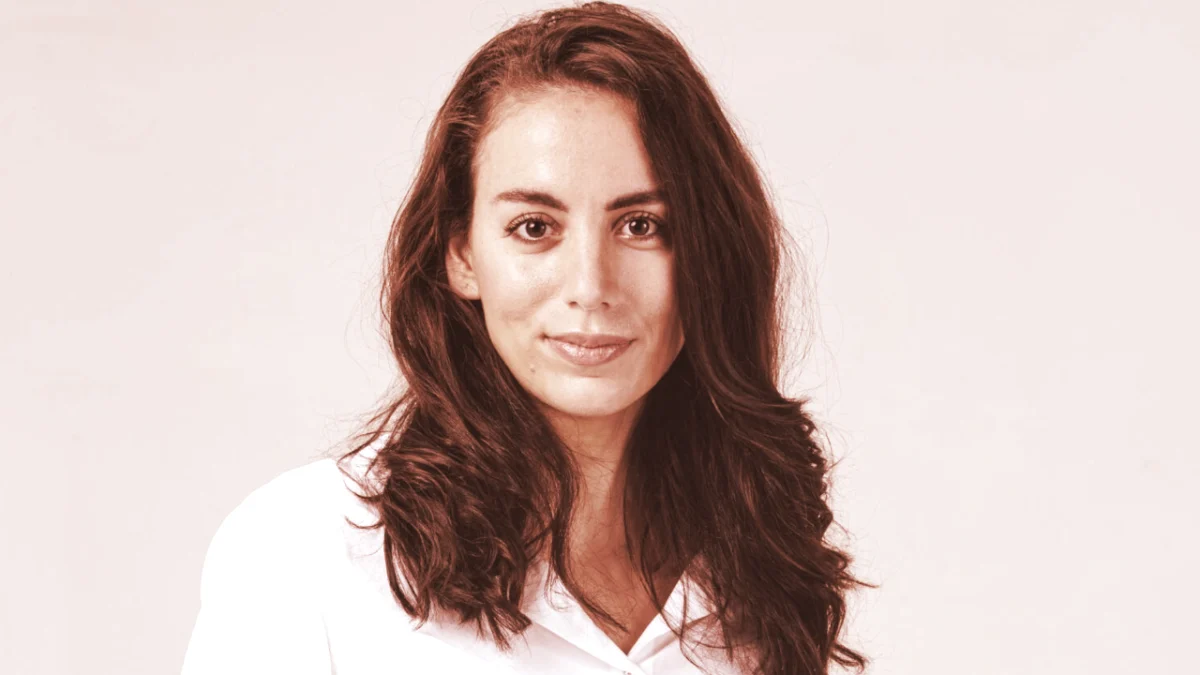
Nearly two years after her high-profile departure from OpenAI, Mira Murati—the former technical architect behind some of the world’s most powerful AI models—has finally stepped out of the shadows. Her new venture, Thinking Machines Lab, has officially unveiled its inaugural flagship model: Inkling.
In a landscape dominated by closed-source monoliths and increasingly powerful Asian-led open-source competitors, Inkling arrives as a potential turning point for Western developers. Built from scratch and released with fully open weights, the model represents a bold attempt to balance the democratization of AI with the high-performance standards demanded by enterprise-level engineering.
A Chronology of Transition: From OpenAI to Independence
The trajectory leading to the birth of Inkling is as dramatic as the technology itself. Mira Murati’s tenure at OpenAI was defined by her role as Chief Technology Officer during the company’s most explosive period of growth. However, the internal instability of late 2023—marked by the sudden firing and subsequent reinstatement of CEO Sam Altman—served as a catalyst for a broader leadership exodus.
Murati officially departed OpenAI in September 2024, citing a desire to pursue independent ventures. By February 2025, she had incorporated Thinking Machines Lab. The startup initially operated in "stealth mode," though it quickly captured the attention of Silicon Valley’s venture capital elite. In July 2025, the company secured a staggering $2 billion seed round at a $12 billion valuation—one of the largest initial funding rounds in the history of the industry. The round was spearheaded by Andreessen Horowitz, with significant participation from a coalition of industry titans including Nvidia, Accel, ServiceNow, Cisco, AMD, and Jane Street.
The meteoric rise was not without friction. By November 2025, reports surfaced that Thinking Machines was seeking a massive valuation hike to $50 billion. However, by January 2026, those negotiations reportedly collapsed, forcing the company to pivot back to its core mission: engineering excellence over speculative finance. The release of Inkling marks the first tangible product from that mission.
Decoding Inkling: Architecture and Capability
Inkling is a "Mixture-of-Experts" (MoE) model, an architecture that has become the gold standard for balancing massive knowledge capacity with operational efficiency. In an MoE design, only a fraction of the model’s total parameters are activated for any given request. This allows for high-speed inference without stripping the model of its depth or contextual nuance.
The Technical Specifications
- Total Parameters: 975 billion.
- Active Parameters: 41 billion (per task).
- Multimodality: Native support for text, images, and audio.
- Context Window: 1 million tokens (approximately 750,000 words).
- Pre-training Data: 45 trillion tokens, spanning a diverse corpus of text, image, audio, and video data.
Given its size, Inkling is not intended for local consumer hardware. It is a data-center-grade powerhouse. However, in keeping with the company’s open-access philosophy, the full weights have been released on Hugging Face under an Apache 2.0 license, meaning there are no usage restrictions for developers.
The Performance Landscape: Benchmarks and Real-World Utility
Thinking Machines is positioning Inkling not as a niche tool, but as a "well-rounded" generalist. In the world of AI benchmarking, this is a strategic choice. Many specialized models excel in coding but fail in creative writing, or vice-versa. Inkling aims to provide a reliable baseline across all verticals.
Agentic Capabilities
Inkling’s most significant strengths lie in its "agentic" performance—the ability to act as an autonomous agent that navigates software environments.
- MCP Atlas (Model Context Protocol): On this benchmark, which evaluates how reliably an AI can connect to external tools, Inkling scored 74.1%. This is a commanding lead, sitting nearly 30 percentage points above Nvidia’s Nemotron 3 Ultra, the current industry benchmark for Western open-weights models.
- SWE-Bench Verified: Designed to test an AI’s capacity to autonomously resolve complex software bugs on GitHub, Inkling achieved a 77.6% success rate, outpacing the Nemotron’s 70.7%.
The "Eastern" Challenge
Despite these impressive gains, Thinking Machines is refreshingly candid about the competitive landscape. Asian models, particularly those emerging from labs like Z.ai, continue to hold a performance edge in specific technical domains. Z.ai’s GLM 5.2 model, for instance, maintains a significant lead in terminal-based coding tasks (82.7% vs. Inkling’s 63.8%), and Kimi K2.6 remains the leader in PhD-level scientific reasoning.
Thinking Machines is not attempting to claim that Inkling is the "best" model in existence. Instead, they are positioning it as the most capable and transparent model developed by a Western lab—a crucial distinction for organizations wary of the geopolitical implications of routing sensitive data through models developed under different regulatory regimes.
Implications: A New Era for Western Open-Weights
The release of Inkling carries profound implications for the global AI ecosystem. For years, Western developers have faced a difficult trade-off: use closed-source, proprietary models (like those from OpenAI or Google) and sacrifice control, or adopt powerful open-weights models from abroad, which may raise compliance, security, or data privacy concerns.
The "Tinker" Ecosystem
To support the adoption of Inkling, the company has launched Tinker, a proprietary cloud platform specifically optimized for fine-tuning. Because Inkling was trained from scratch, it serves as a "clean slate." Developers can use Tinker to adapt the model to specialized industry datasets, creating custom iterations that, through fine-tuning, can eventually close the performance gap with Asian models in specific, high-value tasks.
Ethical Alignment and Safety
One of the most notable metrics reported by the company is the FORTRESS Adversarial score. This benchmark evaluates how well a model balances safety—the refusal to generate harmful content—with utility—the refusal to over-block legitimate queries. Inkling scored 78.0%, the highest mark of any open-weights model currently available. This suggests that Thinking Machines has invested heavily in "alignment," ensuring the model remains useful for enterprises that require strict safety guardrails.
Looking Ahead: The Future of Thinking Machines
While the initial focus is on the 975-billion parameter Inkling, the company has already teased a smaller, more efficient sibling: Inkling-Small. Featuring 276 billion total parameters and 12 billion active parameters, this model reportedly matches the performance of its larger counterpart on most reasoning benchmarks.
For Mira Murati, the launch of Inkling is more than just a product release; it is a statement of intent. By choosing to open-source the model weights and build an accompanying infrastructure for fine-tuning, Thinking Machines is betting that the future of AI development lies in collaboration and accessibility.
In an era where "black box" models are increasingly scrutinized for their lack of transparency, Inkling offers a rare level of visibility. Whether it can truly challenge the supremacy of the world’s largest, closed-source models remains to be seen. However, for the developer community, the availability of a high-performance, Western-built, open-weights model is a significant victory—one that provides a much-needed alternative to the current, highly centralized status quo.
As the industry watches to see how developers utilize Tinker and the Inkling weights, one thing is certain: the competition in the open-weights space has just reached a new level of intensity. The "Thinking Machines" era has officially begun.
