

In the early hours of Friday, July 17, 2026, the artificial intelligence landscape shifted yet again. Moonshot AI, the Beijing-based powerhouse, quietly released its latest frontier model, Kimi K3. While the launch occurred in the dead of night, the implications were heard loudly across the globe as soon as markets opened.
The arrival of Kimi K3 is not merely another iterative update in the AI arms race; it is a profound signal that the "moat" surrounding Western AI dominance is evaporating. As K3’s performance benchmarks surfaced, global equity markets—particularly those tethered to semiconductor manufacturing and high-end compute—reacted with a reflexive, sharp sell-off. The event has reignited a fierce debate on Wall Street: Is the multi-trillion-dollar bet on AI infrastructure facing a structural correction, or is this the inevitable leveling of the playing field?
The Anatomy of the Market Panic
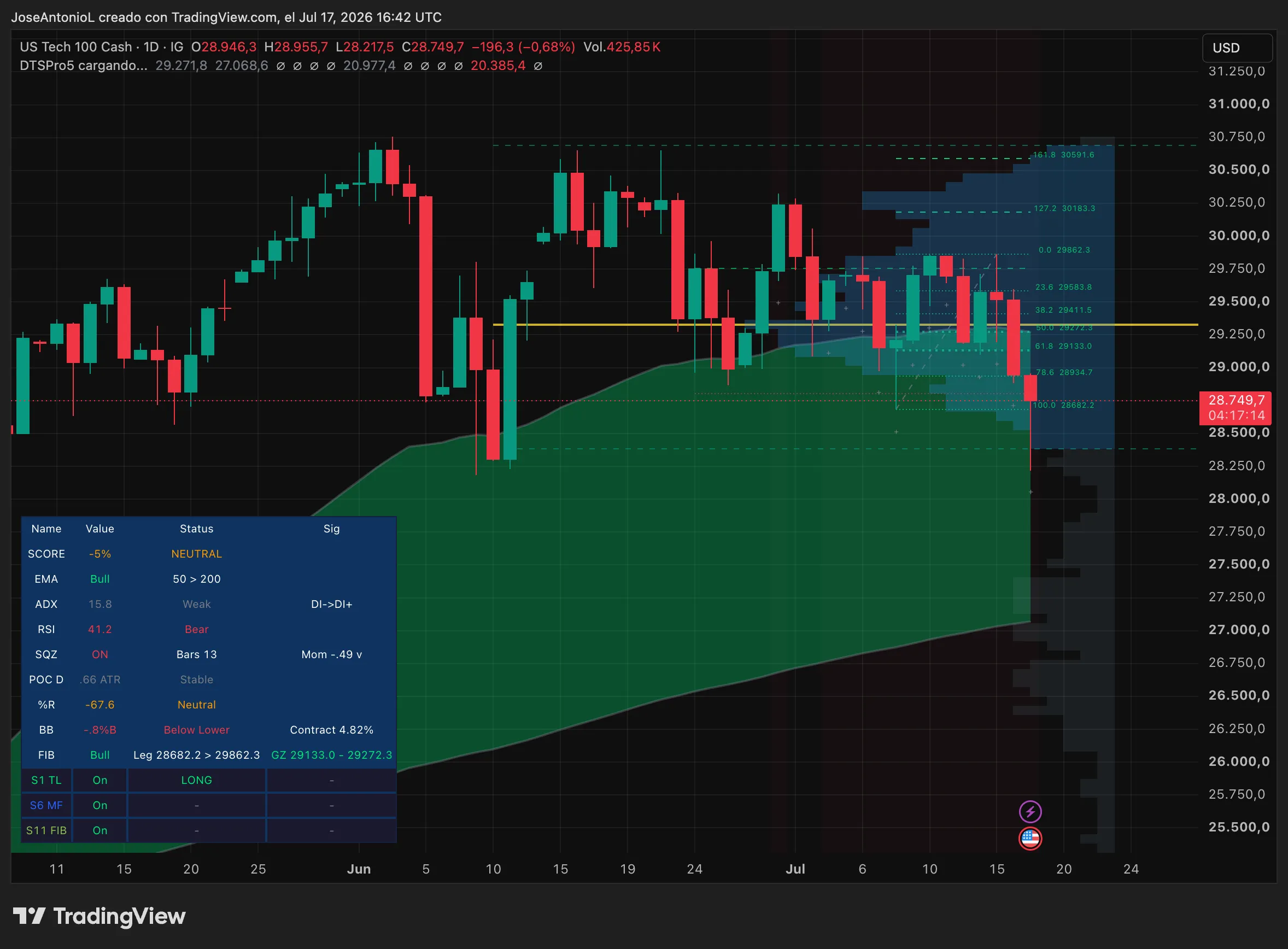
The reaction to the K3 launch was immediate and visceral. Semiconductor and AI-focused stocks, which have served as the primary engines of market growth throughout 2026, saw broad-based retreats. The Nasdaq Composite slid 1.5% in a single session—its worst performance of the week—as investors scrambled to reassess the value proposition of companies heavily reliant on sustained, massive capital expenditure in GPU procurement.
The fallout was even more pronounced in the Asia-Pacific region, where the manufacturing hubs that power the AI revolution reside. Taiwan’s benchmark index plummeted by more than 6%, reflecting deep-seated investor anxiety regarding the long-term demand for foundry services if the current "frontier AI" paradigm shifts toward more efficient, lower-cost, and open-source models. Japan’s markets mirrored this volatility, closing down 4%.
The VanEck Semiconductor ETF (SMH), a proxy for the health of the chip industry, hit a critical technical threshold. The ETF fell below its Exponential Moving Average (EMA) support band for the first time since April. This breach is significant for technical analysts, as it marks the continuation of a downward trend that has seen the sector shed more than 20% of its value since its late-June record highs. The message from the market is clear: the assumption that infinite AI growth requires infinite hardware spending is no longer a given.
A Chronology of Disruption: From DeepSeek to Moonshot
To understand the current panic, one must look at the precedent set by the "DeepSeek effect." In January 2025, when the Chinese lab DeepSeek released its R1 model, it shattered the prevailing dogma that elite-level reasoning capabilities were exclusive to the most expensive, proprietary US models. That release triggered a massive market correction, with Nvidia shedding approximately $590 billion in market capitalization in a single trading session.
The Kimi K3 launch follows a similar, if more sophisticated, trajectory. Moonshot AI has been systematically building its capabilities over the past 24 months.
- 2024: Alibaba leads a $1 billion funding round into Moonshot AI, valuing the company at $2.5 billion.
- May 2026: Observers begin to note that Moonshot’s technology is being integrated into high-profile US developer tools. Notably, it was discovered that Cursor’s "Composer 2" was utilizing Kimi K2.5 as its engine—a move that was only acknowledged after public scrutiny.
- July 17, 2026: Moonshot AI drops Kimi K3. The model is released with high performance in reasoning, coding, and mathematics.
- July 27, 2026 (Scheduled): The full weights of the model are set to be released under a Modified MIT license, effectively commoditizing the intelligence that labs in the US have spent billions to develop.
Benchmarking the "K3" Standard
According to the Artificial Intelligence Analysis Index—a neutral, composite benchmark that evaluates models across reasoning, knowledge, mathematics, and coding—Kimi K3 has achieved a score of 57. This places it in the upper echelon of the global leaderboard.
K3 is not just "competitive"; it is effectively on par with—and in specific niche benchmarks, superior to—Claude Fable 5 and OpenAI’s GPT-5.6 Sol. The critical distinction, however, is the economic efficiency. K3 delivers this level of performance at a fraction of the computational and financial cost associated with its Western counterparts.
The decision to release the full model weights under a permissive license is the "nuclear option" for the industry. By making high-end intelligence available for free to small labs and developers, Moonshot AI is essentially democratizing the frontier. This threatens the subscription-based business models of Western incumbents, who have long relied on the idea that access to the "best" model is a premium service tethered to their proprietary ecosystems.
Analyst Perspectives: The "Confirmatory" Trend
Wall Street analysts are divided between viewing this as a shock event and recognizing it as a systemic, long-term trend.
Bernstein analyst Robin Zhu has been among the most vocal in framing the K3 launch as "confirmatory." According to Zhu, the release is not an anomaly but a data point in a trend that has been building all year: the rapid maturation of Chinese LLMs. "At a high level," Zhu noted, "K3 feels confirmatory of our views that AI state-of-the-art continues to evolve rapidly, and that China’s AI sector can continue to keep pace with global leaders while taking market share over time."
Morgan Stanley’s Gary Yu echoed this sentiment, arguing that investors should stop viewing these releases as "surprises." Instead, he characterizes K3 as the result of steady, compound progress. "K3 has received positive feedback globally," Yu wrote, "signaling an all-round catch-up of Chinese LLMs with US leaders in model size, performance, and pricing."
The shift in narrative is significant. A year ago, the market viewed Chinese advancements as "copycat" or "lagging." Today, the narrative has shifted toward "convergence." As the gap in performance narrows, the premium placed on Western models—and the hardware required to run them—is being challenged.
The Financial Implications: Valuation and Market Capitalization
Moonshot AI itself is the greatest beneficiary of this shift. Once a $2.5 billion startup, the company is now estimated to be worth roughly $31.5 billion. This surge in valuation reflects the market’s recognition that Moonshot has successfully transitioned from a domestic Chinese player to a global competitor.
The broader implications for the US tech sector are sobering. For the past two years, the "AI Trade" has been predicated on the idea that the US would maintain a multi-year lead in model capabilities, keeping users and enterprises locked into the Microsoft-OpenAI or Google-Anthropic-Claude ecosystems. If that lead is now measured in months rather than years—and if the Chinese model is free and open-source—the "moat" that justifies the current high-multiple valuations of American tech giants begins to look like a mirage.
Strategic Outlook: What Happens Next?
As we look toward the July 27 release of the K3 weights, several critical questions remain:
- Will there be regulatory intervention? With the geopolitical tensions between the US and China, the release of such a powerful, open-source model may trigger further export controls or domestic policy discussions regarding the use of "foreign-made" AI in sensitive US applications.
- How will developers react? The "Cursor" incident suggests that developers are already comfortable using non-US models if they provide superior results. If the open-source community adopts K3 as a foundational base, the reliance on proprietary APIs could drop significantly.
- Is the "Compute Craze" over? The market sell-off suggests a growing fear that we have hit a point of diminishing returns on hardware spending. If models can achieve near-frontier performance with fewer parameters and more efficient training, the massive chip orders that defined 2025 and early 2026 may face a painful correction.
In conclusion, the Kimi K3 launch is a watershed moment. It serves as a reminder that in the world of software and intelligence, the barriers to entry are lower than many investors believed. As the market enters a period of volatility, the lesson of July 2026 is clear: the AI race is no longer a sprint by a few chosen companies, but a global marathon where the advantage is shifting toward those who can deliver intelligence, not just at high costs, but with high efficiency.
