

Introduction: The Convergence of Real-World Geolocation and Web3 Gaming
The mobile gaming landscape is on the precipice of a seismic shift. For the past three years, a dedicated development team has been quietly engineering an ambitious play-to-earn mobile Massive Multiplayer Online Role-Playing Game (MMORPG) entitled Chaos on the Chains. Blending cutting-edge geolocation tracking, Augmented Reality (AR), Artificial Intelligence (AI), and blockchain technology within a stylized low-poly aesthetic, the game aims to redefine what players expect from handheld entertainment.
As the project enters its final developmental stretch ahead of a targeted launch this year, industry observers and Web3 gaming enthusiasts alike are turning their attention toward its unique mechanics. Chaos on the Chains is not merely an interactive diversion; it is an immersive, multi-layered ecosystem where the boundaries of the digital world dissolve into the physical streets, parks, and neighborhoods of everyday life. By bridging the gap between physical reality and virtual strategy, the title seeks to establish a new benchmark for decentralized gaming economies.
Main Facts: What is Chaos on the Chains?
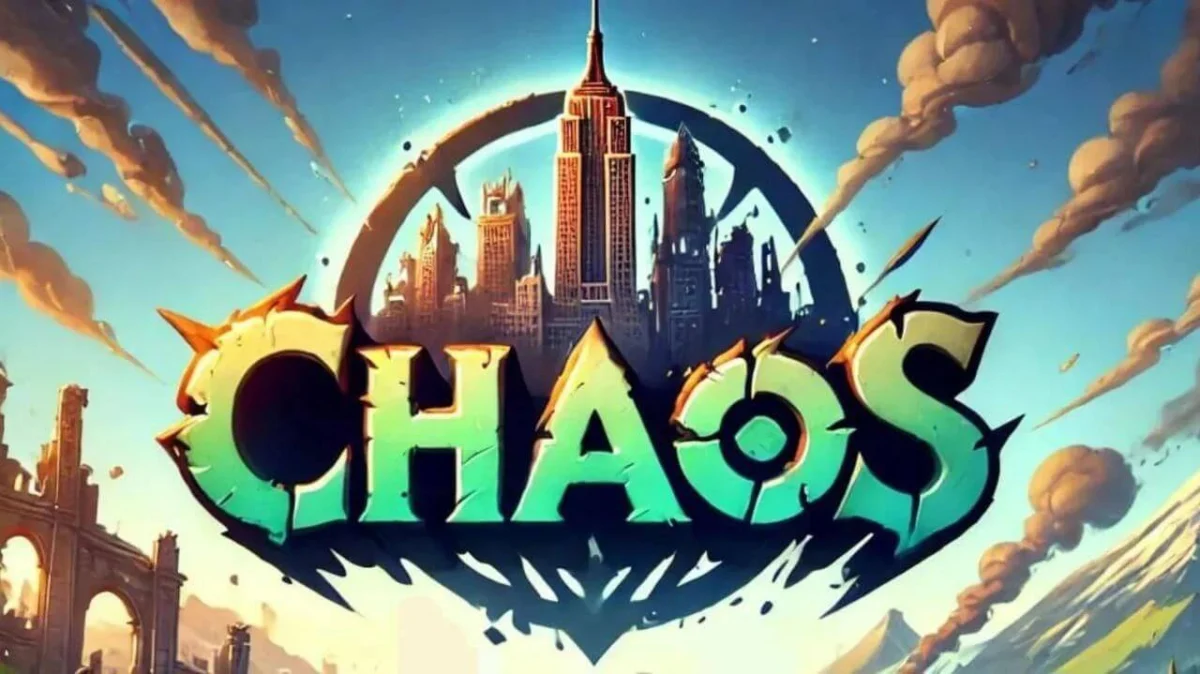
At its core, Chaos on the Chains is an open-world, play-to-earn mobile MMORPG underpinned by a multi-crypto chain economy. The game’s narrative premise centers around a cataclysmic event: a massive meteorite shatters the fabric of reality, fracturing time and space. This cosmic disaster merges distinct realms from ancient history, modern times, and far-flung futuristic planets into a single, cohesive, and chaotic multiplayer universe.
Players are thrust into this fractured landscape as commanders, strategists, and adventurers tasked with navigating, conquering, and surviving the mayhem. Key structural pillars of the project include:
- Real-World Integration (GPS & AR): Leveraging location-based technology, the game maps virtual territories directly onto real-world geography. Players can expand their empires, harvest resources, and engage in territorial disputes simply by walking through their actual neighborhoods.
- AI-Driven Inhabitants: Non-Player Characters (NPCs) are powered by advanced artificial intelligence, offering dynamic interactions, evolving quests, and unpredictable challenges that react to player choices.
- Play-to-Earn (P2E) Economy: Built upon a robust multi-crypto chain infrastructure, the game allows participants to trade assets, engage in strategic commerce, and earn verifiable rewards that hold real-world value.
- Multi-Era Hero Roster: The character roster spans a vast chronological spectrum, allowing users to command everything from historically inspired knights and mythological figures to futuristic cyberpunk warriors and interstellar mercenaries.
Chronology and Development: Three Years in the Making
The journey of Chaos on the Chains began three years ago, conceived by a team determined to solve one of mobile gaming’s persistent challenges: how to deliver PC-grade strategic depth and genuine technological innovation onto handheld screens without sacrificing performance or immersion.
Phase 1: Conceptualization and Technological Foundation (Years 1–2)
During the initial phases, the core architecture of the game was forged. Integrating simultaneous GPS mapping, AR rendering layers, and blockchain transaction handling presented significant engineering hurdles. The team opted for a stylized low-poly graphical approach, ensuring the application could run smoothly across a wide array of mobile devices while maintaining a visually distinct and appealing artistic direction. Concurrently, the multi-chain economic framework was designed to ensure seamless interoperability and scalability.
Phase 2: Internal Testing and Narrative World-Building (Year 3)
As the underlying tech stack matured, the focus shifted toward content generation and user experience. Writers and designers mapped out the multi-era lore, establishing seasonal arcs that would keep the universe dynamic. Developers also integrated interactive Easter eggs, including unexpected in-game appearances by members of the development team—and even the CEO—who occasionally manifest as dynamic adversaries within the open world.
Phase 3: The Home Stretch and Upcoming TGE (Current Phase)
Now entering the final months of production, the project has reached its most critical juncture. With the finish line clearly in sight, leadership has turned its focus outward, preparing for the official Token Generation Event (TGE). This upcoming milestone will open the ecosystem to early adopters, laying the groundwork for the game’s commercial and community-driven deployment later this year.
Supporting Data and Technical Architecture
The technical ambitions of Chaos on the Chains rely on a sophisticated synthesis of hardware capabilities and decentralized ledger systems.
Geolocation and Spatial Computing
Unlike traditional stationary MMORPGs that require players to remain glued to a desktop monitor or console, Chaos on the Chains utilizes the sensors native to modern smartphones. The GPS engine tracks movement with high fidelity, translating physical displacement into in-game exploration metrics. Meanwhile, AR overlays transform mundane urban environments into contested battlegrounds, displaying fortresses, resource nodes, and rival factions directly through the smartphone camera interface.
The Multi-Crypto Chain Economy
Web3 gaming has historically suffered from the limitations of single-chain congestion and volatility. To mitigate these risks, Chaos on the Chains incorporates a multi-crypto chain economy. This design allows for optimized transaction speeds, lower gas fees, and greater liquidity options for players who wish to buy, sell, or trade in-game assets, land deeds, and exclusive equipment. By decentralizing the economic layer, the game ensures true player ownership over virtual property.
Seasonal Content Delivery
To maintain long-term player engagement, the developers have structured the game around evolving seasonal narratives. Each new season introduces fresh story arcs, specialized quests, and time-limited events. This episodic delivery model ensures that the game world remains vibrant, offering continuous challenges for both stealth-oriented raiders and aggressive territorial conquerors.
Official Responses and Community Engagement
As anticipation builds for the forthcoming Token Generation Event, the team behind Chaos on the Chains has emphasized community involvement as a foundational pillar of their launch strategy.
Early community initiatives are designed to reward loyal supporters. Participants in the upcoming TGE will gain access to exclusive perks, including limited-edition in-game gear, priority queuing for future expansions, and a direct voice in community governance polls.
In official statements released via their digital channels, the development team highlighted their vision for the community:
"For three years, we have poured our passion into building a world where the past, present, and future collide. We are not just building a game; we are building a living ecosystem driven by our players. As we approach our Token Generation Event and final launch, we invite gaming enthusiasts and crypto pioneers alike to step outside, embrace the chaos, and help us shape the ultimate mobile MMORPG."
To foster transparency and maintain direct lines of communication with their expanding user base, the project maintains active official channels:
- Official Website: www.chaosonthechains.com
- X (formerly Twitter): @Chaos_on_X
- Telegram Community: t.me/chaosonthechains
Implications for the Mobile and Web3 Gaming Industries
The impending launch of Chaos on the Chains carries significant implications for both the traditional mobile gaming sector and the burgeoning Web3 ecosystem.
Bridging Web2 Habits with Web3 Ownership
One of the primary barriers to mainstream Web3 adoption has been the friction associated with blockchain wallets, complex onboarding processes, and speculative gameplay loops that often prioritize tokenomics over actual entertainment value. By leading with a genre-defining mobile MMORPG experience—complete with compelling strategy, immersive AR mechanics, and familiar touch-controls—Chaos on the Chains aims to attract traditional gamers first, seamlessly introducing decentralized ownership as an enhancement to gameplay rather than its sole purpose.
The Evolution of Location-Based Gaming
Since the mainstream breakthrough of location-based mobile titles like Pokémon GO, developers have continually sought ways to utilize GPS technology for deeper, more complex gameplay loops. Chaos on the Chains takes this concept several steps further by layering real-world territorial conquest, AI-driven encounters, and an open-ended multi-era narrative on top of geolocation tracking. If successful, this model could inspire a new wave of augmented reality MMORPGs that transform entire cities into persistent digital battlefields.
Economic Sustainability in Play-to-Earn
By implementing a multi-crypto chain economy designed to handle diverse in-game trades and asset exchanges, the project addresses liquidity and scalability concerns that have plagued earlier generations of play-to-earn titles. The success of this economic model will be closely monitored by economists and developers across the blockchain space as a potential blueprint for sustainable virtual economies.
Conclusion
As Chaos on the Chains enters the final stretch of its three-year development cycle, the stage is set for what could be a landmark release in modern mobile gaming. By fusing GPS, AR, AI, and blockchain technology into a cohesive, narrative-driven MMORPG, the team has crafted an experience that challenges the boundaries of where and how we play.
With the Token Generation Event on the horizon and the official launch slated for later this year, players around the globe are preparing to step out their front doors and into a reality reshaped by cosmic chaos. Whether they choose to form unbreakable alliances, master stealth raids, or conquer territorial empires head-on, early adopters stand ready to write the opening chapters of a brave new virtual world.
