

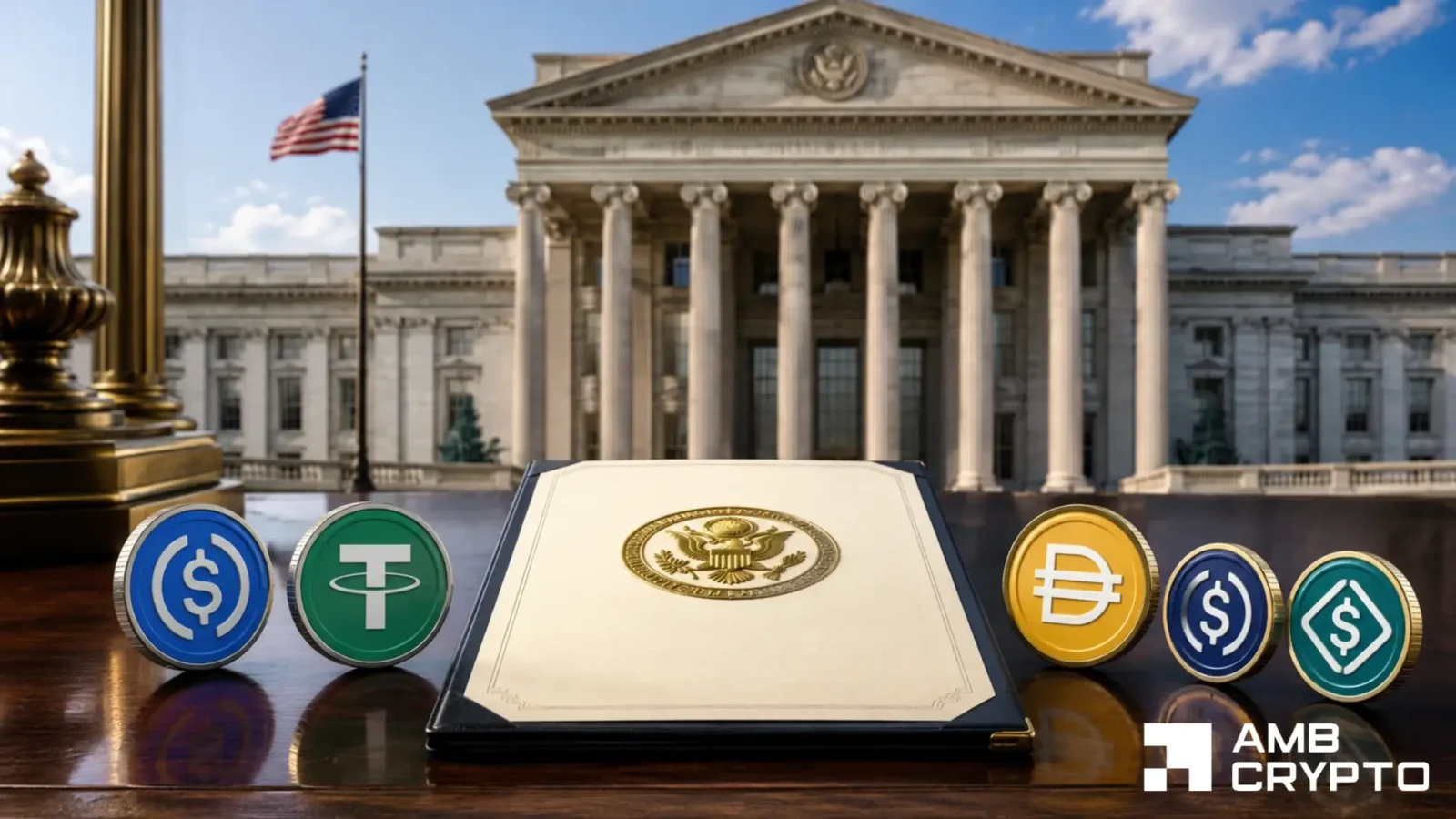
WASHINGTON — In a move that could fundamentally transform the global digital asset landscape, the United States Department of the Treasury has unveiled a comprehensive and aggressive regulatory proposal. The draft guidance sets out to strictly govern which stablecoins cryptocurrency exchanges can offer to American retail and institutional customers. By expanding the reach of domestic oversight to international issuers, the Treasury’s new framework seeks to close regulatory loopholes, protect the US financial system, and enforce strict compliance standards across both onshore and offshore digital currency operations.
The proposed rules operationalize key components of the legislative landmark known as the GENIUS Act. If finalized in its current form, the guidance will force foreign stablecoin issuers, domestic crypto exchanges, decentralized finance (DeFi) protocols, and global market makers to radically overhaul their compliance architectures, listing policies, and operational footprints.
Main Facts: The Scope and Mechanics of the Treasury’s Proposal
At its core, the Treasury’s new guidance establishes a rigorous compliance framework designed to govern any stablecoin transaction touching the US market. The proposal takes a remarkably broad view of what constitutes "issuance" or "offering" within the United States. Under the newly outlined parameters, a digital asset transaction falls under the purview of US rules simply if either the token issuer or the transaction recipient is physically or legally located in the United States.
This expansive definition effectively captures offshore stablecoin projects that historically operated outside the direct jurisdiction of American regulators. To maintain access to the lucrative US market, foreign stablecoin issuers will be forced to meet stringent operational demands or face a complete shut-off from American liquidity.
The Enforcement Mandate: Freezing, Seizing, and Burning
The most controversial and operationally demanding requirement targets the core mechanics of how foreign stablecoins manage their token supply. For an offshore issuer to be deemed compliant and eligible to serve American customers, it must demonstrate an uncompromised technological and legal capability to freeze, seize, or burn stablecoins upon receiving a valid US legal order.
Furthermore, issuers must be able to instantly halt the movement of tokens implicated in illicit finance, sanctions evasion, or court-ordered asset freezes. For many decentralized or algorithmically managed stablecoins, executing these functions on-chain may prove technically difficult or philosophically contradictory to their founding ethos.
The Burden of Proof Shifts to Exchanges
Crypto exchanges and digital asset service providers will no longer be permitted to blindly trust the attestations of foreign issuers regarding their compliance capabilities. Under the proposed framework, platforms must conduct independent, rigorous due diligence to verify that any stablecoin they list originates from an officially authorized issuer.
If an exchange lists an unauthorized token and helps facilitate its distribution to US buyers, the platform could face severe regulatory penalties. The Treasury has clarified that the definition of "offering" a stablecoin extends far beyond primary market sales. Advertising a stablecoin to American audiences, actively responding to purchase requests, facilitating order routing, and helping customers bypass geographic or location restrictions will all be legally classified as offering the asset within the US.
Most notably, the Treasury confirmed that token airdrops will count as issuance events, meaning that even free distributions of unauthorized tokens to US-based wallets will violate the proposed rules. However, the guidance carves out limited exemptions for peer-to-peer direct transfers between individuals, as well as specific transactions conducted via self-custody software and hardware wallets.
Alternative Pathways for Foreign Issuers
Recognizing the friction global compliance mandates might cause, the Treasury has provided a narrow alternative pathway for foreign companies. Offshore issuers may gain entry into the US market if the Treasury formally determines that their home jurisdiction’s regulatory regime is strictly comparable to American standards. Additionally, these qualifying foreign companies must register with the Office of the Comptroller of the Currency (OCC), binding them to direct federal supervision.
For foreign issuers that choose not to seek US market access, the compliance burden is inverted: they will be legally required to implement robust, geofencing and compliance controls to actively block their stablecoins from flowing into American user accounts or wallets.
Chronology: Implementation Timeline and Critical Deadlines
The rollout of the GENIUS Act and the Treasury’s accompanying guidance follows a carefully sequenced timeline, giving the crypto industry a multi-year runway to adapt, lobby, and restructure.
- Public Comment Period (Current Phase): Following the official publication of the proposal in the Federal Register, the Treasury has opened a standard 60-day window for public comments. Industry participants, legal scholars, consumer advocates, and crypto firms are currently scrambling to submit feedback, lobby for amendments, and highlight potential unintended consequences.
- January 18, 2027: The GENIUS Act is officially scheduled to enter into full force, establishing the statutory baseline for federal stablecoin oversight in the United States.
- July 18, 2028 (The Enforcement Cliff): Exactly eighteen months after the GENIUS Act takes effect, the grace period for crypto service providers expires. From this date forward, digital asset exchanges and market makers are strictly prohibited from offering US customers any stablecoins that are not issued by an officially authorized company.
This extended timeline acknowledges the immense technical complexity of building cross-border compliance bridges, but it also leaves zero room for ambiguity once the deadline arrives.
Supporting Data: The Stakes for the Global Stablecoin Market
To understand the weight of the Treasury’s proposal, one must examine the staggering macroeconomic footprint of stablecoins within the modern financial ecosystem.
- Market Capitalization: The global stablecoin market routinely hovers around $160 billion to $180 billion in total circulating supply, acting as the primary liquidity engine for decentralized finance (DeFi) and centralized crypto trading pairs alike.
- Daily Trading Volume: Stablecoins frequently record daily trading volumes that rival or exceed those of major traditional equities indices, processing trillions of dollars in transactional volume on an annual basis.
- Dollar Dominance: Over 99% of all stablecoins are pegged to the US dollar, effectively extending the geopolitical and monetary hegemony of the greenback into digital realms where traditional banking rails do not reach.
This deep integration into the global monetary system is precisely why the US Treasury views unregulated or uncooperative offshore stablecoins as a systemic vulnerability. By compelling foreign issuers to bow to American legal mechanisms—such as freezing and seizing assets—the US government is aggressively asserting its regulatory imperialism over borderless digital bearer assets.
Official Responses: Industry Pushback and Regulatory Defense
The release of the Treasury’s proposal has triggered immediate, impassioned reactions from across the financial and political spectrum.
The Crypto Industry and Compliance Advocates
Major centralized exchanges, blockchain analytics firms, and crypto advocacy groups are currently analyzing the text of the proposal. Representatives from prominent trading platforms have expressed grave concern over the burden of independent verification.
"Expecting exchanges to act as forensic auditors for every single foreign stablecoin listing places an impossible compliance burden on private-sector entities," noted a senior legal advisor at a prominent digital asset trade association. "If an offshore issuer maintains opaque governance structures, exchanges will simply delist the asset entirely rather than risk regulatory annihilation."
Furthermore, privacy advocates and developers working within the decentralized finance (DeFi) ecosystem have warned that mandates requiring a "freeze, burn, or seize" function are fundamentally incompatible with decentralized smart contracts. Because true DeFi protocols operate autonomously without an administrative back-door, complying with the Treasury’s freeze requirement could effectively outlaw decentralized stablecoins within US borders.
The Regulatory Perspective
Defending the proposal, Treasury officials and financial stability experts argue that the rules are vital for safeguarding consumers and preventing illicit finance. Lawmakers who championed the GENIUS Act have repeatedly emphasized that the explosive growth of stablecoins cannot be allowed to bypass anti-money laundering (AML) and counter-terrorist financing (CFT) laws.
"Stablecoins are digital dollars, and when they circulate globally, they carry the reputation and systemic risk of the United States financial system," a Treasury spokesperson stated following the announcement. "We cannot allow offshore entities to issue dollar-pegged instruments that remain immune to domestic law enforcement orders and judicial subpoenas."
Implications: A Fragmented Global Crypto Market?
The long-term implications of the Treasury’s proposed guidance are profound and far-reaching, threatening to permanently alter how digital assets trade around the globe.
1. The Great Delisting and Liquidity Squeeze
As the July 18, 2028 deadline approaches, international exchanges may find themselves forced to split their order books. To comply with US rules while servicing non-US clients, global exchanges could implement geofenced versions of their platforms, offering fully compliant, OCC-registered stablecoins to Americans while trading unauthorized or algorithmic stablecoins exclusively to international users. Alternatively, risk-averse exchanges may choose to completely purge non-compliant stablecoins from their global listings to avoid accidental US exposure.
2. Consolidation Around US-Compliant Issuers
The rules are expected to heavily favor well-capitalized, institutional-grade stablecoin issuers that already maintain transparent banking relationships and legal compliance teams in the United States—such as Circle (issuer of USDC). Conversely, offshore issuers that refuse to bow to US legal jurisdiction (most notably Tether, issuer of USDT, the world’s largest stablecoin) face a stark choice: restructure their operations to incorporate freeze functions and seek regulatory comparability, or risk being entirely walled off from the world’s largest capital market.
3. The Future of Decentralized Finance (DeFi)
Perhaps the most vulnerable sector is decentralized finance. If the Treasury’s interpretation stands, decentralized stablecoins that rely on over-collateralization rather than centralized administrator keys may become legally radioactive in the United States. This could accelerate a bifurcation in the crypto economy: an onshore, heavily regulated, permissioned stablecoin ecosystem operating in lockstep with traditional banking, versus an offshore, underground peer-to-peer crypto economy operating entirely outside the reach of Western regulators.
Outlook
With the 60-day public comment window now open, the digital asset industry has a narrow window to push for amendments, clarifications, and technical exemptions. However, the overarching direction is clear: the era of the wild-west stablecoin is rapidly drawing to a close. As the GENIUS Act implementation date of January 2017—and the subsequent enforcement cliff in 2028—looms closer, market participants must prepare for a deeply institutionalized, highly regulated future where the United States dollar digital coin answers directly to Washington.
