

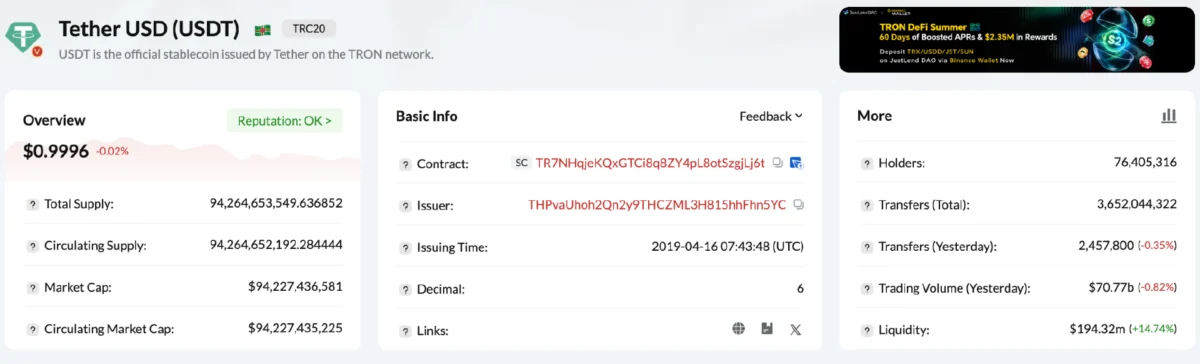
SINGAPORE — In an unprecedented display of hyper-growth, AI infrastructure platform B.AI has officially shattered industry adoption records, surging past a daily throughput of 1.51 trillion tokens just five months after its initial launch. The milestone marks a staggering 71,500-fold increase since the platform’s inception.
By achieving this milestone in roughly 100 days—a feat that took early aggregation pioneer OpenRouter nearly two years to accomplish—B.AI has firmly positioned itself between foundation models and autonomous AI agents. Co-incubated by TRON and YZi Labs, the platform is rapidly emerging as an undisputed leader in next-generation AI infrastructure, seamlessly integrating compute routing, decentralized settlement networks, and a full-stack agent runtime environment.
Main Facts: The Anatomy of B.AI’s Meteoric Rise
At its core, B.AI operates as a dual-engine ecosystem combining advanced compute distribution with decentralized financial settlement. Positioned squarely at the intersection of traditional Web2 infrastructure and the emerging Web3 agent economy, the platform addresses critical bottlenecks in modern artificial intelligence deployment.
Key Milestones and Metrics:
- Token Throughput: Exceeds 1.51 trillion tokens daily, representing a 71,500x-plus growth multiple from Day One.
- Speed-to-Scale: Achieved scale in approximately 100 days, compressing multi-year industry timelines.
- Model Integration: Bridges western frontier models (such as OpenAI’s GPT and Anthropic’s Claude) with high-efficiency Chinese Large Language Models (LLMs).
- Global Partnerships: Formalized strategic alignments with major Asian technology powerhouses, including Tencent, Alibaba, ByteDance, DeepSeek, Zhipu AI, Kimi, and MiniMax.
- Settlement Rail Integration: Deeply integrated with TRON, the world’s largest stablecoin transfer network, utilizing TRC-20 USDT liquidity rails.
Chronology: From Launch to Trillion-Token Infrastructure
The trajectory of B.AI highlights the blistering pace at which foundational AI plumbing is evolving to meet the demands of automated workflows.
- Inception and Day Zero: B.AI launched with a mission to solve global compute fragmentation, serving as an early-stage routing and aggregation node.
- The First 100 Days: Co-incubated by YZi Labs, B.AI deployed an aggressive expansion strategy. YZi Labs acted as a core distribution engine, continuously onboarding early-stage developer communities and crypto-native projects to seed initial traffic.
- The Chinese LLM Influx: Recognizing the macro-trend of high-performance, cost-effective Asian models (such as DeepSeek-V4-Flash, Qwen3.8-Flash, and GLM-5.3 Flash), B.AI integrated these systems alongside western alternatives. Through tiered API pricing models, limited-time free access, and aggressive developer incentives offering discounts of up to 90%, the platform catalyzed organic global adoption.
- The Settlement Breakthrough: Moving past basic routing, B.AI recognized that sustaining multi-trillion-token workloads required an automated financial backend. The platform rolled out a dual-track Web2/Web3 payment architecture.
- Present Day: With daily throughput breaching 1.51 trillion tokens, B.AI has graduated from a simple traffic conduit into a primary commercial facilitator for global artificial intelligence workloads.
Supporting Data: Capitalizing on the Chinese LLM Wave and Stablecoin Liquidity
The rapid scaling of B.AI is underpinned by profound macroeconomic shifts in both artificial intelligence development and digital finance.
The Cost-Performance Advantage
Over the past year, Chinese LLM developers have achieved performance benchmarks comparable to top-tier global models while slashing API execution costs to a fraction of traditional pricing. This unbeatable cost efficiency created an inevitable demand among global developers for seamless integration paths.
By partnering directly with industry leaders like DeepSeek, Alibaba (Qwen), Zhipu AI (GLM), and Moonshot AI (Kimi), B.AI positioned itself as the default global launchpad for these models. High-usage models like DeepSeek-V4-Flash, Qwen3.8-Flash, and GLM-5.3 Flash have driven the lion’s share of B.AI’s record-breaking throughput.
TRON Integration and Liquidity Rails
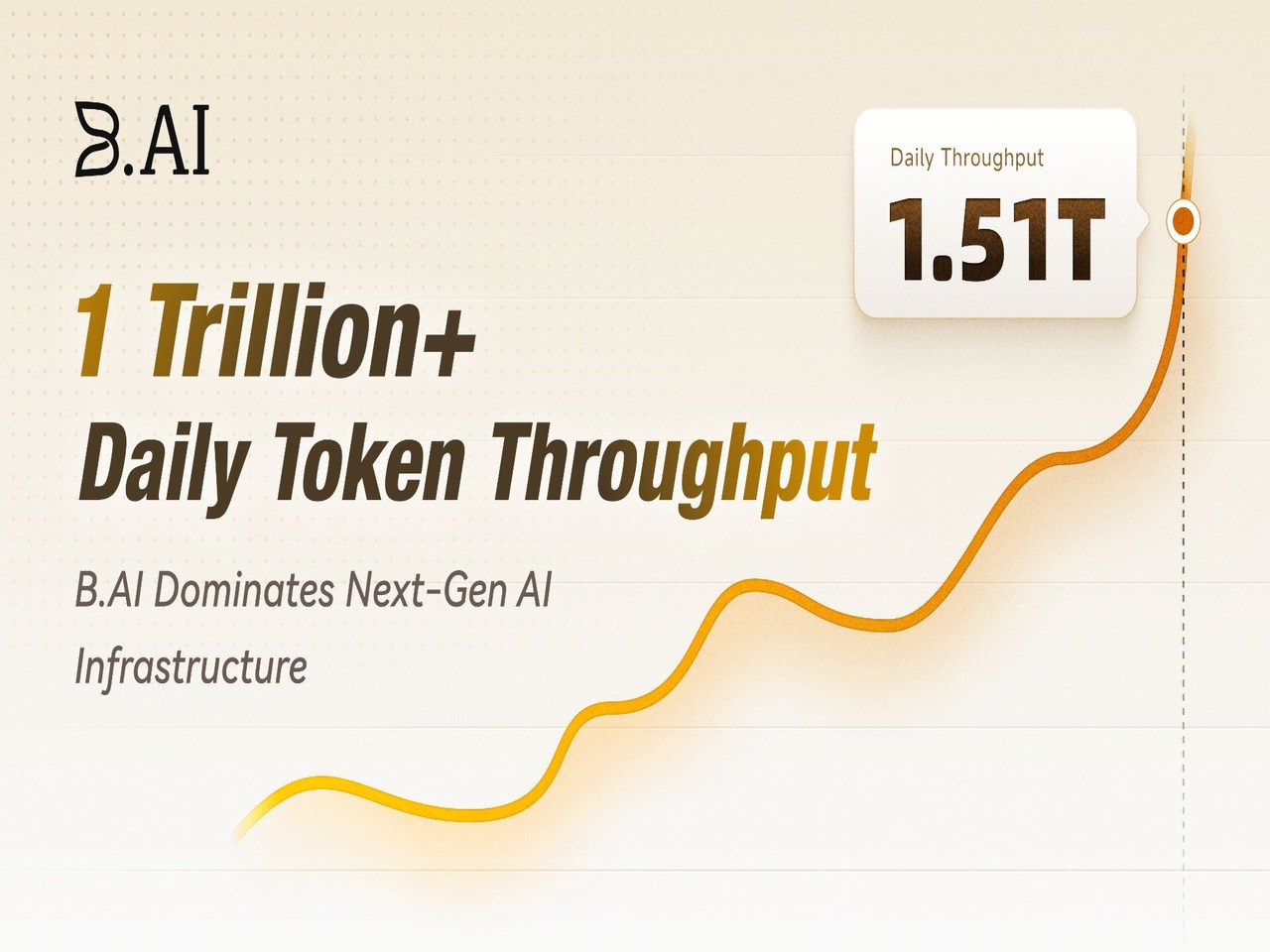
To handle high-frequency micro-transactions between autonomous software agents, B.AI integrated deeply with the TRON blockchain ecosystem. As of September, the total circulating supply of TRC-20 USDT surpassed 94.2 billion tokens, providing a battle-tested, high-liquidity financial layer.
By leveraging TRON’s minimal friction and massive stablecoin volume, B.AI provides cross-border compute scheduling and automated machine-to-machine micropayments with institutional-grade reliability.
Official Responses and Strategic Vision
Leadership behind the co-incubation and development of B.AI emphasize that reaching the trillion-token threshold is merely the starting point for a much larger architectural vision.

According to project representatives, the platform’s long-term value proposition extends far beyond intelligence distribution. Traditional API aggregators focus solely on input-output routing. B.AI, however, views the impending explosion of the agent economy as a multi-trillion-dollar paradigm shift requiring holistic, closed-loop engineering.
"Crossing into the trillion-token era is a new starting point," noted a spokesperson for the B.AI team. "As next-generation AI infrastructure, our core value extends beyond distributing intelligence to powering transactions. By establishing foundational standards for high-frequency agent collaboration, B.AI is reshaping the global flow of compute value."
Implications: Building the Closed-Loop Infrastructure for the Agent Economy
The broader implications of B.AI’s architecture point toward an autonomous, machine-driven commercial ecosystem. As AI transitions from static chat interfaces to proactive, multi-agent frameworks, traditional human-in-the-loop payment gateways become obsolete.
B.AI addresses this structural evolution through a comprehensive, full-stack runtime environment divided into three critical layers:
1. The Scheduling Layer
B.AI drives fine-grained compute allocation. Through its tiered API system, developers can seamlessly match specific business logic, latency requirements, and budget constraints with the most cost-effective and powerful underlying LLM compute resources available globally.

2. The Execution Layer
To empower AI agents to act autonomously across digital environments, B.AI equips them with native toolchains. Integrated systems such as Skills and Agent Wallet, alongside native AI assistants BAIclaw and BAI code, transform basic software scripts into fully functional digital workers capable of independent data acquisition, reasoning, and task execution.
3. The Protocol Layer
Perhaps its most profound strategic differentiator, B.AI establishes native transaction standards for Agent-to-Agent (A2A) commerce. By natively integrating the x402 payment protocol and the 8004 identity authentication protocol, the platform provides a standardized trust framework. This enables autonomous agents to verify identities, establish mutual trust, and execute high-frequency micro-settlements without human intervention.
Dual-Track Payment Architecture
Complementing its Web3 smart settlement network, B.AI maintains strict backward compatibility with legacy Web2 enterprise infrastructure. Developers and enterprise clients can leverage traditional payment gateways—including WeChat Pay, Alipay, UnionPay, and Visa—alongside decentralized stablecoin rails. This dual-track approach ensures frictionless capital flow across both traditional corporate workflows and decentralized agent networks.
Conclusion
By fusing perception, reasoning, action, and settlement into a single, cohesive stack, B.AI has transcended the traditional boundaries of AI middleware. As autonomous machine intelligence prepares to dominate enterprise operations and digital commerce, B.AI stands ready as the foundational clearinghouse and distribution engine for the agent economy.
Media Contact:
- Organization: B.AI Team
- Location: Singapore
- Email: [email protected]
- Website: b.ai
