

The world stands at the precipice of a seismic shift in global finance. As of today, September 7, 2021, El Salvador has officially entered the history books as the first nation to adopt Bitcoin as legal tender. This monumental experiment marks the first time a sovereign state has integrated a decentralized, digital asset into its national economy, challenging the century-long dominance of fiat currencies and traditional central banking.
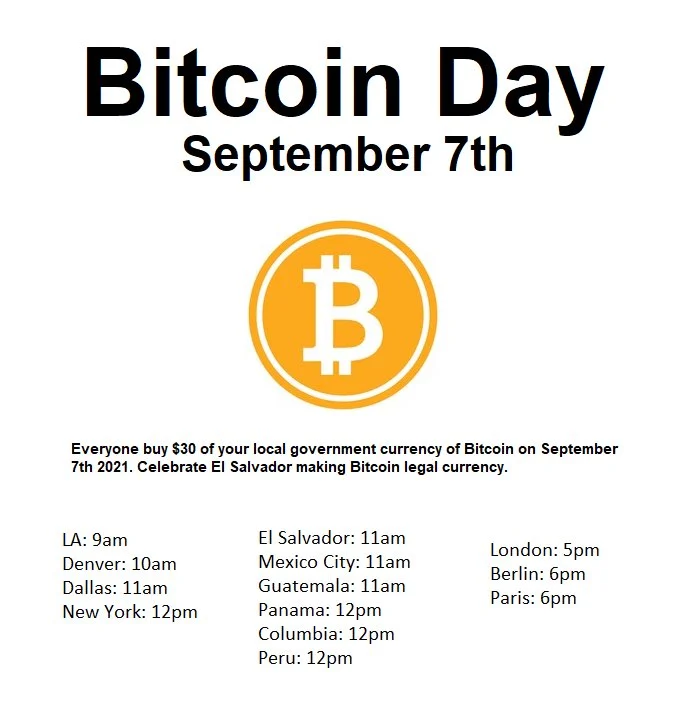
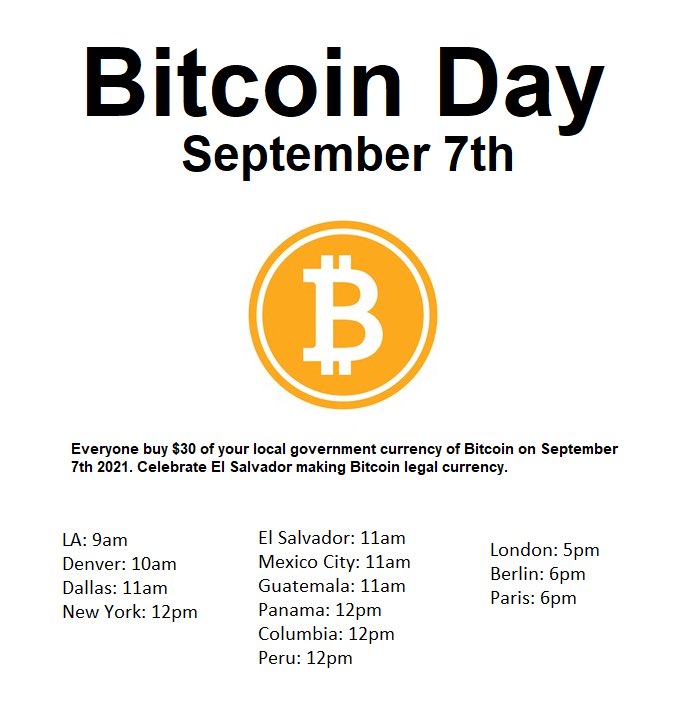
For the international Bitcoin community, this is not merely a policy change in a Central American nation; it is a validation of over a decade of ideological advocacy. In an act of grassroots solidarity, a viral movement has emerged, urging "Bitcoiners" worldwide to purchase $30 worth of the cryptocurrency today. While the amount is modest, the symbolic weight of this collective action is intended to signal global support for El Salvador’s bold monetary transition.
Chronology of a Grassroots Movement
The origins of this synchronized purchase were as decentralized as the currency itself. It began with a simple query on the Reddit community /r/Bitcoin, where a user posed the question: “So… We all buying $30 worth of Bitcoin on Tuesday?” The post, which quickly garnered 8.9K upvotes and over 2,200 comments, served as the spark for a global phenomenon.
The proposal was never designed to manipulate the market or trigger a "pump" of the asset’s price. Rather, it was framed as a gesture of camaraderie. As the movement migrated from Reddit to Twitter, it rapidly evolved, spawning a wave of creative memes, educational threads, and expressions of solidarity.
By the time the initiative reached the broader "Bitcoin Twitter" ecosystem, it had gained institutional recognition. High-profile figures, including MicroStrategy CEO Michael Saylor, amplified the message to their vast followings. The movement crossed linguistic and geographical boundaries, with Korean, Brazilian, and European communities joining the call to action, framing the purchase as a shared milestone in the history of decentralized finance.
The Economic Implications: Why $30?
The decision to set the purchase amount at $30 is strategic. It is low enough to be accessible to the average retail investor, ensuring that the movement remains inclusive rather than elitist. Yet, when multiplied by thousands—or potentially millions—of participants, the aggregate volume creates a visible, albeit decentralized, show of force.
Critics have naturally emerged, questioning the ethics of a coordinated purchase. Some voices within the crypto space have labeled the initiative "greasy," suggesting that such movements could be used to facilitate a "pump and dump" scheme. One skeptic remarked, "Letting retail buy exactly on the 70.2% retracement to dump on them, huh?"
However, proponents argue that the intent is purely symbolic. Unlike a hedge fund-led market manipulation, this movement is driven by individual conviction. The transparency of the Bitcoin blockchain ensures that any large-scale movements by institutional players like MicroStrategy will be visible to the public, providing a check against potential bad-faith actors.
Official Responses and Global Sentiments
The atmosphere surrounding the implementation of the Bitcoin Law has been a blend of intense optimism and cautious scrutiny. President Nayib Bukele, the primary architect of the initiative, has faced both praise for his forward-thinking approach and criticism from international institutions like the IMF and the World Bank.
Internationally, the sentiment is equally polarized. While the Bitcoin community views this as the "hardest money ever created" gaining sovereign legitimacy, traditional economists remain wary of the volatility associated with the asset. Nevertheless, the enthusiasm on the ground is palpable. The narrative of "financial inclusion" has resonated deeply with the unbanked populations of El Salvador, who stand to benefit from lower transaction costs and greater access to global markets.
Technical Context: Navigating Market Volatility
As the law goes into effect, all eyes remain fixed on the BTC/USD price charts. Technical analysts are closely monitoring how the market reacts to the influx of interest. While the "buy $30" movement is unlikely to cause a significant, long-term price shift on its own, it contributes to the broader narrative of Bitcoin’s maturity as a global reserve asset.
The historical significance of September 7, 2021, cannot be overstated. Regardless of the immediate price action, the infrastructure—the Chivo wallet, the national Bitcoin ATMs, and the legal framework—is now a reality. This shift forces a conversation about the nature of money that can no longer be ignored by central banks.
The Philosophical Underpinnings of the Rally
Beyond the economics, this event highlights the unique nature of the Bitcoin community. It is a group bound not by a central authority, but by a shared belief in the properties of sound money. As commentator Tomer Strolight noted, the phenomenon is unprecedented: “Have you ever felt such benevolence to strangers from different nations, religions and other affiliations as you do toward bitcoiners?”
This sense of global unity is what differentiates Bitcoin from traditional financial assets. The "plebs," as they call themselves, have demonstrated an ability to coordinate across borders, languages, and time zones to support a project they believe will improve the lives of Salvadorans.
Challenges and Future Outlook
Despite the celebration, the road ahead is fraught with challenges. The successful integration of Bitcoin into the Salvadoran economy requires widespread education, reliable internet infrastructure, and a seamless user experience. Furthermore, the volatility of the asset poses a risk for merchants and citizens accustomed to the stability of the US dollar.
However, the international support showcased today provides a buffer of sorts. By having a global community invested in the success of the project, El Salvador is not acting in isolation. The $30-purchase movement is a reflection of this symbiotic relationship—a promise that the global community is watching, participating, and rooting for the success of the world’s first "Bitcoin nation."
Conclusion: A Turning Point in Financial History
As we move into the hours following the enactment of the law, the global financial landscape looks fundamentally different than it did just yesterday. Whether the experiment in El Salvador succeeds in the long term remains to be seen, but the precedent has been set.
The "buy $30" movement, while appearing as a minor social media trend to the casual observer, is a historic marker. It represents a collective vote of confidence in a new, decentralized paradigm. Today is not just about the price of an asset; it is about the recognition of a new, digital frontier. As Michael Saylor and others continue to advocate for this transition, the world will be watching to see if El Salvador’s gamble becomes the blueprint for a new era of global monetary sovereignty.
The era of Bitcoin as legal tender has officially begun. The "plebs" have done their part; now, the world waits to see how this grand experiment unfolds in the real-world economy of El Salvador. Whether it leads to a new golden age of financial independence or serves as a cautionary tale remains the great question of our time. But for now, the community celebrates: the revolution is no longer just on a screen—it is in the streets of San Salvador.
