

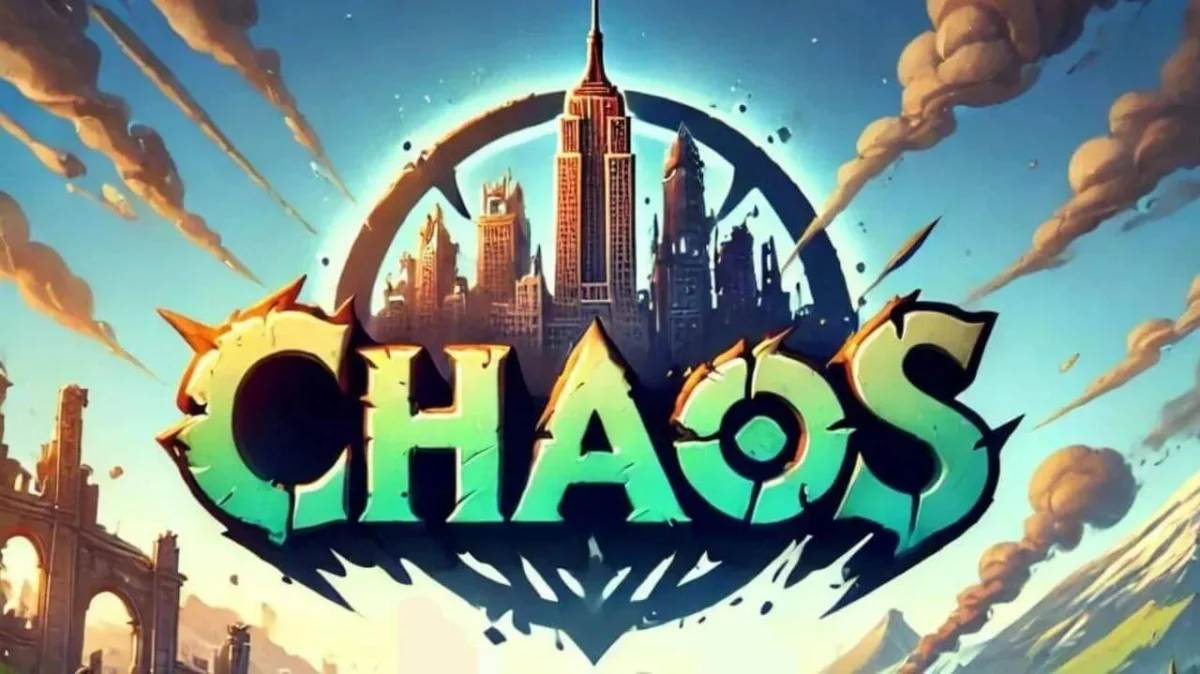
Introduction: The Convergence of Reality and Play-to-Earn Gaming
The mobile gaming landscape stands on the precipice of a profound technological shift. For the past three years, an ambitious development team has been quietly crafting an experience designed to redefine the boundaries of interactive entertainment. Entitled Chaos on the Chains, this upcoming play-to-earn mobile Massively Multiplayer Online Role-Playing Game (MMORPG) merges augmented reality (AR), artificial intelligence (AI), global positioning system (GPS) integration, and blockchain technology into a stylized low-poly virtual universe.
As the project enters its final stretch of development ahead of a highly anticipated launch this year, excitement within the Web3 and gaming communities is reaching a fever pitch. By anchoring virtual empires to physical geography, Chaos on the Chains invites players to step outside their front doors and conquer the very neighborhoods they inhabit. This deep dive explores the mechanics, narrative framework, economic ecosystem, and broader implications of a title poised to alter how humanity interacts with digital assets and physical spaces.
Main Facts: What is Chaos on the Chains?
At its core, Chaos on the Chains is a genre-defining mobile MMORPG that bridges strategy, adventure, and cutting-edge decentralized technology. Built to run seamlessly on smartphones, the game leverages modern hardware capabilities to deliver a persistent, location-based multiplayer world.
Key Pillars of the Ecosystem:
- Real-World Integration (GPS & AR): The game maps in-game territories onto real-world geography. Players expand their domains, gather resources, and engage in tactical skirmishes by physically moving through their local environments.
- Artificial Intelligence (AI): Non-Player Characters (NPCs) are governed by advanced AI frameworks, creating dynamic interactions, unpredictable encounters, and evolving storylines.
- Cross-Era Lore: The narrative kicks off after a cataclysmic meteorite shatters reality, merging disparate timelines, planets, and eras into a singular open world. Players can encounter figures ranging from ancient mythological knights to futuristic cyberpunk warriors.
- Play-to-Earn (P2E) Economy: Utilizing blockchain architecture, the game features a multi-crypto chain economy where strategic battles, resource trading, and territorial dominance yield tangible digital assets.
- Upcoming Token Generation Event (TGE): As development finalizes, the project is preparing its TGE, offering early adopters exclusive digital gear, priority access to future expansions, and a stake in the game’s foundational ecosystem.
Chronology: Three Years in the Making
The journey of Chaos on the Chains reflects the methodical pace required to build a complex, multi-layered ecosystem that marries decentralized finance (DeFi) with real-time geolocation gaming.
Phase 1: Conceptualization and Foundation (Years 1–2)
The project began quietly behind closed doors as a conceptual fusion of traditional strategic MMORPG mechanics and emerging location-based gaming models (popularized by titles like Pokémon GO, though with significantly deeper role-playing elements). During this foundational period, the core engine was designed to handle simultaneous inputs from GPS routing, AR rendering, and blockchain ledger verification without compromising battery life or mobile performance. The team established the overarching lore—centered around the reality-shattering meteorite—and began engineering the low-poly aesthetic that ensures smooth rendering across a wide array of mobile devices.
Phase 2: Refinement and AI Integration (Year 3)
As development progressed into its third year, the focus shifted toward expanding strategic depth and integrating advanced AI systems. Developers sought to move beyond static quests by introducing dynamic regional events and AI-driven adversaries that adapt to player strategies. Community building also took root during this phase, with early teasers shared across social media platforms to gauge interest and build an organic core user base.
Phase 3: The Final Stretch and Upcoming TGE (Present Day)
Currently, Chaos on the Chains has entered its home stretch. The final months of development are dedicated to rigorous testing, optimization, and preparing for the Token Generation Event (TGE). This phase marks the transition from closed development to public engagement, welcoming global gaming enthusiasts into the fold ahead of the official launch.
Supporting Data & Technological Framework
Building an MMORPG that relies on concurrent GPS tracking, AR overlays, and decentralized asset management presents unique engineering challenges. Chaos on the Chains addresses these hurdles through a multi-faceted technological architecture.
The Multi-Crypto Chain Economy
Unlike single-chain games that often suffer from liquidity bottlenecks or high network congestion, Chaos on the Chains operates across a multi-crypto chain economy. This design allows players to trade resources, weapons, and land parcels efficiently, utilizing optimal chains for specific transaction types. The economy is driven by player actions: successful invasions, resource extraction, and diplomatic alliances directly influence supply, demand, and token utility within the marketplace.
Immersive AI and Developer Encounters
The integration of AI extends beyond standard combat mechanics. NPCs possess behavioral loops that react to player dominance in specific regional sectors. Furthermore, the development team has introduced a unique interactive element: surprise in-game appearances by the creators and even the CEO. Players traversing their local parks or city streets might unexpectedly find themselves locked in a showdown not just against a historically inspired knight or an AI boss, but against the very individuals who coded the game.
Seasonal Narrative Arcs
To prevent stagnation, the game utilizes a seasonal update model. Each new season introduces fresh story arcs, expanded map zones, quests, and community-wide events. This ensures that whether a player prefers stealthy, calculated raids or direct, full-scale territorial invasions, the open-world meta continuously evolves.
Official Responses and Community Engagement
As the project ramps up toward its Token Generation Event, the team behind Chaos on the Chains has emphasized community inclusivity as a primary driver for success.
"For the past three years, we have poured our passion into building a world where the boundaries between the digital and the physical dissolve," representatives for the project noted in recent statements. "We aren’t just launching a game; we are inviting our community to become co-creators of a sprawling narrative where past, present, and future collide."
Early adopters who participate in the upcoming TGE will receive distinct advantages, including:
- Exclusive Gear: Limited-edition weapons, armor, and cosmetic items unavailable through standard gameplay.
- Priority Access: Early entry into subsequent map expansions, beta tests, and special regional events.
- Governance and Utility: Direct integration into the game’s multi-chain economic framework, allowing holders to influence future updates and ecosystem growth.
For those wishing to participate in the TGE and track the final development milestones, the team maintains active channels across official platforms:
- Official Website: www.chaosonthechains.com
- X (formerly Twitter): @Chaos_on_X
- Telegram Community: t.me/chaosonthechains
Implications: The Future of Location-Based Web3 Gaming
The impending launch of Chaos on the Chains carries significant implications for both the mobile gaming industry and the broader Web3 ecosystem.
Blurring the Lines Between Virtual and Physical Realities
By leveraging GPS and AR, location-based games transform mundane physical environments into interactive playgrounds. While titles like Ingress and Pokémon GO proved the viability of walking-based exploration, Chaos on the Chains introduces high-stakes territorial warfare and persistent economic consequences. Players are no longer just collecting digital monsters; they are fighting for real-estate dominance in their hometowns, turning local landmarks into strategic strongholds.
Maturation of Play-to-Earn Economics
The P2E sector has faced considerable scrutiny in the past due to unsustainable tokenomics and gameplay loops that prioritized financial extraction over genuine entertainment. By focusing first on deep strategic MMORPG mechanics—compelling combat, multi-era lore, seasonal progression, and engaging AI—Chaos on the Chains attempts to reverse this paradigm. Here, economic incentives serve to enhance a fundamentally robust gaming experience rather than act as its sole selling point.
Mainstream Accessibility via Mobile Devices
By restricting hardware requirements to standard mobile smartphones rather than expensive PC setups or dedicated VR headsets, the developers ensure a low barrier to entry. Anyone with a phone and a data connection can step outside and join the fray. This accessibility could serve as a powerful onboarding funnel for traditional gamers curious about blockchain technology, demonstrating the utility of decentralized assets in an organic, entertaining context.
Conclusion
As Chaos on the Chains enters the home stretch of its development cycle, it stands as a testament to ambition in modern software engineering. By fusing the timeless appeal of MMORPG strategy with the modern interactivity of AR, AI, GPS, and blockchain, the project offers a compelling glimpse into the future of interactive entertainment.
Whether players are looking to forge unbreakable alliances, test their tactical prowess against dynamic AI adversaries, or stake a claim in a multi-crypto chain economy, the chaos is fast approaching. With the Token Generation Event on the horizon, the invitation is clear: step outside, explore the unknown, and prepare to become a legend before the rest of the world catches on.
