

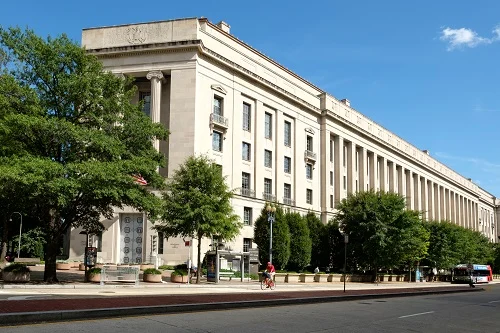
The legal trajectory of Sam Bankman-Fried, the once-celebrated founder of the collapsed cryptocurrency exchange FTX, has reached a critical inflection point. With his landmark criminal trial scheduled to commence in October, the U.S. Department of Justice (DOJ) has formally petitioned the court to revoke Bankman-Fried’s bail and remand him into custody. The move follows a series of escalating allegations that the former billionaire has repeatedly engaged in witness tampering, effectively jeopardizing the integrity of his upcoming judicial proceedings.
The Core Allegation: Witness Tampering and Strategic Leaks
The DOJ’s request for detention, presented during a high-stakes hearing on July 26, is rooted in the contention that Bankman-Fried’s behavior has crossed the line from defense preparation into active obstruction of justice. Prosecutors argue that the defendant has systematically violated court-mandated conditions of release, specifically regarding his interactions with prospective witnesses.
The catalyst for this latest development was the unauthorized disclosure of private diary entries belonging to Caroline Ellison, the former CEO of Alameda Research and Bankman-Fried’s one-time romantic partner. The DOJ alleges that Bankman-Fried provided these deeply personal documents to the New York Times in a calculated effort to discredit Ellison, who has already entered a plea deal and is expected to serve as a primary witness for the prosecution.
By leaking materials that paint Ellison in a negative light, prosecutors argue that Bankman-Fried is not merely exercising his First Amendment rights, but is actively attempting to influence public opinion and, potentially, the jury pool. The DOJ has explicitly stated that, regardless of the release conditions imposed, they have lost faith in the defendant’s ability to adhere to the law, asserting that he will continue to interfere with witnesses if allowed to remain free on bail.
A Chronology of the FTX Collapse and Legal Fallout
To understand the severity of the current situation, it is necessary to contextualize the timeline of events that led to the downfall of the "crypto king."
- November 2022: FTX, once valued at $32 billion, files for Chapter 11 bankruptcy protection following a liquidity crisis that revealed a massive shortfall in customer funds. The collapse sends shockwaves through the global digital asset markets.
- December 2022: Bankman-Fried is arrested in the Bahamas at the request of U.S. authorities. He is subsequently extradited to the United States.
- December 2022: Upon his arrival in New York, Bankman-Fried is released on a $250 million personal recognizance bond—one of the largest in U.S. history—under strict house arrest at his parents’ residence in Palo Alto, California.
- Early 2023: The discovery process begins. Prosecutors and defense counsel trade arguments regarding the scope of information disclosure, while Bankman-Fried maintains an active, and often controversial, public profile via social media and blog posts.
- July 2023: The DOJ alleges that Bankman-Fried leaked private documents to the media. This triggers the current motion for detention, bringing the prospect of pre-trial incarceration to the forefront of the legal battle.
Official Responses and Judicial Stance
During the July 26 hearing, the atmosphere in the courtroom of Judge Lewis Kaplan of the Southern District of New York was notably tense. The defense team, led by Mark Cohen, vehemently opposed the DOJ’s request for detention. Their argument rests on the practical necessity of Bankman-Fried being free to assist in the massive undertaking of his own defense. They contend that the complexity of the FTX case, which involves millions of pages of discovery, requires the defendant to have unfettered access to his legal team and digital records—an environment that would be severely restricted within the confines of a correctional facility.
Judge Kaplan, while not immediately granting the government’s request to revoke bail, issued a stern and unmistakable warning to the defendant. Addressing Bankman-Fried directly, the judge emphasized the gravity of the situation, urging him to "take this seriously."
Rather than opting for immediate incarceration, the court has initiated a path toward a restrictive "gag order." Both the defense and the prosecution have been tasked with crafting a set of limitations on Bankman-Fried’s ability to communicate with the press and the public. This order is expected to be finalized by August 3, potentially curbing the defendant’s ability to make extrajudicial statements that could prejudice the jury.
Implications for the Upcoming Trial
The implications of this development are twofold: legal and strategic.
The Legal Tightrope
If the court ultimately decides to detain Bankman-Fried, it would serve as a profound signal that the judiciary has exhausted its patience with his perceived "extrajudicial" tactics. For the defense, detention would create an enormous logistical hurdle, as preparing for a trial of this magnitude requires constant coordination that is exponentially more difficult from within a jail cell.
The Jury Pool and Public Perception
The DOJ is hyper-sensitive to the impact of media coverage on the jury. In a case as high-profile as the FTX collapse, finding an impartial jury is already a significant challenge. By leaking documents that attack the credibility of his own former colleagues, Bankman-Fried is creating a narrative in the public sphere that may be impossible for the jury to ignore. The prosecution’s argument—that such leaks are a form of witness intimidation—is a direct challenge to the fairness of the trial process.
The Broader Impact on the Crypto Industry
The case of United States v. Bankman-Fried has become the de facto trial for the cryptocurrency industry at large. The collapse of FTX exposed systemic failures in transparency, risk management, and regulatory compliance. If the defendant is found guilty, it will likely serve as a turning point for the sector, emboldening regulators like the SEC and the CFTC to adopt a much stricter posture toward digital asset exchanges.
Moreover, the behavior of Bankman-Fried—who has historically been a vocal proponent of "effective altruism" and a frequent visitor to Washington, D.C. to lobby for favorable regulation—has now become a cautionary tale. The shift from his status as a "white knight" of the industry to a defendant accused of witness tampering illustrates the volatile nature of the crypto sector’s rapid expansion.
Conclusion: A High-Stakes Legal Drama
As the October trial date approaches, the courtroom has become a theater of intense legal warfare. The DOJ’s motion to detain Bankman-Fried is a testament to the prosecution’s commitment to ensuring that the trial proceeds without outside interference. Whether the judge decides to impose stricter bail conditions, a comprehensive gag order, or full detention, one thing is clear: Sam Bankman-Fried’s ability to control his own narrative is rapidly evaporating.
For the legal community, the outcome of this dispute will set a precedent for how high-profile white-collar defendants are handled when they engage with the media during the discovery phase. For the public and investors who lost billions in the FTX collapse, the proceedings are a necessary step toward accountability. As the deadline for the proposed gag order arrives on August 3, the world will be watching to see if the court’s warning to the former CEO was enough to change his behavior, or if the doors of the Metropolitan Detention Center are about to swing open.
The trial of Sam Bankman-Fried is no longer just about the fraud charges; it is a battle over the sanctity of the judicial process itself. As the prosecution and defense prepare for the October showdown, the focus remains firmly on whether the rule of law can withstand the maneuvers of a defendant who has shown a consistent tendency to disregard the boundaries set by the court.
