

Introduction: A Pivotal Step for Fintech and Digital Assets
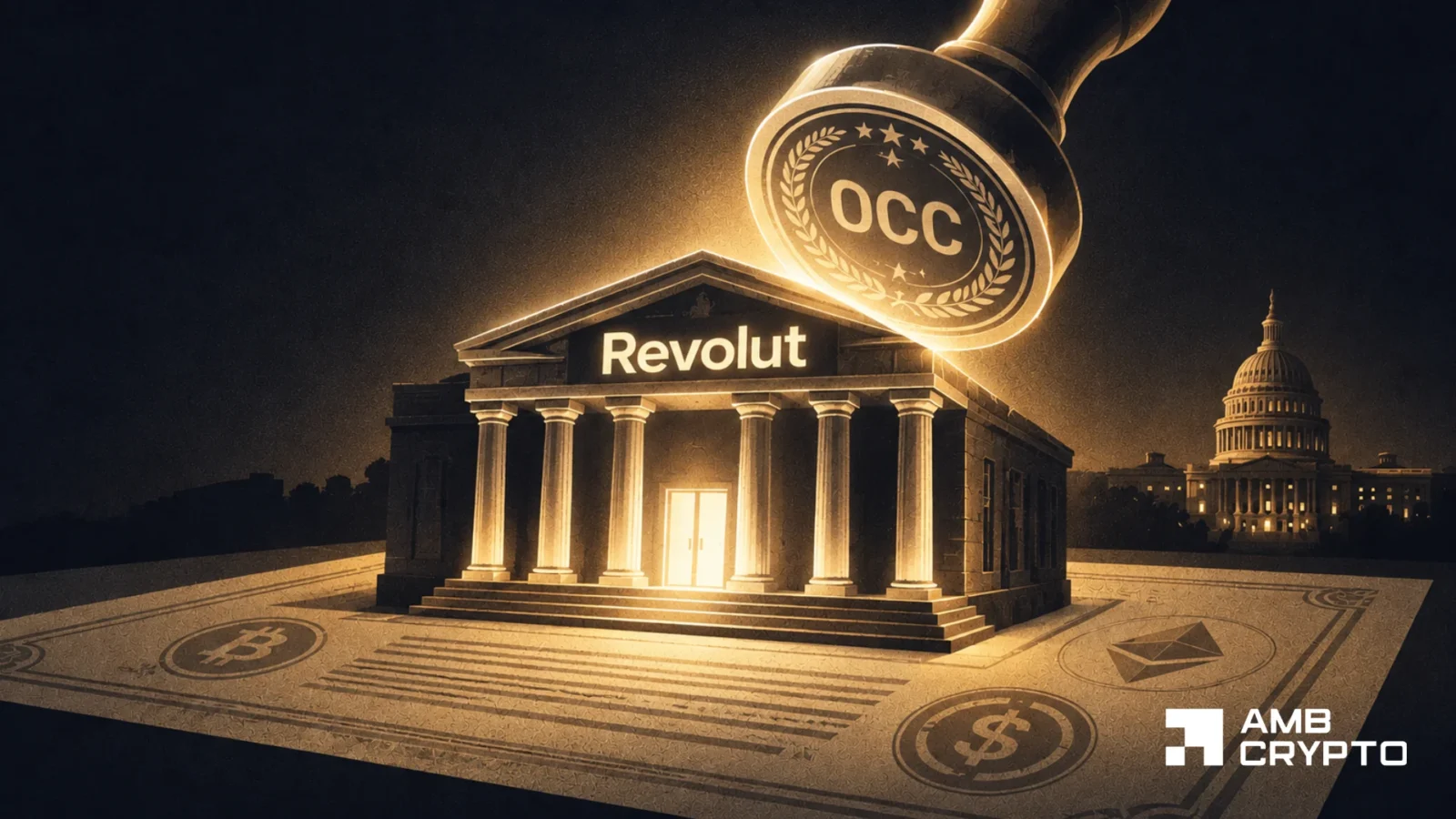
In a landmark regulatory development that bridges traditional finance and the digital asset economy, the Office of the Comptroller of the Currency (OCC) has granted Revolut a preliminary green light to establish a national bank in the United States. This crucial milestone paves the way for the prominent fintech giant to construct and operate its own proprietary banking infrastructure directly under U.S. federal banking supervision.
While the announcement does not yet constitute final authorization to commence commercial banking operations, it marks a monumental leap forward in Revolut’s strategic expansion. If successfully navigated through the remainder of the regulatory labyrinth, this charter will allow the London-headquartered company to bypass intermediary partner banks, offering its vast suite of financial services directly to American consumers under its own institutional umbrella.
Beyond Revolut’s immediate corporate ambitions, the decision carries profound implications for the broader cryptocurrency landscape. As financial regulators navigate the delicate balance between innovation and systemic risk, the inclusion of fintechs with digital asset operations—such as Revolut and its recently introduced euro-backed stablecoin, EURR—signals a shifting paradigm in American monetary oversight. However, this regulatory thaw occurs against a complex backdrop of legislative delays, political scrutiny, and a rapidly evolving global crypto market capitalization currently hovering around $2.8 trillion.
Main Facts: The Scope of Revolut’s U.S. Banking Bid
The core of the recent regulatory announcement centers on Revolut’s application for a national bank charter overseen by the OCC.
- The OCC Decision: The OCC has issued a conditional preliminary approval for Revolut to establish a national bank. This designation is designed to allow financial technology firms to integrate directly into the federal banking architecture, subjecting them to rigorous federal oversight regarding capital adequacy, consumer protection, and anti-money laundering (AML) protocols.
- Remaining Hurdles: Crucially, conditional approval is not a blank check. Revolut must still fulfill a rigorous checklist of OCC conditions. Furthermore, the firm must secure independent green lights from both the Federal Deposit Insurance Corporation (FDIC) to ensure deposit insurance and the Federal Reserve to establish holding company oversight.
- Strategic Intent: Establishing "Revolut Bank US" represents a cornerstone of the company’s global growth strategy. By operating as a federally chartered bank, Revolut aims to eliminate the friction points inherent in "Banking-as-a-Service" (BaaS) partnerships, offering high-yield savings accounts, loans, and integrated payment solutions at a lower cost and with greater reliability.
Chronology: The Path to Federal Oversight
To understand the significance of Revolut’s recent regulatory breakthrough, it is necessary to examine the timeline of fintech-to-bank integration in the United States over recent years.
The Evolution of Fintech Charters (2020–2024)
Over the past several years, the OCC has faced mounting pressure to establish a predictable, transparent pathway for technology-driven financial platforms to access the federal banking system. Historically, fintechs relied on state-level money transmitter licenses and partnerships with traditional chartered banks to offer services like debit cards and deposit accounts.
However, vulnerabilities in these partner-bank relationships—highlighted by several high-profile fintech-bank disruptions—exposed the fragility of the BaaS model. In response, digital asset firms and advanced fintechs began actively pursuing direct federal charters.
The Recent Wave of National Trust Bank Approvals
Revolut’s conditional nod does not happen in a vacuum. Over the past twelve months, the OCC has systematically processed and conditionally approved national trust bank charters for a roster of major digital asset and crypto-native entities. Notable firms that have traversed similar regulatory checkpoints include:
- Coinbase: Securing conditional approval to deepen its integration into the regulated financial infrastructure.
- Paxos & BitGo: Gaining institutional validation for digital asset custody and settlement operations.
- Ripple: Navigating the trust bank framework despite ongoing friction with traditional banking lobbies.
- Circle: Achieving final OCC approval for its national trust bank framework designed to fortify the infrastructure underpinning USD Coin (USDC).
The Revolut Breakthrough
Revolut’s entry into this elite group emphasizes its evolution from a simple cross-border payment app into a comprehensive financial services ecosystem. While trust bank charters limit institutions primarily to fiduciary and custody services, Revolut’s ambition for a full national bank charter aims to unlock retail deposit-taking and lending capabilities across the United States.
Supporting Data: Market Dynamics and Stablecoin Integration
The intersection of Revolut’s regulatory progress and its cryptocurrency initiatives introduces fascinating dynamics into the global financial markets.
The Launch of EURR and Market Reception
Revolut recently expanded its digital asset footprint by launching its proprietary euro-backed stablecoin, EURR. Designed to facilitate seamless, low-cost cross-border settlements and foreign exchange transactions, EURR represents Revolut’s aggressive push into tokenized finance.
However, the stablecoin has generated mixed reactions across the financial and crypto analytic communities. While proponents praise the initiative for bringing institutional credibility and mainstream utility to euro-denominated digital assets, critics have debated consumer demand, questioning whether retail users outside the Eurozone possess an appetite for euro-pegged tokens or if they are effectively being funneled into using them by the platform. Despite these debates, analysts generally agree that Revolut’s integration of stablecoin technology alongside a federally supervised banking infrastructure creates a powerful synergy that could accelerate digital asset adoption.
Broader Macroeconomic and Crypto Market Health
The regulatory developments coincide with a robust recovery in the broader cryptocurrency market. Over a recent 24-hour window, the global cryptocurrency market capitalization experienced a surge of over 4%, propelling total market value to approximately $2.8 trillion. This resurgence in valuation reflects renewed institutional confidence and suggests that macroeconomic headwinds may be easing, potentially setting the stage for favorable market conditions moving into the final quarters of the fiscal year.
Official Responses and Stakeholder Perspectives
The debate surrounding the integration of fintech, crypto, and traditional banking has drawn sharp commentary from industry leaders, regulators, and political figures alike.
Revolut’s Leadership Perspective
Celebrating the regulatory milestone, Revolut Founder and CEO Nik Storonsky emphasized the monumental scale of the opportunity in a formal statement:
"Conditional OCC approval is an important first step towards establishing the proposed Revolut Bank US. It gives us the foundation to build in the world’s largest financial market and bring the full Revolut experience to millions of Americans."
Storonsky’s remarks underscore the company’s long-term vision: transforming from a European challenger bank into a dominant global financial institution capable of competing directly with legacy Wall Street titans on their home turf.
The Regulatory Philosophy: OCC Chief Jonathan Gould
The OCC’s willingness to embrace fintech and digital asset innovators is largely anchored in a shifting institutional philosophy spearheaded by OCC officials. OCC Chief Jonathan Gould has emerged as a vocal proponent of creating clear, legally sound pathways for digital asset firms to enter the federal banking system.
Articulating the rationale behind these regulatory approvals, Gould noted:
"That is why entities that engage in activities involving digital assets and other novel technologies should have a pathway to become federally supervised banks if they so desire and if they meet the requirements to receive an OCC charter."
Gould’s stance highlights a pragmatic regulatory approach: rather than driving crypto and novel financial technologies offshore or into unregulated shadows, the OCC seeks to bring them inside the regulatory perimeter where systemic risks can be monitored, mitigated, and controlled.
The Controversy Surrounding Political and Novel Charters
Not all recent OCC approvals have been met with universal applause. While mainstream fintechs like Revolut and Coinbase have largely navigated standard bureaucratic evaluations, the conditional green light given to World Liberty Financial—a decentralized finance project associated with Donald Trump—sparked intense public debate and raised concerns regarding potential conflicts of interest and the politicalization of financial regulation. These controversies illustrate the tightrope federal regulators must walk to ensure fair, non-partisan application of banking laws in an era of intense political polarization.
Implications: Regulatory Hurdles and Future Outlook
As Revolut and other digital asset pioneers celebrate their regulatory milestones, significant structural and legislative hurdles remain on the horizon.
Legislative Stagnation: The CLARITY Act Delay
The progress of crypto-focused banking integration is unfolding against a backdrop of legislative uncertainty in Washington. The highly anticipated CLARITY Act—a piece of legislation designed to establish comprehensive market structure rules for digital assets and clarify the jurisdiction of the Securities and Exchange Commission (SEC) versus the Commodity Futures Trading Corporation (CFTC)—has faced repeated setbacks.
Initially slated for advancement in August, the bill’s timeline was pushed to September 15th. Compounding the delay, the U.S. House of Representatives subsequently canceled significant portions of its September voting calendar. This legislative backtracking leaves lawmakers with an extraordinarily narrow window to debate, draft, and pass comprehensive cryptocurrency legislation before the upcoming midterm elections. Without statutory clarity from Congress, the regulatory landscape will likely remain heavily dependent on administrative agency enforcement and charter approvals rather than codified federal law.
Looking Ahead to Q4 and Beyond
Despite legislative delays in Washington, the momentum within the private sector suggests that the convergence of banking and cryptocurrency is irreversible. For Revolut, satisfying the stringent demands of the FDIC and the Federal Reserve will be the definitive test of its institutional maturity over the coming months.
If Revolut successfully clears these final regulatory checkpoints, the launch of Revolut Bank US could serve as a watershed moment. It would validate a new operational model where technology-first platforms seamlessly merge traditional banking services with native digital asset infrastructure. For the broader $2.8 trillion crypto market, such developments signal a maturation of the ecosystem—transforming fringe digital currencies into foundational pillars of the modern, federally supervised global financial architecture.
