

By Global Crypto Desk
Published: August 2026
Main Facts
The landscape of cryptocurrency market liquidity is undergoing a profound structural shift. Recent on-chain data reveals that aggregate stablecoin reserves across centralized exchanges (CEXs) have experienced a sharp contraction, tumbling from approximately $80 billion down to $64 billion. This 20% decline has severely limited the amount of "dry powder" readily available on centralized order books for spot-market buying compared to the market peaks of late 2025.
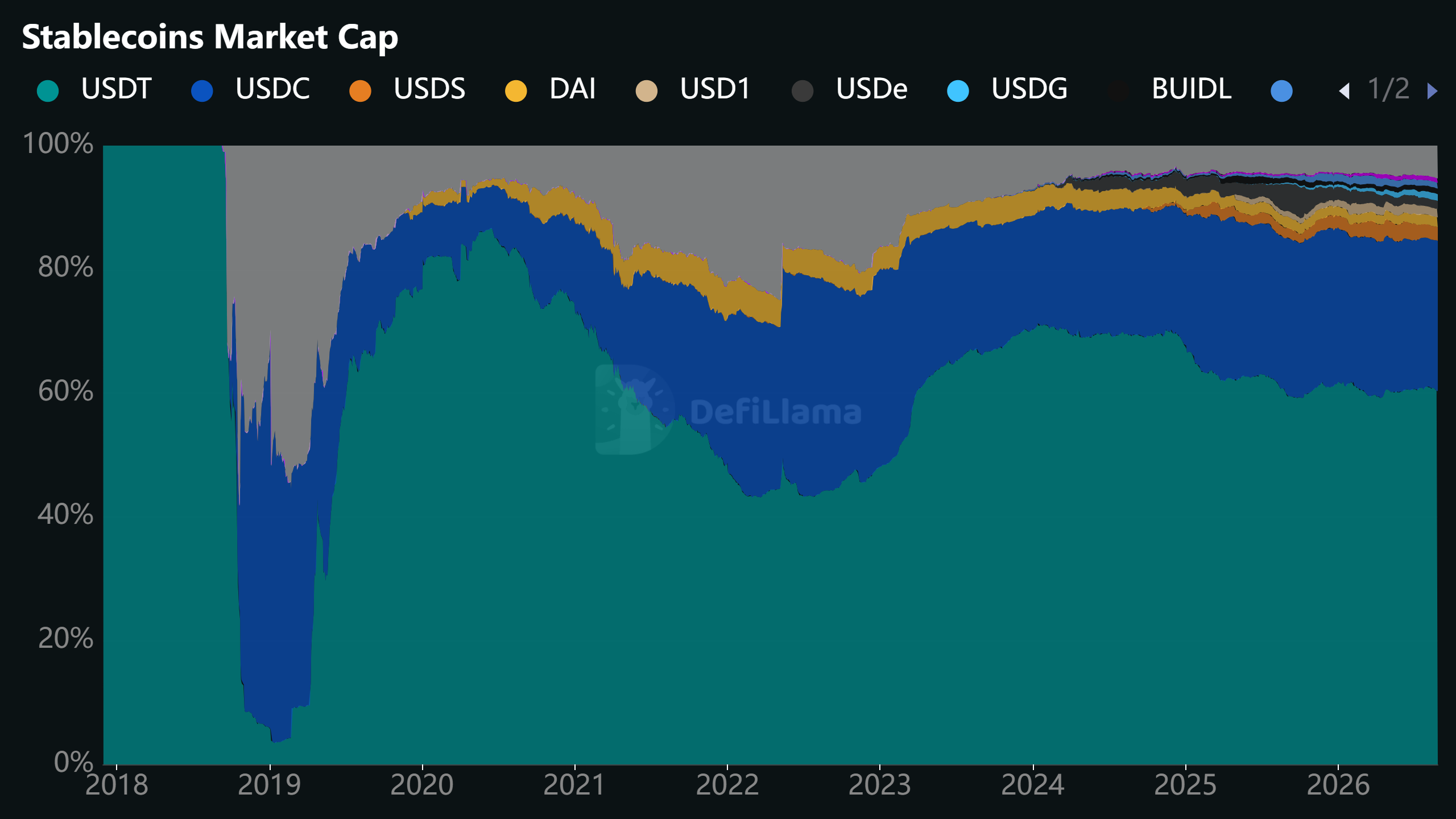
However, this decline does not signify a systemic loss of stablecoin capital worldwide. On the contrary, the broader circulating supply of stablecoins has climbed to historic highs, averaging around $310 billion according to metrics from DeFiLlama. This stark divergence highlights a growing chasm between macro ecosystem liquidity—anchored by decentralized finance (DeFi), self-custody wallets, global payments, and cross-border settlements—and the immediate, tradeable liquidity sitting on centralized trading platforms.
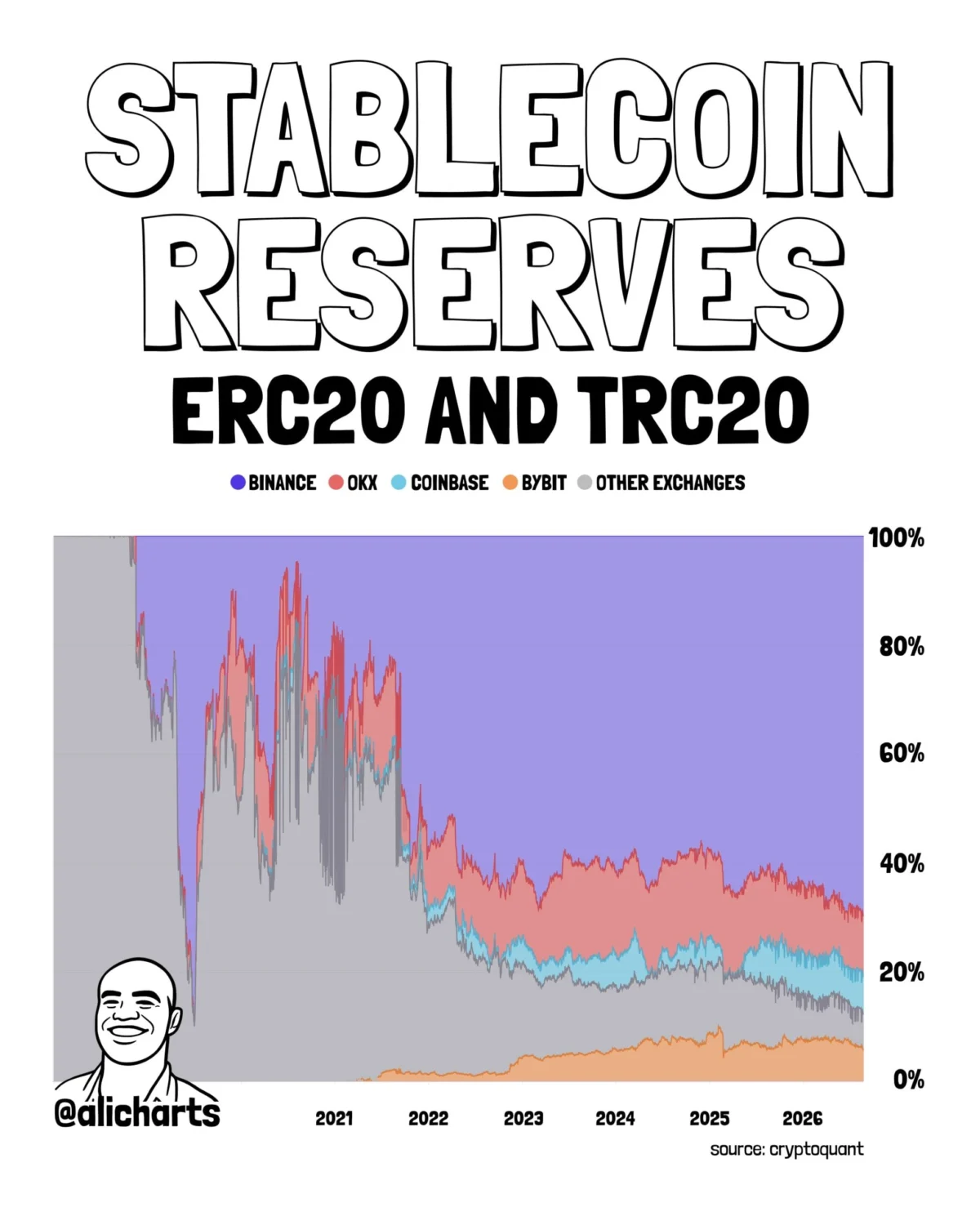
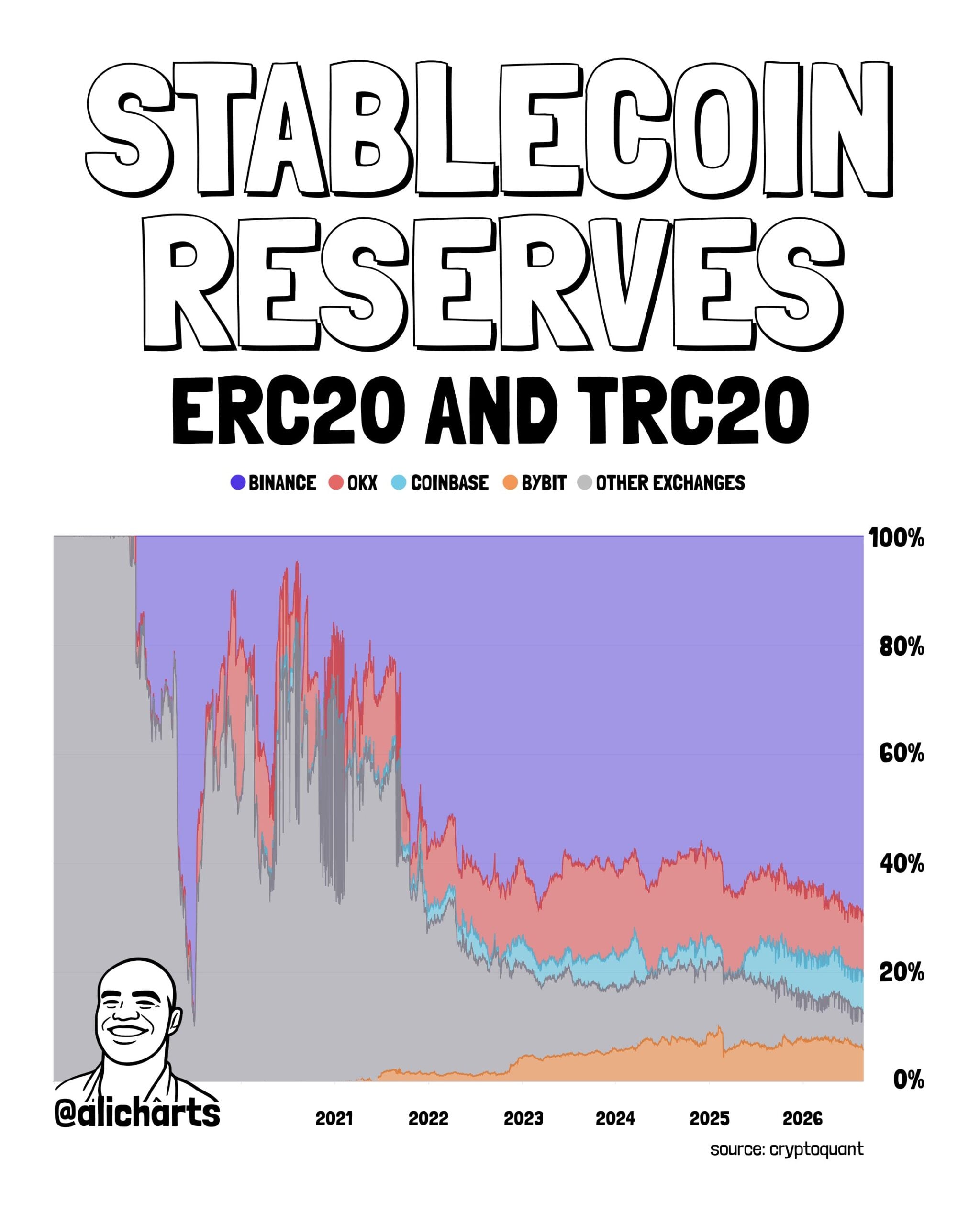
Within the centralized exchange ecosystem, market concentration has intensified dramatically. Binance, the world’s leading digital asset exchange by volume, has expanded its dominance, growing its share of total exchange-held stablecoin reserves from nearly 60% to an overwhelming 68.5%. While Binance commands a greater slice of a shrinking pie, its overall purchasing power remains largely range-bound due to shifting asset compositions rather than net capital inflows.
Chronology and Context: The Evolution of Market Liquidity
To understand the current state of crypto liquidity, analysts must trace the trajectory of stablecoin distribution from the exuberant peaks of late 2025 into the nuanced market environment of mid-2026.

The Late 2025 Highs
During the late 2025 market highs, centralized exchanges enjoyed robust, easily accessible stablecoin reserves hovering near the $80 billion mark. Traders and institutional funds parked vast amounts of capital directly on platforms like Binance, OKX, Coinbase, and Bybit to execute rapid, high-volume spot-market transactions. Order books were deep, slippage was low, and market participants could deploy capital at a moment’s notice.
The Q1–Q2 2026 Divergence
As the market transitioned into 2026, a subtle but decisive migration of capital began. Rather than depositing fresh capital onto centralized order books, investors increasingly routed stablecoin allocations toward self-custody solutions, yield-generating DeFi protocols, and decentralized applications (dApps). By mid-2026, total stablecoin capitalization ballooned to an unprecedented $310 billion, anchored primarily by Tether (USDT)—which commands roughly $183 billion—and USD Coin (USDC), which sits comfortably between $73 billion and $74 billion. Together, these two market leaders account for a staggering 83% of the entire stablecoin market.
Concurrently, exchange-held reserves dwindled to $64 billion, stripping centralized venues of roughly one-fifth of their immediate purchasing power. Instead of a uniform reduction across all platforms, capital concentrated heavily around market leaders, enabling Binance to absorb a larger percentage of the diminishing exchange supply even as its absolute fiat-equivalent reserves remained relatively flat.
Supporting Data: Dissecting the Numbers
A granular look at the data provided by platforms such as DeFiLlama and CryptoQuant illuminates the mechanics behind this liquidity contraction.
The Macro Stablecoin Breakdown
- Total Stablecoin Supply: Averaging ~$310 billion ecosystem-wide.
- Exchange-Held Reserves: Down to $64 billion (a 20% drop from the $80 billion peak).
- Market Dominance: Tether (USDT) represents ~$183 billion (~59%), while USD Coin (USDC) captures ~$73–$74 billion (~24%), leaving all other stablecoins to divide the remaining 17%.
Binance’s Micro-Dynamics
Despite commanding 68.5% of total exchange reserves—up from nearly 60%—Binance’s internal metrics reveal that its actual buying power has remained restrained:
- Average Monthly Reserve Value: Approximately $42.92 billion.
- Monthly Growth Rate: A marginal 0.44% increase per month, indicating that stablecoin flows are currently not injecting substantial new purchasing power into the venue.
- Cross-Chain Migration: Daily USDC inflows rose to $125.4 million, though these gains primarily reflected internal reserve rebalancing rather than fresh capital injections. Similarly, blockchain-specific flows highlighted a geographic rotation of funds: $929 million of USDT entered Binance via the TRON (TRX) network, while $765 million departed via Ethereum (ETH).
- USDC Supply Ratio: Recovered to 0.0986, yet it remains noticeably below its six-month average of 0.1128.
According to quantitative analysts, for Binance to break out of this liquidity consolidation phase and spark a new wave of aggressive spot accumulation, total reserves would need to scale toward $81.17 billion, accompanied by a sustained recovery of the USDC supply ratio above its historical moving average.
Official Responses and Market Expert Perspectives
Industry leaders, quantitative researchers, and on-chain analysts have weighed in heavily on the implications of these shifting liquidity metrics.
Market strategists emphasize that traditional metrics tracking exchange balances can no longer be viewed in isolation. In past market cycles, a drop in exchange reserves was universally interpreted as a bearish signal indicating capital flight from the crypto economy altogether. In 2026, however, the narrative has fundamentally changed.
"We are witnessing a structural maturation of the stablecoin economy," noted a prominent digital asset market structure researcher. "Capital leaving centralized exchanges is not exiting the asset class; rather, it is being put to work on-chain. Whether it is backing decentralized perpetual protocols, serving as collateral in lending markets, or facilitating cross-border trade settlements, stablecoins are increasingly fulfilling their utility as programmable money rather than sitting idle on order books."
Simultaneously, exchange executives and liquidity providers acknowledge the growing consolidation of centralized trading power. With Binance controlling over two-thirds of all exchange-held stablecoins, smaller and mid-tier centralized venues face a severe liquidity deficit. This disparity forces market makers to optimize their capital allocation strategies, frequently routing inventory to Binance to capture the deepest order books and tightest spreads.
Implications for Traders and Market Participants
The divergence between broader crypto ecosystem liquidity and centralized exchange dry powder carries profound implications for day traders, institutional funds, and long-term investors alike.
1. Heightened Sensitivity to Exchange Netflows
Because immediate, tradeable liquidity on centralized exchanges has shrunk by 20%, market volatility can amplify rapidly on relatively modest trade volumes. Without deep order books acting as a shock absorber, large spot market orders can trigger accelerated price movements. Consequently, traders must monitor centralized exchange netflows—particularly on Binance—as the primary leading indicator for imminent spot-market volatility. Rising stablecoin deposits signal that capital is moving closer to execution, whereas sustained outflows point toward continued range-bound or defensive market conditions.
2. The Monopoly of Market Control
With Binance holding 68.5% of exchange-held reserves, the platform exercises unprecedented authority over which stablecoin liquidity pools remain deployable to the broader market. Traders operating across multiple centralized venues must recognize that liquidity is no longer evenly distributed. Secondary exchanges may experience acute liquidity crunches, leading to wider bid-ask spreads and execution slippage during high-stress market events.
3. Ecosystem vs. Tradable Liquidity Distinction
Market participants must separate ecosystem health from exchange liquidity. The fact that total stablecoin capitalization sits at a robust $310 billion proves that underlying demand for digital dollars remains exceptionally strong. However, until a significant portion of that on-chain capital migrates back onto centralized order books—or until Binance’s reserves cross critical thresholds like the $48 billion mark—spot-buying momentum may face structural headwinds.
Conclusion
The crypto market of 2026 is defined by a paradox: a record-breaking $310 billion stablecoin supply coexisting with a 20% contraction in exchange-held trading capital. As self-custody and decentralized applications absorb the lion’s share of digital dollar adoption, centralized venues find themselves operating with leaner reserves. For market participants navigating this environment, tracking the micro-movements of Binance’s stablecoin flows and monitoring exchange netflows will remain the definitive edge in anticipating the next major wave of market liquidity deployment.
