

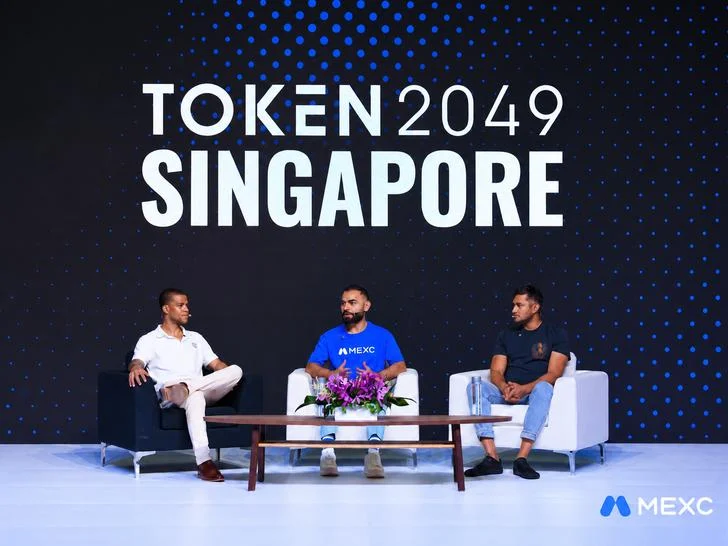
October 9, 2026 — As the boundaries between decentralized innovation and established financial systems continue to blur, industry leaders are looking toward a more unified global financial ecosystem. At the recent TOKEN2049 conference in Singapore, executives from two of the digital asset industry’s most prominent entities—MEXC, a pioneer in zero-fee digital asset trading, and Payward, the parent company of cryptocurrency exchange Kraken—took center stage to discuss the ongoing convergence of cryptocurrency and traditional finance (TradFi).
The high-profile panel featured MEXC CEO Vugar Usi Zade and Payward Co-CEO Arjun Sethi. Together, they explored how broader market access, shifting retail investor demands, and strategic cross-platform collaborations are set to reshape the future of global trading over the next decade.
Main Facts: Bridging the Gap Between Two Financial Worlds
The dialogue at TOKEN2049 underscored a fundamental shift in how global markets operate. For decades, traditional finance has relied on rigid, siloed infrastructure defined by localized clearinghouses, strict banking hours, and fragmented asset classes. Meanwhile, the cryptocurrency industry pioneered an always-on, borderless financial architecture.
Today, these two distinct systems are no longer developing in isolation. Key takeaways from the discussion include:
- The Rise of Always-On Markets: Blockchain infrastructure is dismantling the limitations of traditional trading hours, creating an environment where users demand uninterrupted access to multi-asset portfolios.
- Retail-Driven Evolution: Both leaders agreed that retail investors—seeking lower barriers to entry, superior liquidity, and instantaneous execution—will serve as the primary catalyst for the integration of crypto and TradFi.
- Strategic Synergy over Hostile Competition: Rather than engaging in zero-sum competition, major platforms are recognizing the value of leveraging each other’s geographical strengths, regulatory compliance frameworks, and technological capabilities.
- Foundational Pillars: Trust, transparency, and seamless infrastructure were identified as the absolute prerequisites for scaling future financial platforms to a global audience.
Chronology: The Path to Institutional and Retail Convergence
To understand the weight of the statements made at TOKEN2049 Singapore, it is helpful to examine the timeline of events leading up to this pivotal discussion.
2018–2020: The Foundation of Modern Crypto Exchanges
The foundation for today’s multi-asset platforms was laid during the late 2010s. MEXC was founded in 2018 with a vision to build a user-centric, high-performance trading gateway. During this period, cryptocurrency exchanges operated largely on the periphery of traditional financial markets, focusing primarily on native digital assets, spot trading, and nascent derivatives markets.
2021–2023: The Institutional Awakening and Regulatory Realignment
As digital assets gained mainstream traction, institutional heavyweights and established fintech companies began building bridges into the crypto sector. Payward (Kraken) expanded its regulatory footprint globally, while retail-focused platforms optimized their back-end infrastructure to handle massive spikes in volume. The demand for tokenized stocks, real-world assets (RWAs), and continuous liquidity began to push exchanges to expand their product offerings beyond simple crypto-to-crypto pairs.
2024–2025: The Rise of Zero-Fee Trading and Cross-Asset Demand
As market competition intensified, platforms like MEXC disrupted traditional fee structures by introducing zero-fee digital asset trading. This democratization of access dramatically accelerated retail participation. Concurrently, traditional financial institutions began experimenting with tokenization, blockchain-based settlement, and round-the-clock trading products, setting the stage for direct integration.
October 2026: TOKEN2049 Singapore and the Vision for Unified Finance
At TOKEN2049 Singapore, MEXC and Payward moved past theoretical discussions to signal active exploration of broader collaboration. By highlighting infrastructure, market access, and global distribution as shared goals, both companies framed the next five years as an era of profound integration between crypto rails and traditional financial instruments.
Supporting Data: The Mechanics of Modern Multi-Asset Trading
The push toward a unified financial ecosystem is supported by evolving metrics in global liquidity, user demographics, and technological capability.
1. The Multi-Asset User Base
Modern retail investors are no longer content with single-asset portfolios. Data from global trading platforms indicates that users increasingly expect to manage cryptocurrencies, equities, derivatives, and tokenized traditional assets from a single account. MEXC, for instance, currently serves users across more than 170 global markets, processing high-frequency trades with deep liquidity across both native crypto products and TradFi-linked opportunities.
2. Infrastructure and Collateral Mobility
As Arjun Sethi pointed out during the panel, 24/7 trading is not merely a matter of keeping server lights on; it is fundamentally an engineering challenge regarding collateral mobility. In a unified financial system, liquidity must be able to flow instantly across borders, asset classes, and regulatory jurisdictions without friction.
3. The Economics of Zero-Fee Environments
Platforms that have adopted zero-fee models—such as MEXC—have fundamentally altered retail behavior. By removing transaction friction, traders can execute strategies faster and capitalize on market volatility without seeing their returns eroded by overhead costs. This model has proven crucial in capturing retail demand and driving high-volume liquidity into newly launched digital assets and tokenized instruments.
Official Responses: Insights from Vugar Usi Zade and Arjun Sethi
The panel provided profound insights into the corporate philosophies driving both MEXC and Payward.
Vugar Usi Zade, CEO of MEXC
Vugar Usi Zade emphasized that the next half-decade will witness the emergence of a singular, highly efficient trading environment driven almost entirely by retail preferences.
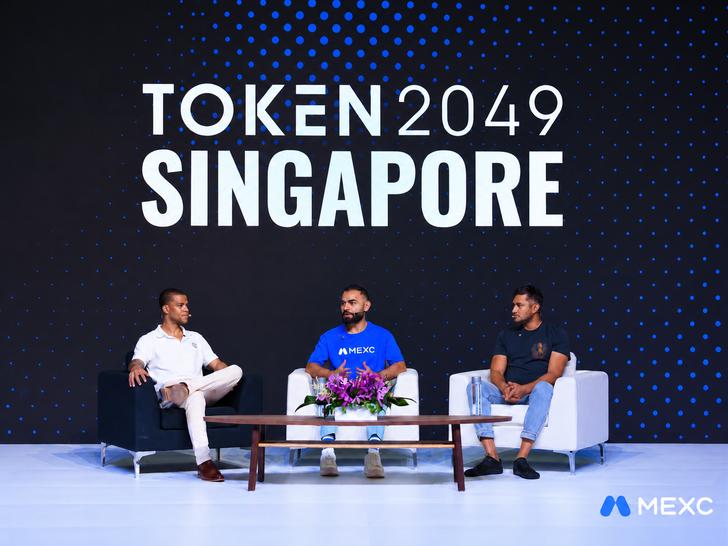
"Over the next five years, we’ll see a convergence toward a singular platform where asset classes and investments can move quickly and smoothly," stated Vugar. "Retail will be the main driver."
Furthermore, Vugar underscored that the foundational elements of this new financial era must be rooted in unwavering reliability and user empowerment:
"Trust and access are two of the most critical elements in building future financial platforms. Our commitment at MEXC has always been to remove barriers, providing users with a zero-fee gateway to infinite opportunities where they can discover earlier and trade freely."
Arjun Sethi, Co-CEO of Payward (Kraken)
Arjun Sethi focused heavily on the structural and operational realities of scaling global financial networks. He noted that the sheer complexity of serving a worldwide audience precludes any single entity from attempting to dominate every regional market alone.
"24/7 trading really means: how do you bring all that collateral into one place?" Arjun noted, highlighting the technical hurdles of cross-market liquidity.
On the necessity of strategic alliances, Arjun explicitly acknowledged the importance of working alongside industry leaders like MEXC:
"The only way to do that is to partner with folks, including MEXC, to be able to help succeed in their core markets. Transparency and connectivity will dictate which platforms thrive as the industry evolves."
Implications: What the Convergence Means for the Future of Finance
The growing alignment between cryptocurrency giants and traditional finance stakeholders carries massive implications for traders, regulators, and fintech developers alike.
1. For Retail Traders
The merging of crypto and TradFi promises unprecedented convenience. Retail investors will likely see the total elimination of artificial barriers between traditional brokerages and digital asset exchanges. Managing equities, foreign exchange, commodities, and digital tokens within a unified dashboard will transition from a futuristic concept to an everyday reality.
2. For Global Exchanges
The era of isolated, highly competitive silos is giving way to an ecosystem built on interoperability and strategic partnerships. As demonstrated by the dialogue between MEXC and Payward, future market leaders will combine localized retail dominance, deep perpetual liquidity, and zero-fee structures with institutional-grade compliance and global financial infrastructure.
3. For Traditional Financial Institutions
Wall Street and legacy banking institutions can no longer ignore the efficiency of blockchain rails. The demand for 24/7 continuous settlement and tokenized collateral will force traditional players to adopt decentralized infrastructure or risk obsolescence. Collaborations between crypto-native innovators and legacy financial giants will serve as the primary bridge for this transition.
About MEXC
Founded in 2018, MEXC is a leading global multi-asset trading platform built as your 0-fee gateway to infinite opportunities. Serving users across more than 170 markets, MEXC provides simple and efficient access to cryptocurrencies, stocks, tokenized assets, derivatives, and a rapidly expanding suite of TradFi-linked investment opportunities through a single unified account.
Driven by zero trading fees, deep market liquidity, comprehensive asset coverage, and a high-performance trading engine, MEXC empowers retail users to discover emerging opportunities earlier, execute trades faster, and operate with minimal friction. As cryptocurrency and traditional finance continue their historic convergence, MEXC remains dedicated to making global financial markets universally accessible, helping users trade freely and maximize every market opportunity.
- Official Website: mexc.com
- X (Twitter): @MEXC
- Telegram: MEXCEnglish
- Guide: How to Sign Up on MEXC
- Media Inquiries: [email protected]
Risk Disclaimer: This content is for informational purposes only and does not constitute financial or investment advice. Given the inherent volatility of financial markets—including digital assets, tokenized securities, and traditional financial products—investors should thoroughly assess prevailing market conditions, underlying asset fundamentals, and their own risk tolerance before executing any trades or making investment decisions.
