

The cryptocurrency landscape has witnessed a seismic shift over the past week, with Ethereum (ETH) reclaiming its position as a dominant market force. After a period of consolidation, the world’s leading smart-contract platform has experienced one of its most aggressive rallies of the year, surging by more than 42% in just seven days. This momentum has propelled the asset beyond the critical $2,600 psychological threshold, signaling a potential shift in long-term market sentiment.
The catalysts for this resurgence are multifaceted, ranging from technical advancements within the network to massive institutional capital inflows. As Ethereum solidifies its infrastructure, emerging projects are leveraging its enhanced capabilities to bridge the gap between traditional meme culture and advanced artificial intelligence. Among these, the "Mind of Pepe" (MIND) project has emerged as a focal point for investors looking to capitalize on the synergy between blockchain scalability and AI-driven market intelligence.
Main Facts: The Ethereum Renaissance
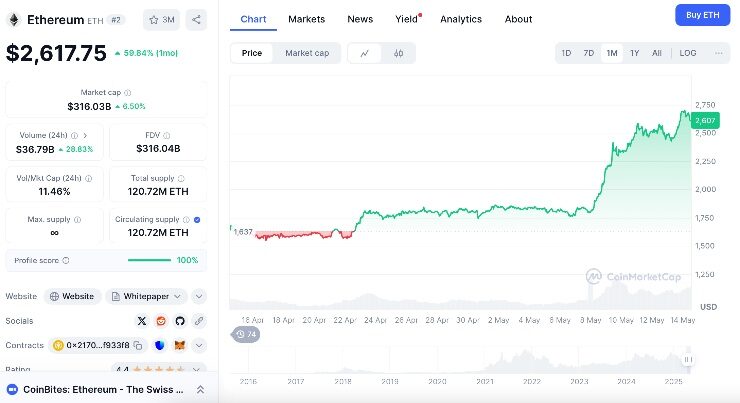
The current bull run for Ethereum is not merely a product of market speculation; it is anchored in tangible, fundamental developments. As of this writing, ETH is trading at approximately $2,617, representing a staggering 59.84% increase over the past 30 days. This rapid appreciation has returned the token to price levels not seen since the beginning of the year, effectively erasing the volatility-induced losses of previous months.
With a market capitalization exceeding $325 billion, Ethereum has surpassed the valuation of global corporate giants such as Coca-Cola ($297 billion) and Alibaba ($320 billion). This achievement underscores the growing acceptance of decentralized assets as viable, high-performance financial instruments. The transition from trading at $1,400 in early April to its current standing serves as a testament to the network’s renewed appeal to both retail and institutional participants.

Chronology of the Rally
The rally did not occur in a vacuum. To understand the current trajectory, one must look at the timeline of events that paved the way for this breakout:
- Early April: Ethereum struggled to maintain momentum, hovering around the $1,400 mark. Investor sentiment was cautious due to broader macroeconomic uncertainty.
- Mid-April to Early May: Development teams finalized the deployment of the "Pectra" upgrade, a highly anticipated technical evolution of the Ethereum mainnet.
- Institutional Entry: Following the upgrade’s successful integration, reports emerged that the British investment firm Abraxas Capital had initiated a systematic accumulation of ETH, purchasing over 211,000 tokens.
- Market Reaction: As news of the institutional acquisition spread, trading volume on major exchanges like Binance spiked, triggering a chain reaction of short squeezes and FOMO (Fear Of Missing Out) among retail traders.
- Current Status: Ethereum has maintained its breakout, establishing a new support level above $2,500 and attracting interest in secondary layer-2 and AI-focused tokens like MIND.
The Pectra Upgrade: Technical Foundations of Growth
The Pectra upgrade represents the most significant architectural overhaul for Ethereum since the transition to Proof-of-Stake (The Merge) and the Dencun upgrade. It has fundamentally altered the economics and usability of the network.
Key Technical Enhancements
- Staking Efficiency: The network has increased the staking limit from 32 ETH to 2,048 ETH per validator. By allowing larger deposits, the network has successfully reduced the total number of validators required for the same capacity, streamlining operations for institutional service providers.
- Smart Account Abstraction: Developers have introduced smart accounts that allow users to pay for gas fees using different tokens, rather than being restricted to ETH. This significantly improves user experience for those interacting with decentralized applications (dApps).
- Enhanced Liquidity: New provisions for withdrawing ETH directly from the execution layer have provided greater flexibility and liquidity for stakers, making Ethereum a more attractive yield-generating asset.
These improvements have not only bolstered the network’s security but have also provided a robust foundation for developers to build sophisticated applications, including those involving complex AI agents and high-frequency trading bots.
Institutional Inflow: The Abraxas Capital Factor
Perhaps the most compelling argument for the sustainability of this rally is the direct involvement of institutional capital. The recent disclosure that Abraxas Capital purchased $477 million worth of ETH over a six-day period has sent a clear message to the market: "Smart money" is back in Ethereum.

A significant portion of this acquisition was executed on the Binance exchange, with a single transaction exceeding $12 million. This institutional commitment validates the narrative that Ethereum is moving beyond a speculative asset class into the realm of "digital oil" or "institutional-grade collateral." By ranking among the top 35 most valuable assets globally, Ethereum is effectively forcing its way into the portfolios of pension funds, hedge funds, and sovereign wealth vehicles that previously shunned the sector.
Emerging Ecosystems: The Case of Mind of Pepe (MIND)
As the Ethereum ecosystem expands, a new class of "intelligent" assets is emerging. The Mind of Pepe (MIND) project is a prime example of how developers are utilizing the updated Ethereum infrastructure to create real-world utility for meme-themed tokens.
The AI-Agent Advantage
Unlike traditional, static meme coins, Mind of Pepe centers on an autonomous AI agent that acts as the platform’s core intelligence. This agent performs several critical functions:
- Real-time Sentiment Analysis: By scraping data from X (Twitter), Telegram, and various blockchain explorers, the agent identifies emerging trends before they reach mainstream awareness.
- Predictive Analytics: The agent utilizes "collective consciousness" analysis to forecast potential market shifts, providing actionable insights exclusively to holders of the MIND token.
- Automated Launchpad: The AI agent is designed to independently identify and potentially launch new token opportunities on the Ethereum network, granting MIND holders preferential access to early-stage investments.
Tokenomics and Staking
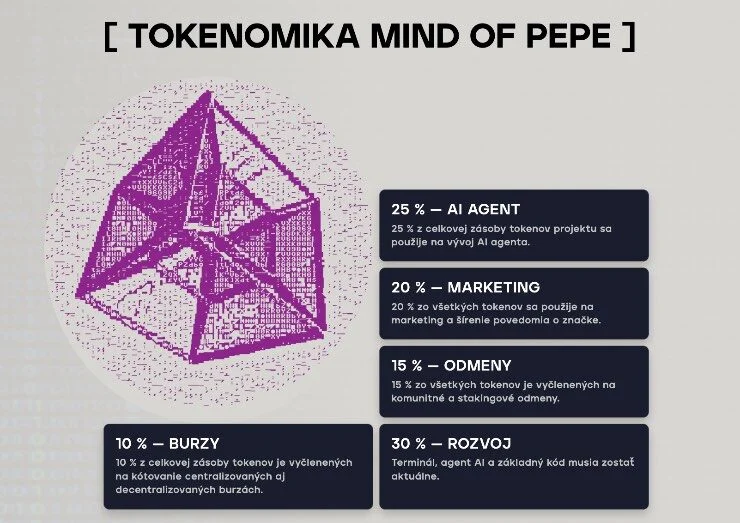
The project’s sustainability is supported by a carefully structured tokenomic model, where 15% of the supply is allocated to staking rewards and 30% to ongoing development. Leveraging the high-liquidity environment created by the Pectra upgrade, Mind of Pepe offers an impressive 247% annual yield on its staking pool. With security audits provided by industry leaders Coinsult and SolidProof, the project has already secured over $9.2 million in its pre-sale phase, trading at $0.0037515 per token.
Implications for the Future of Crypto
The recent performance of Ethereum and the success of AI-integrated projects like Mind of Pepe suggest that the market is entering a new, more mature phase of the crypto cycle.
1. Shift Toward Utility-Driven Meme Assets
The era of "pure speculation" meme coins may be fading, replaced by projects that combine the viral marketing power of memes with substantive technological utility. By embedding AI agents into the fabric of the token, projects like MIND are creating a compelling case for long-term retention rather than "pump-and-dump" behavior.
2. The Institutionalization of DeFi
The involvement of firms like Abraxas Capital indicates that Ethereum’s layer-1 and layer-2 solutions are reaching a level of stability that traditional finance can no longer ignore. The Pectra upgrade’s focus on institutional-friendly features—such as higher staking limits and better fee management—positions Ethereum as the primary settlement layer for the future of finance.
3. AI as the New "Oracle"
The integration of AI into blockchain is rapidly becoming a standard expectation rather than a niche novelty. As AI agents become more adept at processing the massive volumes of data generated by decentralized networks, they will likely become essential tools for traders. Investors who hold tokens tied to these agents, such as MIND, are positioning themselves at the forefront of this technological shift.

Conclusion
Ethereum’s recent 42% surge is a powerful reminder of the network’s resilience and its capacity for continuous innovation. Driven by the technical success of the Pectra upgrade and a massive influx of institutional capital, the asset is clearly in a period of fundamental expansion.
Simultaneously, the rise of projects like Mind of Pepe highlights a growing trend: the fusion of meme culture with high-end artificial intelligence. By offering investors a blend of high-yield staking, automated market intelligence, and early access to emerging tokens, these projects are redefining the utility of Ethereum-based assets. As the market continues to evolve, the combination of robust infrastructure and intelligent application layers will likely be the hallmark of the next generation of successful cryptocurrency investments.
Disclaimer: This article is for informational purposes only and does not constitute financial advice. Cryptocurrency investments involve significant risk. Always conduct your own due diligence before participating in any crypto project.
