


In the volatile theater of digital assets, market participants have long learned to expect the unexpected. However, the events of the past few weeks have defied conventional logic, creating a puzzling divergence between speculative enthusiasm and the harsh realities of liquidity, regulation, and macroeconomic pressure. While Bitcoin has staged an impressive 20% rally, breaching the psychological $30,000 threshold, the underlying infrastructure of the market suggests that this optimism may be built on a fragile foundation.
Main Facts: The Catalyst of Institutional Interest
The recent surge in sentiment is primarily attributed to a sudden flurry of activity from the titans of traditional finance. The "BlackRock Effect" took hold in mid-2023 when the world’s largest asset manager filed for a Bitcoin spot Exchange-Traded Fund (ETF). This move was swiftly mirrored by Fidelity, a move that sent shockwaves of legitimacy through the crypto ecosystem.
Adding to this institutional narrative was the launch of EDX Markets—a new digital asset exchange backed by a consortium of financial heavyweights, including Schwab, Citadel Securities, and Fidelity. By offering trading for Bitcoin, Ether, Litecoin, and Bitcoin Cash, EDX signaled that institutional players remain committed to crypto despite the recent regulatory winter.
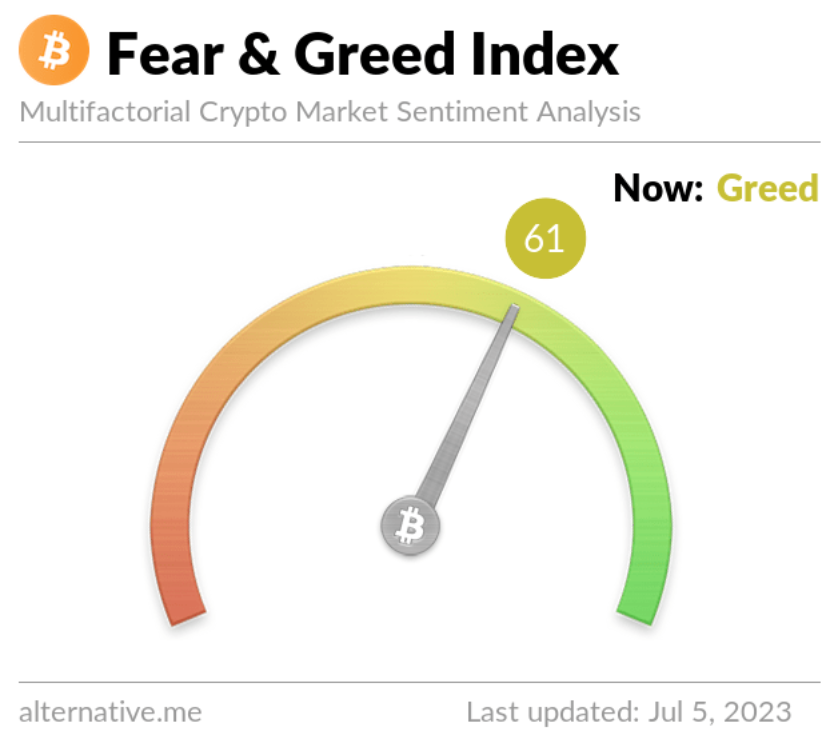
Yet, the market’s "greed" phase—evidenced by a Fear and Greed Index score of 61—appears to be pricing in an immediate victory that has yet to materialize.
Chronology: A Timeline of Divergence
To understand the current market state, one must look at the sequence of events that defined the second quarter of 2023:
- Early June: The U.S. Securities and Exchange Commission (SEC) launched landmark lawsuits against Binance and Coinbase, alleging widespread violations of securities laws.
- Mid-June: Despite the regulatory crackdown, Bitcoin and Ether began a steady climb. Bitcoin moved toward $30,000 while Ether regained momentum toward $2,000.
- Late June: The SEC informed Nasdaq and CBOE that the recent spot ETF filings were "inadequate" due to a lack of detail regarding "surveillance-sharing agreements."
- Early July: While the market initially wobbled on the news of the SEC’s skepticism, refiled applications by CBOE kept investor optimism afloat, highlighting a stubborn refusal to capitulate to regulatory pressure.
Supporting Data: The Liquidity Crisis
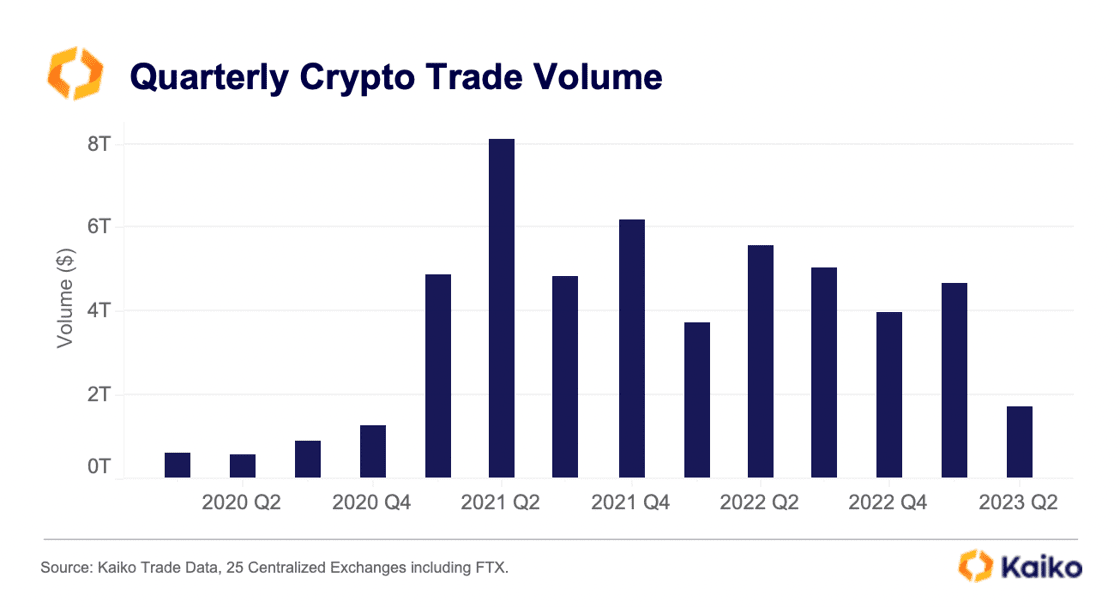
While price action suggests a bull market, the "under the hood" data paints a much grimmer picture. Liquidity, the lifeblood of any financial market, is currently at its lowest point since 2020.
The Exchange Volume Drought
Data from analytics firm Kaiko reveals that trading volumes on centralized exchanges have plummeted. This contraction in volume is critical; in a low-liquidity environment, price swings become significantly more erratic. The 20% spike in Bitcoin’s value in June may not be a sign of organic growth, but rather a reflection of thin order books where relatively small buy orders can exert outsized pressure on the price.
Stablecoin Outflows
Perhaps the most alarming metric is the exodus of capital from the ecosystem. The total balance of stablecoins held on exchanges has cratered by 60% over the last six months, representing an outflow of roughly $26 billion. This indicates that a massive amount of "dry powder"—capital held on the sidelines to purchase assets—has been withdrawn, suggesting that the current rally is struggling to find deep-pocketed support.
The Derivatives Paradox
Interestingly, while spot markets remain stagnant, derivatives markets have shown surprising resilience. Volume in the derivatives space is significantly higher than it was in the latter half of 2022. This suggests that the current market structure is increasingly driven by speculative leverage rather than the actual acquisition of underlying assets, a trend that often precedes high-volatility "long squeezes" or sudden corrections.
Official Responses and Regulatory Friction
The regulatory landscape remains the most significant headwind for the crypto industry. The SEC’s rejection of initial ETF filings—citing a lack of surveillance-sharing agreements—was a stark reminder of the agency’s historical stance. It is worth noting that the SEC previously rejected a Fidelity application in January 2022, underscoring the uphill battle these firms face.
The lawsuits against Coinbase and Binance serve as the twin pillars of the current regulatory crisis. The Binance suit is viewed as a standard enforcement action against an entity known for skirting international guidelines. However, the Coinbase case is far more nuanced. As a publicly traded company that received SEC approval for its IPO in 2021, Coinbase’s legal battle raises fundamental questions: How can the SEC label assets on the exchange as "unregistered securities" today, when they presided over the exchange’s legitimacy just two years ago? This legal ambiguity remains a massive "sword of Damocles" hanging over the entire industry.
Macroeconomic Implications
Beyond the internal crypto dynamics, the global macro environment remains hostile. The Federal Reserve’s recent decision to pause interest rate hikes was met with relief, but Chairman Jerome Powell was quick to clarify that this was not a pivot.
The Interest Rate Reality
The market currently assigns an 86% probability to a 25 basis point rate hike at the next Federal Open Market Committee (FOMC) meeting. This is up from the expectations held a month ago. Despite the rally in digital assets, the probability of a "no-hike" scenario has actually decreased.
Investors are seemingly ignoring the reality that we are in the midst of the most aggressive monetary tightening cycle in modern history. With interest rates now sitting above 5%, the cost of capital has fundamentally changed. History dictates that monetary policy operates with a significant lag; the damage to liquidity and economic growth often takes 12 to 18 months to fully materialize.
Conclusion: A Road Fraught with Uncertainty
The crypto market is currently caught in a classic "tug-of-war" between the promise of institutional adoption and the reality of a restrictive macroeconomic and regulatory environment. While the filing of spot ETFs by BlackRock and Fidelity provides a valid long-term thesis for institutional legitimacy, the current price action feels premature.
Investors should remain cautious. The surge in Bitcoin and Ether, while impressive, lacks the backing of sustained volume and stablecoin inflows. Furthermore, the regulatory environment is not getting easier; it is becoming more surgical and aggressive. When one layers these challenges over a Federal Reserve that is clearly committed to maintaining higher rates for longer, the thesis for a sustained, rapid bull market becomes difficult to defend.
The path forward will likely be marked by significant volatility. While Bitcoin continues to attempt to carve out its identity as a distinct asset class, it remains tethered to the broader global financial system. Until liquidity returns and the legal battle between major exchanges and the SEC finds a resolution, the recent wave of optimism should be viewed as a speculative rebound rather than the beginning of a new, structural super-cycle. In the words of seasoned market watchers, "crypto is going to crypto"—and that often means a long, winding road ahead before the dust finally settles.
