

The cryptocurrency market is currently defined by a profound cognitive dissonance. On one hand, Bitcoin and its peers have staged a significant rally, buoyed by the institutional legitimacy promised by giants like BlackRock and Fidelity. On the other, the foundational metrics of the market—liquidity, regulatory clarity, and macroeconomic stability—tell a far more cautious, if not concerning, story. As investors pivot toward "greed," it is worth examining whether this recent 20% surge in Bitcoin is a precursor to a new bull market or a fragile rally built on sand.
Main Facts: The Institutional Narrative vs. Market Reality
The recent surge in digital assets has been primarily driven by a "spot ETF mania." When BlackRock, the world’s largest asset manager, filed for a Bitcoin spot ETF, it sent a signal to the markets that the most conservative corners of finance were finally ready to embrace crypto. Fidelity, alongside a consortium of TradFi stalwarts like Schwab and Citadel Securities, followed suit by backing EDX Markets—a non-custodial exchange offering trading for Bitcoin, Ether, Litecoin, and Bitcoin Cash.
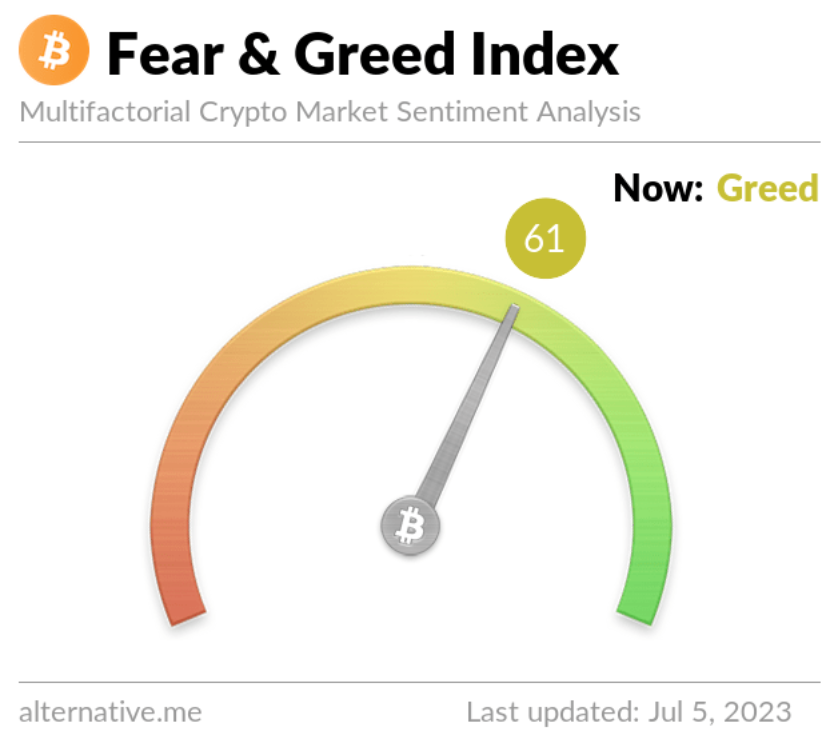
These developments sparked an immediate reaction. Bitcoin breached the $30,000 threshold, marking a 20% gain in just three weeks. Simultaneously, Ether climbed 16%, nearing the $2,000 psychological barrier. According to the Fear and Greed Index, sentiment has shifted firmly into the "greed" territory, with a score of 61.
However, the "under the hood" reality suggests the market may be overreacting. The Securities and Exchange Commission (SEC) has signaled that the initial ETF filings were "inadequate," specifically citing a lack of detail regarding "surveillance-sharing agreements." While these filings can be amended—as CBOE and Nasdaq have begun to do—the SEC’s historical hostility toward spot products suggests that approval is far from a foregone conclusion.
Chronology of a Volatile Month
- Early June 2023: The SEC initiates formal legal action against major industry players Binance and Coinbase, alleging systemic regulatory violations and the unregistered sale of securities.
- Mid-June 2023: Despite the regulatory crackdown, institutional interest peaks as BlackRock officially files for a spot Bitcoin ETF.
- Late June 2023: Bitcoin pushes past $30,000. The SEC informs Nasdaq and CBOE that the recent ETF filings are insufficient, demanding more robust surveillance-sharing agreements.
- Early July 2023: Federal Reserve Chair Jerome Powell reaffirms the "higher for longer" interest rate stance, signaling that the recent pause was a tactical delay, not a pivot in monetary policy.
- Current Outlook: Market participants remain optimistic about ETF approval, despite an 86% probability of a 25 basis point rate hike at the next Federal Reserve meeting.
Supporting Data: The Liquidity Drought
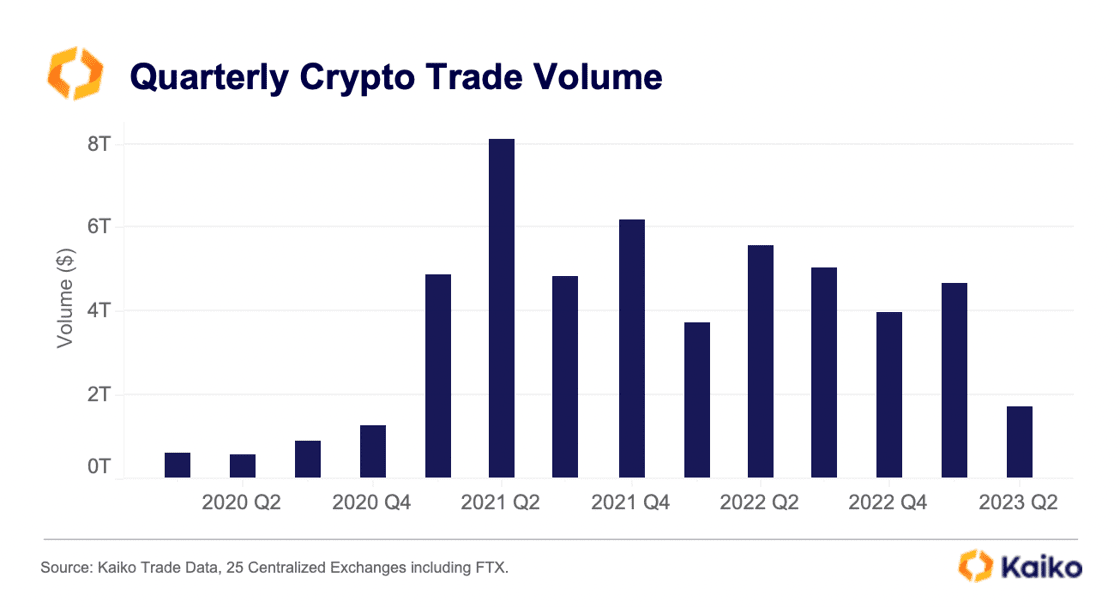
One of the most concerning aspects of the current rally is the deterioration of market liquidity. Data from Kaiko indicates that exchange volumes for the second quarter of 2023 hit their lowest levels since 2020. This is not merely a statistical curiosity; it is a structural warning sign.
In thin markets, price moves are significantly amplified. A lack of depth means that even moderate buying pressure can cause sharp price spikes, while a sudden change in sentiment could trigger a catastrophic liquidity vacuum. Furthermore, the total balance of stablecoins held on exchanges—the "dry powder" of the crypto ecosystem—has plummeted by 60% over the last six months, representing an outflow of roughly $26 billion.
While spot market volume is languishing, derivatives markets have shown surprising resilience, maintaining higher activity levels compared to the second half of 2022. This divergence suggests that the institutional players and professional traders remain engaged, while retail spot participation has been severely dampened by the regulatory environment.
Official Responses and Regulatory Friction
The regulatory landscape has become the primary headwind for the industry. The charges against Binance and Coinbase serve as two distinct case studies in the SEC’s enforcement strategy.
The suit against Binance, characterized by allegations of volume manipulation and customer exploitation, was largely expected by market veterans. In contrast, the SEC’s case against Coinbase is viewed as a "make-or-break" moment for the industry. Critics point to the irony of the SEC overseeing Coinbase’s 2021 IPO while now claiming the platform has been facilitating the trade of unregistered securities for years.
The SEC’s designation of various altcoins as securities has injected a layer of existential risk into the market. Despite this, many of these same tokens have tracked Bitcoin’s rally. This suggests that the current market is trading on "ETF sentiment" rather than fundamental valuation or regulatory compliance, creating a disconnect that may eventually force a painful correction.
Macroeconomic Implications: The Fed’s Shadow
Crypto markets are not operating in a vacuum. The macroeconomic backdrop remains hostile to high-risk assets. While the Federal Reserve paused its rate-hiking cycle in June, the commentary from Jerome Powell was clear: the pause was a strategic maneuver, not an end to the cycle.
Fed futures currently price in an 86% chance of a 25 basis point hike in the coming weeks. A month ago, the probability was lower, yet crypto prices have surged regardless. This indicates that the market is currently ignoring the macro reality of a 5% interest rate environment.
Monetary policy operates with a significant lag. We are currently navigating one of the most aggressive tightening cycles in modern history. The historical correlation between liquidity contraction and asset price pressure suggests that the "easy money" era has not returned. The market is betting on a "soft landing" and ETF approval, but should the Fed maintain high rates while the SEC continues its legal onslaught, the current euphoria may find itself on very unstable ground.
Conclusion: A Road Ahead
The recent optimism in the crypto space is a testament to the market’s enduring, almost irrational, resilience. However, investors would be wise to distinguish between a structural change in the market and a temporary sentiment-driven rally.
The path to a spot Bitcoin ETF is littered with regulatory obstacles, and the current liquidity profile of the market is, frankly, alarming. When combined with a Federal Reserve that is nowhere near a dovish pivot, the current 20% surge begins to look less like a breakout and more like a high-stakes gamble.
As the industry matures, the "crypto is going to crypto" mantra—often used to explain away irrational volatility—is becoming an insufficient explanation. Institutional adoption is indeed coming, but the bridge to that future is currently being built under extreme regulatory and economic pressure. For now, caution is not just recommended; it is a necessity for anyone navigating this volatile, often unpredictable, financial frontier. The road ahead remains long, and the current sentiment may be testing the limits of fundamental reality.
