

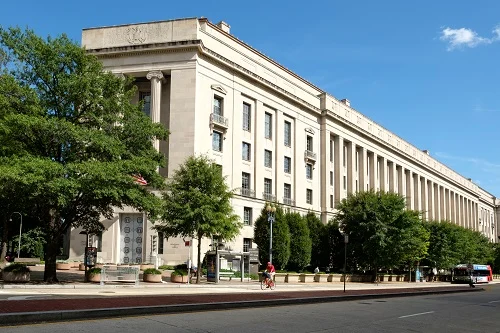
The legal odyssey of Sam Bankman-Fried, the once-celebrated wunderkind of the cryptocurrency industry and founder of the now-defunct exchange FTX, has reached a critical inflection point. With his highly anticipated criminal trial looming in October, federal prosecutors from the U.S. Department of Justice (DOJ) have formally requested that the court revoke the former CEO’s bail, effectively seeking to place him in custody ahead of the proceedings.
The move follows a mounting pattern of behavior that prosecutors argue constitutes a blatant disregard for judicial integrity and witness security. As the FTX saga enters its most dramatic chapter yet, the question is no longer whether Bankman-Fried will face his day in court, but whether he will do so from the comfort of his parents’ Palo Alto home or the confines of a federal detention center.
The Core Allegation: A Pattern of Witness Tampering
The DOJ’s request for detention is not a sudden reaction but the culmination of months of friction regarding Bankman-Fried’s conduct while under house arrest. At the center of the latest dispute is the leak of private, highly sensitive documents belonging to Caroline Ellison, the former CEO of Alameda Research and Bankman-Fried’s one-time romantic partner.
Last week, federal prosecutors alleged that Bankman-Fried leaked Ellison’s personal diary entries to the New York Times. According to the DOJ, this was a calculated effort to smear Ellison—who has entered a plea deal and is slated to be a star witness for the prosecution—and to intimidate other potential witnesses. The diary entries, which detailed Ellison’s inner turmoil and professional struggles while leading Alameda, were published in a manner that the government argues was intended to cast doubt on her credibility and portray her as a scorned, unstable individual rather than a credible witness.
In court, the prosecution argued that these actions were not mere lapses in judgment but a sustained strategy to "corrupt the jury pool" and silence those who possess the most damning evidence against him. Prosecutors explicitly stated that no set of release conditions—no matter how restrictive—would be sufficient to ensure that Bankman-Fried ceases his efforts to interfere with the judicial process.
A Chronology of the FTX Collapse and Legal Fallout
To understand the gravity of the current situation, one must revisit the rapid descent of what was once the third-largest cryptocurrency exchange in the world.
- November 2022: The FTX empire collapses under the weight of a liquidity crisis sparked by revelations of commingled funds between the exchange and its sister hedge fund, Alameda Research.
- December 2022: Bankman-Fried is arrested in the Bahamas following a request from U.S. authorities. He is subsequently extradited to the United States.
- December 2022: Upon his arrival in New York, Bankman-Fried is granted a $250 million bond—one of the largest in American history—allowing him to remain under house arrest at his parents’ residence, provided he adheres to strict conditions, including electronic monitoring and restricted internet access.
- Early 2023: Bankman-Fried faces an expanding list of charges, including wire fraud, conspiracy to commit commodities fraud, and money laundering.
- July 2023: The DOJ files a formal motion to revoke bail, citing repeated instances of witness tampering, specifically the leak of Ellison’s diary.
- July 26, 2023: A tense hearing is held before Judge Lewis Kaplan, where the prosecution makes its case for incarceration.
The Judicial Stance: Judge Kaplan’s Warning
During the July 26 hearing, U.S. District Judge Lewis Kaplan of the Southern District of New York listened to arguments from both sides. While the judge did not immediately grant the DOJ’s motion for remand, his tone was unmistakably stern.
The defense team, led by Mark Cohen, argued that imprisoning Bankman-Fried would severely handicap his ability to prepare for trial. They contended that he requires access to a vast array of digital documents and frequent communication with his legal team—access that would be significantly diminished in a correctional facility.
Judge Kaplan, however, was unimpressed by the defense’s pleas of administrative inconvenience. He issued a sharp warning to the defendant, stating, "Take this seriously." Recognizing the need for immediate action, the court has allowed both parties to collaborate on the drafting of a comprehensive gag order, which is expected to be finalized by August 3. This order is intended to prevent Bankman-Fried from making any further public comments that could be construed as tampering or an attempt to sway public opinion before the jury is seated.
Supporting Data: Why the DOJ is Pushing Back
The government’s argument rests on more than just the diary incident. The DOJ has presented a dossier of behavior they claim demonstrates a propensity for manipulation:
- Encrypted Messaging: Early in his bail period, Bankman-Fried was caught using encrypted messaging apps (Signal) with messages set to auto-delete, which the court viewed as an attempt to hide communications from investigators.
- VPN Usage: Prosecutors have flagged instances where Bankman-Fried used a Virtual Private Network (VPN) to access the internet, potentially bypassing the monitoring conditions set by the court.
- Witness Contact: There have been allegations that Bankman-Fried reached out to the current general counsel of FTX US, attempting to influence his perspective on the events leading up to the collapse.
The DOJ’s thesis is simple: Bankman-Fried is an individual with significant resources and a history of attempting to manipulate his environment. They believe he views the legal system as a problem to be "managed" rather than a court of law to be respected.
Implications: The High Stakes of the October Trial
The implications of these recent events extend far beyond the immediate fate of Sam Bankman-Fried.
The Integrity of the Witness Pool
If a defendant can publicly discredit witnesses through media leaks, it sets a dangerous precedent. The DOJ is fighting to ensure that witnesses like Caroline Ellison, Gary Wang, and Nishad Singh feel safe and secure when they take the stand. If the court allows Bankman-Fried to remain free while allegedly attacking these individuals, it may discourage future whistleblowers from cooperating with federal investigations.
The Perception of Justice
The "two-tier" justice system narrative is a common talking point in the crypto industry. Many argue that the $250 million bond was a form of privilege that the average citizen would never be afforded. Revoking his bail would, for many observers, signal that the law applies equally to those who were once considered titans of industry.
Trial Strategy
Should Bankman-Fried be remanded to custody, his legal team will be forced to pivot. The logistics of reviewing thousands of gigabytes of evidence while in jail are daunting. The defense will likely argue that any inability to review materials constitutes a violation of his Sixth Amendment right to a fair trial. Conversely, the prosecution will likely argue that the defendant brought this situation upon himself through his own actions.
Conclusion: A Turning Point in Crypto History
The collapse of FTX was a watershed moment for the digital asset industry, leading to a global reckoning regarding regulation, transparency, and corporate governance. As the criminal trial approaches, the focus has shifted from the collapse itself to the character and conduct of the man at the helm.
Whether or not Judge Kaplan decides to revoke bail in the coming days, the message from the DOJ is clear: the era of Sam Bankman-Fried operating without consequences has come to an end. The court’s upcoming gag order and the pending decision on his freedom will serve as the final gatekeepers to what promises to be one of the most significant financial fraud trials of the 21st century.
As October approaches, the world waits to see if the man who once aimed to influence the global financial system will find himself in the one place he never anticipated: a prison cell. For the victims of the FTX collapse, the sight of Bankman-Fried being held accountable for his alleged attempts to subvert the trial would be a small, but meaningful, step toward the justice they have been seeking since November 2022.
