

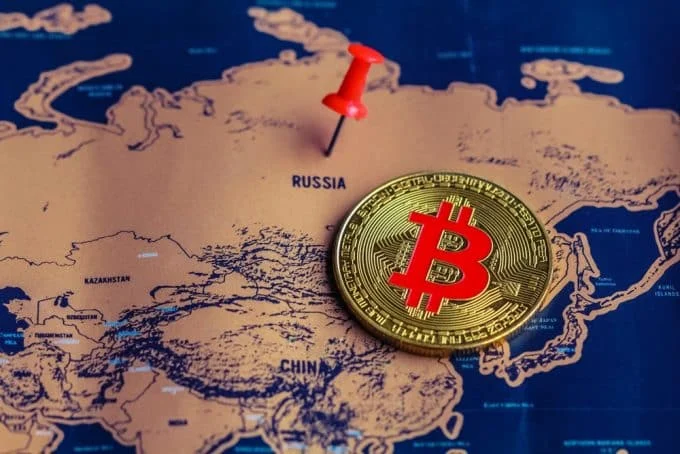
The global financial landscape is currently navigating a period of profound uncertainty, characterized by a dual-fronted challenge: escalating geopolitical tensions on the Eastern European border and a tightening regulatory grip from one of the world’s most significant mining hubs. As the specter of a potential military conflict between Russia and Ukraine looms, the cryptocurrency market has entered a period of volatile readjustment, shedding billions in valuation and forcing investors to re-evaluate the asset class’s role as a "digital hedge."
Main Facts: A Market in Retreat
On Thursday, the cryptocurrency market faced a significant downturn, with major assets struggling to find support. Bitcoin (BTC), the industry’s flagship asset, was trading at approximately $43,352 on Coingecko, reflecting a daily decline of 0.7%. This represents a sharp pullback from the $47,000 threshold observed at the dawn of the year, signaling a loss of momentum that has frustrated short-term bulls. Ethereum (ETH), the second-largest cryptocurrency by market capitalization, mirrored this downward trend, retreating 2.14% to trade at $2,873.
The broader market impact has been staggering. Over a single 24-hour window, the total cryptocurrency industry saw a staggering $200 billion wiped from its collective market capitalization. This sell-off was not isolated; it was part of a global market response where risk-on assets faced intense pressure from investors fleeing toward safer havens as headlines concerning Russian military mobilization intensified.
Chronology: From Diplomatic Warnings to Market Sell-offs
The current market agitation did not manifest in a vacuum; it is the culmination of weeks of deteriorating diplomatic relations and internal Russian policy shifts.
- Early January: Bitcoin began the year with optimism, hovering near the $47,000 level. However, this optimism was short-lived as the geopolitical narrative shifted.
- Mid-January: Fears of an imminent Russian invasion of Ukraine intensified as reports confirmed that Russia had amassed over 100,000 troops near the Ukrainian border.
- The Week of January 24th: Diplomatic efforts escalated. United States President Joe Biden held a high-stakes, hour-long conversation with Ukrainian President Volodymyr Zelensky to discuss security guarantees and de-escalation strategies. Simultaneously, U.S. National Security Adviser Jake Sullivan publicly reiterated warnings of a possible invasion, keeping market sentiment in a state of high alert.
- Late January: The confluence of these geopolitical anxieties and a sudden, hawkish shift in Russian financial policy—specifically the Central Bank of Russia’s proposal for a blanket ban on Bitcoin mining and trading—triggered a massive liquidation event. Bitcoin and Ethereum plummeted, briefly touching their lowest levels in six months.
Supporting Data: Volatility and Market Sentiment
To understand the current state of the crypto market, one must look beyond the price charts and examine the underlying volatility metrics. According to data from BuyBitcoinWorldwide, Bitcoin’s 30-day volatility index has shown a decrease of roughly 3.35%, currently averaging lower than the 4.56% seen throughout 2021. While this might suggest a certain degree of "relative calmness" compared to past periods of extreme turbulence, the psychological weight of the current news cycle remains heavy.
Bitcoin’s total market capitalization currently stands at approximately $817.952 billion, a figure that remains robust despite the recent downturn. However, the contrast between current performance and the lows of $32,950 recorded just two weeks ago highlights a market that is struggling to find a stable floor. The correlation between the Nasdaq Composite index and Bitcoin has become a point of intense study; when the Nasdaq dropped 0.9% last December, the crypto market’s response was significantly more pronounced, underscoring the high-beta nature of digital assets in the current macroeconomic climate.
Official Responses and Regulatory Frictions
The friction in the market is not purely geopolitical; it is also profoundly regulatory. The Central Bank of Russia has recently surfaced as a major antagonist to the digital asset space. In an assessment that sent shockwaves through the mining community, the bank suggested a total prohibition on both the mining and the usage of cryptocurrencies.
This move is particularly consequential because Russia represents a critical node in the global blockchain infrastructure, accounting for approximately 10% of the world’s total Bitcoin mining capacity. A forced migration of this magnitude would disrupt global hashrates and potentially create long-term volatility as miners relocate to more hospitable jurisdictions.
The Russian government’s stance is one of dismissal regarding Western concerns. Kremlin officials have repeatedly rejected warnings of an invasion, characterizing the rhetoric from Washington and its allies as "hypocrisy." This diplomatic stalemate has created a "wait-and-see" environment where institutional investors, wary of potential sanctions or a complete freezing of Russian-linked assets, are choosing to de-risk their portfolios.
Implications: The Interlinked Future of Finance
The events of the past few days have solidified the belief among many market analysts that cryptocurrency is no longer an isolated, experimental asset class. Instead, it has become deeply interlinked with the global financial system and, by extension, global geopolitics.
1. The Death of the "Safe Haven" Narrative
For years, proponents argued that Bitcoin would act as "digital gold"—a hedge against geopolitical turmoil and fiat currency debasement. However, the current crisis has demonstrated that during periods of extreme uncertainty, investors tend to dump high-risk assets regardless of their fundamental value. This suggests that in the short term, Bitcoin is behaving more like a tech stock than a defensive hedge.
2. Regulatory Risk and Geographic Concentration
The Russian proposal to ban mining highlights the vulnerability of a decentralized network to centralized geopolitical decisions. As nations move to protect their own monetary sovereignty, crypto-assets that rely on physical infrastructure in politically unstable regions face an ongoing threat. This is likely to accelerate the trend of miners seeking greener, more stable, and more legally transparent environments, such as the United States, Canada, or parts of South America.
3. The Institutional Pivot
As $200 billion vanished in a single day, the response of institutional players remains the most significant variable. Many hedge funds and asset managers are currently re-evaluating their crypto exposure. If the tension in Ukraine escalates into a full-scale conflict, we may see a prolonged period of suppressed prices. However, some long-term investors view these dips as buying opportunities, banking on the fact that the fundamental utility of blockchain technology remains unaffected by the borders drawn by politicians.
4. The Path Ahead
The coming weeks will be defined by the outcome of the Russia-Ukraine standoff. If diplomatic channels prevail, the market could see a rapid recovery as institutional capital returns to the space. Conversely, if conflict erupts, the resulting economic sanctions and market instability could lead to even deeper corrections.
In conclusion, the cryptocurrency market is currently undergoing a painful "baptism by fire" regarding its integration into the global order. While the recent price action—the drop from $47,000 to the mid-$43,000 range—is distressing to retail holders, it serves as a necessary stress test for the asset class. As the world watches the Ukrainian border, the crypto community is watching the resilience of its decentralized networks, waiting to see if these assets can truly endure the pressures of a changing geopolitical landscape. The future of the market depends not just on the code, but on the shifting sands of international relations.
