

The financial world stands at a historic precipice. As the clock strikes on September 7, 2021, the Republic of El Salvador is set to become the first sovereign nation in history to adopt Bitcoin as legal tender. This monumental shift, spearheaded by President Nayib Bukele, has transformed the nation into a global laboratory for digital currency, sparking a firestorm of debate, anticipation, and grassroots action that has transcended borders, languages, and traditional economic paradigms.
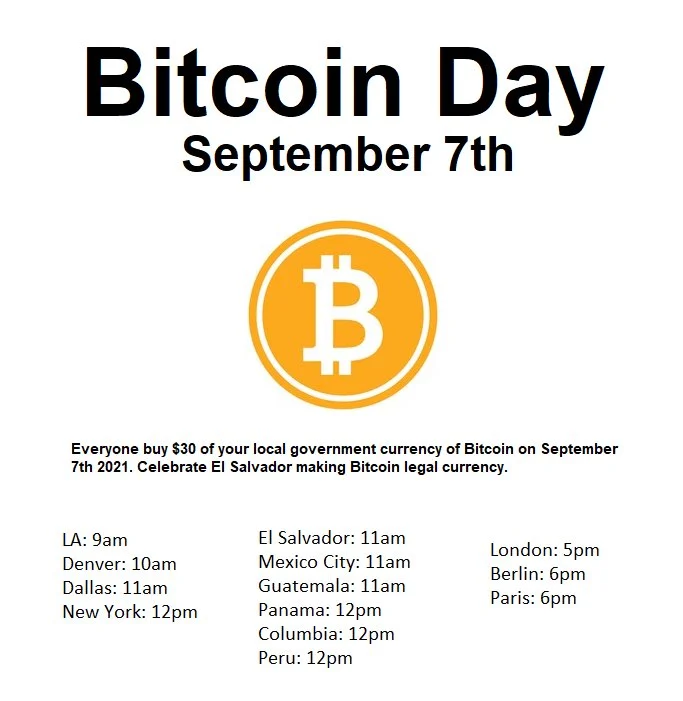
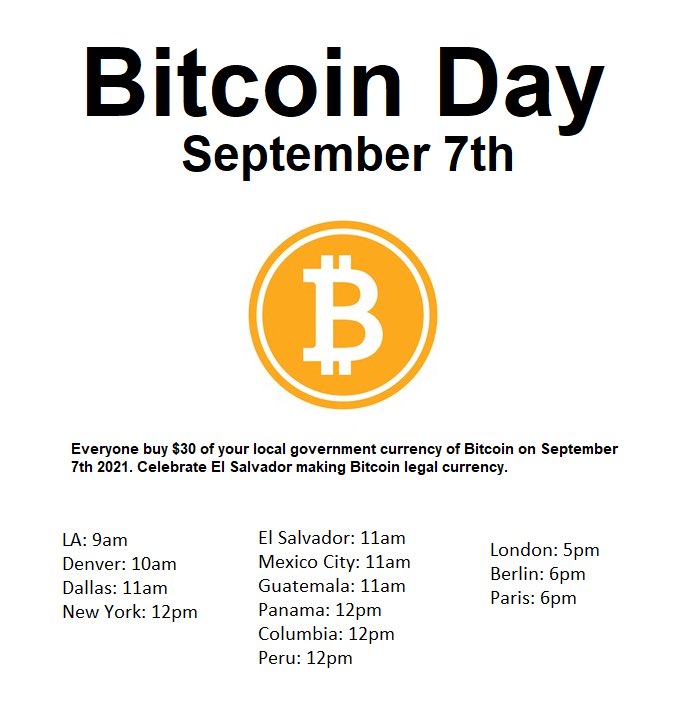
As the "Bitcoin Law" takes effect, the global community of cryptocurrency enthusiasts—often referred to as "plebs"—has organized a decentralized, synchronized display of solidarity. The initiative is simple yet symbolic: an organized, global effort to purchase $30 worth of Bitcoin to commemorate the occasion.
The Genesis of the $30 Movement: From Reddit to Global Solidarity
The movement did not emerge from a boardroom or a coordinated marketing campaign; it was born in the digital trenches of the internet. A simple, earnest post on the /r/Bitcoin subreddit posed the question: "So… We all buying $30 worth of Bitcoin on Tuesday?"
The response was immediate and overwhelming. Within hours, the post surged to nearly 9,000 upvotes and over 2,000 comments. The initiative was never intended to "pump" the price of Bitcoin—the collective purchase of such small amounts is statistically negligible in the context of a trillion-dollar asset class. Instead, the gesture serves as a ritualistic act of unity.
"It’s to show solidarity with our Bitcoin compatriots in El Salvador as they fully adopt Bitcoin as their currency," one user noted. The spirit of the movement quickly pivoted from a mere transaction to a global demonstration of support for a nation challenging the status quo of international finance.
Diverse Perspectives on the "Buy"
The discourse surrounding this coordinated purchase has been as varied as the community itself. While many participated in the spirit of camaraderie, others expressed skepticism. Some vocal critics within the community warned against "greasy" market manipulation, arguing that even small, coordinated buys could be misconstrued as market collusion.
Conversely, the community’s "all-in" mentality was on full display. One Reddit user pledged to purchase $3,000 worth of BTC—effectively covering the $30 commitments of 100 other individuals who might lack the financial means to participate. This sense of shared burden and collective optimism highlights the unique cultural fabric of the Bitcoin ecosystem.
Chronology of the Adoption: The Path to Legal Tender
The road to September 7th was marked by a series of rapid-fire legislative and technical milestones that caught the global financial establishment off guard.
- June 2021: At the Bitcoin 2021 conference in Miami, President Nayib Bukele announced his intention to submit legislation to make Bitcoin legal tender in El Salvador.
- June 9, 2021: The Legislative Assembly of El Salvador overwhelmingly approved the Bitcoin Law, with 62 out of 84 votes in favor.
- August 2021: The government accelerated the rollout of the "Chivo" wallet, the state-sponsored application designed to facilitate Bitcoin transactions for the unbanked population.
- September 6, 2021: The final countdown began. Bitcoin Twitter became a hub of activity, with influencers and retail users alike sharing tutorials, memes, and messages of encouragement for the Salvadoran people.
- September 7, 2021: The law officially enters into force, requiring businesses to accept Bitcoin for goods and services, provided they have the technological capacity to do so.
The Role of Social Media: Memes as a Cultural Catalyst
If the 20th century was defined by the printing press and television, the 21st century’s financial movements are defined by social media and the "meme-ification" of complex economic theories.
Bitcoin Twitter has been particularly instrumental in building the momentum for the September 7th event. Users have repurposed classic cinematic tropes, such as scenes from the 1983 comedy Trading Places, to mock traditional financial skeptics like Peter Schiff and Nouriel Roubini. By framing the adoption of Bitcoin as a "David vs. Goliath" battle against the traditional banking establishment, these digital creators have succeeded in turning a complex legislative event into a cultural celebration.
Even high-profile figures have leaned into this atmosphere. Michael Saylor, the CEO of MicroStrategy and a prominent institutional proponent of Bitcoin, has leveraged his massive social media reach to amplify the narrative of support. By endorsing the movement, Saylor has provided a bridge between retail sentiment and the broader institutional discourse.
Skepticism and the "Bear Market" Narrative
Despite the celebratory tone, the movement has faced significant pushback. Financial analysts and cautious observers have raised concerns about the timing of this event, specifically regarding its proximity to technical retracement levels in the BTC/USD chart.
"Everyone needs to be aware that this could possibly be leading the sheep to their death," one cautious trader noted on social media. "Letting retail buy exactly on the 70.2% retracement to dump on them—it’s a classic trap."
These warnings reflect a deep-seated anxiety within the market. As Bitcoin’s price reached volatile levels leading up to the launch, some traders feared that the "Buy Day" could serve as an exit liquidity event for whales looking to offload their holdings onto retail investors who are buying into the hype.
However, the counter-argument is just as strong: the fundamentals of Bitcoin are decoupled from short-term price fluctuations. Proponents argue that by making Bitcoin legal tender, El Salvador is creating a permanent, systemic demand that transcends the "pump and dump" cycles of retail speculation.
Global Solidarity: Beyond Borders
The movement has achieved a level of international synergy that is rare in modern political history. From Korean Bitcoin communities to supporters in Brazil—where the September 7th date holds added significance due to the nation’s Independence Day—the message is clear: Bitcoin is a borderless technology.
The translation of the "Buy $30" order into multiple languages underscores the decentralized nature of the movement. It is a bottom-up structure where information flows freely, and individuals, regardless of their nationality or economic status, feel a shared responsibility to support the first nation-state to embrace a decentralized monetary system.
As Tomer Strolight, a well-known voice in the Bitcoin community, poignantly asked: "Have you ever felt such benevolence to strangers from different nations, religions, and other affiliations as you do toward bitcoiners?" This sentiment captures the essence of what is happening today: a global community finding common ground in the belief that "hard money" can foster peace, prosperity, and financial inclusion.
Implications: What Comes Next?
The legal tender experiment in El Salvador is not merely about a currency change; it is a test of the viability of Bitcoin as a medium of exchange in a developing economy.
Economic Implications
For El Salvador, the move could potentially lower the cost of remittances—which account for a significant portion of the country’s GDP—by bypassing traditional wire services. However, it also invites significant risks, including the volatility of the asset itself and the potential for regulatory friction with international bodies like the International Monetary Fund (IMF).
Geopolitical Implications
If the experiment succeeds, other nations—particularly those in Latin America and emerging markets facing currency devaluation—may feel emboldened to follow suit. The "El Salvador effect" could catalyze a broader trend toward sovereign adoption, forcing central banks worldwide to reconsider their stance on digital assets.
Technical Implications
The success of the Chivo wallet and the lightning network infrastructure in El Salvador will serve as a stress test for Bitcoin’s scalability. If millions of citizens can successfully use the network for daily transactions, it will provide undeniable proof that Bitcoin is ready for mass adoption.
Conclusion: A Day for the History Books
As the sun rises on September 7, 2021, the eyes of the world are fixed on El Salvador. Whether the "buy $30" movement results in a price surge or a temporary market correction is secondary to the deeper, historical reality: the global financial system is changing.
The "plebs," the memers, and the institutions have all converged on a singular, historic moment. While the skeptics focus on charts and the critics focus on risk, the participants in this global movement are focused on something else entirely: the belief that they are witnessing the birth of a new, more transparent, and decentralized monetary era.
Today, the world watches as an entire nation bets on the future. And for the Bitcoin community, today is not just about the money; it is about the principle. As the first transactions are processed on the state-sanctioned network, one thing is certain: the conversation surrounding the nature of money will never be the same again.
