

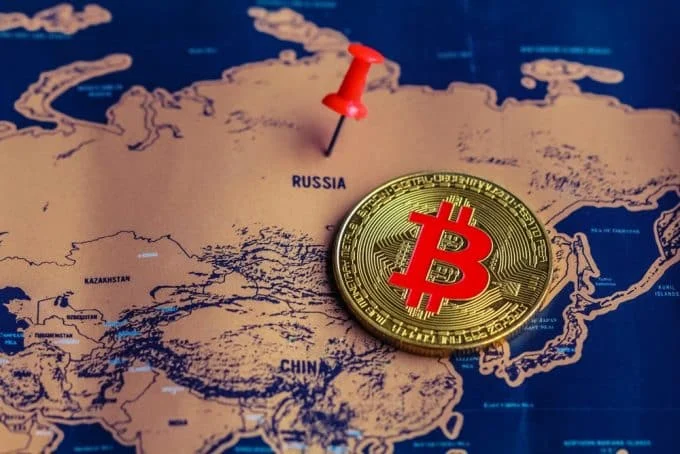
The global cryptocurrency landscape is currently navigating a period of profound turbulence, characterized by a convergence of high-stakes geopolitical tension in Eastern Europe and aggressive regulatory posturing from one of the world’s most significant mining hubs. As of Thursday, Bitcoin (BTC) has retreated to approximately $43,352, struggling to regain the bullish momentum that saw it flirt with the $47,000 threshold as recently as January 1. This downward trend is not isolated to the flagship digital asset; Ethereum (ETH), the world’s second-largest cryptocurrency, has mirrored this volatility, shedding 2.14% to trade at $2,873.
The broader market sentiment has been rattled, resulting in a staggering $200 billion evaporation of total market capitalization within a single 24-hour window. As investors weigh the tangible risks of military conflict against the potential for restrictive domestic policy in Russia, the digital asset sector is undergoing a painful recalibration.
A Chronology of Escalation: From Diplomatic Tensions to Market Retreat
The current market instability can be traced back to the intensifying friction between Russia and Ukraine. As Russia continues to amass a military contingent of over 100,000 troops along the Ukrainian border, global financial markets—traditionally seen as safe havens for risk-on assets—have reacted with acute sensitivity.
The chronology of this decline is marked by several key events:
- Early January: Bitcoin initiated the year with optimistic pricing near $47,000, but momentum began to fracture as geopolitical rhetoric heightened.
- Mid-January: Fears of an imminent Russian incursion intensified, driving Bitcoin and Ethereum toward six-month lows, with some intraday losses exceeding 9%.
- Monday, January 24: U.S. President Joe Biden engaged in a high-level hour-long discussion with Ukrainian President Volodymyr Zelensky. The focus of the call was to strategize against the ongoing threat of a Russian strike.
- Mid-Week: U.S. National Security Adviser Jake Sullivan publicly reiterated warnings regarding the high probability of an invasion, further spooking institutional and retail investors alike.
While some analysts have noted a degree of "relative calmness" in trading volumes despite these headlines, the cumulative effect has been a sustained downward pressure on the crypto sector. The correlation between traditional indices, such as the Nasdaq Composite, and digital assets has become increasingly apparent, suggesting that crypto is no longer viewed solely as an uncorrelated "digital gold," but rather as a high-beta asset sensitive to global systemic risks.
Supporting Data: Volatility Indices and Market Cap Contraction
To understand the severity of the current downturn, one must examine the underlying volatility metrics. According to data from BuyBitcoinWorldwide, Bitcoin’s 30-day volatility index is currently experiencing a compression; while it has decreased by 3.35% from its 2021 average of 4.56%, this is less a sign of stability and more a reflection of a market caught in a state of "wait-and-see" paralysis.
Despite the recent dip, Bitcoin has managed to retain some of the gains achieved following its mid-January low of $32,950. However, the total market capitalization of the cryptocurrency industry has faced a brutal correction, falling to approximately $1.8 trillion. Bitcoin, as the market’s primary barometer, currently maintains a market cap of roughly $817.9 billion.
This contraction has hit not only major assets like Bitcoin and Ethereum but also large-cap altcoins like Cardano (ADA), which have seen significant double-digit percentage drops in valuation. The data underscores a reality that many crypto enthusiasts were hesitant to acknowledge: in times of extreme geopolitical uncertainty, liquidity preference often dictates that investors exit speculative positions to hold cash or traditional safe-haven assets.
Official Responses and the Russian Regulatory Stance
Compounding the geopolitical pressures are the shifting regulatory sands within the Russian Federation. Reports from the Central Bank of Russia have sent shockwaves through the mining community, as the institution has proposed a blanket ban on both the trading and mining of cryptocurrencies.
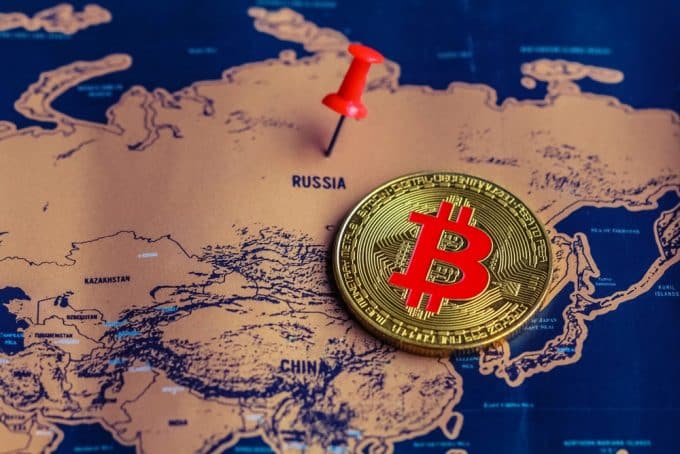
The Central Bank’s assessment frames cryptocurrencies as a threat to the financial sovereignty of the nation and its citizens, citing concerns over money laundering and excessive speculative volatility. This is a significant blow to the ecosystem; Russia currently accounts for approximately 10% of the world’s total Bitcoin mining capacity. By attempting to curb this activity, the Russian government is essentially proposing to dismantle a major piece of the global network infrastructure.
The international community has watched these developments with concern. U.S. officials, including Jake Sullivan, have characterized the Russian posture as "hypocrisy," particularly in light of the country’s previous engagement with the digital asset sector. Furthermore, the Russian government has hinted at plans to impound unlawfully acquired cryptocurrencies, a move that adds a layer of legal risk for Russian citizens and international investors who operate within the region.
Implications: The Interlinked Future of Global Finance
The current state of the market suggests that the "decoupling" theory—the idea that cryptocurrency markets operate independently of geopolitical and macroeconomic events—has been largely debunked. Most market specialists now agree that the future of digital assets is fundamentally interlinked with the global financial system.
The Macro-Geopolitical Linkage
The invasion jitters are a reminder that Bitcoin, while decentralized in its protocol, is centralized in its adoption. As long as retail and institutional investors hold Bitcoin as a portion of their broader, diversified portfolios, any global crisis that prompts a "risk-off" move in the S&P 500 or the Nasdaq will inevitably trigger a sell-off in crypto. The current market decline is, in effect, a vote of no-confidence by investors who are prioritizing liquidity over long-term holding strategies in the face of a potential kinetic war.
The Regulatory Domino Effect
The Russian proposal to ban mining and trading could have a ripple effect on global hash rates. If mining operations are forced to relocate, the network may experience temporary latency issues or shifts in geographical distribution, which could further unsettle the market. However, history has shown that Bitcoin mining is remarkably resilient; the "Great Migration" following China’s mining ban in 2021 proved that the network can adapt to regulatory hostility by relocating to more crypto-friendly jurisdictions.
Investor Sentiment and Future Outlook
Despite the current $200 billion loss, there remains a contingent of market participants who view this pullback as a temporary correction rather than a terminal decline. The fact that Bitcoin has not plummeted below its $32,950 support level suggests that there is still significant "buy-the-dip" interest among long-term holders.
However, the path forward is fraught with obstacles. Until the geopolitical climate in Ukraine stabilizes and the regulatory roadmap in Russia becomes clearer, the cryptocurrency market is likely to remain trapped in a cycle of high volatility. For investors, the takeaway is clear: the maturation of the cryptocurrency market has brought it into the crosshairs of global power struggles. As digital assets continue to integrate into the mainstream financial fabric, they will be increasingly subjected to the same stresses, regulations, and geopolitical winds that shape traditional asset classes.
In conclusion, while the technology behind Bitcoin and Ethereum remains fundamentally unchanged, their market valuations are currently being dictated by a volatile mix of military threats and authoritarian policy. The coming weeks will be a critical test of the market’s resilience—and perhaps the final confirmation that in the 21st century, there is no such thing as an isolated financial market.
