

Introduction: A New Frontier of Ethical Contention
The intersection of high-stakes political power and the volatile world of decentralized finance has reached a fever pitch. Following the recent public disclosure that President Donald Trump accumulated over $1.2 billion in crypto-related earnings over the past year, the debate regarding ethical standards for elected officials has shifted from traditional stocks to the wild, largely unregulated frontier of meme coins.
New York Senator Kirsten Gillibrand, long considered a pragmatic voice in the Democratic caucus regarding financial innovation, has reignited her legislative campaign to impose a strict ban on the issuance and promotion of digital assets by federal officeholders and their spouses. The move comes as the astronomical profits generated by the Trump family—most notably from a Solana-based meme coin project—have sparked bipartisan concern about the potential for market manipulation, conflicts of interest, and the erosion of public trust in government institutions.
Main Facts: The $1.2 Billion Disclosure
The catalyst for this renewed legislative push is the disclosure of the President’s personal financial gains. According to regulatory filings, President Trump’s crypto portfolio surged by more than $1.2 billion in the previous year. This figure is not merely a reflection of passive market appreciation but is deeply tied to active engagement in the "meme coin" economy—a sector characterized by extreme volatility and social-media-driven speculation.
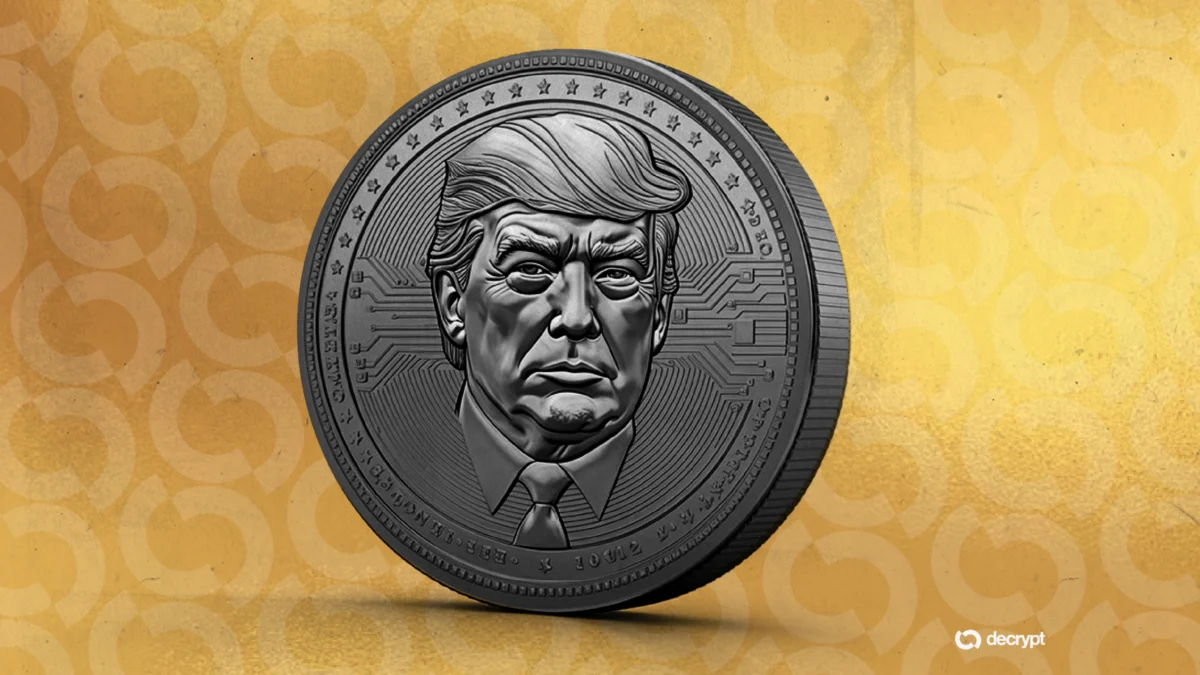
Specifically, reports indicate that the President realized upwards of $635 million from a single Solana-based digital asset venture. These numbers have placed the White House at the center of an ethics storm. Critics argue that when a head of state leverages their platform to promote, launch, or benefit from speculative tokens, they fundamentally alter market dynamics, effectively using their office to pump the value of assets in which they hold significant equity.
Chronology: A Trajectory of Legislative Frustration
The path to this moment has been paved with months of legislative maneuvering and stalled negotiations.
- Early 2026: Senator Gillibrand begins building a coalition to address the perceived "wild west" of digital asset trading within Congress, focusing on the potential for insider trading in prediction markets.
- May 2026: As the "Clarity Act"—a landmark market structure bill intended to provide regulatory certainty for the crypto industry—begins its trek through the Senate, Gillibrand publicly ties its passage to the inclusion of rigorous ethics provisions. She warns that without guardrails preventing the President and Congress members from issuing tokens, the bill lacks moral legitimacy.
- Summer 2026: The Clarity Act passes a critical Senate committee vote. However, the anticipated "ethical guardrails" were notably absent from the final text of that draft, leading to a rift among Democratic leadership.
- Late 2026: Following the disclosure of the President’s $1.2 billion haul, Gillibrand formalizes her call for a targeted ban on meme coin issuance, arguing that the status quo is untenable for the integrity of the financial system.
Supporting Data: The Volatility of Influence
The data surrounding the Trump family’s involvement in digital assets serves as a case study for why regulators are increasingly concerned. Meme coins—tokens often created as jokes or satirical commentary—rarely carry the underlying utility of major assets like Bitcoin or Ethereum. Their value is almost entirely dependent on community engagement and, in this instance, the "Trump Effect."
Research from industry analysts, including those at Galaxy, suggests that the market for these assets is highly sensitive to political rhetoric. When a high-ranking official benefits from an asset they can influence through public statements or policy posturing, the line between personal enrichment and public service vanishes.
According to market analysts, the "50-50" odds currently assigned to the passage of the Clarity Act are not merely a function of time constraints on the legislative calendar; they are a reflection of the political deadlock created by the desire to foster crypto innovation while simultaneously policing the blatant self-dealing of its most prominent advocates.
Official Responses and Political Strategy
Senator Gillibrand’s stance has been unequivocal. In a recent press release, she framed the issue not as an attack on technology, but as a safeguard for democratic values.
"This is a commonsense requirement that should get broad bipartisan support—public officials and their spouses should not be issuing meme coins," Gillibrand stated. She emphasized that the primary goal of any financial reform should be to expand economic opportunity for the "millions of Americans our financial system has left behind," rather than providing a vehicle for those already in power to extract wealth from the digital economy.
Furthermore, Gillibrand has linked her current push to her long-standing advocacy for banning stock trading among members of Congress. Her strategy is to frame digital asset ethics as a natural extension of existing conflict-of-interest laws. By treating tokens like stocks—or even more stringently, given their lack of oversight—she aims to force a vote on the matter before the legislative session concludes.
Implications: The Future of Digital Finance and Governance
The Erosion of Consumer Protections
If politicians are permitted to mint and promote assets without oversight, the incentive to prioritize consumer protection vanishes. Senator Gillibrand has argued that self-dealing by the executive branch prevents the government from effectively cracking down on illicit finance. If the government is viewed as a participant in the "pump-and-dump" culture of the meme coin space, its ability to regulate the industry fairly is compromised.
The Legislative Bottleneck
The Clarity Act, once hailed as the potential savior of the U.S. crypto sector, now faces a precarious future. Industry lobbyists are caught between a rock and a hard place: they need the bill to pass to ensure legal clarity, but they are increasingly wary of being associated with the ethics scandals currently surrounding the White House. The "50-50" odds mentioned by researchers highlight that the Senate is hesitant to pass a bill that might be perceived as a "green light" for further political crypto exploitation.
Defining "Official" Behavior
The broader implication is the redefinition of what constitutes "official behavior." In the 20th century, ethics reforms focused on blind trusts and stock portfolios. In the 21st century, the definition of an "asset" has expanded to include NFTs, tokens, and decentralized protocols. The current debate is forcing the federal government to confront the fact that current ethics laws are woefully outdated.
If Senator Gillibrand’s push succeeds, it would establish a landmark precedent: that a digital wallet is no different from a brokerage account, and that the power of the Presidency cannot be used to inflate the value of one’s own private, digital holdings.
Conclusion: The Urgency of Reform
As the legislative clock ticks down, the urgency of Senator Gillibrand’s call grows. The "cashing in on office" phenomenon, while not new in human history, has found a uniquely efficient and high-speed delivery mechanism in the world of cryptocurrency.
Whether the Senate will prioritize the integrity of the financial system over the political aspirations of its members remains to be seen. However, one thing is clear: the era of "crypto-politics" has forced a reckoning that can no longer be ignored. The public, the markets, and the legislative branch are all watching to see if the law can catch up to the technology, or if the digital gold rush will permanently alter the ethical landscape of American democracy.
The coming weeks will likely determine whether the Clarity Act emerges as a piece of functional policy or as another casualty of the growing divide between those who believe in the promise of decentralized technology and those who believe it has become the ultimate tool for political self-enrichment.
