

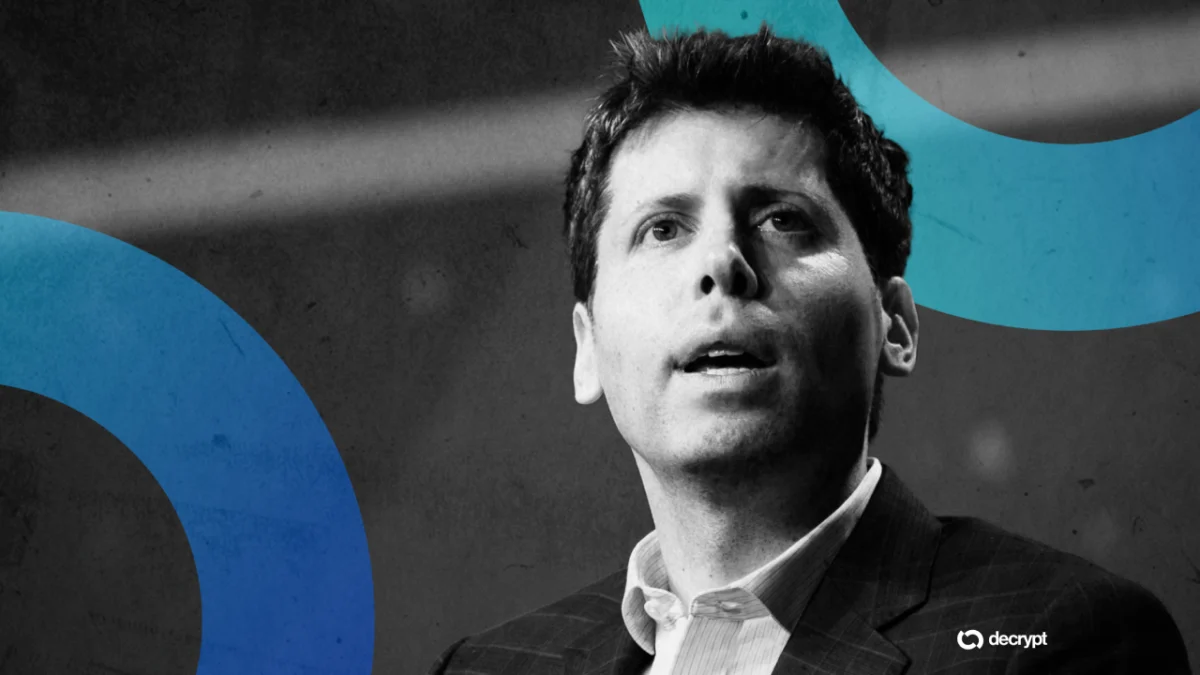
In a move that could fundamentally redefine the relationship between Silicon Valley and the federal government, OpenAI is engaged in high-level discussions with the Donald Trump administration to hand over a 5% equity stake in the company to the United States government. This proposal, first reported by the Financial Times, represents a radical departure from traditional corporate governance and underscores the growing influence of AI as a strategic national asset.
At the heart of this proposal is an $852 billion valuation—the figure established during OpenAI’s March funding round. A 5% slice of the artificial intelligence giant would be valued at approximately $42.6 billion, creating an unprecedented financial nexus between the executive branch and one of the world’s most powerful private technology firms.
The Strategy: Democratizing the AI Dividend
OpenAI CEO Sam Altman has reportedly framed the proposal as a mechanism for "democratizing the economic upside" of artificial intelligence. By ceding equity, the company aims to ensure that the American public directly benefits from the rapid growth of the sector.
According to sources familiar with the discussions, Altman has taken the proposal directly to the highest levels of the current administration, including President Donald Trump, Commerce Secretary Howard Lutnick, and Treasury Secretary Scott Bessent. The conceptual framework mirrors the Alaska Permanent Fund—a state-owned vehicle that manages oil revenues and distributes annual dividends to state residents. Under the OpenAI proposal, the government would hold these shares in a sovereign wealth-style vehicle, potentially using the proceeds to benefit the broader populace.
However, the ambition does not stop at OpenAI’s front door. Industry observers note that Altman is reportedly advocating for a broader industry adoption of this model, suggesting that other major AI developers—including Anthropic, Google, and Meta—should cede similar 5% stakes. To date, these industry peers have remained conspicuously silent, having signaled no formal interest in joining the initiative.
A Chronology of Increasing Intervention
The proposal emerges against a backdrop of intensifying federal scrutiny and regulatory pressure. The relationship between Washington and the AI sector has grown increasingly transactional and fraught over the past year.
- Mid-June 2026: The Department of Defense labels Anthropic a "supply chain risk," leading to a period of restricted access for its models, including Mythos 5 and Fable 5.
- Late June 2026: Anthropic undergoes a month-long "lockdown" under emergency export controls, a move that starkly contrasts with OpenAI’s more cooperative approach.
- Early July 2026: OpenAI launches GPT-5.6 in a limited, restricted capacity. This follows a direct request from the White House’s Office of the National Cyber Director, which asked for a controlled rollout while federal officials finalize a comprehensive testing framework for frontier AI.
- August 2026 (Historical Context): The U.S. government cements a 9.9% stake in Intel by converting CHIPS Act grants into shares, a move that has since proven highly lucrative as the valuation of the stake soared from an initial $8.9 billion to over $50 billion.
These events mark a shift in how Washington manages "frontier tech." Rather than relying solely on regulatory oversight or antitrust litigation, the current administration has increasingly pivoted toward equity-based partnerships, effectively making the government a shareholder in the companies it regulates.
Supporting Data and Economic Context
The economic weight of the proposed deal is massive. With OpenAI’s valuation reaching $852 billion, a 5% stake is not merely a symbolic gesture—it is a fiscal powerhouse. The precedent for this state-equity model is already being established across the tech landscape.
The government’s previous deal with Intel serves as the blueprint. By converting $8.9 billion in grants into a 9.9% stake, the administration effectively secured a multi-billion dollar windfall as market conditions shifted. Furthermore, companies like AMD and Nvidia have already agreed to surrender 15% of their China-bound chip revenues in exchange for continued export licenses. President Trump has publicly signaled that he believes these negotiations should be even more aggressive, noting in May that he regretted not pushing for a larger stake in Intel.
The proposed 5% stake in OpenAI would be the first instance of the U.S. government holding equity in a private AI company, potentially complicating the firm’s path to its anticipated initial public offering (IPO). OpenAI is currently navigating a confidential IPO filing, alongside a multi-state investigation spearheaded by 42 state attorneys general, adding layers of complexity to the deal’s feasibility.
Official Responses and Political Hurdles
While the proposal is still in its conceptual stages, it has already ignited debate on Capitol Hill. Senator Bernie Sanders, who has met with Sam Altman recently, is advocating for a far more aggressive approach. Sanders has introduced legislation that would require the largest AI companies to surrender 50% of their equity to a public fund, with the proceeds distributed directly to Americans.
The contrast between Altman’s 5% proposal and Sanders’ 50% demand creates a difficult political middle ground. For OpenAI, the 5% figure may be a tactical attempt to appease the administration while forestalling more radical legislative actions.
From the government’s perspective, the deal is far from guaranteed. Any agreement of this magnitude would likely require Congressional approval, a hurdle that could prove insurmountable given the current partisan climate. Furthermore, the legal and ethical implications of the government acting as both regulator and shareholder remain a point of contention for constitutional scholars and market economists alike.
Implications: A New Era for Corporate-State Relations
The implications of the OpenAI proposal are profound. If successful, the deal would signal the end of the "hands-off" era of American tech regulation.
- Market Distortion: Critics argue that state ownership could create an uneven playing field, where companies that "pay to play" with equity receive preferential treatment from regulators, while those that refuse are subjected to stricter oversight or export blocks.
- Corporate Governance: OpenAI is effectively inviting the government into its boardroom. This raises significant questions regarding the independence of AI development. Will the government use its stake to influence safety protocols, or will it prioritize the financial performance of its investment?
- The "AI Sovereign Wealth" Model: If the government successfully secures stakes in the "Big Tech" of the 21st century, the U.S. could effectively build a massive, diversified investment portfolio backed by the growth of artificial intelligence. This would provide the federal government with a non-tax revenue stream, potentially changing how public services are funded.
- Competitive Disadvantage: For companies like Anthropic or Meta, the pressure to follow OpenAI’s lead could be suffocating. If the government makes equity ownership a prerequisite for large-scale federal contracts or favorable regulatory treatment, the industry could face a forced consolidation of the government-backed model.
As OpenAI navigates this delicate negotiation, the company faces a dual-track challenge: securing its future as a dominant global player while satisfying a government that is no longer content to simply regulate from the sidelines. Whether this move is a visionary step toward social equity or a dangerous entanglement of state and corporate power remains to be seen. What is clear, however, is that the era of the private, independent AI powerhouse is rapidly drawing to a close, replaced by a new, hybrid model where the lines between public policy and private profit are permanently blurred.
