

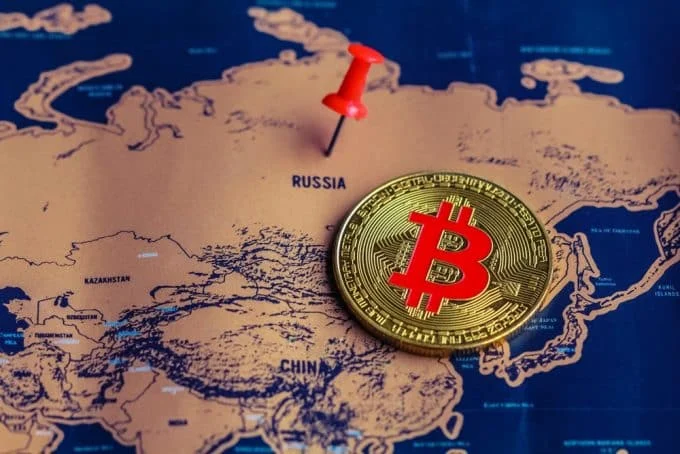
The global cryptocurrency landscape is currently navigating a period of profound uncertainty, characterized by a volatile collision of geopolitical tension and tightening regulatory scrutiny. As the specter of a potential Russian military incursion into Ukraine looms over international relations, digital asset markets have responded with significant downward pressure. This sensitivity underscores the evolving, albeit complex, relationship between decentralized finance and traditional macroeconomic triggers.
As of Thursday’s trading session, Bitcoin (BTC), the market’s bellwether, is trading at approximately $43,352 according to Coingecko data—a noticeable retreat from the $47,000 threshold observed at the dawn of the year. Ethereum (ETH), the world’s second-largest cryptocurrency by market capitalization, has mirrored this bearish trend, shedding 2.14% to reach $2,873. These movements are symptomatic of a broader risk-off sentiment currently permeating global financial markets as investors weigh the potential for a full-scale regional conflict against the backdrop of an already cooling appetite for speculative assets.
A Chronology of Escalation: From Border Tensions to Market Jitters
The current market volatility cannot be viewed in a vacuum; it is the culmination of months of deteriorating relations in Eastern Europe. The chronology of the current crisis began in late 2021, when satellite imagery and intelligence reports first identified a massive mobilization of Russian forces along the Ukrainian border.
By mid-January, the situation reached a critical juncture as diplomatic efforts between Washington and Moscow struggled to find common ground. On Monday, U.S. President Joe Biden held a high-stakes, hour-long conversation with Ukrainian President Volodymyr Zelensky. The focus of the dialogue was to coordinate a unified response to the military buildup, which now involves over 100,000 Russian troops.
U.S. National Security Adviser Jake Sullivan has consistently echoed the administration’s warnings, stating that an invasion could occur at any moment. These diplomatic warnings have acted as a direct catalyst for market anxiety. Whenever the rhetoric from the White House or the Kremlin intensifies, cryptocurrency markets have shown an immediate, often reflexive, downward reaction. This correlation was most evident when Bitcoin and Ethereum experienced a 9% correction to six-month lows, a move that sent shockwaves through the retail and institutional investor base alike.
Supporting Data: Analyzing the Volatility and Market Cap Erosion
To understand the severity of the current downturn, one must look at the quantitative data. According to BuyBitcoinWorldwide’s volatility index, Bitcoin’s 30-day volatility metric is currently reflecting the heightened state of market nervousness. While the asset’s 2021 average volatility stood at 4.56%, the current environment has forced a recalculation of risk profiles.
Despite the recent slump, it is important to contextualize Bitcoin’s performance. The asset has not fully relinquished the gains achieved during its recovery from the $32,950 floor hit just two weeks ago. However, the broader ecosystem has felt a much sharper sting. In a single 24-hour window, the aggregate cryptocurrency market lost approximately $200 billion in total valuation.
Currently, the total market capitalization of the cryptocurrency space sits at roughly $1.8 trillion, with Bitcoin’s dominance accounting for approximately $817.95 billion of that total. This massive withdrawal of liquidity highlights how investors are rapidly de-risking their portfolios in favor of safe-haven assets, such as U.S. Treasury bonds or gold, which historically benefit during periods of acute geopolitical instability.
Regulatory Hurdles: The Russian Central Bank’s "Blanket Ban" Proposal
Compounding the geopolitical pressure is a secondary, yet equally significant, threat: the potential for a total regulatory crackdown within the Russian Federation. Reports surfacing from the Central Bank of Russia suggest that the state is considering a comprehensive ban on both the mining and the trading of cryptocurrencies.
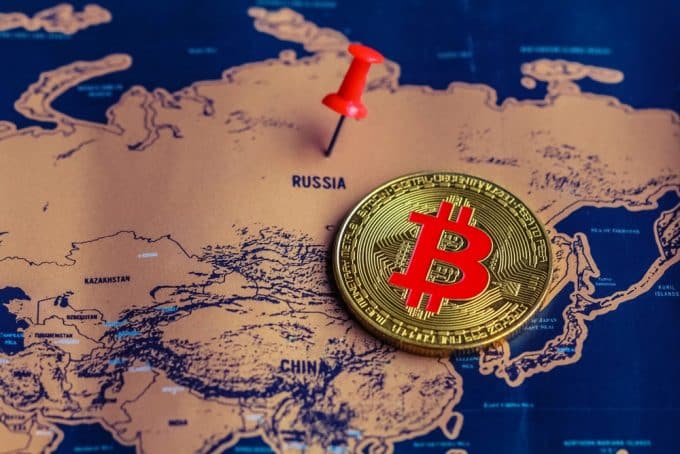
The rationale provided by the central bank leans heavily on concerns regarding financial stability and the potential for money laundering. However, skeptics suggest that this push is also rooted in a broader desire by the Kremlin to maintain centralized control over the national economy.
Russia holds a unique position in the global mining ecosystem, accounting for an estimated 10% of the world’s total Bitcoin hash rate. The prospect of a "blanket ban" is not merely a local issue; it has global implications. If Russia were to officially outlaw mining, a significant portion of the network’s hash power would be forced to migrate, potentially leading to a short-term drop in network security and increased volatility in transaction processing.
Furthermore, the Russian government has indicated plans to impound unlawfully acquired cryptocurrencies, signaling a move toward more aggressive legal enforcement. This regulatory hostility has created a "double-threat" scenario: investors are not only worried about the physical threat of war in Europe but are also grappling with the existential threat of major nations shutting the doors on the crypto economy.
Official Responses and Diplomatic Stalemates
The Kremlin has largely rejected Western warnings regarding an impending invasion, characterizing the rhetoric as "hypocrisy" and "fear-mongering." This dismissal has effectively stalled the diplomatic process, leaving global markets in a state of purgatory.
In the United States, the Biden administration continues to emphasize that the costs of a Russian incursion would be severe and immediate. For the crypto sector, these official responses are closely monitored. Many industry experts argue that the future of cryptocurrency is now inextricably linked to the trajectory of global macroeconomics. When the Federal Reserve signals interest rate hikes—as it has recently—and geopolitical tensions threaten the stability of the global supply chain, cryptocurrencies—often marketed as "digital gold"—have paradoxically struggled to decouple from the broader equity markets.
Implications for the Future: A New Era of Sensitivity?
The implications of this period for the cryptocurrency industry are manifold. First, it challenges the narrative of Bitcoin as a "store of value" in times of crisis. While proponents argue that Bitcoin’s long-term scarcity remains intact, the short-term reality is that it currently behaves more like a high-growth tech stock, sensitive to the whims of geopolitical stability.
Second, the potential for a Russian mining ban forces the industry to consider the decentralization of infrastructure. If a major mining hub can be rendered "illegal" overnight, the resilience of the Bitcoin network to regional regulatory shifts will be tested. While the network is mathematically designed to survive the loss of hash power through difficulty adjustments, the political narrative surrounding such a move could suppress institutional adoption for the foreseeable future.
Finally, the current market climate suggests that we are entering a new phase of maturity for digital assets. The days of "decoupling" from the traditional financial system remain an aspiration rather than a reality. As long as the crypto markets remain dominated by institutional capital and retail investors who also hold equity portfolios, they will remain susceptible to the same shocks that rock the Nasdaq, the S&P 500, and the geopolitical order of the 21st century.
As the situation in Ukraine continues to evolve, the cryptocurrency market remains at a crossroads. Investors are waiting for a signal—either a de-escalation in Eastern Europe or a clear regulatory framework—to determine the next major trend. Until that clarity arrives, the markets will likely continue to experience the oscillations of fear and hope, reminding all participants that in a globalized digital economy, no asset class is an island.
