

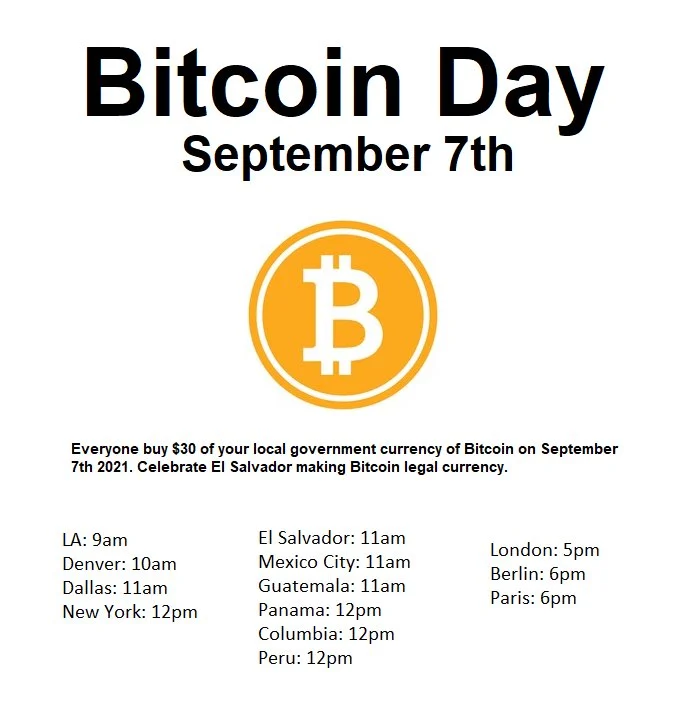
The global financial landscape is on the cusp of a paradigm shift. In a few short hours, the Republic of El Salvador will officially implement its "Bitcoin Law," marking a historic moment as the first sovereign nation to adopt a decentralized, digital asset as official legal tender. As the world watches to see if the experiment will stabilize or struggle, the international Bitcoin community has mobilized in a display of grassroots solidarity that transcends borders, languages, and traditional financial institutions.
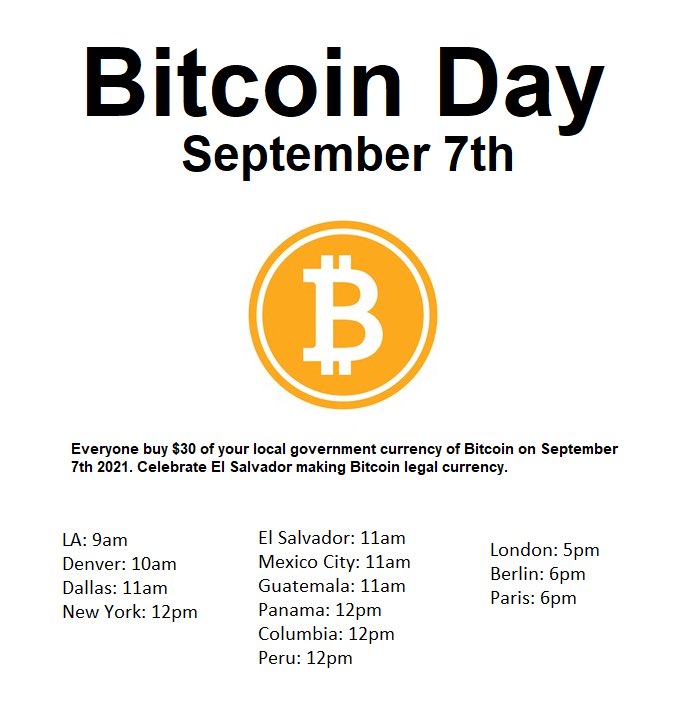
The movement, characterized by the mantra to "stack sats" (buying small increments of Bitcoin), has coalesced around a specific call to action: a coordinated purchase of $30 worth of BTC to commemorate the nation’s bold leap into the digital age.
The Genesis of a Grassroots Movement
The initiative did not originate from corporate boardrooms or institutional investment firms. Instead, it sprouted from the fertile, decentralized soil of the /r/Bitcoin subreddit. On September 5, 2021, a user posed a simple, provocative question: "So… We all buying $30 worth of Bitcoin on Tuesday?"
What followed was an unprecedented surge of digital consensus. The post quickly garnered over 8,900 upvotes and more than 2,200 comments, creating a viral feedback loop that spilled over into the broader cryptocurrency ecosystem. The symbolism of the $30 figure is twofold: it is a nod to the $30 in free Bitcoin that the Salvadoran government promised to provide to citizens via the "Chivo" digital wallet, and it is a price point accessible enough to ensure high participation without creating a massive, inorganic market manipulation.
While the primary goal of the movement is symbolic—a show of solidarity with the Salvadoran people—the sheer scale of the coordination has sparked intense debate regarding the ethics and efficacy of such collective market activity.
Chronology of the "Legal Tender" Event
To understand the gravity of this moment, one must look at the timeline of the legislation’s rollout:
- June 2021: President Nayib Bukele first announces the intention to adopt Bitcoin as legal tender during the Bitcoin 2021 conference in Miami.
- August 2021: The legislative assembly in El Salvador officially passes the Bitcoin Law, setting the stage for a September implementation.
- September 5-6, 2021: The "Buy $30" campaign gains momentum on social media, moving from Reddit to Twitter, and finding international traction in regions as far-flung as South Korea and Brazil.
- September 7, 2021: The official "Day of Bitcoin" in El Salvador. The law mandates that businesses must accept Bitcoin for goods and services, provided they have the technological capacity to do so.
This chronology marks the transition of Bitcoin from an internet-native asset class to a state-recognized monetary standard, a transition that has historically been reserved for central bank-issued fiat currencies.
Supporting Data: The Digital Solidarity Network
The fervor surrounding this event is backed by data-driven engagement across multiple social platforms. On Twitter, the hashtag #7SeptemberBuyBTC became a rallying cry. Influential figures within the Bitcoin space, including MicroStrategy CEO Michael Saylor, amplified the message. Saylor, who has been one of the most vocal institutional proponents of Bitcoin, utilized his massive platform to provide legitimacy to the community’s efforts.
The movement also transcended linguistic barriers. A Korean Bitcoin enthusiast translated the call to action, noting that for the Brazilian community, the date held additional significance as it coincided with Brazil’s Independence Day. This confluence of national pride and digital sovereignty created a unique cultural moment.
However, not all feedback has been positive. Critics have voiced concerns that such coordinated buying pressure could be interpreted as "greasy" or manipulative. Skeptics within the community have warned that the hype might be a trap for retail investors. One prominent Reddit user cautioned, "Everyone needs to be aware that this could possibly be leading the sheep to their death. Very nerve-wracking these narratives are coming out before we hit the huge retracement levels."
Official Responses and Market Skepticism
The reaction from traditional financial analysts and legacy institutions has been one of cautious skepticism. International bodies, such as the International Monetary Fund (IMF) and the World Bank, have expressed concerns regarding the volatility of Bitcoin and the potential for financial instability within the Salvadoran economy.
Within the Bitcoin community, the debate regarding market timing is fierce. While some view the collective buy as a gesture of support, others worry that institutional whales might use this artificial spike in volume to "dump" their positions on retail investors. The skepticism is rooted in market cycle theory, with some traders pointing to technical indicators suggesting that a "70.2% retracement" could be on the horizon.
Michael Saylor, despite the cynicism directed at him, has maintained a firm stance that MicroStrategy is a "long-term holder" and has no intention of divesting. "Bitcoin does not lie," remains the prevailing sentiment among the movement’s supporters. If institutional players or the government itself were to act against the interests of the community, the transparency of the public blockchain would make such actions immediately visible to all.
Implications for Global Finance
The implications of El Salvador’s move are profound. For the first time, a country is testing whether a deflationary, non-sovereign currency can function as an everyday medium of exchange in an economy traditionally reliant on remittances and US dollar liquidity.
1. Remittance Efficiency
A significant portion of El Salvador’s GDP comes from remittances sent by citizens working abroad. By utilizing the Bitcoin Lightning Network, the government aims to reduce the exorbitant fees charged by traditional money transfer services, effectively putting more money directly into the pockets of the Salvadoran people.
2. Financial Inclusion
With a large segment of the population currently "unbanked," the integration of a government-backed digital wallet provides a gateway to financial services that were previously inaccessible. This could stimulate economic growth and empower small business owners to participate in the global digital economy.
3. A Precedent for Sovereign Adoption
If the El Salvador experiment succeeds, it provides a blueprint for other developing nations currently struggling with inflation and currency devaluation. It challenges the hegemony of the US Dollar and potentially shifts the balance of power toward decentralized, algorithmic monetary policies.
The Road Ahead: A Test of Resilience
As the clock strikes the hour of implementation, the world is watching a high-stakes experiment. The "Buy $30" campaign is more than just a meme-fueled financial trade; it is a manifestation of the Bitcoin ethos: decentralized, collaborative, and inherently rebellious against the status quo.
Whether or not this collective action successfully "pumps the price" is perhaps the least significant aspect of the event. The real success will be measured by the adoption rate among Salvadoran citizens and the resilience of the nation’s infrastructure under the strain of a new, volatile monetary system.
As Tomer Strolight aptly noted on Twitter, there is a unique benevolence among Bitcoiners that is rarely seen in traditional finance. "Have you ever felt such benevolence to strangers from different nations, religions, and other affiliations as you do toward bitcoiners?"
Regardless of the immediate market outcome, September 7, 2021, will be etched into the annals of financial history. The "plebs," as they refer to themselves, have made their stance clear: they are not just investing in an asset; they are participating in the birth of a new global monetary order. As the sun rises over El Salvador, the eyes of the world are fixed on the small nation that dared to bet on the future of hard money.
