

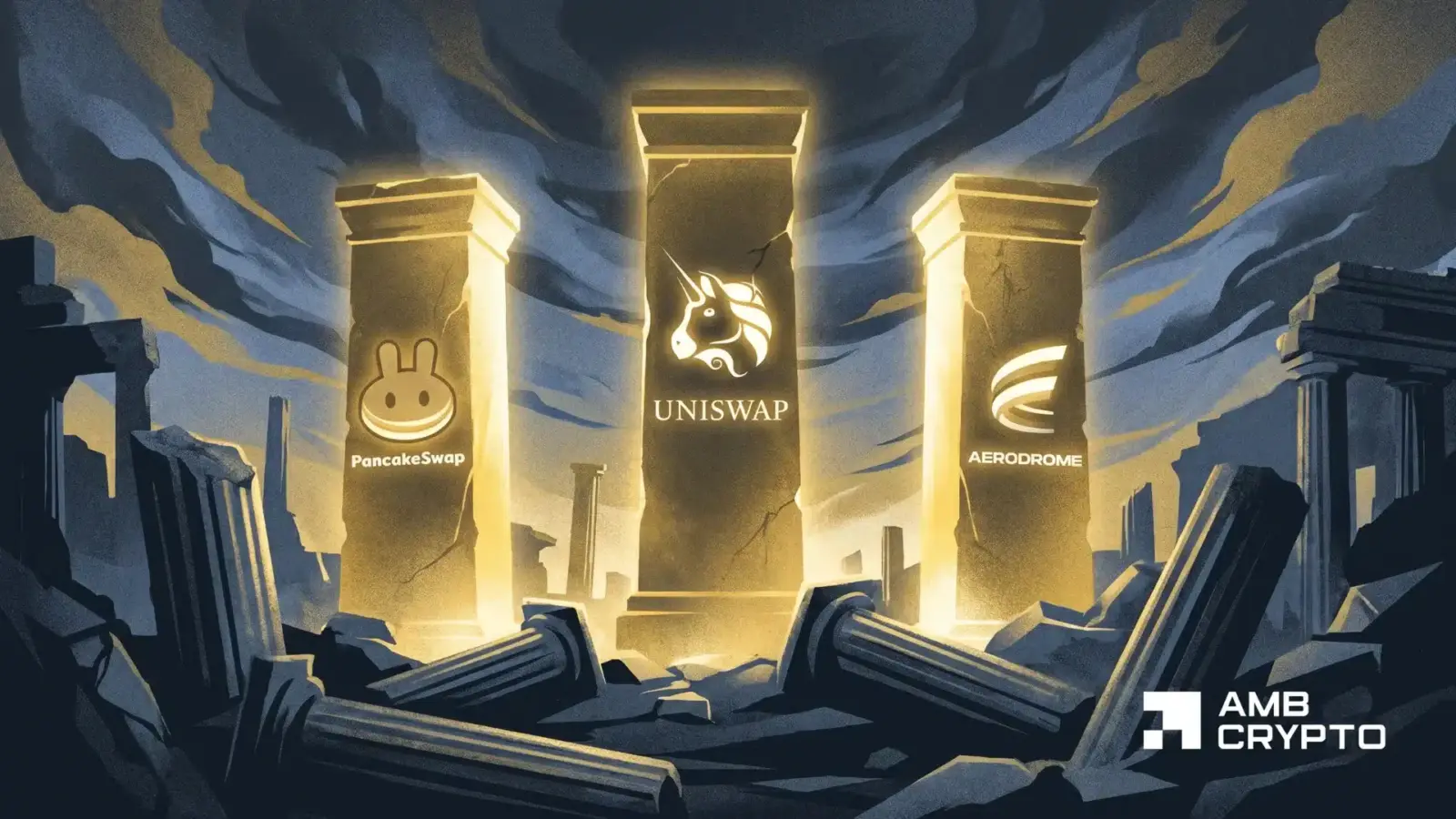
The decentralized finance (DeFi) sector, once the unstoppable engine of the cryptocurrency ecosystem, is currently navigating a period of profound uncertainty. Recent data from DeFiLlama paints a sobering picture of a market in contraction: as of May 28, 2026, daily trading volume on Decentralized Exchanges (DEXs) has plummeted to approximately $6.047 billion, a staggering decline from the $22 billion recorded in late January of the same year. This contraction has reignited a perennial, albeit contentious, debate across industry forums and social media: "Is DeFi finally dying?"
While the numbers are undeniably stark, market analysts suggest that a binary interpretation—either "growth" or "death"—fails to capture the structural evolution occurring within the blockchain space. To understand the current climate, one must look beyond the raw numbers and examine the shifting tides of investor sentiment, institutional capital flows, and the historical cycles that have defined DeFi’s resilient, if volatile, trajectory.
The Chronology of Contraction: From Peak to Pressure
To contextualize the current downturn, we must look back at the meteoric rise and subsequent correction of the market. In October 2025, the DeFi landscape was characterized by exuberance. At its zenith, weekly DEX volumes surged to a massive $159 billion, fueled by a combination of retail interest in memecoins and a buoyant broader crypto market.
However, the "October Crash" of 2025 served as a violent inflection point. Since that period, the market has struggled to regain its footing, experiencing consistent week-on-week declines. Current weekly volumes are hovering near the $40 billion mark—a precipitous drop of roughly 76% from the highs of early 2025.
Timeline of the Recent Decline:
- October 2025: Market peak, with weekly DEX volume hitting $159 billion.
- Late January 2026: A temporary stabilization period where daily volume reached $22 billion.
- April 2026: Market anxiety deepens as monthly volume hits a then-low of $55.5 billion.
- May 2026: The current "drought" phase, with daily volumes sinking to roughly $6 billion, signaling a significant retreat in on-chain activity.
Market Dominance Amidst the Downturn
Despite the overall contraction in liquidity, the "blue-chip" protocols of the DEX world continue to command the lion’s share of whatever volume remains. Data from May 2026 highlights the resilience of the industry’s stalwarts.
Uniswap [UNI] continues to lead the pack, recording daily figures of $1.428 billion. Following closely is PancakeSwap [CAKE], which maintains a robust presence with $805.97 million in volume. Aerodrome Finance [AERO] has cemented its position as a major contender, capturing third place with $798.11 million.
The fact that these three platforms continue to dominate suggests that while the total market volume is shrinking, user activity is consolidating toward established, battle-tested protocols. This "flight to quality" is a hallmark of bear markets, where risk appetite for experimental or unproven yield farms evaporates, leaving behind only the most reliable infrastructure.

Supporting Data and Underlying Drivers
Why is this happening now? The collapse in DEX activity is rarely the result of a single factor; rather, it is an intersection of macroeconomic trends and internal market dynamics.
1. The Shift to Stability
When the broader market shows signs of weakness—evidenced by a 3% drop in total crypto market capitalization over the last 24 hours—investors tend to rotate their assets. There is a clear migration from volatile altcoins toward stablecoins or, in many cases, a total exit to fiat currency. As DEXs are primarily used for trading altcoins, a reduction in the "gambling" aspect of crypto directly correlates to lower exchange volumes.
2. Institutional De-risking
Institutional players, who have increasingly entered the DeFi space over the last two years, are highly sensitive to volatility. When the macro environment turns bearish, these entities are the first to lower their exposure, pulling liquidity from automated market makers (AMMs) and reducing the frequency of on-chain trades.
3. The "Speculation Cleanse"
It is essential to distinguish between a "dying" industry and a "correcting" one. Much of the volume seen in 2025 was driven by unsustainable speculation and the rapid-fire launch of memecoins. A drop in volume can be viewed as the market flushing out this excess, creating a more stable, albeit less frenetic, environment for future growth.
Historical Context: DeFi’s Cycle of Rebirth
History shows us that DeFi is a master of reinvention. The industry has survived multiple "death" warnings by constantly pivoting its value proposition:
- 2020: The birth of Yield Farming, which introduced the concept of liquidity mining and drew massive TVL (Total Value Locked) into the space.
- 2021: "DeFi Summer" and the integration of NFTs, which expanded the utility of decentralized assets beyond simple swapping.
- 2023: The rise of Liquid Staking, allowing users to earn yield on staked assets while maintaining liquidity.
- 2024–2025: A pivot toward the Base Ecosystem and the memecoin mania, which, while volatile, brought millions of new users into the on-chain ecosystem.
Each of these eras was marked by a period of cooling, followed by a transition to a new, more advanced model of operation. The current decline may simply be the precursor to a new, as-yet-undefined narrative that will redefine how decentralized markets operate.
Implications for the Future
The current downturn has significant implications for the developers, liquidity providers, and governance token holders within the space.

For Developers:
The era of "launching a fork and hoping for liquidity" is over. Projects that do not offer tangible utility or solve genuine efficiency problems will likely cease to exist as volume dries up. The focus is shifting toward capital efficiency—optimizing how liquidity is utilized to ensure that even lower volumes can support deep, slippage-free trading.
For Investors:
The decline in volume is a warning sign to exercise caution. Liquidity mining rewards are becoming harder to sustain, and the "yield" in many protocols is becoming increasingly decoupled from real trading fees. Investors must now perform deeper due diligence, favoring protocols with sustainable revenue models rather than those reliant on inflationary token emissions.
For the DeFi Ecosystem:
The consolidation of volume into the top three or four DEXs suggests that the industry is maturing into an oligopoly. While this may raise concerns about centralization, it also provides a more stable foundation for the integration of traditional finance (TradFi) into decentralized structures.
Conclusion: Is the "Death" Narrative Premature?
To conclude that DeFi is dying because of a decline in volume is to ignore the foundational utility of the technology. Decentralized exchanges provide a censorship-resistant, permissionless, and global alternative to the traditional financial system. These attributes remain just as valuable today as they were at the peak of the 2025 bull run.
While the "DEX volume" metric is a key indicator of health, it is not the only indicator. The industry is currently in a phase of introspection, where the froth of the 2025 cycle is being removed, and the focus is returning to fundamental utility. If history is any guide, this period of contraction is not a funeral for decentralized finance, but rather a necessary restructuring before the next evolution. The names of the dominant protocols may change, and the mechanisms of liquidity may evolve, but the core promise of DeFi—that finance should be open, transparent, and decentralized—remains firmly intact.
