

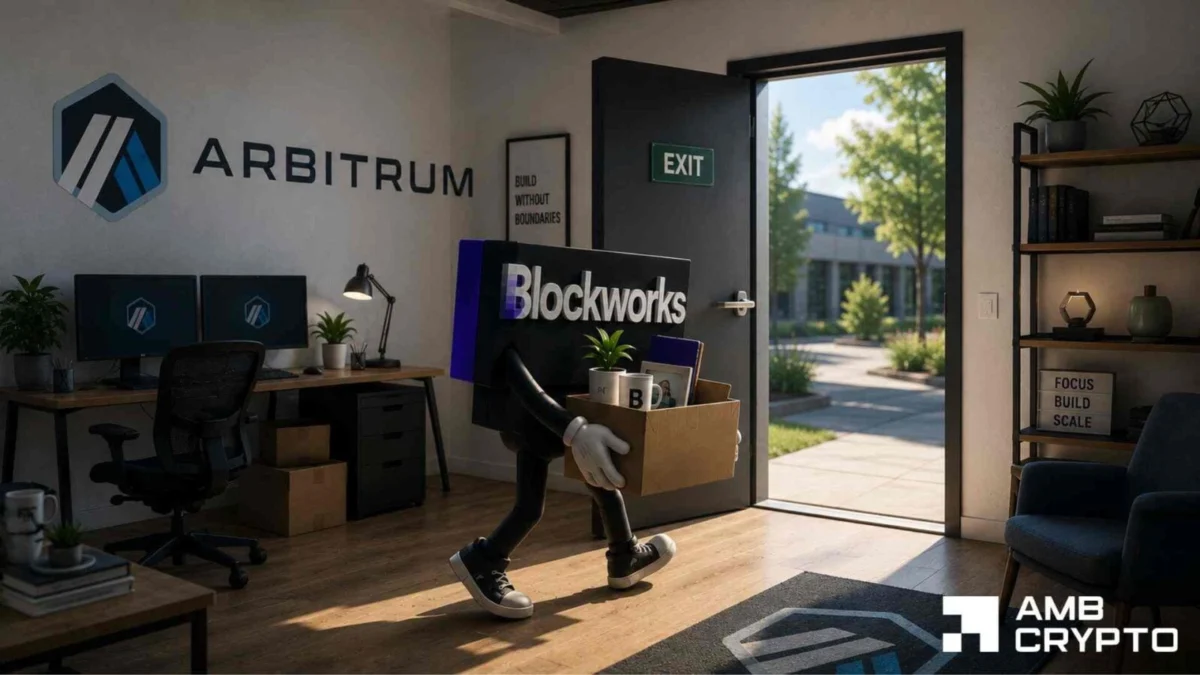
In a move that has sent ripples through the decentralized finance (DeFi) ecosystem, Blockworks Advisory, one of the most prominent delegates within the Arbitrum DAO, has announced it will wind down its governance participation. As the second-largest delegate on the Arbitrum network—trailing only Entropy Advisors—Blockworks’ withdrawal marks more than a simple operational change; it serves as a bellwether for the shifting power dynamics between professional delegates, original protocol builders, and the increasingly complex regulatory environment surrounding Decentralized Autonomous Organizations (DAOs).
The announcement, delivered via a statement on June 1st, was framed by the firm as a strategic realignment of business objectives rather than a vote of no confidence in the Arbitrum ecosystem. Despite this, the move has catalyzed a broader discussion regarding the sustainability of the "three-layered" governance model that has defined the blockchain industry for the better part of a decade.
The Chronology of a Governance Exit
The decision by Blockworks to step back from active delegation did not occur in a vacuum. To understand the weight of this exit, one must look at the timeline of events that preceded the firm’s decision:
- The Rise of Professional Delegation: Over the last two years, Arbitrum’s DAO evolved from a community-led experiment into a sophisticated governing body. Firms like Blockworks became integral to this structure, providing the technical and legal oversight necessary to manage a multi-billion dollar treasury.
- The Aave Governance Friction: Early 2024 saw significant tension within the Aave DAO, as the protocol’s core development entity, Aave Labs, engaged in a high-profile dispute with community delegates. This incident highlighted a growing desire from "Lab" companies to reclaim control over the protocols they initially birthed.
- The Regulatory Realignment: Throughout the first half of 2024, the U.S. regulatory environment began to shift. The cooling of aggressive SEC enforcement actions, coupled with the introduction of the CLARITY Act, provided a new framework for what constitutes a "mature" blockchain. This shift lowered the perceived need for the "shield" of decentralization that DAOs previously provided.
- The June 1st Announcement: Blockworks publicly declared its intention to phase out its role, explicitly stating that it would no longer serve as an active delegate. The firm urged its constituents to re-delegate their voting power to other active, community-focused contributors to ensure the continuity of governance.
- Market Reaction: Following the news, the ARB token experienced a 6% pullback. While analysts noted that broader market trends, including a Bitcoin-led contraction, contributed to this decline, the uncertainty surrounding Arbitrum’s governance stability was undeniably a contributing factor.
The "Three-Layered" Model Under Fire
For years, the gold standard for a successful decentralized project has been the three-layered approach. This structure was designed to balance innovation with decentralization and legal compliance:
- The Lab Company: Entities such as Offchain Labs (for Arbitrum) or Aave Labs (for Aave) act as the R&D engines, raising capital and building the initial core architecture of the protocol.
- The Foundation: This serves as the legal bridge between the digital protocol and the traditional world. Foundations manage treasury reserves and handle off-chain contracts, ensuring the DAO has the resources to operate.
- The DAO/Governors: This is the community layer, responsible for voting on treasury allocations, protocol upgrades, and ecosystem growth initiatives.
Historically, this model was touted as the ultimate defense against regulatory scrutiny. By distributing power to the DAO, builders could claim that no single entity exercised control, thereby mitigating the risk of the project being classified as an unregistered security.
However, as Joseph Axisa, a legal advisory specialist and managing partner at Axis Group, notes, this model is under significant stress. "As DAOs continue to be squeezed by the influence of Lab companies, we are witnessing a fundamental pivot," Axisa explained. "Professional delegates are realizing that the cost and political complexity of managing these protocols—without having the final say—is becoming unsustainable. This exit will become a trend."
Supporting Data: The Illusion of Decentralization
The friction within DAOs is compounded by mounting empirical evidence that suggests current governance models are far more centralized than their marketing claims. A recent study published by the European Central Bank (ECB) has cast a long shadow over the sector, revealing that in many prominent DeFi DAOs, a mere 100 wallets control up to 96% of the delegated voting power.
This concentration of power undermines the fundamental premise of "community governance." When a small group of entities holds near-total control, the presence of professional delegates often becomes redundant or, worse, a target for political maneuvering. If a Lab company wants a specific outcome, they can often influence the small cohort of large voters, effectively rendering the public debate a performative exercise.
For firms like Blockworks, the effort required to analyze proposals, engage in discourse, and maintain neutrality in a system prone to such capture represents a diminishing return on investment. The transition from being a neutral steward to a participant in an increasingly "top-down" governance structure has forced many professional firms to rethink their value proposition.
Official Responses and Strategic Pivot
Blockworks’ official stance remains one of diplomatic support for the ecosystem. Their statement emphasized that the decision should not be viewed as a "bet against the Arbitrum DAO itself." By framing the exit as a shift in business goals, Blockworks has sought to maintain its reputation within the ecosystem while distancing itself from the growing administrative burdens of DAO governance.

"Stepping back from active delegation is, for Blockworks, a way to align with the current business goals of our organization," the statement read. The firm remains bullish on the "bright future" of Arbitrum, suggesting that the network’s underlying technology remains robust regardless of the governance structure that manages its treasury.
This sentiment is shared by many in the industry who argue that the "governance" phase of DeFi may be reaching a state of maturity. As protocols move toward "post-governance" states—where code becomes immutable and the need for frequent voting decreases—the role of an active, paid delegate becomes less critical.
Implications for the Future of DeFi
The departure of a major delegate like Blockworks has profound implications for the future of decentralized governance:
1. The Rise of "Lab-Centric" Governance
We are entering an era where Lab companies are openly reclaiming authority. This is not necessarily a negative development; it provides greater accountability and faster decision-making. However, it requires a recalibration of how investors perceive "decentralized" assets. Protocols that are effectively governed by their original builders may be safer, but they are also more centralized, which could affect their status in the eyes of regulators.
2. Regulatory Clarity as a Double-Edged Sword
The emergence of clear regulatory guidelines, such as the CLARITY Act, means that projects no longer need to pretend they are fully decentralized to avoid the SEC. This transparency allows builders to adopt more efficient governance models without the constant threat of enforcement. Paradoxically, the more "legal" a project becomes, the less "DAO-like" it may need to be.
3. The Professional Delegate Dilemma
The business model of a professional delegate is increasingly precarious. Without a clear path to monetization or influence, these firms are essentially providing free labor to a system that is becoming increasingly dominated by internal stakeholders. We should expect a consolidation in this space, where only those delegates with deep ties to the Lab companies survive.
4. Market Volatility and Governance
The 6% drop in ARB following the announcement serves as a warning to stakeholders. Governance is a core component of a protocol’s value. When key participants exit, it signals a change in the protocol’s health. Future DAO structures will need to find ways to incentivize participation that don’t rely solely on the altruism or brand-building of third-party firms.
Conclusion: A Maturing Ecosystem
The decision by Blockworks to exit the Arbitrum governance role is a symptom of a maturing industry. The "wild west" phase of DeFi, where decentralization was the primary goal, is being replaced by a more pragmatic phase focused on efficiency, legal compliance, and sustainability.
As DAOs evolve, the "three-layered" model will likely undergo significant surgery. We may see a shift toward smaller, more agile governing bodies, or perhaps a move toward hybrid models where Lab companies retain specific veto powers while community members focus on treasury growth.
For Arbitrum, the path forward remains bright, provided the community can fill the vacuum left by Blockworks and other departing delegates. The challenge now is to prove that a decentralized network can survive—and thrive—when the original, idealistic vision of universal participation gives way to the realities of professional management and institutional control. The governance landscape of 2024 is no longer about the quantity of voters, but the quality of the decisions being made—and for many, that shift cannot come soon enough.
