

In a stark reminder of the persistent vulnerabilities within the decentralized finance (DeFi) ecosystem, Taiko, an Ethereum Layer 2 (L2) scaling solution, has suffered a significant security breach. The exploit, which targeted the project’s core infrastructure rather than user-level activity, resulted in the illicit withdrawal of approximately $1.7 million in digital assets. This incident has sent shockwaves through the L2 community, raising critical questions regarding the robustness of chain-state verification mechanisms and the underlying security assumptions that govern modern scaling protocols.
The Anatomy of the Exploit
The breach originated from a failure in Taiko’s chain-state verification mechanism. By bypassing essential validation checks, the attacker was able to gain unauthorized access to the network’s critical assets. This was not a typical phishing attack or a social engineering scheme; rather, it was a sophisticated technical intervention that exploited the "plumbing" of the L2 bridge.
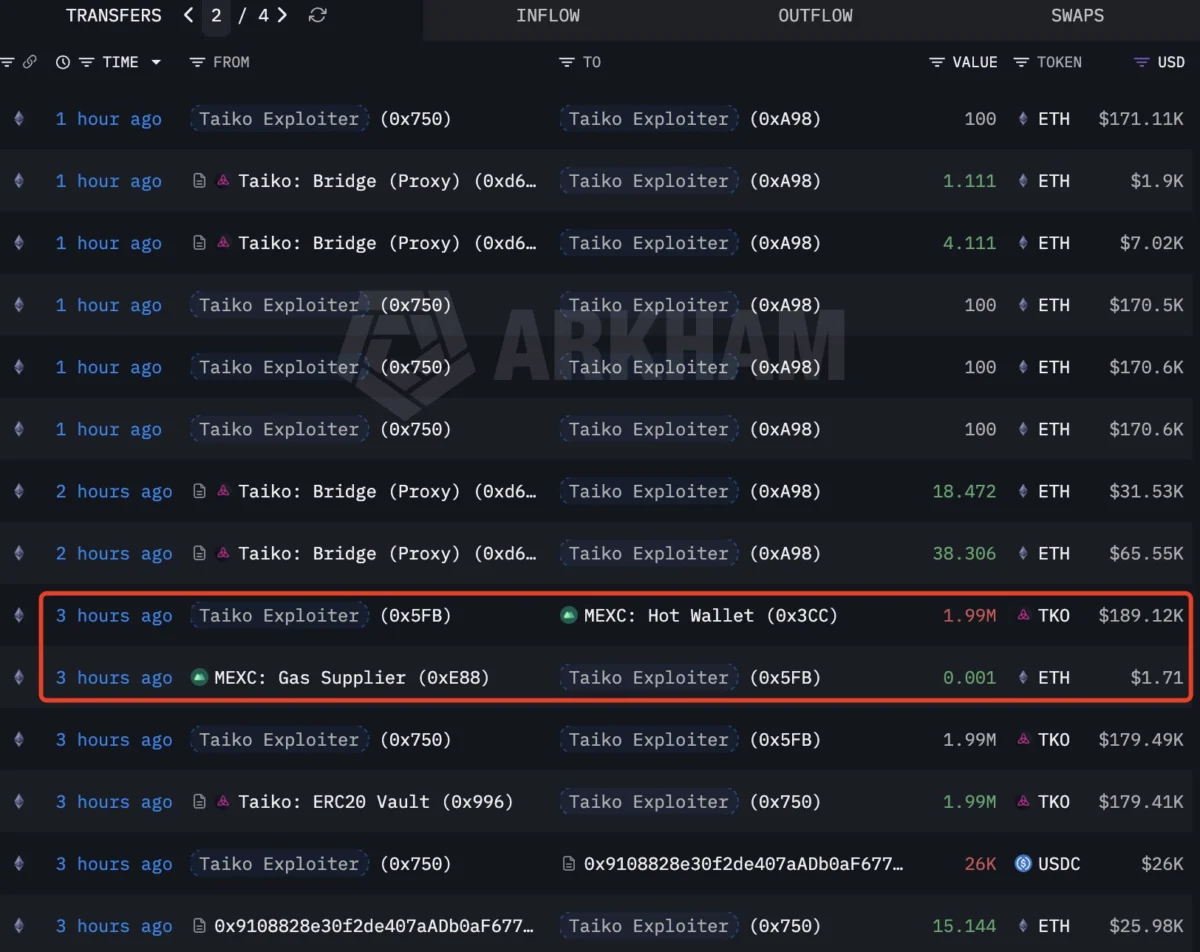
The attacker successfully targeted the ERC20 Vault and the Taiko Bridge Proxy Contracts. These contracts serve as the gateway for assets moving between the Ethereum mainnet and the Taiko ecosystem. Once the verification checks were circumvented, the perpetrator drained the liquidity stored within these vaults. Immediately following the breach, the stolen assets were consolidated into a series of centralized wallets, marking the commencement of a rapid monetization phase.
Chronology of the Incident
The sequence of events unfolded with clinical precision, suggesting a well-planned maneuver by the malicious actor:
- The Initial Breach: The attacker exploited the chain-state verification failure, successfully accessing the ERC20 Vault and Bridge Proxy Contracts.
- Asset Consolidation: Post-breach, the stolen funds were aggregated into specific addresses to facilitate easier management and eventual laundering.
- Initial Monetization: Within moments of the consolidation, the exploiter moved 1.99 million TKO tokens—valued at approximately $189,000 at the time—to the MEXC exchange’s hot wallet. This move signaled a desire for immediate liquidity, likely to convert the native tokens into more stable or harder-to-trace assets.
- Containment Efforts: Upon detecting the anomaly, the Taiko team initiated emergency protocols. Recognizing the gravity of the situation, they ordered all block proposers to cease the production of new blocks. This "emergency stop" was designed to halt any further unauthorized transactions while the development team conducted a forensic analysis of the vulnerability.
- Coordinated Defense: Taiko leadership reached out to major centralized exchanges (CEXs) to blacklist the attacker’s identified wallet addresses, effectively creating a "digital blockade" to prevent the further off-ramping of stolen TKO tokens.
Supporting Data and Market Impact
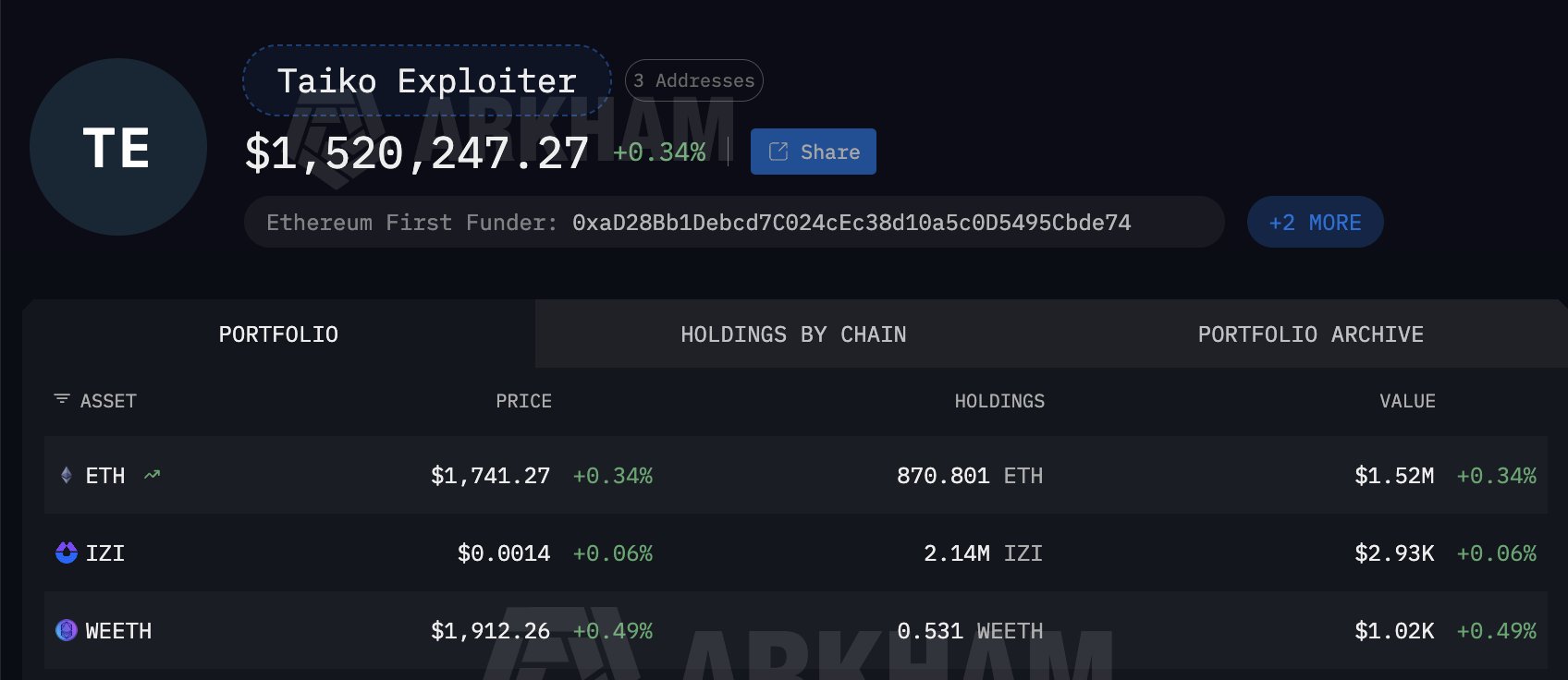
The financial aftermath of the hack has been severe, both for the protocol’s liquidity and its token valuation. According to on-chain data provided by Arkham Intelligence, the exploiter remains in possession of approximately 870.8 ETH, valued at roughly $1.52 million. This significant concentration of funds suggests that the majority of the loot has yet to be moved through privacy mixers or decentralized exchanges, keeping the assets under high-intensity surveillance by security firms and community sleuths.
Market Reaction
The market response was swift and negative. Following the news of the breach, the TKO token experienced a sharp decline. Prices dropped from $0.1279 to a low of $0.07499, representing a nearly 10% decrease in market capitalization in a matter of hours.
Protocol Health Metrics
Despite the volatility, the broader Taiko ecosystem showed signs of resilience in its fundamental metrics:
- DeFi TVL: Data from DeFiLlama indicated that the Total Value Locked (TVL) in Taiko’s DeFi protocols actually rose to $3.84 million, a 3.64% increase, perhaps indicating user confidence in the recovery process or automated adjustments in liquidity provisioning.
- Bridged TVL: The bridged assets remained stable at approximately $12.85 million, suggesting that the majority of users did not panic-withdraw their assets from the bridge, despite the breach.
- Transaction Volume: Weekly transaction counts sat at 324,630. This figure represented a slight contraction—a 3.37% decrease—over the previous week, a predictable outcome given the temporary suspension of block production.
Official Responses and Remediation
Taiko’s core development team has been transparent throughout the incident, utilizing social media channels to communicate with the community. Their primary focus during the immediate aftermath was the containment of the breach. By halting block production, the team prevented the attacker from further exploiting the bridge or manipulating the chain state.
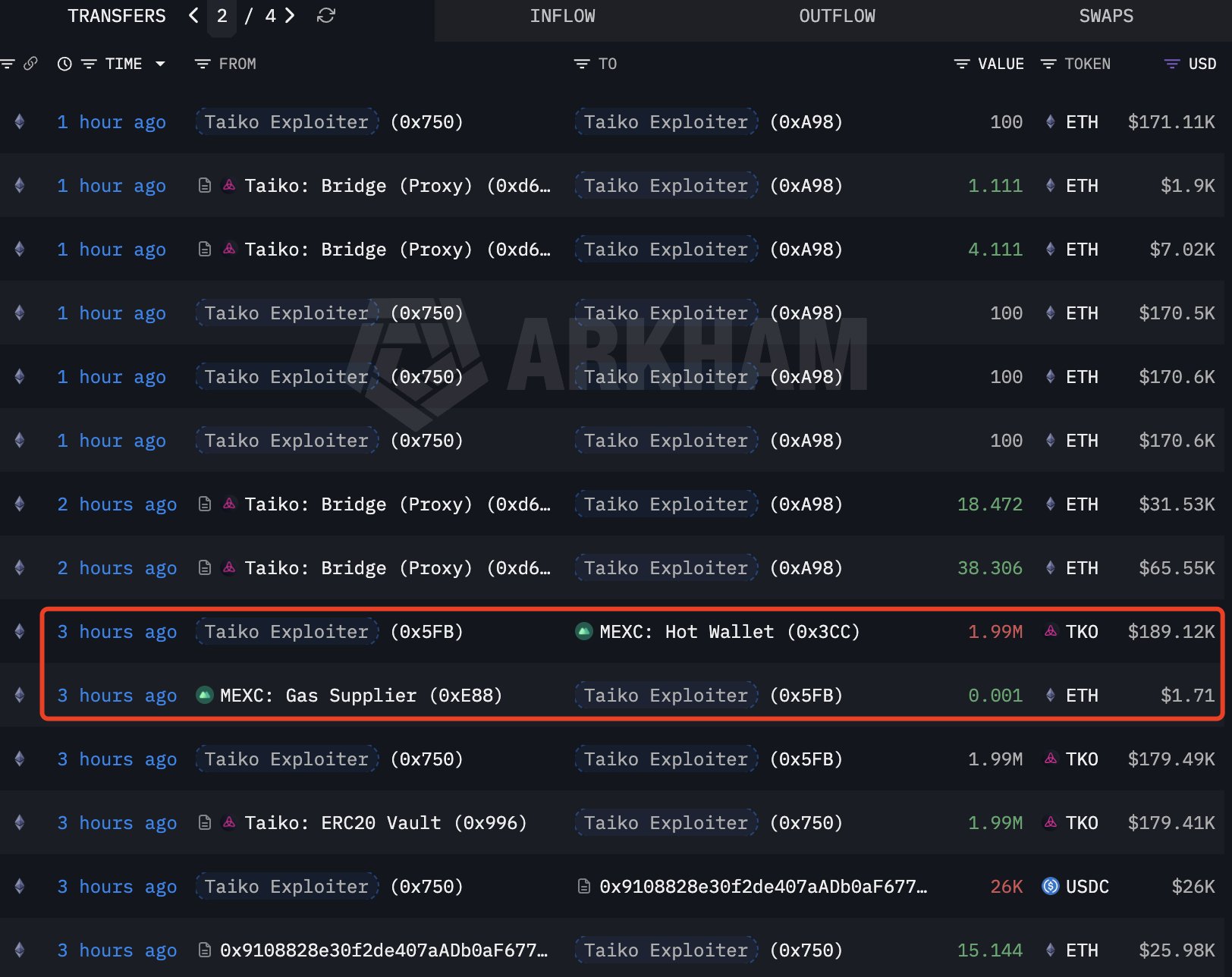
The decision to work directly with exchanges like MEXC demonstrated a proactive approach to modern blockchain security. By successfully urging these platforms to freeze deposits associated with the attacker’s addresses, Taiko effectively reduced the attacker’s ability to offload the remaining stolen TKO.
In a statement following the incident, representatives emphasized that this was a "critical infrastructure failure" and that a comprehensive audit of the chain-state verification code would be conducted before the bridge resumes full, trustless operations. The team has committed to providing a full post-mortem report once the forensic investigation is complete, ensuring that the community understands the technical nature of the bug.
Broader Implications for the L2 Landscape
This incident marks a turning point in the discussion surrounding Ethereum Layer 2 security. Unlike previous hacks that focused on user-facing frontends or compromised private keys, the Taiko exploit targeted the underlying verification logic.
1. The Vulnerability of "Infrastructure-as-Code"
The Taiko breach highlights the inherent risks of L2 scaling solutions, which rely on complex, novel code to bridge assets between chains. As these projects move toward decentralization, the "attack surface" grows. When the core verification logic—the very thing that makes an L2 secure—fails, the entire system is rendered vulnerable. This event serves as a warning to other L2 developers that rigorous, multi-layered audits of the bridge and verification mechanisms are non-negotiable.
2. The Limits of Centralized Containment
The ability of the Taiko team to contact centralized exchanges and effectively freeze the attacker’s assets highlights the ongoing tension between decentralization and security. While this "centralized intervention" saved a portion of the funds, it also underscores that many "decentralized" protocols still rely on centralized gatekeepers for asset recovery. This raises questions about whether current L2 designs are truly as censorship-resistant and immutable as they claim to be.
3. Investor Confidence and Future Growth
For Taiko, the path forward involves restoring trust. Investors and users are increasingly sensitive to security flaws in the L2 space. The protocol’s ability to recover from this blow—by providing transparency, compensating affected parties if necessary, and hardening its security architecture—will define its long-term viability. The fact that the TVL remained relatively stable suggests that the community is willing to support the project through its growing pains, provided the developers can demonstrate that the specific vulnerability has been permanently eradicated.
Conclusion
The exploit of the Taiko network serves as a sobering case study for the entire blockchain industry. As L2 solutions continue to proliferate, the complexity of their security requirements is skyrocketing. The breach was not merely a loss of $1.7 million; it was a stress test of the protocol’s incident response capabilities.
While Taiko has managed to contain the immediate damage, the incident leaves behind a legacy of scrutiny. The focus now shifts to the post-mortem analysis and the implementation of more robust, failure-proof verification systems. In the fast-paced world of DeFi, survival is not just about the quality of the technology, but the speed and transparency with which developers address its inevitable shortcomings. The coming weeks will be critical for Taiko as it works to prove that this setback was an isolated incident, rather than a sign of structural weakness within its ecosystem.
