

The cryptocurrency market is currently defined by a striking paradox. While prices for industry stalwarts like Bitcoin and Ether have staged an impressive recovery, the structural foundations—liquidity, regulatory clarity, and macroeconomic stability—remain fragile. As investors flock back to the "greed" sector of the market, a sober analysis reveals that the recent 20% surge in Bitcoin may be more a product of speculative fervor than a response to concrete institutional breakthroughs.
Main Facts: The Illusion of Certainty
In the last few weeks, the crypto space has been gripped by a sudden wave of optimism. The primary catalyst for this shift was the entry of Wall Street heavyweights BlackRock and Fidelity into the race for a spot Bitcoin Exchange-Traded Fund (ETF). This was further bolstered by the launch of EDX Markets, a new exchange backed by a consortium of TradFi giants including Charles Schwab and Citadel Securities, which facilitates the trading of Bitcoin, Ether, Litecoin, and Bitcoin Cash.
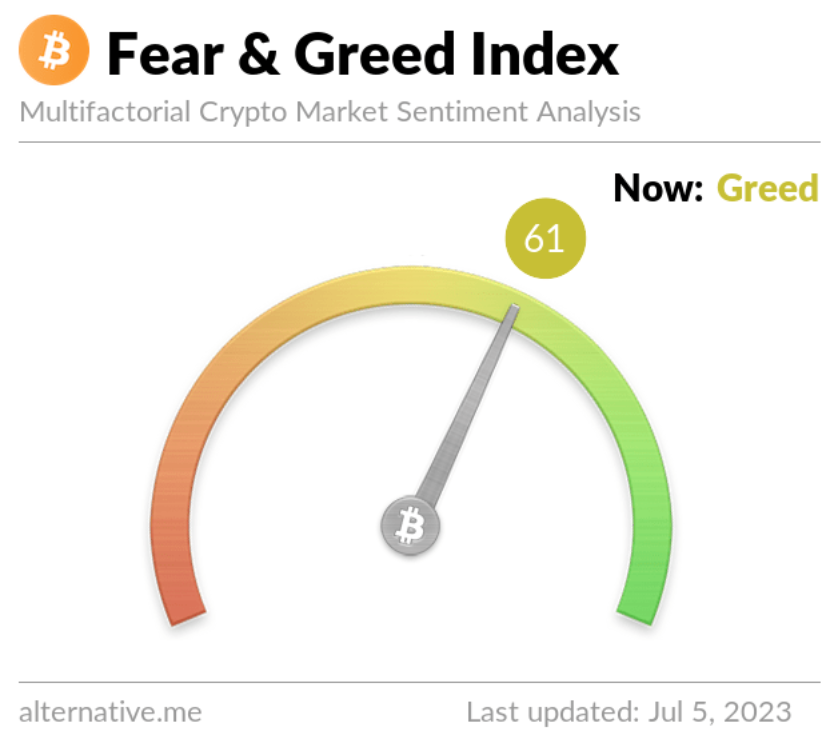
Consequently, Bitcoin has breached the $30,000 threshold, marking a 20% gain in just three weeks, while Ether has clawed its way back toward $2,000. The "Fear and Greed" index, a popular sentiment tracker, has swung firmly into the "greed" territory with a score of 61. However, beneath this surface-level exuberance lies a complex web of regulatory hurdles and liquidity droughts that suggest the market may be getting ahead of itself.
Chronology of Recent Market Events
To understand the current state of the market, one must look at the timeline of the last few weeks:
- Mid-June 2023: The market received a shock as the U.S. Securities and Exchange Commission (SEC) launched high-profile lawsuits against the world’s two largest crypto exchanges: Binance and Coinbase.
- The ETF Filing Frenzy: Shortly after the regulatory crackdown, BlackRock filed for a spot Bitcoin ETF, followed by Fidelity. This news acted as a massive counter-weight to the negative regulatory headlines.
- SEC Pushback: Reports emerged from the Wall Street Journal that the SEC deemed the initial ETF filings "inadequate," citing a lack of sufficient detail regarding "surveillance-sharing agreements."
- Fed Policy Pivot: The Federal Reserve paused interest rate hikes, but Chairman Jerome Powell clarified that this was a temporary breather rather than an end to the tightening cycle, with further hikes expected later in the year.
- Market Response: Despite the SEC’s skepticism and the Fed’s hawkish warnings, crypto asset prices continued to climb, defying traditional correlations with macro-economic indicators.
Supporting Data: The Liquidity Crisis
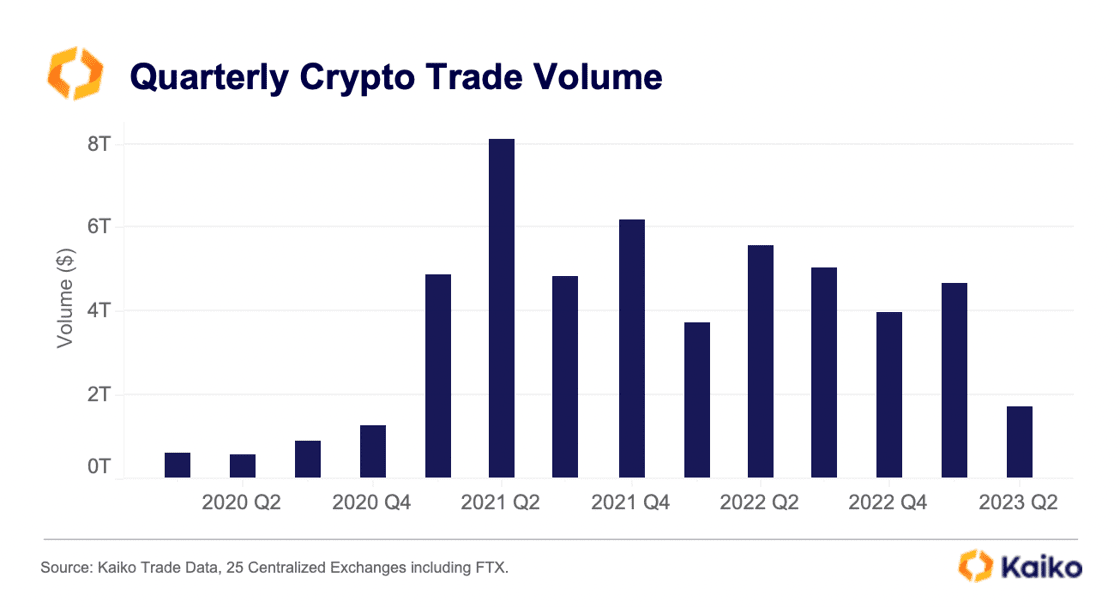
One of the most concerning aspects of the current rally is the deterioration of market liquidity. According to data from Kaiko, trading volumes on centralized exchanges reached their lowest levels since 2020—a period before the massive bull run that brought crypto into the mainstream financial consciousness.
When liquidity is thin, price swings are amplified. This is likely a major contributor to the current volatility. A look at stablecoin balances on exchanges reveals a more harrowing trend: these balances have plummeted by 60% over the last six months, representing a net outflow of approximately $26 billion. This exit of capital suggests that the "smart money" may not be as committed to this rally as the price action implies.
While spot market volume is suffering, derivatives markets have shown surprising resilience, with volumes significantly higher than in the latter half of 2022. This divergence suggests that professional traders are still hedging and positioning, even as retail and spot-market participants exit the ecosystem.
Regulatory Tensions: The SEC vs. The Industry
The regulatory landscape is arguably the most significant risk factor. The lawsuits against Binance and Coinbase serve as two distinct archetypes of the SEC’s current posture. The Binance case involves allegations of market manipulation, co-mingling of funds, and skirting geographical restrictions—offenses that many observers found unsurprising.
The Coinbase case, however, represents a fundamental philosophical conflict. The SEC has accused Coinbase of operating as an unregistered securities exchange. This move has drawn widespread criticism, particularly because the SEC permitted Coinbase to go public via a direct listing in April 2021. Critics argue that the regulator is now moving the goalposts, attempting to classify tokens as securities after previously allowing them to trade on a publicly listed platform.
Implications for Investors
The market’s refusal to react to the "inadequate" label slapped on the ETF filings is perhaps the most telling indicator of current investor psychology. While it is true that these applications can be amended and refiled—as the CBOE has already done—there is no guarantee of success. The SEC has a long history of rejecting spot Bitcoin ETFs, including a notable rejection of Fidelity’s application in January 2022.
Furthermore, the macroeconomic backdrop remains unfavorable. The Fed’s interest rate cycle, which has pushed rates from zero to above 5% in record time, continues to exert downward pressure on risk assets. Fed futures currently indicate an 86% probability of a 25-basis-point hike in the coming weeks. A month ago, when Bitcoin was 20% cheaper, the market’s expectations for a rate hike were lower than they are today. This creates a "Great Disconnect": Bitcoin is rallying even as the interest rate outlook becomes more restrictive.
The Lag Effect of Monetary Policy
Investors must remember that monetary policy operates with a significant time lag. The full impact of the massive interest rate hikes implemented over the last year has not yet fully rippled through the economy. While sentiment has temporarily shifted to a more optimistic tone, the fundamental reality is that liquidity is draining from the system, and the cost of capital is at a multi-year high.
Conclusion: A Fool’s Errand?
"Crypto is going to crypto." This mantra is often used to excuse irrational price behavior, but it is a dangerous philosophy for institutional and retail investors alike. When asset prices move sharply in the face of bad regulatory news, deteriorating liquidity, and a restrictive macroeconomic environment, it is rarely a sign of a sustainable bull market.
The current rally is driven by the hope of institutional adoption via ETFs. While the entry of firms like BlackRock is undeniably a massive long-term validation of the asset class, it does not erase the immediate structural risks. The market is currently banking on a perfect scenario: regulatory approval of ETFs and a soft landing for the global economy.
If the SEC continues to drag its feet or if the Federal Reserve pushes rates higher for longer than anticipated, the current "greed" could quickly revert to the "fear" that dominated the early months of the year. Investors should remain cautious; the road ahead is likely to be far more volatile than the current price trends suggest. The "Great Disconnect" cannot last forever; eventually, market prices will be forced to reconcile with the sobering realities of the regulatory and macroeconomic environment. Until that reconciliation occurs, the current bull run rests on a foundation that is significantly less stable than it appears.
