

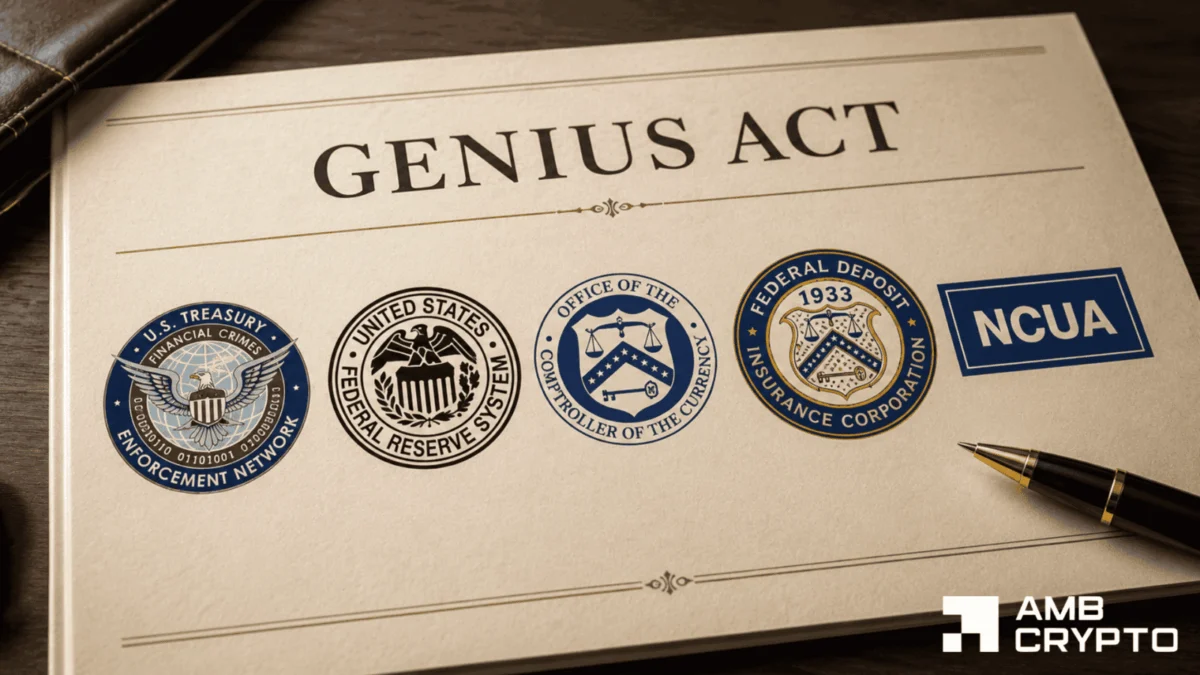
In a significant move toward integrating digital assets into the traditional financial architecture, a coalition of top U.S. financial regulators has unveiled a joint proposal aimed at establishing stringent Customer Identification Programs (CIPs) for stablecoin issuers. The initiative, which aligns with the provisions of the GENIUS Act, marks a major step in bringing stablecoin providers under the regulatory umbrella of the Bank Secrecy Act (BSA).
The joint proposal was issued by a powerhouse group of regulators: the Financial Crimes Enforcement Network (FinCEN), the Federal Reserve Board, the Office of the Comptroller of the Currency (OCC), the Federal Deposit Insurance Corporation (FDIC), and the National Credit Union Administration (NCUA). By treating permitted payment stablecoin issuers (PPSIs) as "financial institutions," the agencies aim to standardize identity verification processes that have long been the bedrock of the banking sector.
Main Facts: The New Compliance Mandate
At the heart of this regulatory shift is the requirement for PPSIs to implement robust Customer Identification Programs. Under the proposal, any entity issuing stablecoins that fall under the purview of the GENIUS Act must collect and verify specific identifying information from their direct customers. This data includes full legal names, physical addresses, dates of birth (or dates of formation for corporate entities), and government-issued identification numbers.
The objective is clear: to ensure that issuers can form a "reasonable belief" regarding the true identities of their direct users. This is a critical component of the broader national strategy to bolster Anti-Money Laundering (AML) and Counter-Terrorist Financing (CTF) efforts. By forcing issuers to act as gatekeepers, regulators hope to curb the illicit use of stablecoins for money laundering, sanctions evasion, and the financing of criminal activities.
Chronology: The Road to the GENIUS Act Framework
The journey toward this regulatory proposal began with the broader legislative push to address the proliferation of stablecoins, which have become the primary liquidity bridge between fiat currencies and the decentralized finance (DeFi) ecosystem.
- Early Legislative Drafting: Following the collapse of various algorithmic stablecoins and the subsequent market turmoil in 2022 and 2023, lawmakers began drafting the GENIUS Act to provide a comprehensive framework for the issuance, redemption, and oversight of payment-oriented stablecoins.
- Congressional Passage: After extensive debate regarding the balance between innovation and consumer protection, the GENIUS Act was passed, establishing the legal definition of a "permitted payment stablecoin" and the regulatory expectations for issuers.
- Regulatory Deliberation: Following the Act’s passage, the five major agencies—FinCEN, the Fed, OCC, FDIC, and NCUA—began a coordinated effort to define the technical requirements for issuers. This process involved assessing the unique nature of blockchain-based assets versus traditional bank deposits.
- The Joint Proposal: The current proposal serves as the realization of those efforts, turning the legislative mandates of the GENIUS Act into actionable, enforceable administrative rules.
Supporting Data: Why Direct Relationship Matters
Regulators have been meticulous in their explanation of why they have drawn a line between direct customers and secondary-market participants. The data and reasoning provided by the agencies suggest that they are acutely aware of the potential for regulatory overreach to stifle the very innovation they seek to regulate.
The Limits of Oversight
The agencies noted that the decentralized nature of public blockchains makes it technically and legally impractical to impose identity requirements on every participant in a secondary-market transfer. If every node operator or wallet holder were treated as a customer of an issuer, the administrative burden would be insurmountable, likely causing the stablecoin market to fracture or migrate to less regulated jurisdictions.
Risk-Based Approach
By focusing on the "direct relationship," the regulators are employing a risk-based approach common in financial oversight. The primary risk of money laundering is often found at the "on-ramps" and "off-ramps"—the points where fiat currency is converted into digital tokens or vice-versa. By ensuring that issuers know exactly who is minting and redeeming these tokens, the regulators can address the highest-risk activity without compromising the efficiency of the underlying blockchain technology.
Official Responses and Regulatory Rationale
The collaborative nature of this announcement underscores the importance the U.S. government places on stablecoin regulation. By including both the Fed and the FDIC, the proposal signals that stablecoins are now viewed as a critical component of the national payments infrastructure, not merely a niche speculative asset.
"Customer identification is the first line of defense against financial crime," an agency spokesperson noted in the supplementary briefing accompanying the proposal. "By requiring issuers to adopt these standards, we are ensuring that the digital dollar—in whatever form it takes—is as secure and transparent as the traditional commercial bank account."
Industry feedback is expected to be mixed. While many institutional issuers have already implemented voluntary KYC (Know Your Customer) processes to attract large-scale partners, the formalization of these rules under the BSA carries significant legal weight. Critics in the privacy-advocacy space have expressed concern that these requirements, while limited to issuers, could eventually lead to a "creeping jurisdiction" where secondary markets are targeted in future iterations of the GENIUS Act implementation.
Implications: A New Era for Stablecoins
The implications of this proposal are profound, touching upon the technical design of stablecoins, the competitive landscape for issuers, and the future of blockchain interoperability.
1. Market Consolidation
The cost of compliance is expected to rise. Smaller, boutique stablecoin issuers may find it difficult to maintain the infrastructure necessary for high-level identity verification, leading to potential consolidation. The market will likely be dominated by a few well-capitalized issuers who have the resources to integrate sophisticated verification tools into their minting platforms.
2. Impact on DeFi and Secondary Markets
Perhaps the most significant victory for the crypto industry in this proposal is the explicit exclusion of wallet-to-wallet transfers from CIP requirements. Had regulators mandated identity checks for every blockchain transaction, the pseudonymity that powers DeFi would have been effectively eradicated. By narrowing the scope to direct customers, the regulators have preserved the utility of stablecoins as a medium of exchange on public, open-access networks.
3. Legal Certainty for Issuers
For the first time, issuers operating under the GENIUS Act framework will have clear, codified guidance on their responsibilities. This provides a level of legal certainty that has been absent in the crypto space. Financial institutions, such as traditional banks looking to issue their own stablecoins, will now have a clear roadmap for compliance, which may encourage greater adoption of the technology by mainstream financial players.
4. Future Regulatory Challenges
Despite the clarity provided by this proposal, challenges remain. How will issuers handle the verification of customers located in jurisdictions with different data privacy laws? How will they manage the security of the massive databases containing PII (Personally Identifiable Information)? These are the next hurdles the industry and the regulators will have to clear as the GENIUS Act implementation progresses.
Conclusion: Balancing Security and Innovation
The joint proposal from FinCEN and its partners represents a pragmatic middle ground. By applying the principles of the Bank Secrecy Act to the issuance of stablecoins while protecting the fluidity of secondary-market transactions, the U.S. government is attempting to modernize its financial oversight without killing the technological progress of the digital asset sector.
As the industry moves toward a period of public comment and eventual rule finalization, the focus will shift to implementation. Issuers will need to upgrade their technology stacks, and regulators will need to monitor whether these new rules effectively curb illicit activity without causing significant friction in the digital economy. If successful, this framework could serve as a global template for how to regulate decentralized finance in a way that is both safe and scalable.
The GENIUS Act was intended to bring clarity, and with this proposal, that clarity is beginning to take shape. While the compliance burden is undeniably increasing, the legitimacy it brings to the stablecoin sector may prove to be the catalyst for the next wave of mainstream adoption. As the digital and traditional financial worlds continue to collide, this framework provides the bridge that keeps them from drifting apart.
