

In 2025, the landscape of digital commerce shifted dramatically. TikTok Shop, the social media giant’s integrated e-commerce ecosystem, moved an staggering $64.3 billion in gross merchandise volume (GMV). This represented a near-doubling of the previous year’s figures, with the United States alone contributing $15.1 billion to that total. Behind these eye-watering numbers lies a simple, repeatable formula: short, low-budget, face-to-camera videos where a creator holds a product and explains its utility.
Historically, this "user-generated content" (UGC) model required a significant investment of time and resources—a human presenter, a smartphone, professional lighting, and hours of retakes. Today, however, the barrier to entry has evaporated. A new breed of artificial intelligence tools allows any aspiring entrepreneur to launch a full-scale marketing operation using nothing more than a product photo and a few AI-powered applications.
The Anatomy of the New Digital Sales Funnel
The democratization of high-end advertising is no longer a prospect for the future; it is a current reality. By leveraging generative AI, marketers can create hyper-realistic product demonstrations without ever touching a physical product or hiring a spokesperson. This transition from labor-intensive video production to automated, prompt-based content generation has effectively lowered the cost of entry for small-scale merchants.

Step 1: Curating the Source Material
The foundation of any AI-driven ad campaign is the product image. Success in this sector requires a high-fidelity reference. Whether a merchant is selling a specific piece of apparel or a technical gadget, the source photo must be clean—stripped of background clutter, models, and watermarks. The AI engine utilizes this cropped image as the "source of truth." Any imperfections in the reference photo are amplified by the generation process; therefore, precision at this stage is the most critical factor in achieving a professional result.
Step 2: The Synthetic Spokesperson
Once the base image is prepared, the next phase involves "putting a model in the product." Advanced models like GPT Image 2 have emerged as the industry standard for photorealism, consistently outperforming competitors in side-by-side testing.
By feeding the model a precise prompt—such as, "Generate a vertical 9:16 photo of a professional in their late 20s wearing this garment in a bright, modern office"—users can dictate the demographic, environment, and tone of their advertisement. This level of customization allows for granular targeting; a fitness brand can place their product on a model in a gym setting, while a luxury accessory brand can opt for a high-end café backdrop. The AI maintains the integrity of the product—preserving fabric texture, stitching, and color—while seamlessly integrating it into a simulated reality.

Step 3: Architecting the Script via JSON
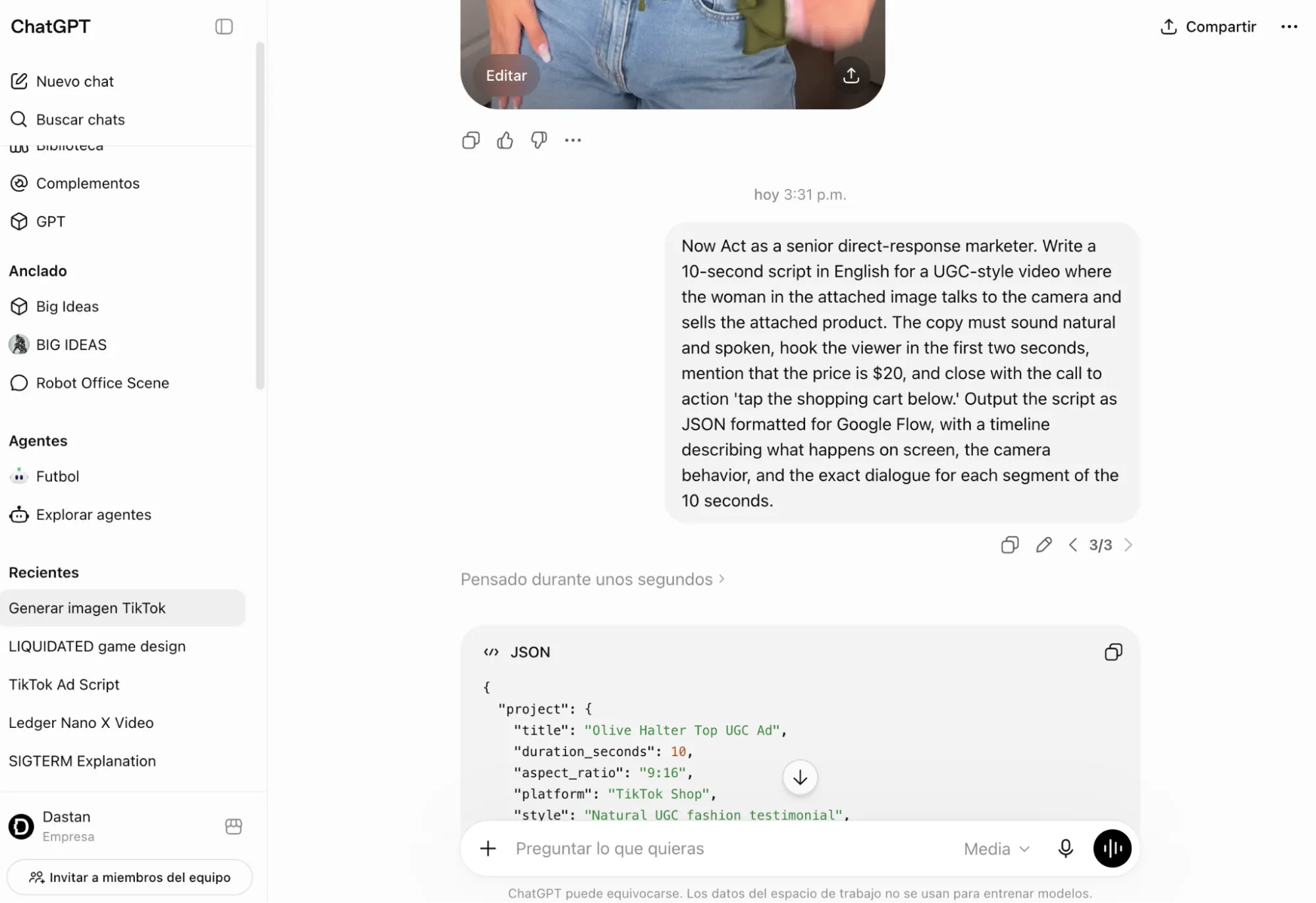
Efficiency in video generation is achieved through structure. Rather than relying on prose, expert marketers now utilize JSON-formatted scripts to guide video models. By requesting a 10-second script in a JSON structure, users can define specific camera movements, dialogue beats, and gestures for each second of the video. This eliminates the "hallucination" issues common in long-form AI video generation, ensuring that the model follows a strict timeline and avoids the repetitive looping that often plagues AI-generated content.
Step 4: Video Synthesis
With the script and images prepared, platforms like Google’s Gemini Omni or Veo are used to synthesize the final video. These models represent a leap forward, as they generate video clips with native audio—meaning the synthetic spokesperson actually speaks the provided dialogue. For creators on a budget, this workflow is highly scalable, though it often requires a paid subscription to access the necessary compute credits. However, creative workarounds exist; for instance, some platforms offer access to these capabilities through integrated social media creation suites at no additional cost.
Step 5: Post-Production Refinement
The final step is the polish. CapCut remains the industry standard for trimming the anomalies—such as extra phrases or awkward gestures—that can occasionally emerge from generative models. While the AI does the heavy lifting, the human element remains vital in the final edit, where subtitles are added and the pacing is tightened for maximum viewer retention.

The Economic Reality: Is the Opportunity Overstated?
While the technological path to creating a "marketing empire" has been laid bare, the economic reality serves as a sobering reminder of the competitive landscape. According to Camille Moore, president of the marketing agency Third Eye Insights, the barrier to entry may be low, but the barrier to success remains formidable. Data from the previous year indicates that of the 803,500 TikTok Shop stores operating in the United States, more than 50% recorded zero sales.
The tools are essentially free, but the competition is not. The sheer volume of AI-generated content flooding these platforms means that while the cost of production has plummeted, the cost of attention has skyrocketed.
Navigating Platform Policies and Ethics
Both TikTok and YouTube have established frameworks to govern the rise of synthetic media. Transparency is the central pillar of these policies.
- TikTok: The platform requires creators to label all realistic AI-generated content. Advertisers must utilize specific disclosures in the TikTok Ads Manager, and those promoting commercial products are mandated to activate the "commercial-content disclosure" settings.
- YouTube: Similarly, Google requires creators to disclose when content has been "meaningfully altered" or generated by AI. These videos receive a disclosure label, and any paid sponsorships must adhere to standard paid-promotion disclosure protocols.
- X (formerly Twitter): While X has been more permissive regarding synthetic media, their policies strictly prohibit deceptive content that could cause widespread confusion or public harm.
These policies are not mere suggestions; failure to comply can lead to shadow-banning, the removal of content, or the suspension of affiliate accounts.
Future Implications: The Shift Toward Automation
As we look toward the future, the integration of more sophisticated tools—such as ElevenLabs for consistent brand voice, and node-based workflows like ComfyUI for granular motion control—will likely become the norm for mid-sized operations. The current "entry-level" workflow is merely a testing ground. It allows merchants to validate whether a product has market fit before committing significant capital to inventory or advanced production.
The shift toward AI-generated commerce represents a fundamental change in the retail economy. Small merchants who previously lacked the budget for creative agencies can now compete on visual parity with larger firms. Yet, as the market becomes saturated with high-quality, synthetic advertising, the brands that survive will likely be those that pair this technology with genuine product value and authentic community engagement. The tools have changed the game, but they have not changed the fundamental rules of commerce: value, trust, and relevance remain the ultimate determinants of success in the digital marketplace.
