

In a move that has sent shockwaves through the decentralized finance (DeFi) ecosystem, Robinhood CEO Vlad Tenev has publicly endorsed the utility of the newly launched "Robinhood Chain"—an Ethereum Layer-2 (L2) network—for the speculative world of memecoins. While the platform was initially marketed as a sophisticated infrastructure for the tokenization of Real-World Assets (RWAs), Tenev’s recent pivot has ignited a fierce debate regarding the ethical responsibilities of major financial entities and the long-term sustainability of niche blockchain networks.
The Strategic Shift: From Institutional Grade to Degenerate Playgrounds
The core of the controversy lies in the fundamental repositioning of the Robinhood Chain. Initially, the project was framed as an institutional-grade solution, designed to bridge the gap between traditional finance and blockchain technology through the secure, transparent tokenization of assets like real estate, bonds, and equities.
However, in a recent public statement that caught many industry analysts off guard, Tenev remarked: "While we’re building Robinhood Chain to be the best chain for RWA… it works great for memes too."
This seemingly offhand comment signaled a major strategic departure. By inviting the high-volatility, high-reward world of memecoins onto his platform, Tenev is betting that the rapid liquidity and user engagement inherent in "meme culture" will be the catalyst required to jumpstart the network’s adoption.
Chronology of the Controversy
The rollout and subsequent pivot of the Robinhood Chain have been marked by a rapid escalation of market activity:
- Initial Launch Phase: The L2 was introduced with a focus on enterprise-grade RWA tokenization, aiming to attract institutional players and provide a stable environment for regulated assets.
- The Tenev Pivot: Following a period of slow organic growth, CEO Vlad Tenev publicly acknowledged the network’s potential for memecoin trading via social media.
- Market Reaction: Within 48 hours of the announcement, the network experienced a surge in speculative interest, with previously obscure tokens on the chain seeing triple-digit percentage gains.
- The VCs’ Backlash: Prominent venture capitalists and industry veterans voiced their frustration, labeling the move as a dilution of the platform’s original mission.
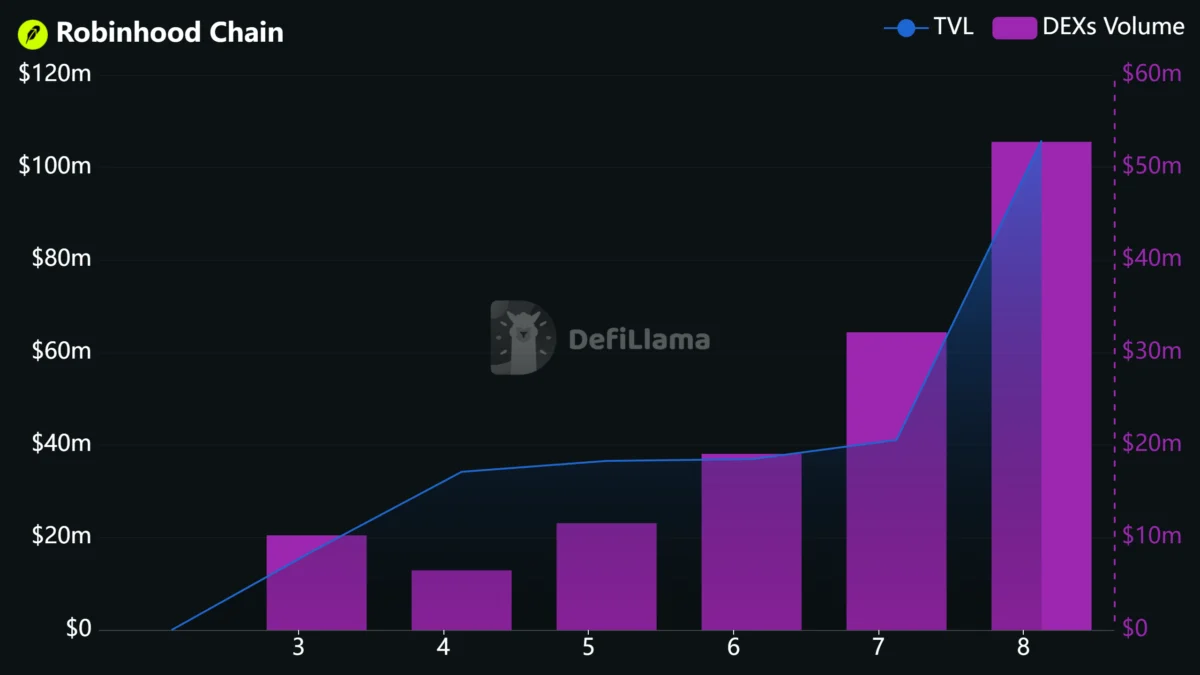
- The Current Surge: The network’s Total Value Locked (TVL) skyrocketed from $10 million to $105 million in under a week, validating the "memecoin-as-growth-engine" theory in the eyes of some, while worrying others.
Industry Backlash: A "Race to the Bottom"?
The reaction from the venture capital sector has been notably sharp. Simon Dedic, a partner at Moonrock Capital, encapsulated the frustration of many market participants when he retorted: "Just another L2 that offers no real value over the existing ones is exactly what we were missing. But hey, you can trade memes on it too. Someone tell Vlad it’s not 2024 anymore."
Critics argue that by actively courting memecoin activity, Robinhood is abandoning its role as a bridge between TradFi and DeFi. There is a palpable fear that the company is trading its reputation for institutional stability for a temporary boost in trading volume. Comparisons to Coinbase’s "Base" network are frequent, though industry observers point out that while Base has become a home for certain memecoins, it maintains a more rigorous framework, keeping its "centralized" image slightly more detached from the wilder fringes of the retail crypto casino.
Supporting Data: The Economics of the Meme Cycle
To understand why Tenev would risk the company’s brand, one must look at the data. Memecoins are no longer just internet jokes; they are the primary drivers of blockchain activity in the current market cycle.
The Power of Speculative Liquidity
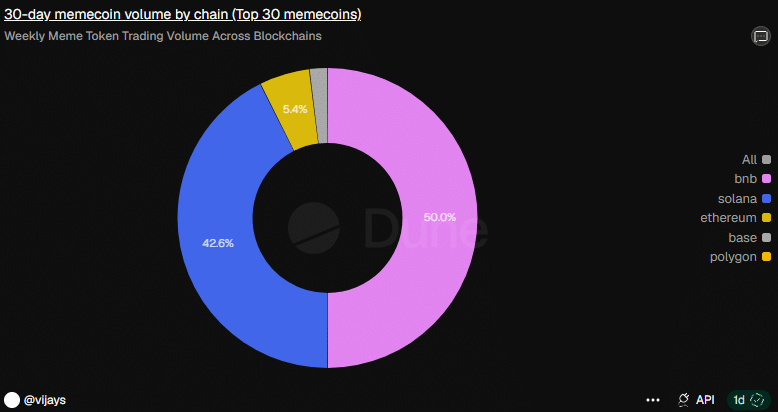
On major networks like Solana and the BNB Chain, memecoin activity consistently accounts for 40% to 50% of total trading volume. This volume acts as a massive "user acquisition funnel." When a new chain launches, the "cold start problem"—the difficulty of attracting users when there is nothing to do—is most effectively solved by the high-octane environment of meme trading.
The Robinhood Chain Trajectory
The empirical evidence of the recent shift is staggering:
- TVL Expansion: Before the pivot, the chain held a modest $10 million in total assets. Following the viral nature of Tenev’s comments, that figure ballooned to $105 million in less than seven days—a 10x increase.
- DEX Volume: Decentralized Exchange (DEX) volumes on the chain followed a similar trajectory, climbing from $10 million to $52 million.
- Token Explosions: Individual assets like Cash Cat [CASHCAT] and 4663 saw meteoric rises, posting gains of 1,100% and 800% respectively within 24 hours of the surge.
The Human Cost: Retail Investors in the Crosshairs
While the data highlights the commercial success of this strategy, the moral implications remain murky. The current cycle has been defined by extreme volatility, where retail investors have frequently found themselves at the mercy of "pump and dump" schemes.
The history of the sector is littered with examples of projects, such as the Trump-affiliated World Liberty Financial, which generated substantial capital while leaving late-coming retail participants with heavy losses. Critics of the Robinhood strategy argue that by leaning into this ecosystem, the company is effectively legitimizing a high-risk gambling environment for its massive retail user base, many of whom may lack the experience to navigate the treacherous waters of memecoin markets.
Implications for the Future of DeFi
The decision to embrace memecoins on a platform originally designed for institutional-grade RWA tokenization suggests a shift in the philosophy of "chain-building."
1. The Death of Niche Specialization?
If a major financial institution feels compelled to pivot to memecoins to gain market share, it suggests that the "utility-only" phase of blockchain development may be insufficient for survival. The market currently favors chains that provide high-speed, low-cost environments for speculative activity.
2. The Battle for Market Share
Robinhood is effectively playing catch-up. With Base, Solana, and BNB dominating the retail landscape, Tenev realizes that his L2 cannot rely solely on the slow, methodical growth of RWA tokenization. To compete, he needs the "degenerates"—the high-frequency traders who provide the liquidity necessary to keep a chain alive.
3. Regulatory Scrutiny
Robinhood has always walked a fine line with regulators. By creating an environment that encourages highly speculative, often predatory, token trading, the company may be inviting a new wave of scrutiny from the SEC and other global financial watchdogs. The irony is that in trying to build a professional, regulated, institutional bridge, they may be forced to build a platform that looks and acts like an unregulated offshore casino.
Conclusion: A High-Stakes Gamble
The "Robinhood Chain" experiment is now a test of whether a platform can successfully straddle two different worlds. Can it maintain the professional infrastructure required for tokenized real-world assets while simultaneously hosting the chaotic, high-risk activity of the memecoin markets?
For now, the numbers speak for themselves. The liquidity is flowing, the volumes are up, and the retail interest is palpable. However, the long-term cost of this strategy remains to be seen. If the chain becomes known primarily as a destination for rug-pulls and volatile memes, the institutional partners Tenev hoped to attract for his RWA vision may look elsewhere. Conversely, if he can successfully harness this volatility to build a robust, high-volume ecosystem, Robinhood may have found the blueprint for how a traditional firm survives and thrives in the "wild west" of the modern crypto era.
The market has spoken, and for the moment, it has chosen the memes. Whether this leads to a sustainable financial revolution or a repeat of the sector’s most painful failures is the question that will define the next chapter of the Robinhood story.
