

The decentralized finance (DeFi) ecosystem, long touted as the bedrock of a new, transparent, and immutable financial order, is currently embroiled in a fierce, high-stakes debate regarding its fundamental safety. The controversy was ignited by a provocative assertion from Manuel Aráoz, the founder of the preeminent blockchain security firm OpenZeppelin. Aráoz’s declaration that the "entire DeFi sector is unsafe" has sent shockwaves through the industry, prompting a sharp divide between those who view the sector as increasingly hardened against attack and those who believe it is entering a period of unprecedented vulnerability.
The Catalyst: Aráoz’s Call to Exit
Earlier this week, Aráoz, whose firm is synonymous with building the infrastructure that secures billions in on-chain assets, dropped a bombshell on the community. He stated that he considers "all of DeFi unsafe," a sentiment so strong that he has reportedly advised his own friends and family to liquidate their positions in major blue-chip protocols, including Aave, MakerDAO (now Sky), and Compound.
Aráoz’s pessimism is rooted in the rapid advancement of artificial intelligence. He posits that the offensive capabilities of AI-powered cybersecurity agents—tools capable of autonomously auditing code, identifying edge-case vulnerabilities, and executing exploits—have reached a level of sophistication that outpaces human-led defensive measures. In his view, the "arms race" between hackers and developers has shifted, and the attackers now hold the high ground.
A Public Clash of Titans
The reaction from the industry was swift and largely dismissive of Aráoz’s alarmism. Stani Kulechov, the founder of the leading decentralized lending protocol Aave, emerged as the most prominent voice of dissent. Kulechov characterized Aráoz’s stance as a "bad take," arguing that the industry has undergone significant maturation since its early, experimental days.
"DeFi infrastructure today is materially more resilient than in prior cycles," Kulechov noted, highlighting that the very technology Aráoz fears—AI—is simultaneously serving as a powerful force for defense. "DeFi is constantly evolving, but pretending the industry hasn’t matured significantly or that AI is only a net negative for DeFi security is simply not true," Kulechov asserted.
Supporting this view is Sam MacPherson, co-founder of Sky (the protocol formerly known as MakerDAO). MacPherson challenged the premise that the underlying code is the primary point of failure. "Most of the recent major hacks have been operational security (opsec) issues," he observed. "Smart contracts of blue chips are quite safe these days."

Chronology of the Dispute
- Early 2026: A wave of high-profile exploits triggers broader concern regarding the security of cross-chain bridges and administrative key management.
- Mid-May 2026: Aráoz publishes his controversial remarks, warning of the "superhuman" capability of AI-driven exploit agents.
- Late May 2026: The industry reacts with indignation; Aave’s Kulechov and Sky’s MacPherson publicly debate the systemic risks.
- The Present: OpenZeppelin issues a formal statement distancing the firm from its founder’s personal views, signaling a desire to maintain institutional credibility.
Dissecting the Data: Where Does the Risk Actually Lie?
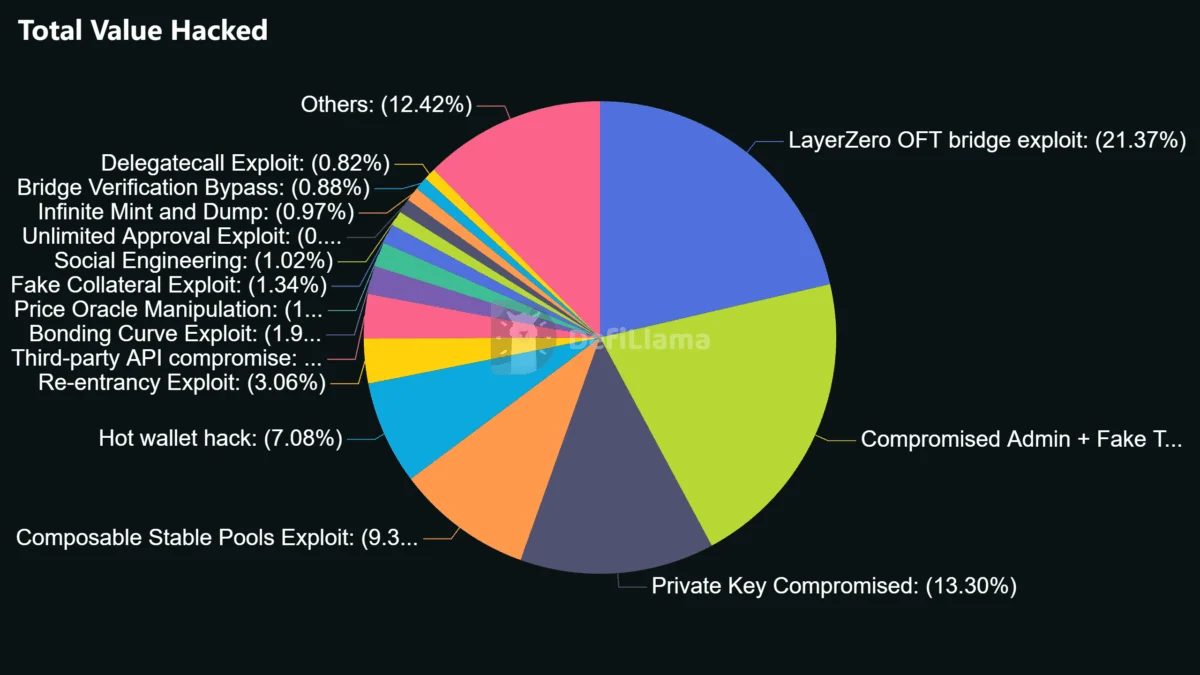
To understand the gravity of the disagreement, one must look at the empirical data surrounding DeFi exploits. Recent analysis suggests that less than 10% of DeFi hacks recorded in 2025 were directly attributable to flaws in the core codebase of established protocols. This statistic strongly supports the argument presented by Kulechov and MacPherson: that "blue-chip" smart contracts have become remarkably robust.
However, the threat landscape is not disappearing; it is merely shifting. The remaining 90% of exploits are largely linked to:
- Poor Operational Security (Opsec): Compromised private keys, social engineering, and insider threats.
- Bridge Vulnerabilities: The "interoperability" layer of DeFi, which has historically been the weakest link in the ecosystem.
- Governance/Admin Key Exploits: Centralized points of failure where attackers gain control of protocol parameters.
Aráoz remains unswayed by these statistics. He maintains that if AI agents become proficient at identifying even minor, non-obvious vulnerabilities, the distinction between "codebase issues" and "opsec issues" will vanish. He argues that coding agents are already demonstrating the ability to craft exploits that exploit complex, multi-step parameter configurations that would be impossible for a human hacker to synthesize in real-time.
The Financial Fallout: Capital Outflows and Market Sentiment
The timing of this debate could not be more critical. The DeFi sector is currently reeling from a broader market downturn. In 2026 alone, the sector has witnessed a staggering $45 billion in capital outflows. This, combined with the lingering effects of a prolonged "crypto winter," has seen the Total Value Locked (TVL) in DeFi protocols drop by 35%, currently sitting at approximately $80 billion.
The confluence of security fears and market instability has created a "contagion" effect. Investors, already risk-averse, are increasingly sensitive to any warnings from high-profile figures in the security space. When a founder of a security firm like OpenZeppelin speaks, the market listens—and reacts.
OpenZeppelin’s Institutional Stance
The tension reached a breaking point when OpenZeppelin felt compelled to issue a statement distancing itself from Aráoz’s comments. As a firm that provides auditing and security automation for the world’s most significant financial protocols, OpenZeppelin could not afford the appearance of internal instability. By clarifying that Aráoz’s views were personal and did not reflect the firm’s professional assessment of the industry, OpenZeppelin sought to reassure its clients and the broader community that its services remain a reliable standard for security.

Implications for the Future of DeFi
The debate between Aráoz and his counterparts highlights a fundamental philosophical divide regarding the future of blockchain security.
1. The Pro-Resilience Argument
Proponents of DeFi argue that the industry is entering its "industrial" phase. With the integration of decentralized oracles, time-locks, multi-signature requirements for admin keys, and AI-assisted formal verification, the protocol-level security has never been higher. They argue that the focus should shift from "is the code secure?" to "is the governance secure?"
2. The Existential Risk Argument
Conversely, the "unsafe" camp argues that we are building castles on shifting sands. They believe that as long as protocols remain complex, upgradeable, and reliant on human-managed keys, they are inherently prone to catastrophic failure. They argue that AI will eventually turn the "complexity" of DeFi into a playground for automated theft, rendering manual audits and existing defensive tools obsolete.
Conclusion: A Turning Point
The industry is at a crossroads. While the $1.45 billion in stolen assets over the past year is a stark reminder of the risks involved, the resilience of major protocols under heavy market pressure suggests that the infrastructure is not as fragile as some might fear.
The path forward likely requires a synthesis of both views. The industry must continue to harden its code, but it must also acknowledge the burgeoning reality of AI-driven threats. Whether the DeFi sector will emerge from this period of doubt stronger and more secure, or whether it will continue to shed capital in the face of these existential warnings, remains the defining question for the next chapter of decentralized finance. For now, the "Great Security Debate" serves as a necessary, if uncomfortable, wake-up call for an industry that has grown perhaps too comfortable with its own success.
