

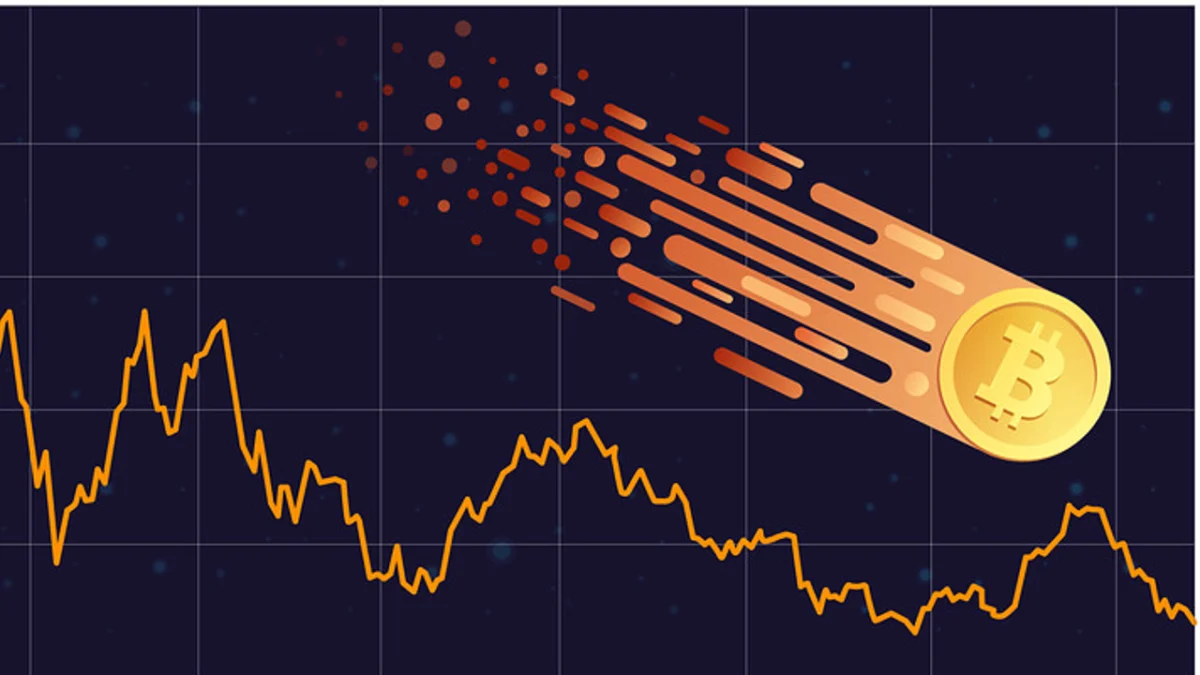
The global cryptocurrency landscape is currently navigating a period of profound volatility, characterized by a sustained retreat in prices that has wiped out significant value across the digital asset sector. Bitcoin (BTC), the world’s leading cryptocurrency, has suffered six consecutive days of declines, reflecting a broader risk-off sentiment that has permeated traditional and digital financial markets alike.
As geopolitical tensions between Russia and Ukraine reached a boiling point this week, investors have increasingly retreated from speculative assets, favoring liquidity and safety. This flight to quality has left Bitcoin and Ethereum (ETH) vulnerable, with both assets testing critical support levels that have not been seen since early February.
Main Facts: A Bearish Week for Digital Assets
Bitcoin began the trading week under intense selling pressure, falling approximately 12% from its valuation just seven days prior. After reaching a local high of $39,394.44 on Sunday, the asset saw a sharp reversal, plummeting to an intraday low of $37,358.00 by Tuesday. This downward trajectory has pushed the cryptocurrency to its lowest point since February 4, bringing it perilously close to a long-term support floor at $37,200.
The technical outlook for Bitcoin is currently dominated by bearish indicators. The 14-day Relative Strength Index (RSI), a key gauge of momentum, has tracked down to 39—its lowest level in over three weeks. This places the asset in "oversold" territory, suggesting that while selling pressure is high, the market is struggling to find the necessary conviction to initiate a meaningful bounce.
Ethereum, the second-largest cryptocurrency by market capitalization, has mirrored this bearish trend. ETH/USD dropped over 9% compared to Monday’s valuations, touching an intraday low of $2,585.95. This decline has effectively stalled the momentum of a previously forming bullish crossover between the 10-day and 25-day moving averages, forcing traders to recalibrate their expectations for a potential recovery.
Chronology: A Week of Sustained Selling
The current slide is not an isolated event but rather the culmination of a week-long degradation in market sentiment.
- Mid-February: Bitcoin showed early signs of instability, with several attempts to break past the $40,000 threshold failing to gather sustained momentum.
- February 21: The market experienced a significant dip that brought Bitcoin dangerously close to the $37,000 psychological support level. While a late-night surge provided a temporary reprieve—pushing the price to $38,607—the recovery proved to be a "dead cat bounce" rather than a trend reversal.
- Tuesday Morning: The descent accelerated as news of the escalating conflict in Eastern Europe broke. The market witnessed a cascade of liquidations, with over $30 million in long positions wiped out in a single hour. This event marked the second-highest hourly liquidation volume in four days and the third-highest in nearly a month, underscoring the severity of the market’s fragility.
Supporting Data: Decreasing Network Activity and Liquidations
Beyond price action, on-chain data points to a cooling in interest among retail and institutional market participants. As of Tuesday, daily active entities on the Bitcoin network were estimated at approximately 275,000. When compared to the heights of the 2021 bull market, this figure represents a significant decline, suggesting that new customer acquisition and retail demand are currently tepid.
Market statistics reveal that Bitcoin is currently trading roughly 45% below its all-time high. This prolonged drawdown has led to a lack of conviction in the market. The persistent liquidations—whereby traders using leverage are forced to sell their holdings as prices drop toward their liquidation thresholds—have created a feedback loop of selling pressure.
Technical analysis suggests that should the current support at $37,200 fail to hold, the market could see further contraction. On the upside, Bitcoin faces stiff resistance at the $37,800 level, followed by a more robust barrier at $38,200. Only a decisive break above these levels, ideally pushing toward $39,500, would suggest a shift in the current bearish narrative.
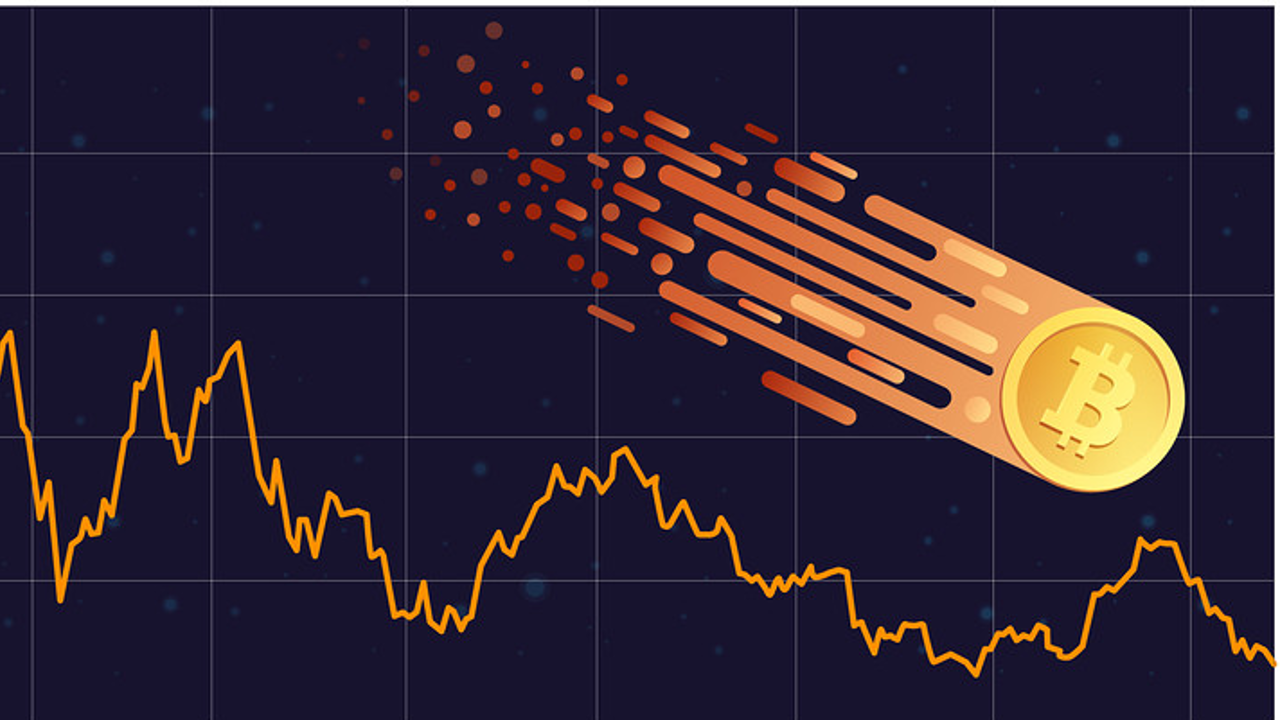
For Ethereum, the path to recovery is equally steep. Analysts are monitoring the $2,680 level as the first significant resistance point. Should the asset manage to reclaim this level, it would need to clear the $2,750 zone to open a pathway toward $2,880.
Geopolitical Implications: The "Ukraine Effect"
The primary driver of the current market anxiety is the escalating crisis between Russia and Ukraine. On Tuesday, reports confirmed that Russian President Vladimir Putin had authorized the deployment of forces into two separatist-held regions in Ukraine. This development, which has drawn swift and harsh condemnation from Western leaders, has fundamentally altered the risk appetite of global investors.
In times of geopolitical uncertainty, the "risk-on" label applied to cryptocurrencies often leads to institutional capital flight. Investors are systematically unloading speculative positions to preserve liquidity and mitigate exposure to global instability. Because Bitcoin has increasingly been traded in correlation with tech-heavy indices like the Nasdaq, the "war premium" currently being priced into traditional markets is bleeding directly into the crypto sector.
The crypto community, which often prides itself on the decentralized and "hedge-like" nature of assets like Bitcoin, is currently finding that in the short term, digital assets are acting more like high-beta equities. The fear of potential sanctions, global trade disruptions, and the broader impact on the fiat financial system has induced a "panic-sell" atmosphere that ignores the long-term fundamental thesis of blockchain technology.
Future Implications: What Lies Ahead?
The crypto market now stands at a crossroads. While some analysts argue that the current oversold conditions present a long-term buying opportunity, others warn of further downside risks. Reports from financial institutions like Stifel have highlighted macro factors—including potential interest rate hikes by the Federal Reserve and the tightening of global monetary policy—that could exert further downward pressure on Bitcoin, with some analysts even forecasting scenarios where prices test lower support levels.
However, the resilience of the Bitcoin network remains a constant. Despite the price volatility, the underlying hash rate and block production continue to function without interruption, demonstrating the network’s inherent stability.
For traders and investors, the immediate future will likely be defined by how the market reacts to ongoing diplomatic developments. As long as the geopolitical climate remains volatile, the "tepid" demand observed this week is unlikely to improve. Market participants should expect continued high volatility and should remain cautious of leverage, as the history of the last 48 hours has demonstrated that the market remains highly susceptible to sudden, sharp liquidation events.
Ultimately, the current downturn serves as a stark reminder of the immaturity of the crypto market in the face of global macro shocks. While the promise of "digital gold" remains a core part of the Bitcoin narrative, the reality of 2024 has shown that even the most innovative assets are not immune to the traditional fears that have driven market movements for centuries. Whether this cycle leads to a sustained winter or a swift recovery will depend on the restoration of global stability and the return of confidence to the broader financial ecosystem.
