

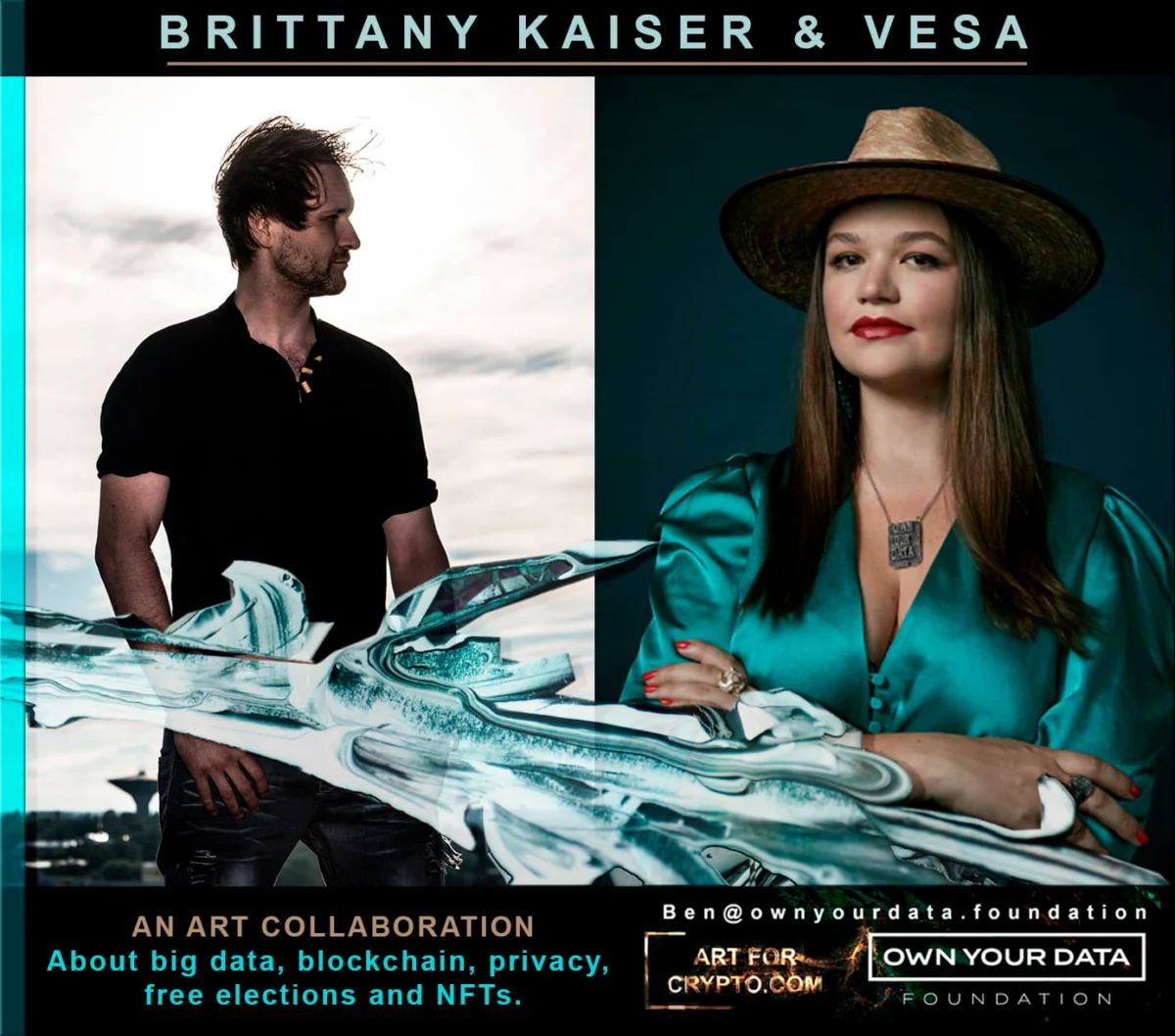
In the rapidly evolving landscape of the digital age, few figures have cast a shadow as long—or as significant—as Brittany Kaiser. Once an insider at the heart of the Cambridge Analytica scandal, Kaiser has spent the years following her whistleblowing activities transforming from a controversial corporate operative into a leading advocate for data privacy and digital human rights.
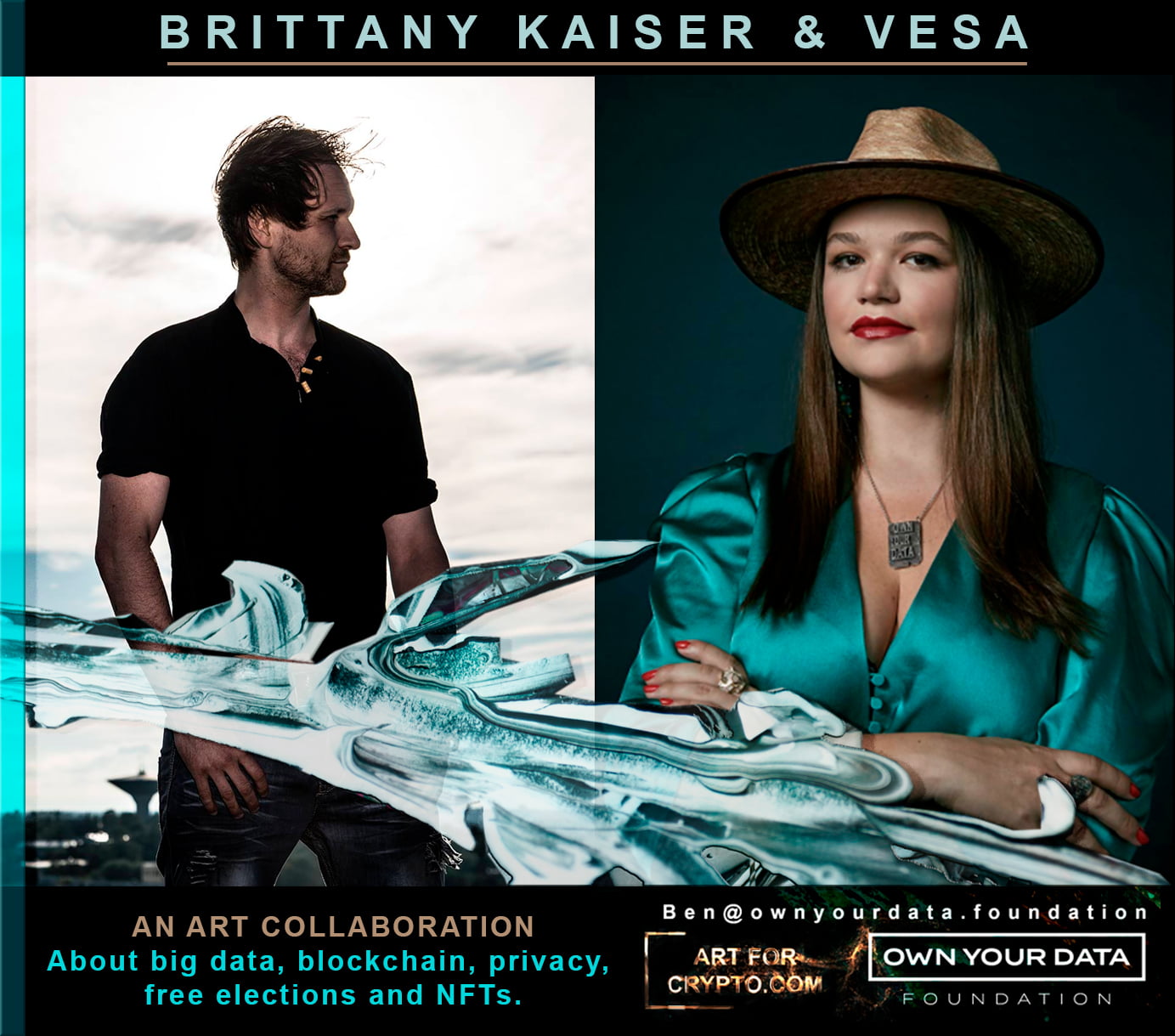
Her latest venture, a collaborative project with renowned crypto-artist VESA, represents a convergence of high-stakes political history and the burgeoning world of non-fungible tokens (NFTs). By merging physical mixed-media art with blockchain-based digital assets, this partnership seeks to reframe the conversation around personal data, positioning it not as a commodity to be harvested, but as property to be owned and protected.
The Genesis of a Movement: From Corporate Insider to Data Activist
To understand the weight of this artistic endeavor, one must first recognize the gravity of the story behind it. Brittany Kaiser gained international notoriety for her role in exposing the mechanisms of Cambridge Analytica, a firm that utilized sophisticated psychological profiling and data mining to influence electoral outcomes globally. Her journey was laid bare for the world in the Netflix documentary The Great Hack, a production that has reached an estimated 100 million viewers and secured nominations for both a BAFTA and an Academy Award.
The documentary served as a global wake-up call, illustrating the "strip-mining" of personal information that defines the modern internet economy. In the wake of this revelation, Kaiser co-founded the Own Your Data Foundation, an organization dedicated to providing education and advocacy for data literacy. As Kaiser famously noted, “If we want protection, we need to start thinking of our data as our property, because, if no one has noticed, property is held up and protected legally.”
This philosophy is the bedrock of her collaboration with artist VESA. Together, they are not merely creating art; they are creating a visual and digital lexicon for the next generation of data ownership.
Chronology of a High-Stakes Collaboration
The partnership between Kaiser and VESA—a pioneer of the "Artevo" movement and a veteran of the crypto-art space—was born out of a shared vision to bridge the gap between technical complexity and artistic expression.

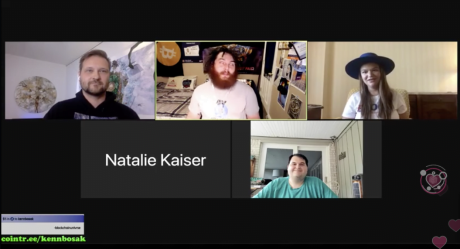
- October 2020: The official launch announcement took place via a podcast featuring Kaiser, VESA, and industry figures including Kenn Bosak and Benjamin Leff. This event set the stage for a series of planned exhibitions designed to challenge the status quo of digital surveillance.
- January 2021: The project moved to the development phase in Helsinki, where the collaborative efforts between Kaiser and VESA began to take physical form. This period focused on the synthesis of traditional mixed media with digital elements.
- Spring 2021: The culmination of the project was scheduled for a red-carpet launch in London. This event was designed to be multi-dimensional, featuring a physical art exhibition alongside a synchronized launch in the metaverse via the virtual world of Crypto Voxels.
- Post-London Expansion: Following the London debut, the project was slated to travel to New York for a second major auction, further embedding the narrative of data sovereignty into the global art market.
The Intersection of Art, Blockchain, and Data Ethics
The art pieces produced through this collaboration utilize cutting-edge technology to express the paradoxes of the current digital era. By tokenizing these works, the artists are reclaiming the narrative of digital assets. In the blockchain community, "Ikigai"—the Japanese concept of finding one’s purpose or "reason for being"—is often applied to the pursuit of decentralized systems. The collaboration treats data privacy as that purpose.
The Role of NFTs as a Statement of Ownership
By leveraging blockchain technology, the project ensures that the provenance and ownership of the art are transparent and immutable. This acts as a thematic mirror to the project’s core mission: if we can use the blockchain to prove ownership of a digital image, why can we not use similar frameworks to protect our personal data?
The choice of Crypto Voxels for the metaverse launch was intentional. It allowed for a decentralized, immersive experience where participants could interact with the art in a space that mirrors the borderless, democratized nature of the blockchain itself.
Supporting Data: The Scale of the Digital Crisis
The collaboration arrives at a critical juncture in global technology policy. The data mining practices highlighted in The Great Hack are not isolated incidents; they are symptomatic of a systemic reliance on data extraction as a business model.
- The Surveillance Economy: Research indicates that the average internet user’s data points are harvested thousands of times per day.
- The Regulatory Lag: While GDPR in Europe and the CCPA in California represent steps toward regulation, they remain reactive rather than proactive.
- Public Awareness: The success of The Great Hack (100 million views) demonstrates a massive, untapped public appetite for understanding how digital footprints are weaponized.
The Own Your Data Foundation, supported by Director of Communications Benjamin Leff, is working to fill this gap by translating complex technical jargon into actionable, human-centric strategies.
Implications for the Future of Digital Rights
The implications of this intersection between art and advocacy are profound. By bringing the conversation out of policy whitepapers and into the world of high-end art, Kaiser and VESA are reaching an audience that might otherwise remain disengaged from the technical nuances of blockchain and data security.
1. Cultural Normalization of Data Ownership
Art has the unique power to influence cultural norms. By framing data as "property," this project helps shift the public perception of digital information from something that is "given away" to something that is "held."
2. The Decentralization of Influence
The partnership challenges the centralized power of "Big Tech" by promoting a future where users, not corporations, decide how their data is used. The use of NFTs serves as a symbolic, yet highly functional, proof-of-concept for this decentralized future.
3. A New Asset Class for Activism
The project proves that political activism can be financially sustainable. By tokenizing the art, the creators provide a blueprint for how future activists can fund their work through the sale of digital assets, bypassing traditional, often centralized, funding streams.

Official Stance and Future Outlook
The Own Your Data Foundation continues to emphasize that education is the primary weapon in the fight for digital freedom. As the organization notes, the goal is to empower individuals to take back control of their digital identities.
For those looking to engage with the project or support its mission, the foundation maintains active communication channels, led by Benjamin Leff, to coordinate with potential sponsors and collaborators. As the project evolves, it remains a focal point for those interested in the intersection of privacy, technology, and human rights.
The legacy of this collaboration—and of Brittany Kaiser’s pivot from corporate strategist to privacy advocate—serves as a reminder that the digital world is not a static reality. It is a construct, one that is currently being rebuilt by those who see the value in transparency, ownership, and the creative application of blockchain technology.

As we look toward the future, the integration of art and data policy suggests that the next phase of the digital revolution will not be defined by the corporations that harvest our data, but by the individuals who reclaim it. Through the lens of VESA’s art and the voice of Brittany Kaiser, the message is clear: the digital future must be built on the foundation of property, ownership, and, above all, the protection of the individual.
Disclaimer: The information provided in this article is for educational purposes only. It does not represent the opinions of the publisher on whether to buy, sell, or hold any investments. Investing in blockchain technology and digital assets carries inherent risks. Readers are advised to conduct their own thorough research before making any financial decisions. Use information provided on this platform entirely at your own risk.
