

The global financial landscape is on the cusp of a paradigm shift. As the sun rises over San Salvador, the nation prepares to execute the most ambitious monetary experiment in the history of decentralized finance. Today, El Salvador’s groundbreaking "Bitcoin Law" officially comes into effect, marking the first time in history that a sovereign nation has adopted a volatile, decentralized cryptocurrency as legal tender alongside the U.S. dollar.
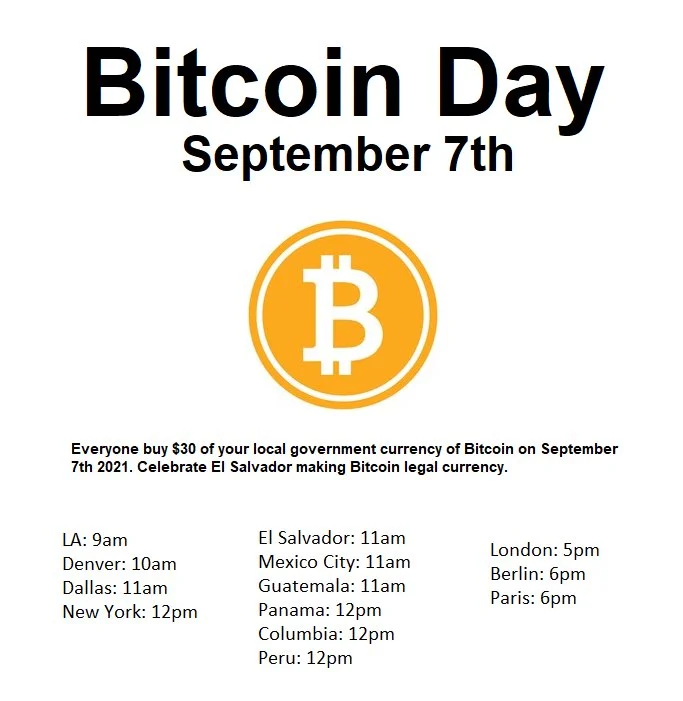
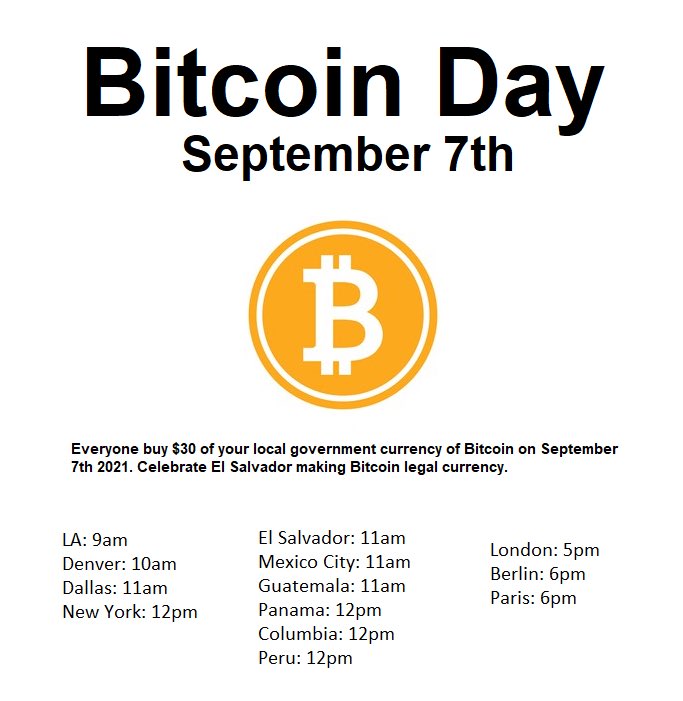
While institutional economists and international bodies like the IMF look on with skepticism, the grassroots Bitcoin community is celebrating this monumental occasion with a coordinated act of solidarity. Across the globe, "plebs"—the affectionate term used by Bitcoin enthusiasts for retail participants—are mobilizing to purchase $30 worth of Bitcoin, a symbolic gesture intended to honor the day and demonstrate the borderless, unified nature of the Bitcoin network.
The Chronology of a Grassroots Movement
The momentum behind today’s event did not emerge from a boardroom or a hedge fund, but from the bottom-up architecture of the internet. The initiative began as a humble inquiry on the Reddit forum r/Bitcoin, where a user posed a simple, provocative question: "So… we all buying $30 worth of Bitcoin on Tuesday?"
From Reddit Thread to Global Phenomenon
What started as a singular post quickly gained traction, reflecting the high-conviction sentiment that characterizes the Bitcoin community. Within hours, the thread surged to over 8.9K upvotes and 2,200 comments, creating a digital ripple effect that spanned multiple social media platforms.
- Initial Spark: The call to action focused on the number 30, a nod to the specific amount that many speculate El Salvadoran citizens might receive or interact with as they begin their journey into the digital economy.
- Viral Expansion: By the eve of the implementation, the hashtag #7SeptemberBuyBTC had become a rallying cry on Twitter (now X). Memetic culture, a hallmark of crypto-social engagement, took over. Users began sharing creative edits, including mashups of classic cinema scenes and high-energy graphics depicting the historic nature of the transition.
- The "Sats" Strategy: The consensus was clear: the goal was not to artificially "pump" the price of the asset, but rather to show a unified front. By keeping the purchase amount small and accessible, the community ensured that the event would be inclusive rather than exclusionary, reinforcing the ethos that Bitcoin is for everyone, regardless of net worth.
Supporting Data and Community Dynamics
As the movement gained visibility, it drew a diverse array of responses, ranging from enthusiastic participation to cautionary skepticism.
The Spectrum of Support
The comments section of the original Reddit post provided a fascinating cross-section of the Bitcoin ecosystem:
- Altruistic Contributors: Several users pledged to purchase significantly more than the requested $30, explicitly stating their intention to "cover" the entry costs for others who may lack the liquidity to participate.
- Ideological Solidarity: Many participants framed their purchase as an act of solidarity with the citizens of El Salvador, viewing the nation’s decision to embrace Bitcoin as a courageous step toward financial sovereignty.
- The Skeptics and Analysts: Not all feedback was positive. A vocal contingent of market observers warned that such coordinated retail buying could be interpreted as a market manipulation attempt or, worse, a trap for retail investors. Some analysts pointed to current technical charts, suggesting that the "buy" date might align with a market retracement, potentially leaving participants vulnerable to a short-term price drop.
International Reach
The movement transcended linguistic and cultural boundaries. Korean Bitcoin communities, for example, quickly translated the call to action, noting that September 7th also happens to coincide with Brazil’s Independence Day, adding a layer of thematic resonance to the event. This international synchronization highlights a unique characteristic of Bitcoin: it is the first asset class that creates a truly global, unified community that operates outside the traditional constraints of nation-states.
Official Responses and Institutional Influence
The gravity of the day was further punctuated by the involvement of heavyweights in the industry. Michael Saylor, the CEO of MicroStrategy and one of the most prominent institutional proponents of Bitcoin, leveraged his massive social media following to amplify the event.
The "Saylor" Effect
Saylor’s support served as a bridge between the retail "plebs" and the institutional world. By engaging with the community’s excitement, he effectively validated the grassroots movement, lending the event a sense of legitimacy that caught the attention of mainstream financial news outlets. His public stance—that MicroStrategy has no intention of divesting from its massive Bitcoin holdings—sought to calm fears that the event might be used as a "pump and dump" scheme by wealthy whales.
The Transparency of the Ledger
While critics worry about the potential for market manipulation, the nature of the Bitcoin blockchain offers a unique safeguard: transparency. Unlike traditional financial markets where "insider trading" can often be obscured by opaque reporting, every transaction on the Bitcoin network is public. If major players or institutional entities were to sell off their positions in response to the retail buying pressure today, the entire world would see it in real-time. This inherent accountability is, for many, the ultimate check against the "greasy" behavior that critics fear.
Implications for the Future of Finance
The implementation of the Bitcoin Law in El Salvador is more than just a legislative change; it is a stress test for the viability of a decentralized, non-sovereign currency in a world dominated by central bank-issued fiat.
A Test of Sovereignty
For El Salvador, the move is a gamble on financial inclusion. By adopting Bitcoin, the nation aims to lower the cost of remittances, increase access to financial services for the unbanked, and position itself as a global hub for technological innovation. If successful, it could force other developing nations to reconsider their reliance on foreign currencies and traditional banking systems.

The Regulatory Landscape
The international response has been mixed. While the IMF and other regulatory bodies have expressed concerns regarding financial stability and consumer protection, the Bitcoin community views these concerns as evidence that the system is functioning as intended. The "Bitcoin experiment" is being watched by central bankers worldwide, and the outcome will likely dictate the tone of cryptocurrency regulation for the next decade.
Looking Ahead
As we look at the charts and monitor the price action following the official "Legal Tender" declaration, the focus remains on the long-term utility of the asset. Regardless of whether today’s coordinated $30 purchase causes a short-term surge or a quiet day of consolidation, the event has already succeeded in its primary objective: it has sparked a global conversation.
The world is watching to see how the citizens of El Salvador interact with the "hardest money ever created." If the transition is smooth, it may provide a roadmap for other nations seeking to escape inflationary cycles. If it faces challenges, it will provide valuable data on the scalability and infrastructure requirements for national-level adoption.
Today is not just about the price of an asset; it is about the birth of a new financial era. Whether this leads to a "huge retracement" or a historic bull run, one thing is certain: the Bitcoin community has proven that it is a decentralized force, capable of mobilizing across borders in a heartbeat to support a common vision of financial freedom. The day of the "legal tender" has arrived, and the global experiment has officially begun.
