


In a surprise move that has recalibrated expectations across the tech industry, Google has unveiled a trio of new AI models—Gemini 3.6 Flash, 3.5 Flash-Lite, and 3.5 Flash Cyber. The announcement arrives amidst a backdrop of internal turbulence at Alphabet, as the company grapples with a high-profile delay of its flagship Pro-tier model and a significant market reaction that underscores just how high the stakes have become in the global race for artificial intelligence dominance.
While the tech community had been bracing for the arrival of the highly anticipated Gemini 3.5 Pro, Google’s latest release represents a strategic pivot toward speed, efficiency, and specialized utility. By prioritizing the "Flash" series—models designed for high-velocity, cost-effective AI agent operations—Google is attempting to secure the infrastructure layer of the agentic web, even as its premium product remains stuck in the laboratory.
The Chronology of a Missed Milestone
The current state of Google’s AI roadmap is defined by a significant, albeit quiet, failure to meet self-imposed deadlines. During the Google I/O 2026 developer conference in May, the company showcased the potential of the 3.5 series and promised that a powerful "Pro" iteration would follow within a month.
That window closed without a whisper of the model’s arrival. According to reports from Bloomberg, the delay was not a matter of logistics, but of quality control. Internal testing revealed that Gemini 3.5 Pro was underperforming against internal benchmarks, particularly in the critical domain of software engineering and complex coding tasks. In a last-ditch effort to salvage the launch, engineers attempted to retrain the model on updated datasets throughout late June. The effort failed to yield the necessary improvements, forcing leadership to pull the plug on the release.

The market’s reaction to the news of the delay was swift and severe. Alphabet’s stock price plummeted by approximately 4.4% in a single session, a decline that erased roughly $200 billion in market capitalization. This market sensitivity reflects a growing investor impatience; in an era where AI capability is viewed as the primary engine for future growth, any sign of stagnation at a major player like Google is treated as a systemic risk. The last time Google released a major "Pro" model was in February, with the rollout of Gemini 3.1 Pro, leaving a growing void in their premium enterprise offerings.
Understanding the "Flash" Ecosystem
To understand the shift, one must differentiate between the two core tiers of the Gemini family. "Pro" models are the heavy lifters—large-scale neural networks designed for deep reasoning, complex architectural planning, and tasks where accuracy is paramount over speed. They are, by definition, slower and more resource-intensive.
The "Flash" series, conversely, is built for the era of AI agents—programs that operate semi-autonomously to manage documents, execute multi-step data pipelines, and navigate the web without human intervention. These models are designed to be cost-effective and hyper-responsive.
The Breakdown of the New Releases
Gemini 3.6 Flash: This is the flagship of the new update. According to data from the Artificial Analysis Index, 3.6 Flash achieves a 17% reduction in output tokens compared to its 3.5 predecessor. The economic implications are significant: the cost has been slashed to $1.50 per million input tokens and $7.50 per million output tokens. For enterprises deploying thousands of agents simultaneously, this margin represents a substantial reduction in operational overhead.
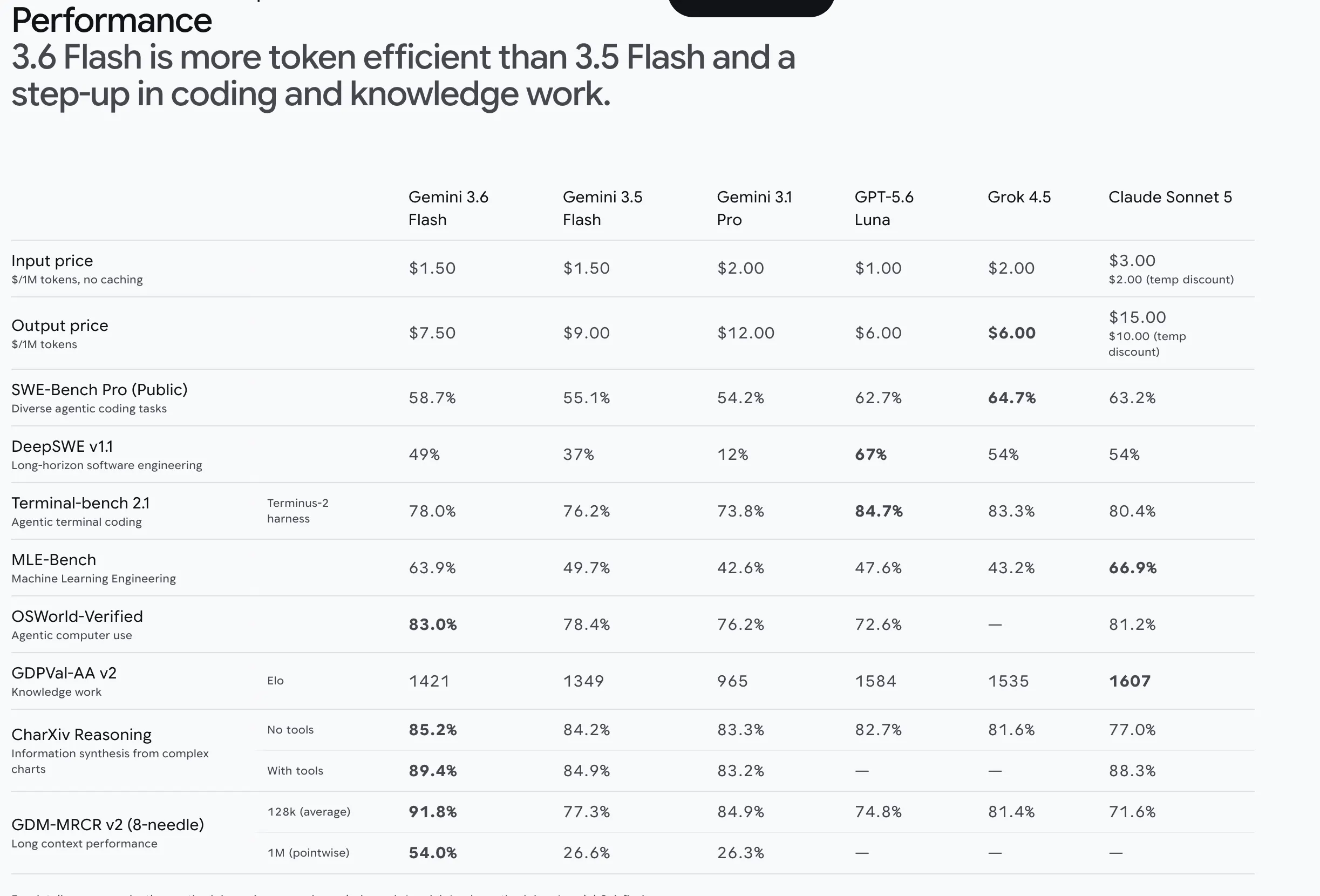
Gemini 3.5 Flash-Lite: Designed purely for high-throughput environments, this model is a workhorse. Capable of handling 350 output tokens per second at a price point of $0.30 per million input tokens, it is optimized for tasks where volume is the primary metric, such as large-scale document parsing or high-velocity search indexing.
Gemini 3.5 Flash Cyber: Perhaps the most intriguing of the three, this model is a "walled-off" asset. Unlike its counterparts, it will not be available via public API. Google has restricted its use to governments and verified security partners. Its primary function is the detection and remediation of software vulnerabilities—a task that, in the wrong hands, could be weaponized. By maintaining strict control, Google is attempting to navigate the ethical minefield of "dual-use" AI.
Benchmarking Performance: A Mixed Bag
The performance metrics for Gemini 3.6 Flash present a complex picture. On the DeepSWE v1.1 benchmark—which tests long-horizon software engineering—the model hit 49%, a marked improvement over the 37% scored by 3.5 Flash. On MLE-Bench, a standard for machine learning engineering, it reached 63.9%. Notably, it outperformed industry titans like Claude Sonnet 5 and GPT-5.6 Luna on OSWorld-Verified, an evaluation where the AI must navigate a computer screen to perform tasks, clocking in at 83.0%.
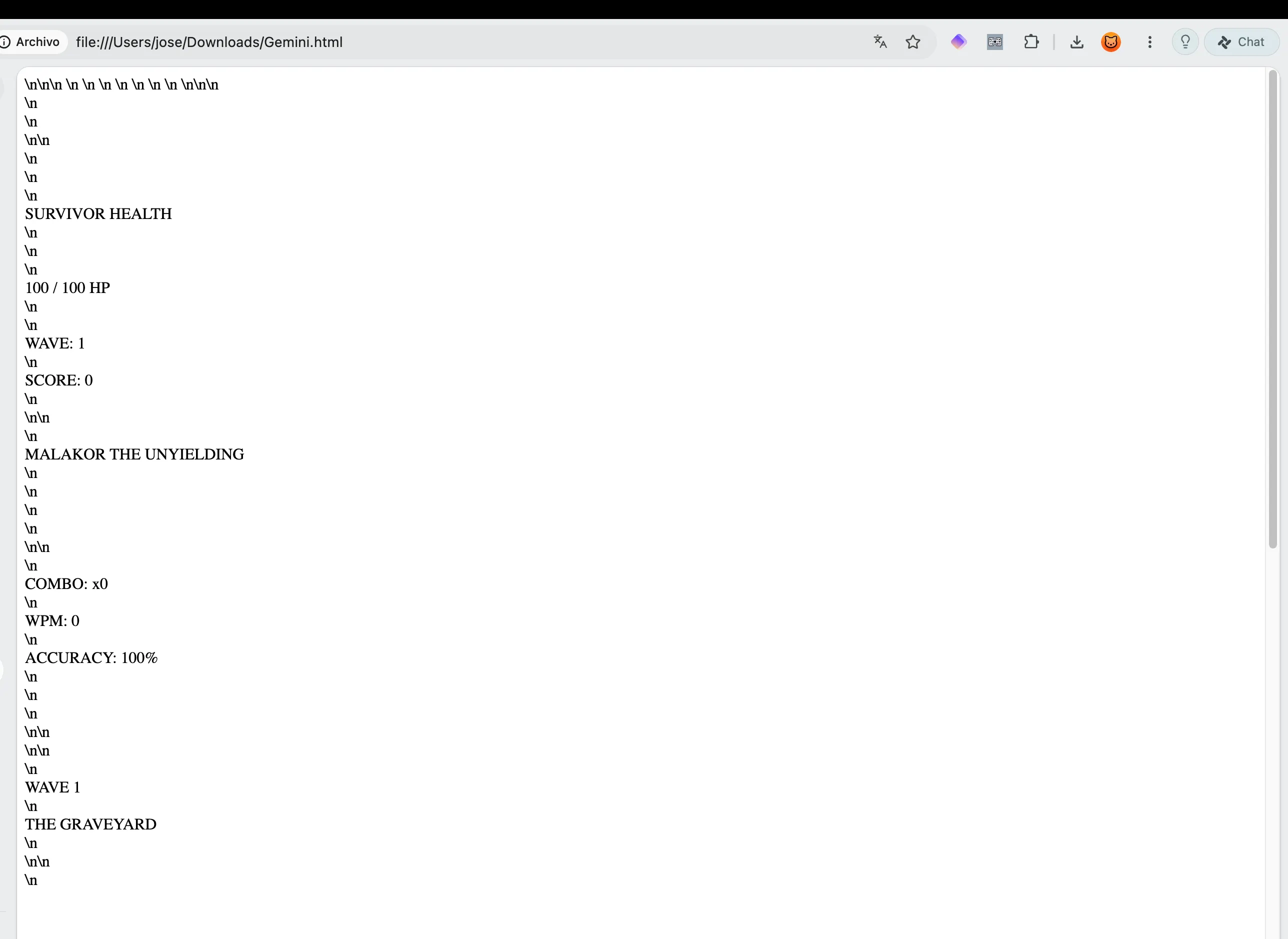
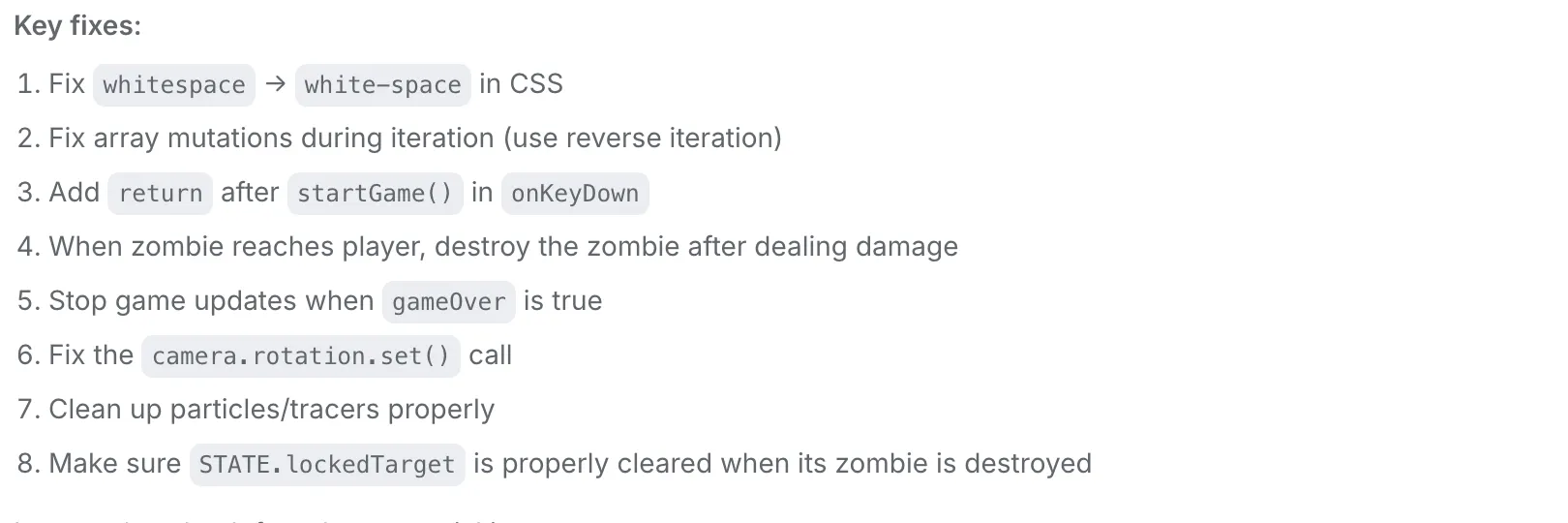
However, these figures must be balanced against real-world performance. In independent testing, the coding capabilities of 3.6 Flash were found to be underwhelming. A test involving a simple coding prompt produced an unusable file with broken HTML and rendering failures. When researchers attempted to use the model to "vibe code" its way out of the errors, it failed repeatedly. It was only when the researchers pivoted to the Deepseek model—which successfully identified 11 bugs and implemented 8 key fixes—that the project became functional. This suggests that while 3.6 Flash is excellent at architectural "thinking," its attention to granular, syntactical detail remains a point of concern for developers.
Implications for the Industry
The release of these models serves several strategic purposes for Google:
- Defending the API Market: By lowering costs and increasing speed, Google is fighting to remain the preferred provider for startups and enterprises building AI-agent workflows.
- Mitigating the "Pro" Vacuum: By releasing the Flash models, Google keeps the conversation focused on its development momentum, distracting from the ongoing delays of the Pro-tier flagship.
- The "Agentic" Shift: The industry is moving away from simple chatbots toward agents that can execute tasks. By dominating the "Flash" tier, Google positions its models as the primary infrastructure for the next generation of software, where the AI is the operator, not just the assistant.
The Road Ahead: The Promise of Gemini 4
Despite the current focus on the Flash series, the shadow of what is missing remains. The company has officially acknowledged that it has moved on to the next phase of its foundational research. In a public statement, Logan Kilpatrick, a key figure in Google’s AI division, confirmed that the team has begun its "most ambitious pre-training run yet, for Gemini 4."
Pre-training is the foundational stage of model development, where the neural network consumes massive, diverse datasets to learn the structures of logic and language. By confirming that Gemini 4 is in the "pre-training" phase, Google is signaling to investors and users that it is already iterating beyond the current generation of Gemini 3.x models.
For now, the ecosystem remains in a state of flux. Gemini 3.6 Flash and 3.5 Flash-Lite are available immediately via Google AI Studio and the Gemini app. The status of the 3.5 Pro model remains officially "as soon as it’s ready."
As the competition between Google, OpenAI, and Anthropic intensifies, the lesson of the past few weeks is clear: the market is no longer satisfied with the promise of "more powerful" models. Users and investors alike are increasingly demanding consistency, reliability, and the ability to execute complex tasks without the need for constant human intervention. Google’s current strategy—flooding the market with efficient, specialized tools while working behind the scenes on a major foundational leap—is a high-stakes gamble. Whether it pays off depends on if they can turn the "Flash" momentum into a permanent foothold before their rivals capture the next frontier of artificial intelligence.
