

As the digital asset landscape matures, the convergence of traditional fiat currencies and decentralized finance (DeFi) continues to reshape global liquidity. Among the most intriguing regional developments is the rise of JPYC—a Japanese yen-pegged digital asset—whose circulation has recently surpassed the monumental milestone of 2 billion yen.
Despite this expanding supply, a critical bottleneck remains: bridging the gap between localized fiat adoption and efficient, large-scale participation in global decentralized liquidity pools. Industry analysts suggest that while supply expansion is a vital first step, the future of JPYC within on-chain finance depends heavily on targeted liquidity injections, structural market depth, and cross-chain capital rotations.
Main Facts
The expansion of JPYC highlights a growing appetite for yen-denominated digital assets on the blockchain. However, analysts emphasize a stark dichotomy between the asset’s total supply and its practical utility in decentralized markets.
- Circulation Milestone: JPYC circulation has officially crossed the 2 billion yen threshold, signaling robust organic demand and growing localized adoption.
- The Liquidity Bottleneck: Despite its high circulation, the primary USD Coin (USDC) and JPYC liquidity pool currently holds a modest $275,000. This shallow depth restricts large-scale conversions and introduces high slippage, forcing the majority of JPYC activity to remain confined to basic yen-based transfers.
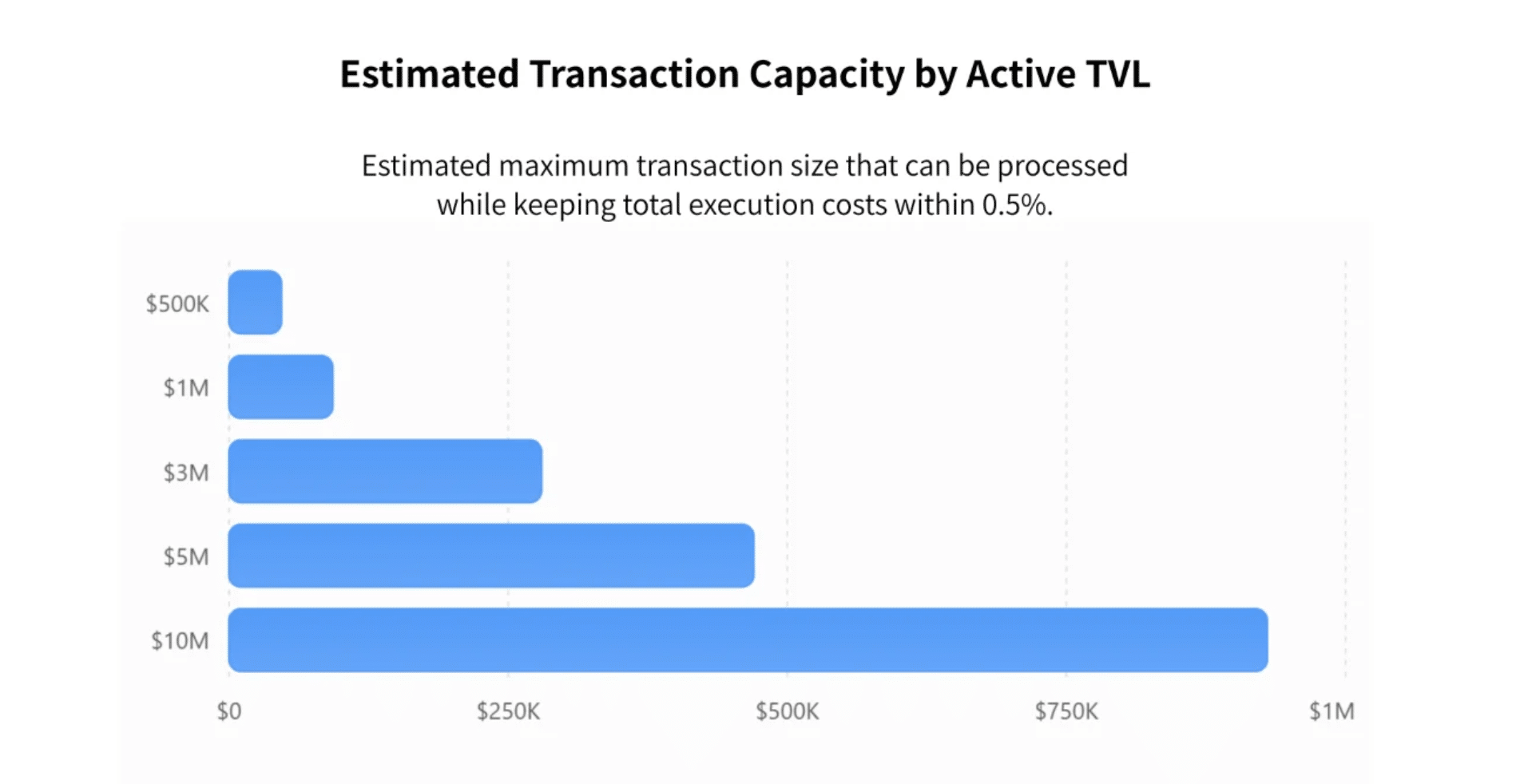
- Capital Efficiency Projections: According to insights from CryptoQuant analyst XWIN, scaling liquidity pools is essential for processing institutional-grade volume. A $1 million pool could process roughly $93,000 per transaction while keeping execution costs near a manageable 0.5%.
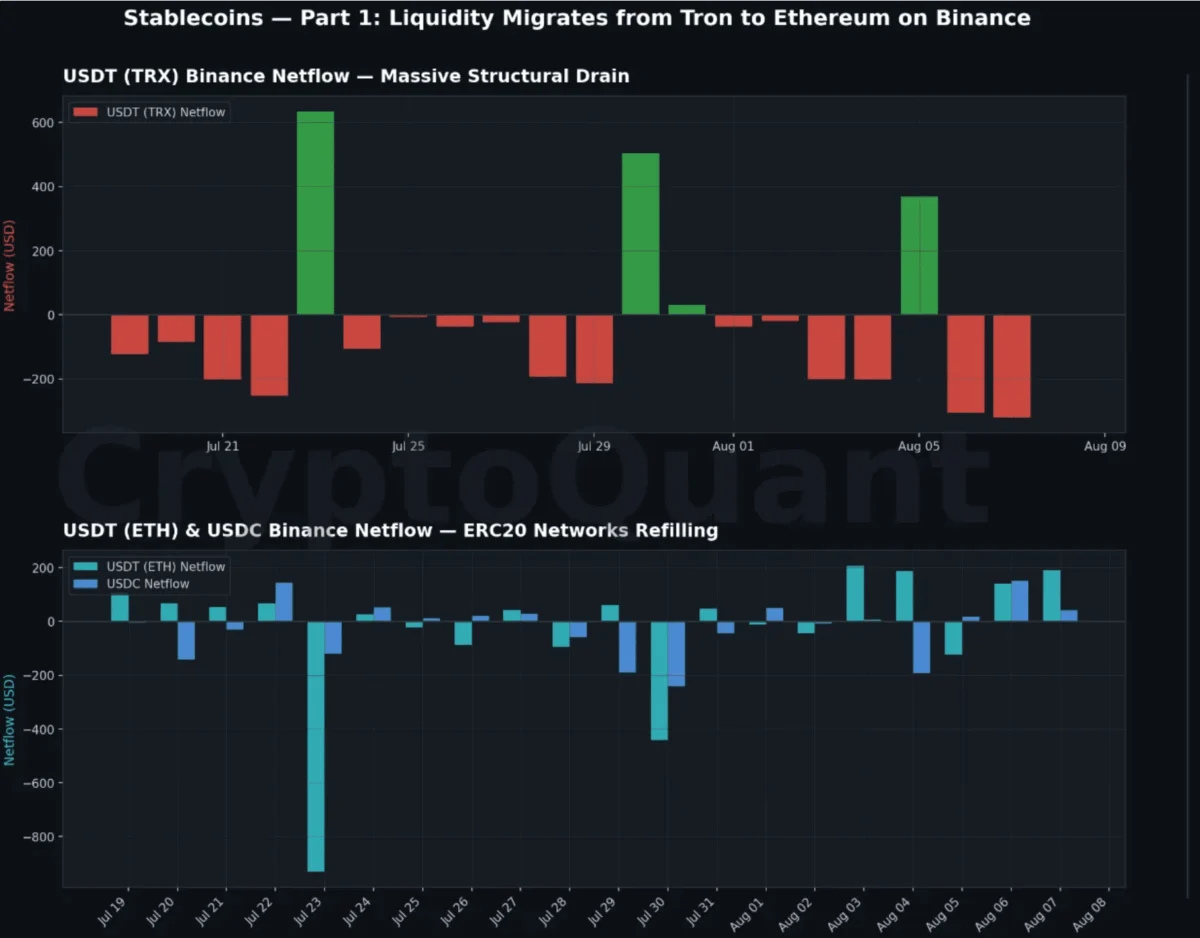
- Network Rotation: The broader stablecoin ecosystem is experiencing a major shift in capital deployment. While exchanges like Binance continue to pull in roughly $87 million in daily net inflows, capital is increasingly rotating across networks—most notably into Ethereum—rather than leaving the crypto economy altogether.
Chronology of JPYC’s DeFi Integration and Market Evolution
The trajectory of JPYC reflects the broader challenges faced by non-USD stablecoins attempting to break into a predominantly dollar-denominated DeFi ecosystem.
Phase 1: Localized Adoption and Supply Growth (Foundational Era)
In its early stages, JPYC focused primarily on establishing regulatory compliance, building trust, and expanding its user base within Japan. The primary objective was achieving a critical mass of circulation. Over time, organic demand surged, eventually pushing total circulation past the 2 billion yen mark. During this phase, usage was largely centered on peer-to-peer transfers, simple transactional use cases, and localized experiments.
Phase 2: The On-Chain Utility Bottleneck
As circulation grew, developers and market participants sought to integrate JPYC into broader decentralized finance protocols—including lending markets, automated market makers (AMMs), and yield-generating vaults. However, because the primary trading pairs (such as JPYC/USDC) remained severely underfunded, users encountered severe price slippage on anything more than micro-transactions. Consequently, the asset’s utility stalled, proving that high supply does not automatically translate to high market efficiency.

Phase 3: The Ethereum Stablecoin Rotation (Current Era)
Entering the current market cycle, a structural shift in liquidity has begun to alter the landscape. As capital rotates away from legacy networks and into Ethereum—highlighted by staggering surges of 210% in Tether (USDT) inflows and 114% in USDC inflows on the Ethereum network—the foundational infrastructure required to support deeper JPYC trading pairs has begun to materialize. Analysts and protocol architects are now actively mapping out the capital requirements needed to transition JPYC from a localized token into an efficient global bridge.
Supporting Data: Liquidity Thresholds and Capital Requirements
To transition JPYC from a domestic settlement tool into a globally traded DeFi asset, specific financial thresholds must be met. CryptoQuant analyst XWIN has modeled the precise capital injections required to unlock various tiers of on-chain utility:
| Liquidity Pool Size | Estimated Max Transaction Capacity | Execution & Slippage Profile | Enabled DeFi Use Cases |
|---|---|---|---|
| $275,000 (Current) | Micro-scale ($5,000 – $10,000) | High slippage on larger swaps | Basic peer-to-peer transfers, minor retail trades |
| $1,000,000 | ~$93,000 | ~0.5% execution costs | Small-scale swaps, introductory liquidity provision |
| $3,000,000 – $5,000,000 | Up to ~$470,000 | Optimized for medium-sized trades | Larger token swaps, basic yield vaults, limited lending protocols |
| $13,000,000 – $15,000,000 | Institutional-grade capacity | Minimal slippage, high arbitrage efficiency | Deep lending markets, collateralized debt positions (CDPs), institutional trading desks |
As detailed in the data, reaching a $5 million liquidity pool would dramatically increase transaction capacity to nearly $470,000 under optimal market conditions. Furthermore, injecting an additional $8 to $10 million—bringing total pool depth to the $13–$15 million range—would finally create a viable ecosystem for institutional traders and advanced users seeking to utilize JPYC as collateral.
Official Responses and Market Perspectives
Market analysts and on-chain intelligence platforms have closely monitored the structural evolution of non-dollar stablecoins. The consensus within the analytical community is that regional stablecoins cannot scale in a vacuum; they are inextricably linked to the health and depth of benchmark dollar-pegged assets like USDC.
CryptoQuant analysts point out that while stablecoin issuers and centralized exchanges continue to enjoy healthy net inflows (such as Binance’s $87 million daily net intake), the true story lies in intra-chain migration. The contraction of TRON USDT reserves—dropping from $1.4 billion down to $709 million—alongside massive capital flights toward Ethereum, demonstrates that liquidity is actively hunting for higher-yield, deeply integrated financial environments.
For JPYC, this means its fate is tied to the availability of USDC on Ethereum. Because USDC serves as the crucial dollar-side counterweight in proposed liquidity pairs, any increase in Ethereum-based USDC reserves directly enhances JPYC’s ability to absorb larger trades, reduce volatility, and offer competitive exchange rates.
Implications for Global DeFi and the Japanese Economy
The ongoing evolution of JPYC carries profound implications for both the Japanese financial ecosystem and the broader decentralized finance landscape.
1. Opening Up the Yen to Global Yield Opportunities
For Japanese holders of capital, access to global DeFi has historically been hindered by currency conversion friction, regulatory complexities, and the shallow depth of localized crypto ramps. By establishing deep, efficient JPYC/USDC pools, Japanese retail and institutional investors could seamlessly channel yen-denominated capital into global lending markets, earning yields previously restricted to dollar or euro holders.
2. The Blueprint for Non-Dollar Stablecoins
JPYC serves as a vital case study for other sovereign currency-backed tokens (such as digital Euros, Pounds, or Pesos). The lessons learned from JPYC’s circulation-versus-liquidity mismatch prove that minting high volumes of a digital fiat currency is only half the battle. Without intentional, coordinated capital deployment into automated market makers and lending protocols, sovereign stablecoins risk remaining isolated digital tokens with limited real-world utility.
3. Institutional Validation and Cross-Border Settlement
As liquidity requirements are met and pools scale past the $10 million threshold, institutional traders will gain the confidence needed to execute large-scale cross-border settlements using JPYC. This could dramatically streamline trade finance, foreign exchange hedging, and multinational corporate treasury management between Japan and international partners.
Conclusion
JPYC’s crossing of the 2 billion yen circulation mark is a testament to the surging demand for digitized Japanese currency. However, as quantitative models and market dynamics demonstrate, supply alone does not guarantee integration.
The transition from a localized token to a cornerstone of cross-border decentralized finance hinges on deliberate liquidity scaling—specifically through deeper USDC partnerships on high-throughput networks like Ethereum. Until those capital thresholds are met, JPYC will remain a promising bridge; but with the right liquidity injections, it has the potential to fundamentally redefine how yen capital interacts with the global financial grid.
