

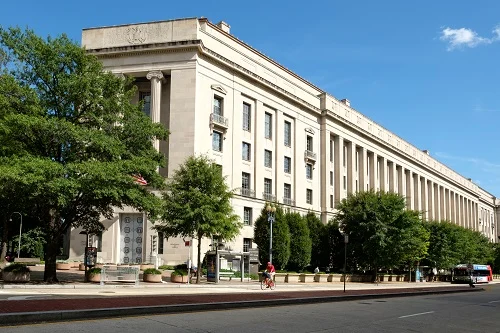
The legal landscape for Sam Bankman-Fried, the disgraced founder of the collapsed cryptocurrency exchange FTX, has shifted dramatically. Once a titan of the digital asset industry, Bankman-Fried now finds his freedom hanging by a thread as the U.S. Department of Justice (DOJ) formally requested that a federal judge revoke his bail and remand him to jail ahead of his high-stakes criminal trial scheduled for October.
This development marks a significant escalation in a case that has captivated the global financial community since FTX’s spectacular implosion in November 2022. Prosecutors argue that Bankman-Fried’s pattern of behavior—specifically regarding witness tampering—has rendered his current release conditions insufficient to protect the integrity of the judicial process.
The Core Allegation: Witness Tampering and Strategic Leaks
The catalyst for the DOJ’s request stems from a series of actions the prosecution characterizes as a calculated attempt to influence potential witnesses and sway public opinion. Most notably, federal prosecutors have accused Bankman-Fried of leaking the private diary of Caroline Ellison, his former romantic partner and the former CEO of Alameda Research, to the New York Times.
Ellison, who has entered a plea deal with the government and is expected to serve as a key witness against Bankman-Fried, had her private reflections publicized in a manner that the DOJ claims was designed to discredit her. By leaking sensitive, personal documents, prosecutors argue that Bankman-Fried is not merely exercising his First Amendment rights, but is actively engaging in "witness tampering" intended to intimidate or embarrass those prepared to testify against him.
During a July 26 hearing, the DOJ’s legal team emphasized that these actions represent a persistent, willful defiance of court-ordered restrictions. The prosecution’s argument is stark: they contend that no amount of restrictive bail conditions will prevent Bankman-Fried from interfering with the trial process, and that incarceration is the only way to ensure the safety and impartiality of the witness pool.
A Chronology of the FTX Collapse and Subsequent Legal Battles
To understand the gravity of the current situation, one must look at the timeline of the FTX disaster and its aftermath:
- November 2022: FTX files for Chapter 11 bankruptcy in Delaware after a liquidity crisis exposes a multi-billion dollar hole in its balance sheet. Bankman-Fried resigns as CEO.
- December 2022: Bankman-Fried is arrested in the Bahamas at the request of U.S. authorities. He is subsequently extradited to the United States.
- December 2022: Bankman-Fried is released on a $250 million personal recognizance bond, the largest in American history, requiring him to reside at his parents’ home in Palo Alto, California, under strict monitoring.
- Early 2023: Prosecutors unseal a superseding indictment detailing additional fraud charges, including allegations of illegal campaign finance contributions and conspiracy to commit bank fraud.
- July 2023: The DOJ files a motion to revoke bail, citing the leak of Caroline Ellison’s diary and other extrajudicial statements that allegedly constitute witness tampering.
- July 26, 2023: A federal hearing takes place where Judge Lewis Kaplan expresses deep concern over Bankman-Fried’s conduct, warning the defendant to "take this seriously."
Supporting Data: The Case for Incarceration
The prosecution’s argument rests on the principle of trial integrity. In their filings, the DOJ has highlighted that Bankman-Fried’s "extrajudicial statements" are not merely inconvenient; they are potentially prejudicial to the jury pool.
According to legal experts monitoring the case, the government’s concern is that Bankman-Fried is leveraging his social media presence and his access to the press to construct a narrative that undermines the evidence the prosecution intends to present. By leaking private documents, he is allegedly attempting to influence the testimony of former colleagues who are already feeling the pressure of the government’s investigation.
The DOJ noted in court documents that Bankman-Fried’s behavior constitutes a "pattern of abuse" that has evolved over several months. While the defendant’s legal team maintains that he is simply attempting to defend his reputation in the court of public opinion, the prosecution argues that the line between reputation management and witness tampering has been crossed.
Official Responses and Judicial Stance
The legal battle over bail has created a stark divide between the defense and the prosecution.
The Defense Position
Bankman-Fried’s legal counsel has vigorously opposed the motion to revoke bail. They argue that incarceration would severely hamper their client’s ability to participate in his own defense. They contend that the volume of discovery—the mountain of digital evidence provided by the government—is so vast that it requires Bankman-Fried’s active, daily participation to categorize and analyze. They argue that being in remand would effectively strip him of his Sixth Amendment right to a fair trial.
The Judge’s Perspective
Judge Lewis Kaplan of the Southern District of New York has remained measured but firm. While he did not grant the DOJ’s request for immediate detention on July 26, his rhetoric was a clear warning. He explicitly told Bankman-Fried to "take this seriously," indicating that the defendant’s window of opportunity to comply with court directives is rapidly closing.
Furthermore, the court has signaled its intention to move toward a strict "gag order." Both parties have been ordered to negotiate the terms of this order, with an expected implementation date of August 3. This move is designed to muzzle Bankman-Fried’s ability to speak publicly about the case, effectively putting him under a judicial "silence" to prevent further interference.
Implications for the October Trial
The potential for Bankman-Fried to be sent to jail before his trial has profound implications for the legal proceedings.
Impact on Trial Strategy
If Bankman-Fried is incarcerated, the logistical challenges for his defense team will be immense. Coordinating a complex financial fraud defense from within the confines of a correctional facility is significantly more difficult than working from a home office. However, some legal observers suggest that detention might actually prevent further "own goals" by the defendant, whose penchant for speaking out has often created more legal trouble than it has resolved.
The Precedent of Witness Tampering
This case serves as a high-profile case study in the limits of pretrial freedom. For high-net-worth defendants, the use of bail often allows for a level of communication and media interaction that the average defendant never enjoys. The DOJ’s move against Bankman-Fried sends a clear message that the court will not tolerate the use of wealth and influence to manipulate the judicial process, regardless of the defendant’s status.
The Broader Crypto Industry
For the crypto industry, the trial of Bankman-Fried is seen as a watershed moment. The collapse of FTX led to a global crackdown on digital asset exchanges, and the trial is expected to shed light on the systemic failures and potential criminal conduct that characterized the sector during the 2021 bull run. Any decision regarding Bankman-Fried’s detention will be viewed through the lens of how seriously the U.S. justice system treats white-collar financial crimes in the modern era.
Conclusion: A Precarious Future
As August 3 approaches and the details of the pending gag order are finalized, Sam Bankman-Fried finds himself in a position of extreme vulnerability. The court has granted him a stay of execution, so to speak, but the warning from Judge Kaplan serves as a final notice.
Should Bankman-Fried continue to engage in behavior that the court perceives as witness tampering or an attempt to undermine the judicial process, the transition from his parents’ home to a jail cell is likely imminent. For a man who once occupied the pinnacle of the financial world, the coming months will be a testament to the fact that, in the eyes of the law, no one is above the consequences of attempting to tilt the scales of justice.
The October trial will proceed regardless of his location, but his ability to effectively fight the charges against him will be irrevocably altered by his next moves. The question remains: can Bankman-Fried maintain the discipline required to stay out of jail, or will his own actions be the final nail in the coffin of his freedom?
