

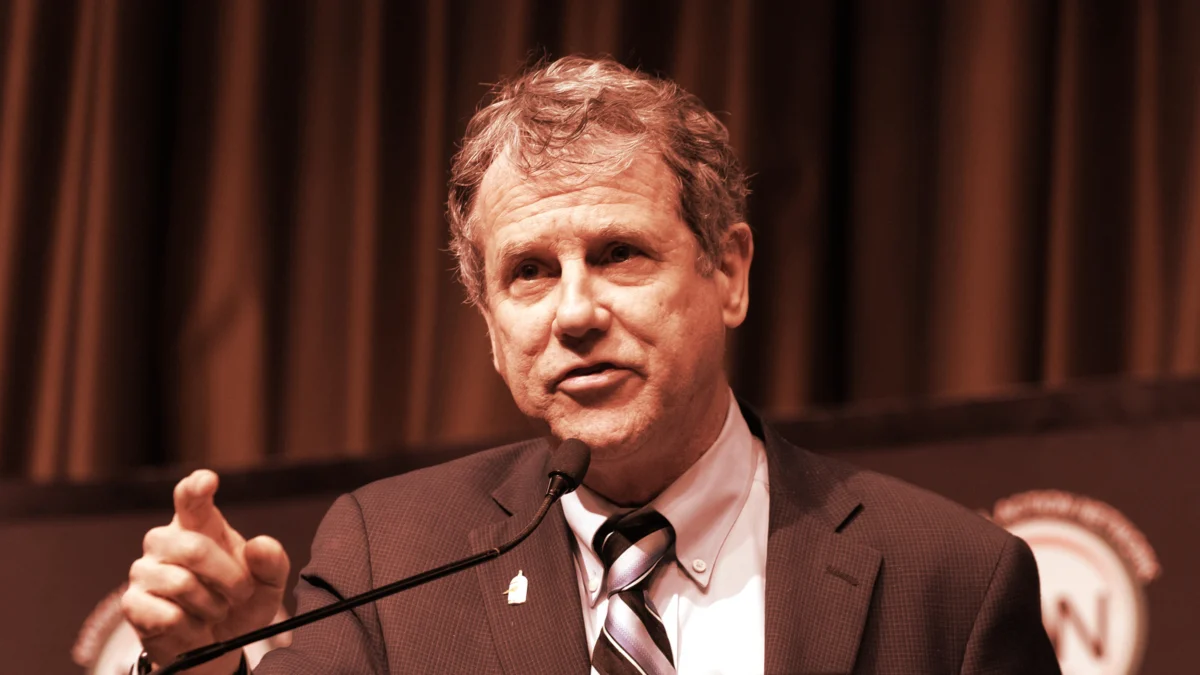
WASHINGTON — In a staggering escalation of digital asset industry political intervention, the crypto super Political Action Committee (PAC) Fairshake has confirmed plans to deploy a massive $30 million war chest to oppose former Democratic Senator Sherrod Brown’s bid to return to Congress.
The announcement, first reported by Politico, arrives on the heels of a major legislative defeat for the digital asset sector on Capitol Hill, where the closely watched Digital Asset Market Clarity Act stalled in the Senate. The looming showdown in Ohio—where Brown is challenging incumbent Republican Senator Jon Husted—is rapidly shaping up to be one of the most expensive, fiercely contested, and consequential congressional races of the 2026 midterm cycle, with national implications for the balance of power in the Senate and the future of financial technology regulation in the United States.
Main Facts: The Battlegrounds of Ohio and Washington
The renewed hostility between Silicon Valley’s deep-pocketed crypto advocates and the populist wing of the Democratic Party highlights the unprecedented convergence of digital finance and American electoral politics.
Fairshake’s newly minted $30 million campaign is explicitly designed to block Brown’s political comeback. Brown, a stalwart progressive and former chairman of the influential Senate Banking Committee, has long been viewed by the cryptocurrency industry as one of its most formidable and vocal antagonists. His skeptical stance on decentralized finance, stablecoins, and digital asset deregulation made him public enemy number one for crypto lobbyists during the 2024 election cycle, and that sentiment has only intensified.
In the opposing corner sits Republican Senator Jon Husted, the former Ohio lieutenant governor. Husted was appointed to the upper chamber in January 2025 to fill the vacancy left by JD Vance following Vance’s ascension to the vice presidency. With control of the Senate hanging in the balance, the Ohio matchup has become a lightning rod for out-of-state money, policy debates, and ideological warfare.
The timing of Fairshake’s announcement is far from coincidental. It directly follows the Senate’s narrow failure to advance the Digital Asset Market Clarity Act, a landmark bill that aimed to establish a comprehensive federal regulatory framework for crypto markets. The legislation sought to divide regulatory oversight clearly between the Securities and Exchange Commission (SEC) and the Commodity Futures Trading Commission (CFTC)—a long-sought priority for an industry that has repeatedly complained of "regulation by enforcement."
When the cloture motion failed by a vote of 49–50—falling just short of the 60 votes required to proceed—it sent shockwaves through the crypto ecosystem, transforming legislative frustration into immediate, aggressive electoral mobilization.
Chronology: From 2024 Defeat to the 2026 Senate Showdown
To understand the magnitude of Fairshake’s $30 million pledge against Sherrod Brown, it is necessary to examine the rapid evolution of the crypto industry’s political playbook over the past two years:
- Late 2024: Riding a wave of financial contributions, Fairshake and its affiliated super PACs deployed roughly $40 million to unseat Sherrod Brown in his previous Senate reelection bid in Ohio. Pitted against Republican challenger Bernie Moreno, Brown ultimately lost his seat in a brutal, multi-million-dollar media slugfest that signaled a watershed moment for corporate digital asset spending in federal elections.
- January 2025: Following his victory in the presidential election alongside Donald Trump, former Senator JD Vance vacates his Ohio Senate seat. Governor Mike DeWine appoints former Lieutenant Governor Jon Husted to fill the remainder of the term, setting the stage for an explosive 2026 defense of the seat.
- Early 2025: Fairshake reports staggering fundraising totals for the 2026 midterm cycle. By January 2025, the group has already amassed $116 million, bolstered by major contributions from heavy-hitters like Coinbase, Ripple, and Andreessen Horowitz.
- August 2025: Despite ongoing campaign expenditures across various primary races, Fairshake reports a formidable war chest of $108 million remaining in its accounts, proving that its financial momentum is sustainable and expanding.
- September 2026: The legislative showdown reaches a boiling point. The Senate votes 49–50 against cloture on the Digital Asset Market Clarity Act. Every present Democrat votes against advancing the bill, alongside Republican dissidents.
- Days Later (September 2026): Politico breaks the news that Fairshake has confirmed its intent to spend $30 million targeting Sherrod Brown’s current campaign to reclaim a seat in Congress, formalizing the revenge-and-retention strategy just weeks before the November 3 midterms.
Supporting Data: The Financial Muscle and Legislative Arithmetic
The numbers underlying Fairshake’s operations underscore an unprecedented shift in modern campaign finance. Financed primarily by digital asset industry titans—including crypto exchange Coinbase, cross-border payments firm Ripple, and venture capital giant Andreessen Horowitz—Fairshake operates with a financial flexibility that rivals traditional party committees.
The Congressional Breakdown on the Clarity Act
The legislative defeat of the Digital Asset Market Clarity Act exposed deep partisan and procedural fault lines within the Senate:
- The Vote: 49 votes in favor, 50 votes against (failing to reach the 60-vote threshold needed to break a filibuster).
- Democratic Block: All participating Democratic senators voted against moving forward with the bill, reflecting a unified party line influenced by consumer protection concerns and skepticism voiced by figures like Elizabeth Warren and Sherrod Brown.
- Republican Defections: Republican Sens. Susan Collins, Josh Hawley, and Jerry Moran broke ranks to vote against cloture.
- Procedural Maneuver: Republican Sen. Thom Tillis switched his vote to a technical "no" at the eleventh hour—a procedural chess move designed to preserve the right to reintroduce the legislation during a future legislative window.
PAC Financial Footprint
- Total 2026 Fundraising: $116 million secured by January 2025.
- Reserves: $108 million cash on hand as of late August 2026.
- Targeted Ohio Investment: $30 million earmarked specifically for the Brown-Husted race, trailing closely behind the $40 million spent in the state during the 2024 cycle.
Official Responses: Campaigns Trade Blows Over "Special Interests"
The clash has triggered sharp rhetorical volleys between the crypto industry, the political establishment, and the Brown campaign.
Patrick Eisenhauer, campaign manager for Sherrod Brown, did not mince words when addressing the influx of millions in outside corporate money aimed at his candidate. In an official statement, Eisenhauer framed the PAC’s intervention as a desperate attempt by wealthy elites to silence a populist champion:
“Of course the special interests are panicking, they know Sherrod will fight the rigged system they’re feasting on to stand up for working Ohioans.”
Brown’s camp continues to emphasize his legislative record as a defender of consumers, arguing that his skepticism toward digital assets stems from a desire to protect everyday Americans from financial volatility, fraud, and systemic risk.
On the other side of the aisle, crypto advocacy groups and PAC strategists argue that opposition to anti-innovation lawmakers is a matter of democratic accountability. Grassroots and advocacy organizations like Stand With Crypto—backed heavily by Coinbase—vowed immediate electoral consequences following the Senate’s rejection of the Clarity Act. The organization announced plans to incorporate senators’ votes directly into its public lawmaker scorecards, mobilizing millions of digital asset investors and enthusiasts ahead of the November 3 midterms.
While Fairshake publicly maintains that it supports bipartisan candidates who favor forward-thinking, clear regulatory frameworks, its media strategy often sidesteps technical debates over blockchain technology. Instead, the PAC historically crafts campaign advertisements focusing on broader, highly resonant populist and economic themes—a strategy it successfully deployed during both the 2024 general election cycle and the 2026 congressional primaries.
Implications: What This Means for Crypto Regulation and the Midterms
The multi-million-dollar onslaught against Sherrod Brown carries profound ramifications that extend far beyond the borders of Ohio, touching upon the future of federal oversight, campaign finance, and legislative gridlock.
1. The Death (and Rebirth) of Crypto Legislation
With the Senate’s failure to pass the Clarity Act and the legislative calendar rapidly winding down ahead of the November midterms, comprehensive federal crypto regulation is effectively dead for the current congressional session. The bitter partisan divide over the bill—compounded by the unified Democratic opposition—suggests that digital asset policy will remain a contentious political football well into the next Congress.
2. The Chilling Effect on Dissenting Lawmakers
Fairshake’s targeted destruction of high-profile skeptics sends an unambiguous message to Capitol Hill: opposing the digital asset lobby carries severe political and financial consequences. Lawmakers on both sides of the aisle are taking note of the PAC’s massive war chest. Political analysts suggest that the immense financial pressure exerted by crypto super PACs could cause wavering legislators to moderate their stances on future blockchain and stablecoin bills, fearing an avalanche of negative campaign advertising in their home districts.
3. A New Paradigm in Super PAC Influence
The deployment of over $100 million by a single single-issue industry cohort solidifies the cryptocurrency sector’s place as one of the most powerful interest groups in modern American politics. By utilizing sophisticated polling strategies that translate complex regulatory debates into relatable voter issues—while obscuring overt industry messaging in campaign ads—crypto super PACs have proven they can successfully sway elections without getting bogged down in the technical minutiae of decentralized ledgers.
As the race between Jon Husted and Sherrod Brown enters its final, high-intensity weeks, all eyes will be on Ohio. Whether the $30 million Fairshake investment can successfully block Brown’s political ambitions once again will serve as a definitive referendum on the political clout of Silicon Valley and the digital asset revolution.
