

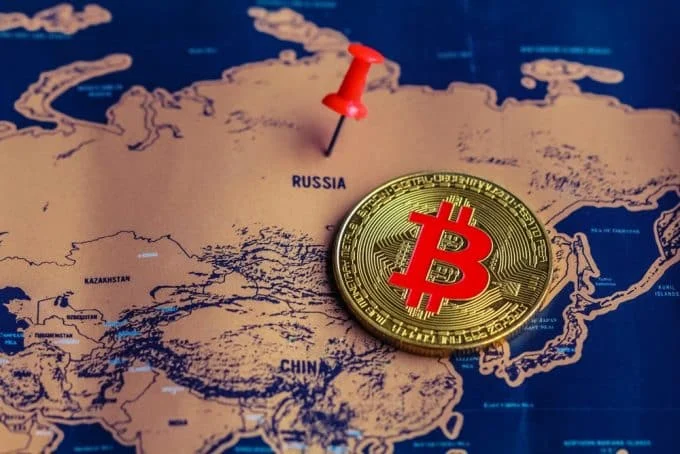
The global cryptocurrency market is currently grappling with a potent "perfect storm" of macroeconomic uncertainty and geopolitical friction. As tensions along the Russia-Ukraine border intensify, digital asset markets—long touted as a potential hedge against traditional financial instability—have found themselves mirroring the volatility of global equity markets. With Bitcoin retreating from its early January highs and Ethereum experiencing significant downward pressure, the industry is once again confronting the reality that crypto assets remain highly sensitive to international instability and regulatory threats.
Main Facts: A Market Under Pressure
As of Thursday, the cryptocurrency market is navigating a turbulent landscape. Bitcoin (BTC) is currently trading at approximately $43,352, shedding 0.7% in a single day and retreating significantly from the $47,000 threshold observed on January 1. This downward trend is not limited to the flagship asset; Ethereum (ETH), the world’s second-largest cryptocurrency, has seen a 2.14% decline, trading at $2,873.
The broader market impact has been profound. Over a single 24-hour period, the global cryptocurrency sector suffered a staggering loss of $200 billion in total market capitalization. This mass sell-off reflects a growing investor sentiment that digital assets are no longer insulated from the geopolitical tremors shaking traditional Wall Street indices. When juxtaposed with the Nasdaq Composite—which faced a 0.9% drop last December—the current volatility in the crypto space underscores a heightened level of risk aversion among both retail and institutional traders.
Chronology: The Escalation of Tensions
The current market instability can be traced through a series of escalating diplomatic and military developments:
- Early January 2022: Bitcoin opened the year with momentum, hitting $47,000. However, as the month progressed, the narrative shifted from price discovery to risk management.
- The Troop Buildup: Reports confirmed that Russia had amassed more than 100,000 troops near the Ukrainian border. This massing of forces served as the primary catalyst for market jitters, overshadowing typical crypto-market drivers.
- Diplomatic Channels: United States President Joe Biden engaged in an hour-long dialogue with Ukrainian President Volodymyr Zelensky on Monday to assess the deteriorating situation. These high-level discussions served as a signal to global markets that the threat of kinetic conflict was becoming an imminent reality rather than a speculative risk.
- Regulatory Aggression: Compounding the geopolitical fear, the Central Bank of Russia issued a formal assessment suggesting a total ban on cryptocurrency mining and trading within its borders. This move hit the market particularly hard, given that Russia represents roughly 10% of the global Bitcoin mining hash rate.
- The "Double-Dip" Effect: As fears of a Russian strike grew, Bitcoin and Ethereum plummeted over 9% in a short window, reaching their lowest levels in six months. This, combined with the threat of internal bans, created a feedback loop of panic selling.
Supporting Data and Volatility Analysis
Understanding the current market environment requires a deep dive into volatility metrics. According to data from BuyBitcoinWorldwide, Bitcoin’s 30-day volatility index is currently experiencing a contraction, losing 3.35% of its value. While this might seem counter-intuitive given the price drops, it suggests that the market is currently in a "wait-and-see" mode, where the volatility is driven by macro events rather than internal asset-specific cycles.
For context, Bitcoin’s average volatility throughout 2021 was roughly 4.56%. The current dip is significant, yet it is essential to note that the asset has not surrendered all the gains secured from its mid-January lows of $32,950. The total market capitalization of Bitcoin currently stands at approximately $817.952 billion, with the total crypto industry valuation hovering around $1.8 trillion.
Technical indicators on TradingView suggest that the market is struggling to maintain support levels. The correlation between the crypto sector and traditional risk-on assets has reached new heights, suggesting that crypto traders are currently operating with the same algorithmic responses as traditional equity fund managers.
Official Responses and Regulatory Posturing
The intersection of state power and digital finance has never been more visible. The Russian Central Bank’s proposal to ban mining and trading is a watershed moment for the industry. By labeling the technology as a risk to the country’s financial stability, Moscow has effectively turned its back on an industry that it once nurtured as a mining powerhouse.
Western powers have been equally vocal. US National Security Adviser Jake Sullivan has repeatedly warned of a "real and present danger" regarding an invasion. These warnings have functioned as market triggers. The Kremlin, conversely, has characterized Western concerns as "hypocrisy," further complicating the diplomatic landscape and adding a layer of unpredictability that markets despise.
Furthermore, reports have emerged indicating that Russia is planning to seize and impound cryptocurrencies deemed to be "unlawfully acquired." This regulatory hardening is forcing institutional investors to re-evaluate their exposure to jurisdictions with high geopolitical risk. The message from the Russian authorities is clear: they are preparing to utilize every available tool to consolidate domestic financial control, including the total restriction of decentralized digital assets.
Implications: The Interlinked Future of Markets
The primary takeaway from the current crisis is the dissolution of the "uncorrelated asset" myth. For years, proponents of Bitcoin argued that it would act as "digital gold"—a safe haven that would perform well when traditional markets failed. However, the current data suggests the opposite. Bitcoin is currently acting as a high-beta asset, moving in lockstep with the S&P 500 and the Nasdaq.
1. The Mining Hub Shift
If Russia proceeds with a total ban on Bitcoin mining, the industry will face a significant supply-chain shock. While the global network has proven resilient—most notably when China banned mining in 2021—a sudden exodus of 10% of the world’s mining capacity would lead to short-term network congestion and a decline in hash rate, potentially impacting transaction speeds and fees.
2. The Institutional Sentiment
Institutional investors are currently in a defensive posture. The combination of interest rate hikes from the Federal Reserve and the threat of war in Eastern Europe has pushed capital toward cash and high-liquidity bonds. Unless there is a de-escalation in the Russia-Ukraine conflict, the cryptocurrency market may remain in a range-bound state, characterized by lower trading volumes and high sensitivity to "headline risk."
3. The Future of Crypto-Policy
The situation serves as a stark reminder that cryptocurrency is not immune to the policies of nation-states. As nations face existential crises, their tolerance for decentralized financial tools that allow for capital flight or anonymous transactions diminishes. We are likely to see an increase in "sovereignty-focused" regulation, where governments demand greater oversight of wallets and exchanges to prevent the circumvention of potential international sanctions.
Conclusion
The cryptocurrency market is currently navigating a period of profound transition. The correlation between geopolitical stability and asset valuation has become undeniable, and the industry’s vulnerability to state-level regulation has been laid bare. While the long-term potential of blockchain technology remains intact, the short-term outlook is dictated by the halls of power in Washington, Moscow, and Kyiv.
Investors are advised to remain vigilant. As the situation evolves, the "crypto-as-a-hedge" narrative will be tested as never before. Whether the market finds a floor and bounces back, or succumbs to further pressure, one thing is certain: the era of cryptocurrency being a fringe, isolated financial experiment is over. It is now a central actor on the global stage, subject to the same pressures, anxieties, and political maneuvers as any other asset class in the modern age.
