

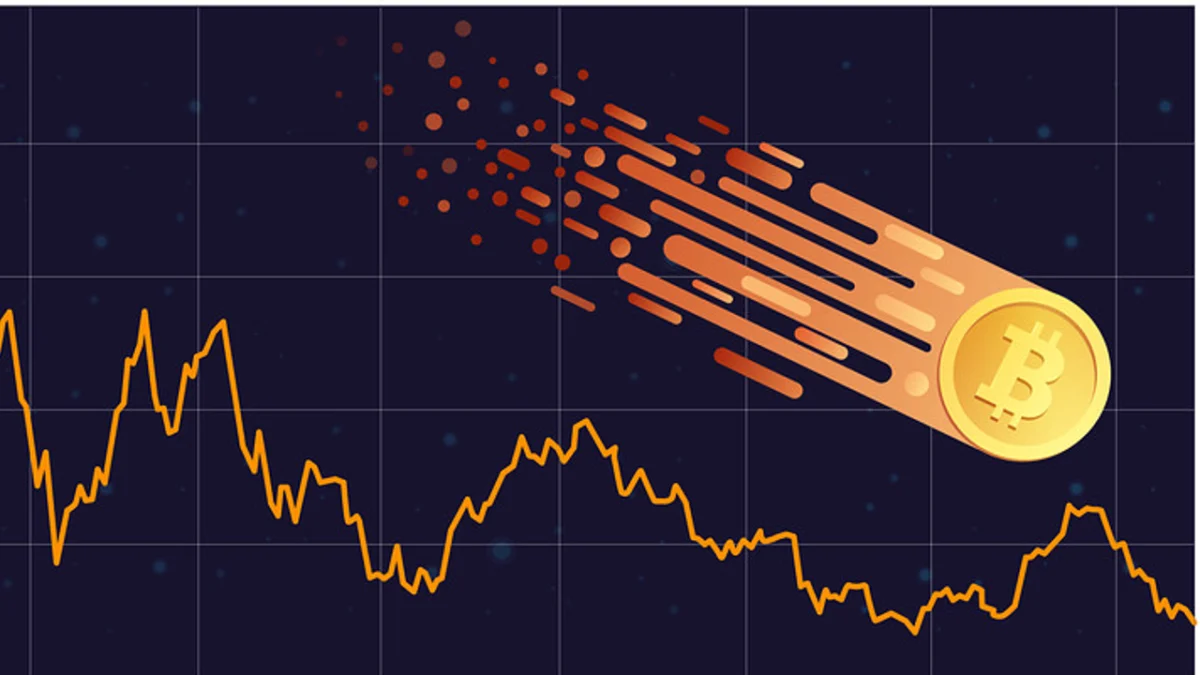
The cryptocurrency market is currently navigating a period of heightened volatility and bearish sentiment, with Bitcoin—the world’s premier digital asset—recording its sixth consecutive day of losses. As global markets react to the escalating geopolitical crisis in Eastern Europe, digital assets have faced a wave of sustained selling pressure, leaving investors to grapple with significant portfolio drawdowns and uncertainty regarding the near-term recovery of the sector.
Main Facts: A Bearish Trendline
As of Tuesday’s trading session, Bitcoin (BTC) has retracted approximately 12% from its valuation just one week ago. The asset touched an intraday low of $37,358.00, a level not seen since February 4, as it drifted dangerously close to the long-term support threshold of $37,200. This decline follows a fleeting period of optimism on Sunday, when the cryptocurrency reached a high of $39,394.44, only to succumb to renewed selling momentum as the week progressed.
Technical indicators suggest that the current sell-off is not merely a minor correction. The 14-day Relative Strength Index (RSI) has slipped to 39, marking its lowest reading in over three weeks and indicating that the asset has entered deeply oversold territory. Despite a brief, unexpected rally in the late hours of Monday that saw the price climb to $38,607, the recovery failed to gain traction, and by Tuesday, BTC was struggling to hold the $37,700 level, reflecting a 1.57% decline within the day’s session.
Currently, Bitcoin is trading nearly 45% below its all-time high, a stark reminder of the "tepid" demand currently plaguing the market.
Chronology: The Slide into Negative Territory
The recent downward trajectory of the crypto market can be mapped through a series of critical inflection points over the past week:
- Mid-February Stabilization: By February 21, Bitcoin attempted to hold the $37,000 line, showing signs of potential consolidation.
- The Sunday Surge: Traders briefly pushed the price toward the $39,400 mark, igniting hopes that the asset might re-enter the $40,000 range.
- The Monday Reversal: The momentum stalled early in the week. Despite a momentary late-night bounce to $38,607, selling pressure dominated the overnight session.
- Tuesday Liquidation: Tuesday marked the sixth day of the current slide. As news regarding the Russia-Ukraine conflict intensified, the market experienced a significant "shake-up," forcing a rapid liquidation of long positions.
Supporting Data: Network Activity and Liquidations
A critical metric for assessing the health of the Bitcoin network is the count of daily active entities. On Tuesday, the network recorded approximately 275,000 active entities. Analysts note that this figure is significantly lower than the levels observed during the height of the recent bull market, signaling a marked decrease in interest from new market participants and a lack of conviction among existing holders.
The financial pain has been compounded by massive liquidations. In a single hour on Tuesday, more than $30 million in long positions were liquidated. This represents the second-highest hourly liquidation volume in four days and the third-highest in nearly a month. These forced liquidations create a feedback loop: as leveraged positions are closed by automated trading systems, they drive the price lower, triggering further liquidations and exacerbating the downward volatility.
Official Responses and Market Context
The broader crypto market, including Ethereum (ETH), has mirrored Bitcoin’s struggles. Ethereum, the second-largest cryptocurrency by market capitalization, saw a decline of over 9% compared to its Monday valuation. ETH touched an intraday low of $2,585.95, its lowest point since February 3.
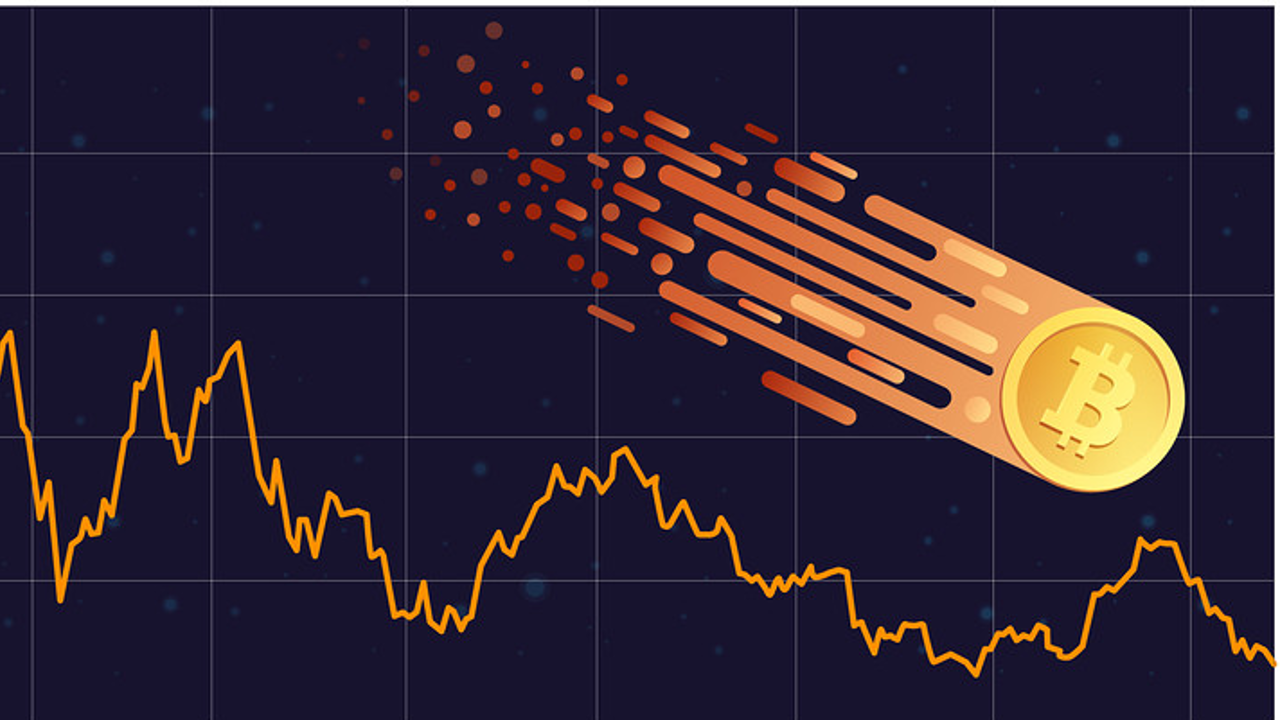
The technical outlook for Ethereum is similarly cautious. The impending "fall cross" of the 10-day and 25-day moving averages—a bearish signal—has been delayed only by the minor, ephemeral bounces seen earlier this week. Analysts are watching the $2,680 and $2,750 resistance levels closely; should the asset fail to break above these, further downside to the $2,500 range is viewed as a high-probability scenario by many market participants.
Implications: The Geopolitical Shadow
The primary driver behind this week’s bearish sentiment is not strictly found on a technical chart, but rather in the escalating tension between Russia and Ukraine. On Tuesday, reports confirmed that Russian President Vladimir Putin authorized the movement of forces into two rebel-held regions of Ukraine, a move that triggered immediate condemnation from Western nations and roiled global financial markets.
The Flight to Safety
In times of macro-geopolitical instability, institutional and retail investors typically retreat from "risky assets." Despite Bitcoin’s proponents often labeling it as "digital gold" or a hedge against inflation, the current reality shows that crypto is still highly correlated with traditional risk-on assets like technology stocks. When the S&P 500 or Nasdaq face downward pressure due to international conflict, Bitcoin often experiences a concurrent, and frequently amplified, sell-off.
The crypto community is currently witnessing a widespread "de-risking" event. Investors are unloading digital holdings to safeguard their capital, driven by the fear that further conflict could lead to tighter monetary policies from central banks or broader economic sanctions that could dampen global liquidity.
Future Outlook and Resistance Levels
Looking ahead, market analysts are focused on key levels of resistance and support. For Bitcoin, the path to recovery is obstructed by immediate resistance at $37,800. If the bulls can regain control and push past this level, they will face a more significant hurdle at $38,200. A clean breakout above that zone could potentially open the door for a return to $39,500.
Conversely, should the $37,200 support level fail to hold, the path of least resistance points toward $35,000. As documented in recent analytical reports, some market observers are even contemplating more drastic scenarios, citing macro factors—such as interest rate hikes and balance sheet tightening—that could potentially test lower price floors.
Conclusion: A Market in Transition
The current downturn is a stark reminder of the speculative nature of the cryptocurrency market. While the long-term thesis for Bitcoin remains intact for many institutional investors, the short-term reality is dictated by fear, uncertainty, and doubt (FUD) emanating from the geopolitical arena.
As the situation in Ukraine continues to evolve, the crypto market will likely remain in a state of high alert. Investors are advised to watch for signs of stabilization in the RSI, a return of volume to the Bitcoin network, and, most importantly, clarity on the global stage. Until such time, the "tepid" demand and the prevalence of forced liquidations suggest that the market remains in a vulnerable state, susceptible to sharp movements in either direction as traders attempt to price in the geopolitical risk premium.
