

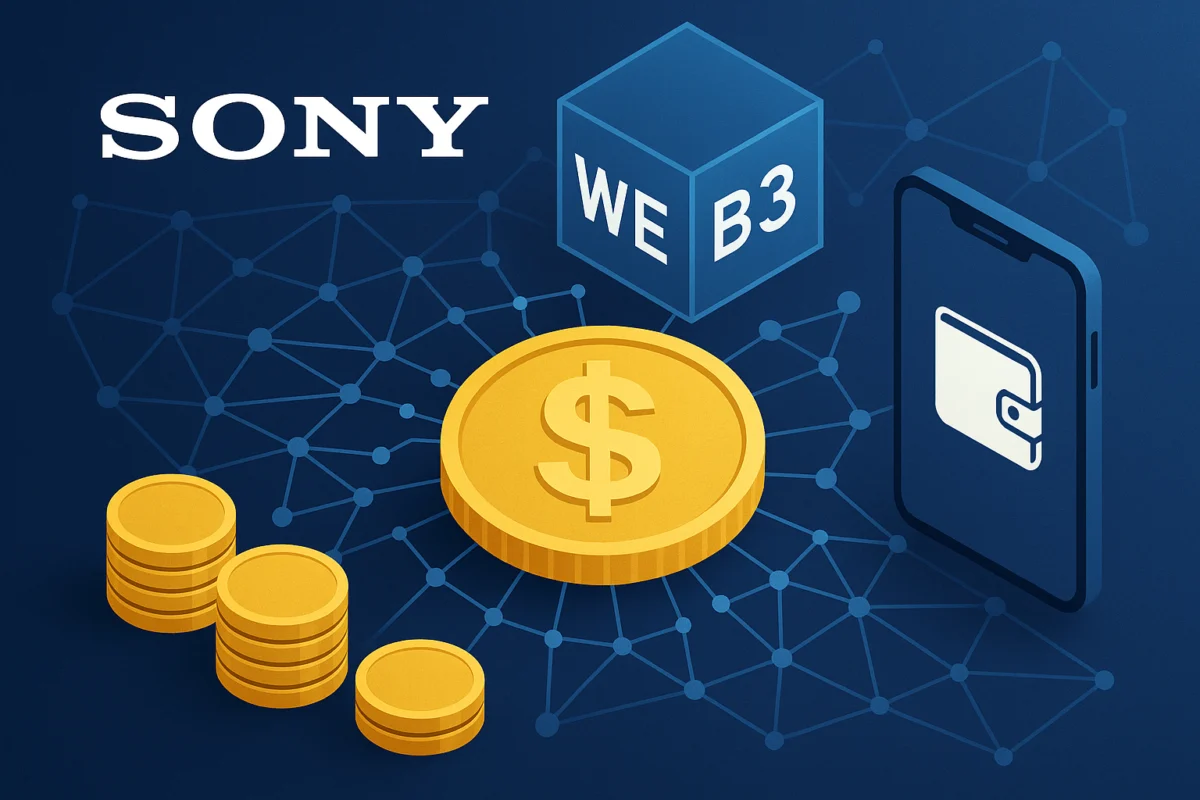
TOKYO & NEW YORK — In a move that signals a seismic shift in how traditional corporate giants approach decentralized technology, Japanese multinational conglomerate Sony is laying the groundwork for a proprietary US dollar-pegged stablecoin. Targeted for a commercial rollout in 2026, this digital asset is far more than an experimental financial foray. Instead, it represents the cornerstone of a sweeping Web3 infrastructure designed to unify Sony’s sprawling empire—spanning PlayStation gaming, anime distribution, digital subscriptions, and music—into a frictionless, cross-platform economic network.
As legacy financial rails face increasing scrutiny over high transaction fees, processing delays, and friction in cross-border commerce, Sony’s strategic pivot marries the reliability of blockchain technology with the massive, built-in audience of one of the world’s most influential entertainment powerhouses.
Main Facts: The Anatomy of Sony’s Web3 Payment Network
At the heart of this initiative is Sony Bank, an online lender operating under the Sony Financial Group umbrella. Rather than treating payment processing as a mere background utility, Sony is engineering an active Web3 layer that integrates blockchain assets directly into the consumer journey.
Key pillars of the initiative include:
- The USD Stablecoin: A digital token pegged directly to the US dollar, engineered to facilitate microtransactions, game purchases, subscription renewals, and digital goods within the Sony ecosystem.
- Geographic Focus: The initial rollout targets the United States, a critical market that accounts for approximately 30% of Sony Group’s total external sales.
- Regulatory and Technical Partnerships: Sony Bank applied for a US banking license in October and has forged a strategic alliance with Bastion, a prominent US-based stablecoin issuer and infrastructure provider.
- The ‘BlockBloom’ Subsidiary: Operating under a dedicated Web3 arm, this specialized unit is tasked with building the middleware, wallet integrations, and NFT-compatible environments required to bridge fiat currencies, digital tokens, and physical user experiences.
By bypassing traditional credit card processing rails for a portion of its digital sales, Sony aims to drastically reduce intermediary fees while boosting settlement speeds for its tens of millions of active users across North America.
Chronology: From Concept to the 2026 Horizon
Sony’s entry into the digital asset space has been deliberate, methodical, and structured across several key corporate milestones over the past year:
- May — July 2024: Sony Bank formally outlines its ambitions to enter the digital asset market, recognizing the rising prominence of cryptocurrency exchanges, non-fungible token (NFT) storage solutions, and decentralized finance protocols. In June, the bank establishes a dedicated Web3 subsidiary—later christened BlockBloom—to oversee the development of cross-platform digital infrastructure.
- September 2024: In a major corporate restructuring move, Sony Financial Group is officially separated from Sony Group and independently listed on the Tokyo Stock Exchange. This spin-off effectively divorces the financial arm’s operations and balance sheets from the broader electronics and entertainment conglomerate, granting Sony Bank the autonomy required to pursue long-term, capital-intensive digital finance innovations.
- October 2024: Accelerating its international ambitions, Sony Bank officially submits an application for a US banking license. Simultaneously, Sony’s venture capital arm participates in a $14.6 million financing round for Bastion, a stablecoin infrastructure provider. The funding round is spearheaded by Coinbase Ventures, signaling a deep alignment between traditional Japanese finance and established Western Web3 players.
- December 2024 — Present: Details surrounding the 2026 stablecoin launch come to light via industry reports and Nikkei disclosures, revealing that the stablecoin will integrate natively with PlayStation ecosystems and anime streaming services, offering consumers an alternative to traditional credit card transactions.
- 2026 (Projected Launch): The planned deployment of the US dollar-pegged stablecoin across US markets, marking the formal activation of Sony’s cross-platform Web3 payment network.
Supporting Data: The Economic Imperative Behind the Pivot
To understand why Sony is investing heavily in blockchain-based payments, one must examine the sheer scale of the company’s digital footprint and the economic inefficiencies of legacy payment systems.
1. The US Market Dominance
The United States represents a goldmine for Sony, generating nearly a third of the conglomerate’s external revenues. This revenue is heavily weighted toward digital goods: PlayStation Network (PSN) digital game purchases, microtransactions, PlayStation Plus subscriptions, Crunchyroll anime streaming memberships, and Sony Music digital downloads.
2. Fee Compression and Margin Expansion
Traditional card networks (Visa, Mastercard) and regional payment processors typically charge merchants interchange and processing fees ranging from 1.5% to 3.5% per transaction. Multiply this across hundreds of millions of digital transactions processed annually by PlayStation and its sister divisions, and the cost amounts to hundreds of millions of dollars. Stablecoin transactions, settled on high-throughput blockchain rails, offer the promise of near-zero marginal settlement costs, protecting operating margins.
3. Institutional Backing via Bastion
Sony’s investment in Bastion via its venture arm highlights a calculated risk-management strategy. By backing a compliant, US-regulated stablecoin issuer alongside heavyweights like Coinbase Ventures, Sony is ensuring that its upcoming financial ecosystem complies with evolving regulatory frameworks in the United States, thereby mitigating legal and compliance hurdles before the 2026 launch.
Official Responses and Strategic Vision
While direct public commentary from top-tier executives has been carefully measured to align with regulatory disclosure standards, corporate filings and disclosures from BlockBloom and Sony Bank shed light on the philosophy driving the project.
In initial corporate announcements regarding the formation of its Web3 subsidiary, Sony Bank emphasized that digital assets built on blockchain architecture are rapidly transitioning from speculative fringe investments into foundational layers of modern digital service delivery.
Industry analysts point out that Sony’s leadership views Web3 not as a trend to chase, but as an architectural necessity for the future of digital ownership. Traditional account balances and closed-loop virtual currencies (like PlayStation Wallet funds) often trap user capital within isolated silos. By contrast, a compliant, USD-pegged stablecoin provides interoperability—allowing users to potentially move, earn, and spend value fluidly across distinct entertainment properties, and potentially even trade digital collectibles or earn rewards authenticated by blockchain-based smart contracts.
The independence gained from the September Tokyo Stock Exchange listing of Sony Financial Group has further empowered leadership. Free from the immediate consensus requirements of the parent electronics manufacturer, the financial services arm can aggressively pursue fintech innovations that position it against traditional digital wallets and neobanks.
Implications: What Sony’s Stablecoin Means for Gaming, Web3, and Big Tech
The implications of Sony’s impending stablecoin rollout extend far beyond the company’s balance sheet. If successful, this venture could serve as a powerful blueprint for how legacy multinational conglomerates integrate Web3 technologies into consumer-facing ecosystems.
1. Mainstream Normalization of Stablecoins
For years, stablecoins have been primarily utilized by cryptocurrency traders seeking refuge from market volatility or users executing cross-border remittances in developing nations. By integrating a dollar-pegged token directly into mainstream entertainment platforms like PlayStation and anime streaming services, Sony will expose tens of millions of mainstream consumers—many of whom have never interacted with a crypto wallet—to the utility of blockchain-based money.
2. Pressure on Competitors
Sony’s primary rivals in the interactive entertainment space, including Microsoft (Xbox) and Nintendo, as well as digital distribution giants like Apple and Google, maintain tightly controlled, proprietary payment ecosystems. These platforms take significant cuts (often up to 30%) on digital store transactions. Should Sony successfully introduce a lower-cost, blockchain-native payment rail that reduces operational overhead, competitors may face intense consumer and developer pressure to adopt similar efficiencies or risk losing profit margins.
3. Bridging Digital and Physical Experiences
Through the work of BlockBloom, Sony aims to construct an ecosystem where physical merchandise, digital tokens (NFTs), fiat currencies, and blockchain assets intersect. Imagine attending a live Sony Music concert, receiving a commemorative digital collectible via a BlockBloom-powered wallet, and utilizing stablecoin balances earned through PlayStation gaming achievements to purchase merchandise seamlessly.
4. Regulatory Precedent
Because Sony is actively seeking a US banking license and collaborating with regulated entities like Bastion, this initiative represents a convergence of traditional banking compliance and decentralized finance. The success or failure of Sony’s US stablecoin project will likely be scrutinized heavily by global regulators, setting an important precedent for how traditional financial institutions can safely issue and manage digital assets across borders.
Conclusion
Sony’s venture into the Web3 payment space is a calculated, forward-looking strategy that leverages corporate restructuring, targeted acquisitions, and deep-pocketed partnerships to redefine digital commerce. As the tech world marches toward 2026, all eyes will be on Tokyo and New York to see how BlockBloom and Sony Bank execute a vision that could permanently alter the intersection of entertainment, finance, and blockchain technology.
