

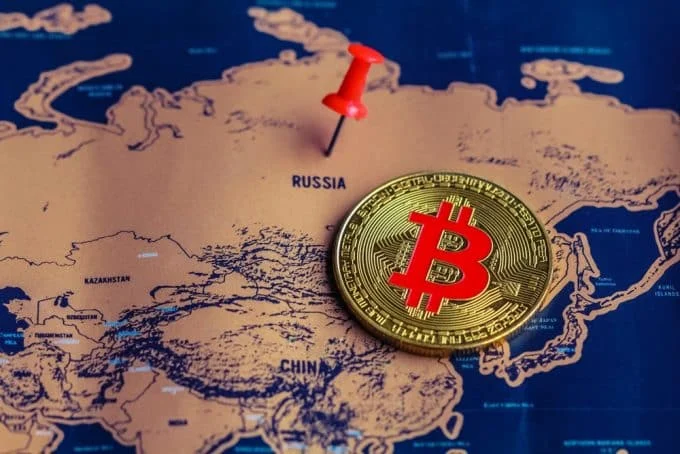
The global financial landscape is currently navigating a period of profound uncertainty, as the burgeoning cryptocurrency market finds itself caught in the crossfire of escalating geopolitical tensions in Eastern Europe and aggressive regulatory posturing from one of the world’s most significant mining hubs. As of Thursday, Bitcoin, the world’s premier digital asset, has retreated from its January 1 levels of $47,000, trading under immense downward pressure at approximately $43,352.
The decline is not isolated. Ethereum (ETH), the second-largest cryptocurrency by market capitalization, has mirrored this bearish trend, shedding 2.14% to trade at $2,873. This broad-based market correction, which saw the total crypto industry valuation plummet by $200 billion within a single 24-hour window, underscores the increasing correlation between digital assets and traditional macro-risk environments.
The Chronology of Tension: A Market Under Siege
The current market volatility did not materialize in a vacuum. The trajectory of the crypto market over the past several weeks has been inextricably linked to the military buildup along the Russian-Ukrainian border.
The Escalation
Since early January, satellite imagery and intelligence reports have highlighted the mobilization of over 100,000 Russian troops near the Ukrainian frontier. As Western nations, led by the United States and NATO, began sounding alarms regarding a potential invasion, global financial markets—including stocks and crypto—began to exhibit symptoms of "risk-off" behavior.
The Diplomatic Standoff
The tension reached a fever pitch earlier this week when U.S. President Joe Biden engaged in an intensive, hour-long consultation with Ukrainian President Volodymyr Zelensky. The conversation focused on the immediate security concerns and the potential for a diplomatic resolution. Despite these efforts, U.S. National Security Adviser Jake Sullivan publicly doubled down on warnings of a looming military strike, further fueling investor anxiety.
The Market Reaction
Following these heightened warnings, Bitcoin and Ethereum experienced a sharp correction, dropping over 9% to reach their lowest levels in six months. This sell-off served as a catalyst for a wider market malaise, as investors scrambled to liquidate positions in riskier assets, opting for the relative safety of fiat-denominated bonds or cash.
Supporting Data: Analyzing the Volatility
To understand the severity of the current downturn, one must look at the technical indicators and the statistical reality of the market’s behavior during this period of geopolitical strife.
Volatility Trends
According to data provided by BuyBitcoinWorldwide, Bitcoin’s 30-day volatility index is currently experiencing a contraction, losing roughly 3.35% of its value. While this may seem counterintuitive given the market’s recent price drops, it suggests that the market is entering a phase of "exhaustion selling" rather than high-octane panic. For context, Bitcoin averaged a 4.56% volatility rate throughout 2021. Despite the current dip, it is crucial to note that the asset has not surrendered all the gains achieved following its mid-January low of $32,950, indicating that long-term support levels remain resilient.
Market Capitalization and Correlation
The broader crypto market, currently valued at roughly $1.8 trillion, saw a staggering $200 billion evaporation in market cap in just 24 hours. This massive drawdown highlights the fragility of investor sentiment when faced with systemic shocks. Analysts note that Bitcoin’s daily chart—with a total market cap hovering near $817 billion—is increasingly reflecting the trends seen in traditional equity indices, such as the Nasdaq Composite, which saw a 0.9% decline in late December, a figure now eclipsed by the current crypto slide.
Official Responses and the Russian Regulatory Stance
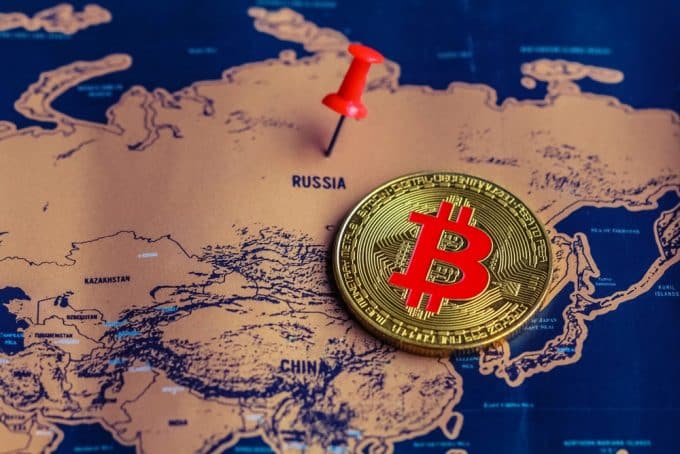
Compounding the geopolitical pressure is an internal regulatory threat originating from Moscow. The Russian Central Bank has recently proposed a blanket ban on both the mining and trading of cryptocurrencies, citing concerns over financial stability and the potential for illicit activities.
The "Hypocrisy" of Regulation
The Russian government has remained defiant in the face of Western warnings regarding Ukraine, dismissing these accusations as "hypocrisy." Simultaneously, the Kremlin’s approach to domestic crypto regulation has been equally uncompromising. The Central Bank’s assessment suggests that cryptocurrencies pose a systemic threat to the Russian financial system, prompting a push for an outright prohibition of mining operations.
The Significance of Russian Mining
This regulatory pivot is particularly significant because Russia serves as a critical processing hub for the global Bitcoin network. It accounts for approximately 10% of the world’s total Bitcoin mining capacity. Should a total ban be enforced, it would necessitate a massive migration of hash power, potentially causing short-term network instability and further price volatility.
Further Legal Measures
Adding to the uncertainty, the Russian government is also exploring legislative avenues to impound unlawfully acquired cryptocurrencies. This has created a climate of fear among Russian investors and has caused a ripple effect, as the global crypto community watches to see if other nations will follow suit with similarly draconian measures.
Implications: The Interlinked Future of Markets
The events of this week have ignited a fierce debate among financial experts and crypto-enthusiasts alike: Is Bitcoin truly a "digital gold" hedge against inflation and geopolitical instability, or has it become just another speculative asset tied to the performance of the Nasdaq?
The Death of the "Safe Haven" Narrative
For many years, proponents argued that Bitcoin would act as an uncorrelated asset—a hedge against the failures of traditional state-controlled currencies. However, the current reality suggests a high degree of integration between crypto and the traditional financial sector. When geopolitical tensions spike, liquidity is pulled from all risk-on assets, and Bitcoin is currently treated as an asset of choice for immediate liquidation.
The Regulatory Domino Effect
The Russian proposal to ban crypto is not an isolated event; it is part of a broader trend of central banks attempting to exert control over decentralized finance. As governments globally look to launch Central Bank Digital Currencies (CBDCs), the space for private, decentralized assets is being increasingly scrutinized. The implication for investors is clear: the path to mass adoption is likely to be paved with significant regulatory hurdles.
Long-term Outlook
Despite the current "beating" taken by Bitcoin, Ethereum, and Cardano, many institutional investors remain bullish. The fundamental utility of blockchain technology—transparency, immutability, and decentralization—remains intact, regardless of the current price action. Analysts suggest that once the geopolitical dust settles, the focus will likely shift back to fundamental adoption metrics, such as the growth of the Lightning Network, the implementation of Layer-2 scaling solutions, and the increasing institutional appetite for crypto-backed ETFs.
Conclusion
The convergence of military escalation in Ukraine and restrictive regulatory policies in Russia has created a challenging environment for cryptocurrency markets. The $200 billion loss in market capitalization serves as a stark reminder of the volatility inherent in this emerging asset class. However, as the market navigates these turbulent waters, it is also testing its resilience.
For the average investor, the current period underscores the importance of risk management. While the geopolitical situation remains fluid and the regulatory landscape in Russia remains hostile, the underlying technology continues to mature. Whether the current downturn proves to be a temporary setback or a precursor to a more sustained bear market, one thing is certain: the cryptocurrency industry is no longer a peripheral player in the global financial story. It is now a central character, subject to the same geopolitical and macroeconomic forces that govern the traditional world, and it will continue to evolve in response to these pressures.
