

The legal odyssey of Sam Bankman-Fried, the disgraced founder of the collapsed cryptocurrency exchange FTX, reached a critical inflection point this week. Following months of relative freedom under a restrictive $250 million bond agreement, the former billionaire now faces the looming prospect of incarceration ahead of his high-stakes criminal trial, currently scheduled for October.
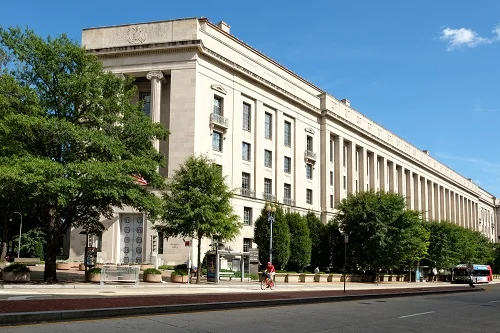
The U.S. Department of Justice (DOJ) has formally petitioned the Southern District of New York to revoke Bankman-Fried’s bail, alleging a pattern of behavior that undermines the integrity of the judicial process. This move, underscored by accusations of witness tampering, signals a more aggressive stance by federal prosecutors as they prepare to dismantle the complex web of fraud charges leveled against the one-time "King of Crypto."
The Core Allegations: A Pattern of Obstruction
The DOJ’s request for detention is not a sudden reaction to a single event, but rather the culmination of what prosecutors describe as a persistent effort to manipulate the public narrative and intimidate key witnesses. At the heart of the current controversy is the unauthorized disclosure of private documents belonging to Caroline Ellison, the former CEO of Alameda Research and Bankman-Fried’s former romantic partner.
Last week, federal prosecutors alleged that Bankman-Fried leaked excerpts of Ellison’s private diary to The New York Times. The publication of these intimate reflections—which detailed Ellison’s personal and professional anxieties during the final months of Alameda Research—was, according to the DOJ, a calculated maneuver to discredit a star government witness. Ellison has already entered a plea deal and is expected to serve as a pivotal witness against Bankman-Fried during the upcoming trial.
The DOJ argues that the leak was designed to portray Ellison as a flawed individual and to discourage other potential witnesses from cooperating with the government. Prosecutors stated in court, “The defendant has been attempting to influence potential witnesses and sway public opinion in a manner that jeopardizes the fairness of the proceedings.”
A Chronology of the FTX Downfall
To understand the gravity of the current situation, one must look back at the rapid ascent and catastrophic collapse of the FTX empire.
- 2019–2021: FTX rises from a niche crypto exchange to a global behemoth, fueled by aggressive marketing and Bankman-Fried’s reputation as a "white knight" of the industry.
- November 2022: A liquidity crisis at Alameda Research triggers a run on FTX. Within days, it is revealed that billions in customer funds were allegedly funneled into Alameda to cover its failing bets. FTX files for Chapter 11 bankruptcy.
- December 2022: Bankman-Fried is arrested in the Bahamas after being indicted by U.S. prosecutors. He is later extradited to the United States.
- December 2022–January 2023: Bankman-Fried is released on a $250 million personal recognizance bond, the largest in American history, allowing him to live under house arrest at his parents’ home in California.
- July 2023: The DOJ files a motion to revoke bail, citing consistent violations of release conditions, specifically focusing on the leaking of Ellison’s diary.
Judicial Skepticism and the "Gag Order" Compromise
During the July 26 hearing, U.S. District Judge Lewis Kaplan, known for his no-nonsense approach to courtroom decorum, listened as prosecutors laid out their case for remand. The defense team argued that incarcerating Bankman-Fried would severely hamper their ability to organize a complex legal defense, citing the volume of discovery materials he needs to review.
Judge Kaplan did not grant the request for immediate detention, providing a brief reprieve for the defendant. However, the tone from the bench was unambiguous. Addressing Bankman-Fried directly, Judge Kaplan warned him to “take this seriously,” noting that his previous actions—including his frequent, unauthorized public comments—have pushed the court’s patience to the limit.
The judge has ordered both the defense and the prosecution to collaborate on a comprehensive "gag order" by August 3. This order is expected to strictly limit the extrajudicial statements Bankman-Fried can make to the media or on social media platforms, effectively muzzling the man who was once a fixture on cable news and Twitter.
The Legal and Ethical Implications
The potential revocation of bail raises fundamental questions about the balance between a defendant’s right to prepare a defense and the court’s duty to protect the integrity of the trial.
Witness Intimidation in the Digital Age
The case highlights a modern challenge for the legal system: how to manage high-profile defendants who possess the digital reach to influence public perception. By leaking private materials, Bankman-Fried is accused of "witness tampering by proxy"—using the media to do what he cannot do directly. If the court finds that these actions constitute a genuine threat to the trial process, it could set a significant precedent for how future white-collar defendants are handled.
The Impact on the Defense
Bankman-Fried’s legal team maintains that he is a victim of a media firestorm and that his attempts to "tell his side of the story" are a legitimate exercise of his right to defend his reputation. However, legal experts suggest that the defense strategy is crumbling under the weight of the government’s evidence. By attempting to influence witnesses, Bankman-Fried may have inadvertently strengthened the prosecution’s argument that he is a flight risk or a danger to the judicial process.
The Road to October: What to Expect
As the October trial date approaches, the courtroom in the Southern District of New York will become the epicenter of the crypto world. The charges against Bankman-Fried are sweeping, including wire fraud, conspiracy to commit money laundering, and campaign finance violations.
The testimony of Caroline Ellison is widely viewed as the "smoking gun." If the government can prove that Bankman-Fried orchestrated a systematic fraud involving the commingling of customer funds, the consequences could be life-altering. The current battle over his bail is merely a preview of the intensity that will define the upcoming trial.
The Role of Public Perception
Bankman-Fried has long been a master of public relations. From his appearances in Forbes to his lobbying efforts in Washington, he cultivated a persona of a benevolent billionaire. The current DOJ efforts are aimed at stripping away that facade. By restricting his access to the media, the courts are forcing the battle to move from the court of public opinion to the court of law, where the standard of evidence is far higher and the penalties are far more severe.
Conclusion: A High-Stakes Final Act
The request to revoke Sam Bankman-Fried’s bail is more than a procedural skirmish; it is a declaration of war by the DOJ against the defendant’s attempts to evade accountability. While he remains free for the moment, the walls are closing in.
The August 3 deadline for the gag order will be the next major milestone. If Bankman-Fried continues to challenge the authority of the court, or if he is found to have violated the spirit of the new restrictions, Judge Kaplan is unlikely to show further leniency. For a man who once controlled the flow of billions in digital assets, the coming months will be a humbling lesson in the limits of influence.
The crypto industry, the victims of the FTX collapse, and the legal community are all watching. Whether Bankman-Fried enters the courtroom in October as a man on bail or as a man in custody, the trial promises to be one of the most consequential financial criminal cases of the 21st century. The era of the "crypto-genius" is over; the era of legal accountability has begun.
