

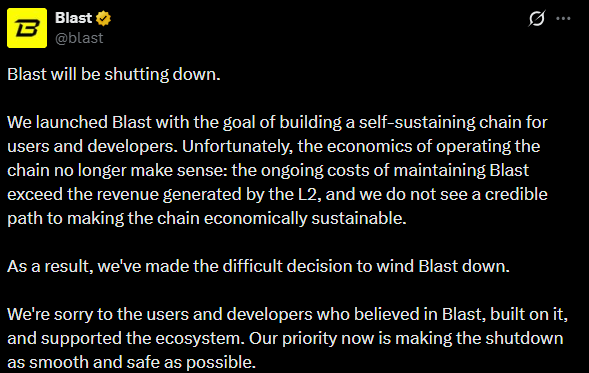
In a move that has sent shockwaves through the decentralized finance (DeFi) ecosystem, the Ethereum Layer 2 scaling solution Blast has officially announced it will cease operations by the end of October 2026. The decision marks a somber conclusion to a project that was once heralded as a high-yield powerhouse for the Ethereum network. Citing insurmountable operational costs and an inability to find a "credible path" toward economic sustainability, the team’s announcement has triggered not only a scramble for asset recovery but also a firestorm of criticism from investors, venture capitalists, and the broader crypto community.
The Collapse of a Once-Promising Protocol
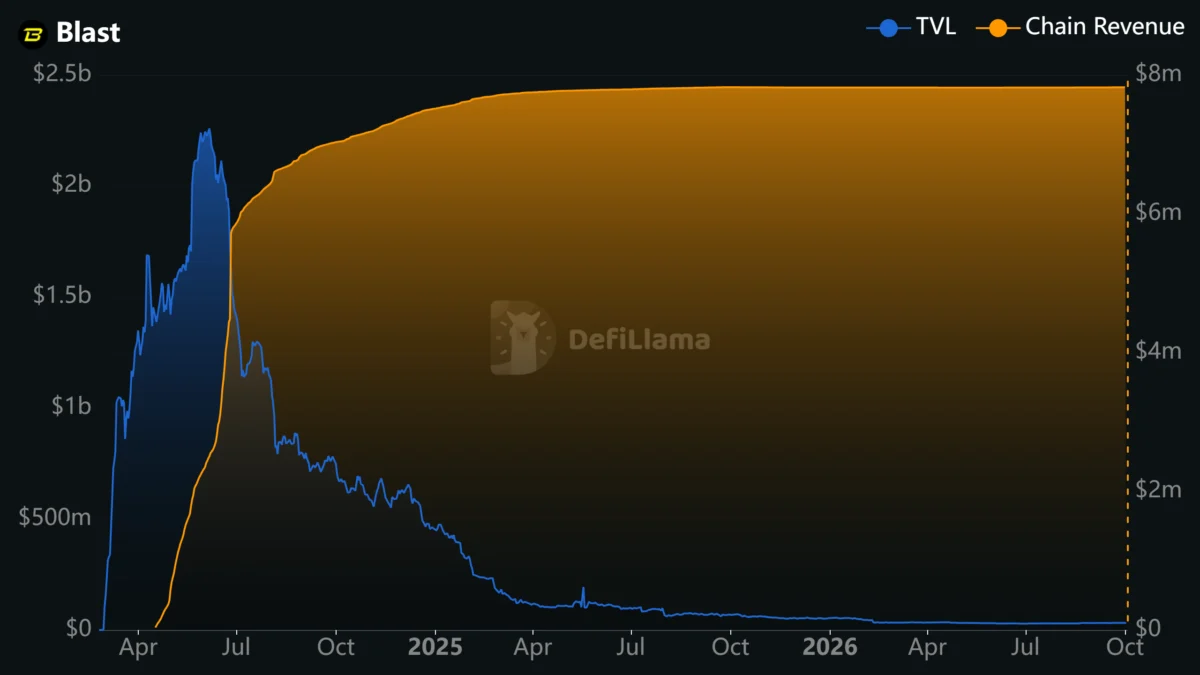
The announcement, delivered via the social media platform X (formerly Twitter), was blunt: the costs of maintaining the Blast infrastructure now consistently exceed the revenue generated by the chain. For a platform that once boasted a Total Value Locked (TVL) of $2.4 billion, the admission of failure is stark.
"The economics of operating the chain no longer make sense," the team stated. The protocol, which promised to bring native yield to ETH and stablecoins, has effectively become a victim of the very market pressures it sought to navigate. As of early October 2026, the chain’s cumulative revenue had remained flat for nearly two years, suggesting that the project had long since ceased to be a viable commercial venture, even if the public-facing image suggested otherwise.
A Chronology of Decline: From Hype to Exit
To understand the demise of Blast, one must look back at its rapid rise and subsequent stagnation.
- Late 2024: Blast launches with massive fanfare, capturing over $2 billion in TVL as users flocked to the platform to earn native yields. The token price hits a record high of $0.80, fueling optimism.
- Mid-2025: Growth begins to stall. Despite initial momentum, the chain fails to attract sustained developer activity or meaningful transaction volume.
- Early 2026: On-chain data indicates that cumulative revenues have flatlined. The project enters a period of silence and operational decline.
- Mid-2026: TVL experiences a catastrophic collapse, plummeting by over 90% as capital flees the ecosystem in search of more sustainable yields elsewhere.
- October 2026: The official shutdown is announced. The team sets an October 26th deadline for primary withdrawals, effectively sunsetting the project.
Supporting Data: The Erosion of Value
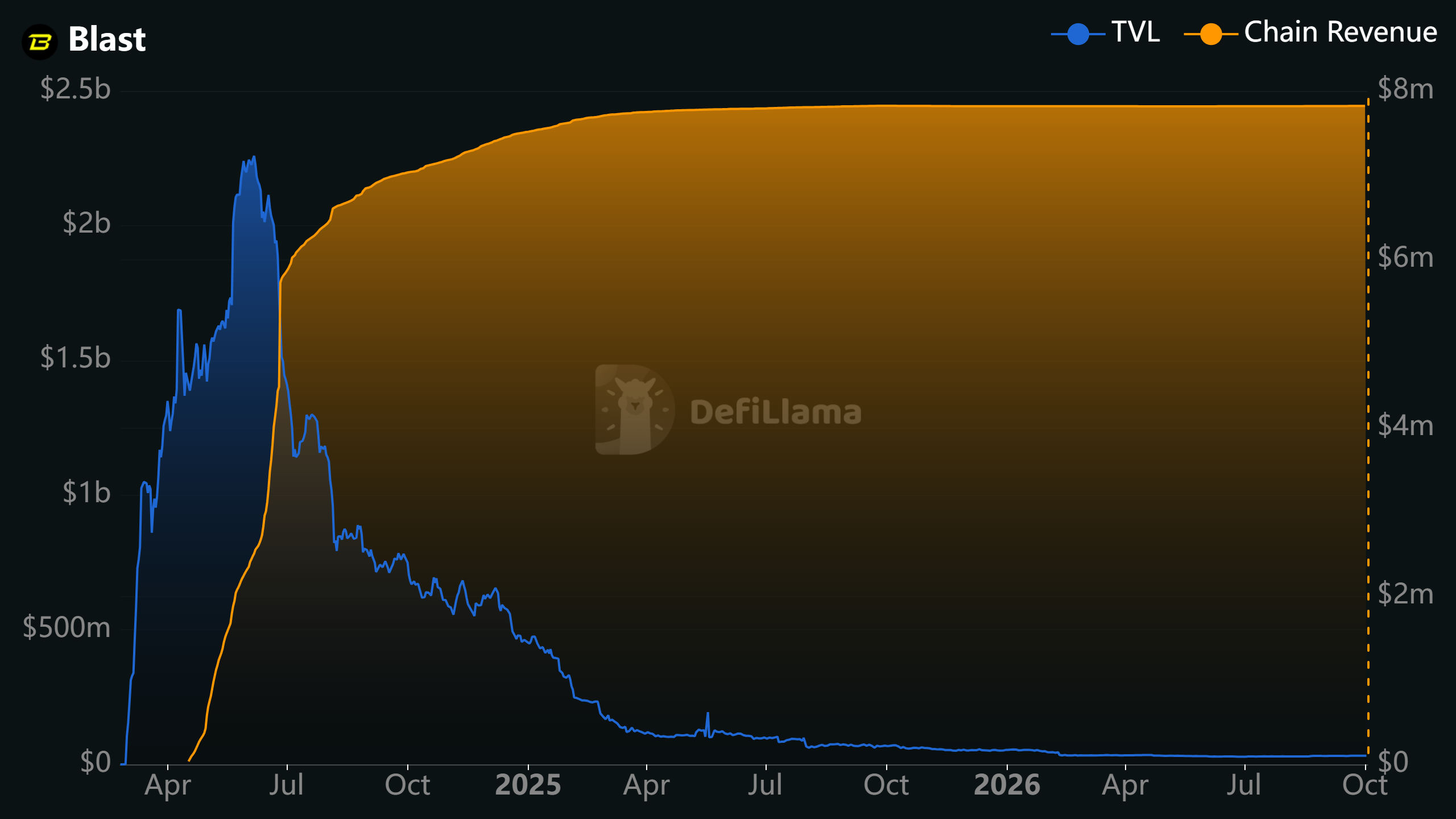
The financial data paints a grim picture of Blast’s final chapters. According to metrics provided by DeFiLlama, the project saw its TVL crater from a peak of $2.4 billion to a mere $32 million in recent weeks. This 90% decline represents one of the most significant erosions of capital in the recent history of Layer 2 solutions.
Furthermore, the price of the native Blast token has mirrored this downward trajectory. After reaching a $0.80 peak in late 2024, the token has plummeted to $0.02, representing a 98% loss in value. This price action, coupled with the lack of revenue growth, has led many analysts to characterize the project as a "zombie chain"—an entity that remained technically active while being economically dead for the better part of two years.
Official Responses and the "Pacman" Controversy
The project’s founder, Tieshun Roquerre—known widely in the crypto space as "Pacman"—issued a statement expressing his disappointment. "I’m disappointed that we weren’t able to make the chain sustainable over the long term," he remarked. "But I’m grateful to the users, developers, and teams who helped give Blast its moment, even if its run was shorter than we had hoped."
However, this expression of gratitude has been met with cold hostility from the community. Critics have pointed to the timing of the shutdown and the perceived lack of transparency regarding the project’s long-term viability. The sentiment among the retail investor base is one of betrayal, with many accusing the team of orchestrating an "extractive" model designed to benefit insiders while leaving retail users to bear the brunt of the platform’s technical complexities during the withdrawal phase.
Implications for Users and the Withdrawal Process
The immediate concern for users is the recovery of their assets. The Blast team has instructed users to withdraw their holdings to the Ethereum mainnet immediately. The process is not without its hurdles: assets currently locked in Lido (a liquid staking protocol) require a one-week waiting period to be unlocked and moved.
For the average retail user, this process is fraught with technical complexity. Pulling funds directly from the Ethereum mainnet without the convenience of the Blast app is a task that requires a high level of technical literacy. This has raised concerns that many smaller, less experienced investors may inadvertently "strand" their assets, potentially losing them to the void if they fail to navigate the manual withdrawal process before the October 26th deadline.
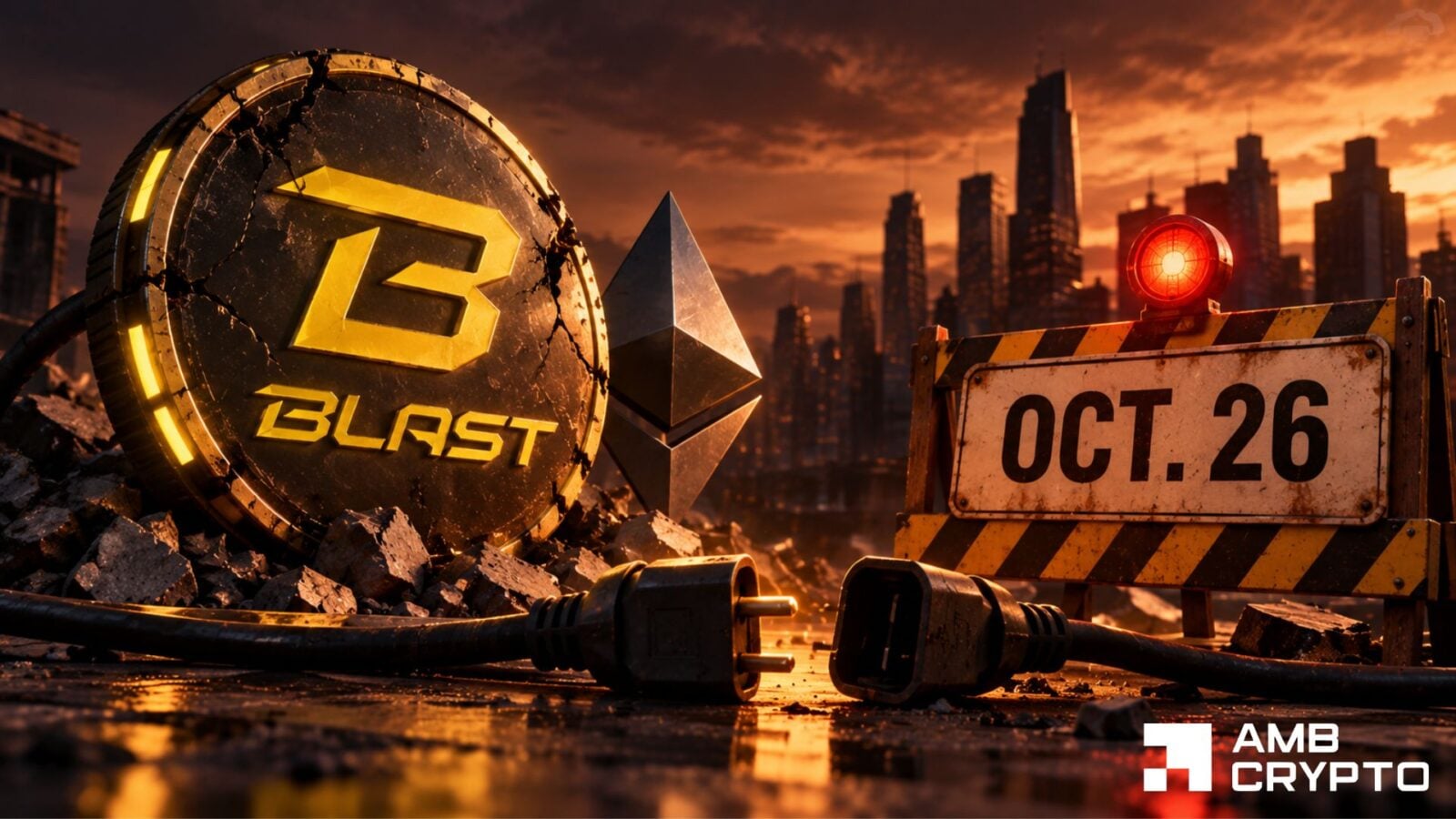
After this date, the bridge interface is expected to become inaccessible, meaning that any remaining assets will have to be recovered through direct, low-level interactions with the Ethereum smart contracts—a process that is daunting for the vast majority of the crypto-investing public.
The Industry Context: A Wave of 2026 Exits
The collapse of Blast does not occur in a vacuum. It is part of a broader trend in 2026 that has seen several prominent crypto platforms, including BitMEX, BitMart, and CoinEx, shutter their operations. Analysts point to a "perfect storm" of challenges currently facing the industry:
- Overwhelming Compliance Costs: As global regulations tighten, the cost of operating a compliant crypto entity has skyrocketed, making it difficult for smaller or less profitable platforms to survive.
- Saturated Competition: The market for Layer 2s and exchanges has become incredibly crowded. Without a distinct competitive advantage, many platforms are finding it impossible to retain liquidity.
- Revenue Compression: With the "crypto winter" of 2026 stretching on, transaction fees and trading volumes have hit multi-year lows, squeezing the margins of infrastructure providers.
The "Slow Rug" Accusations
Perhaps the most damaging aspect of the Blast shutdown is the accusation that the project was a "slow rug." This term, common in crypto slang, refers to a project where founders slowly extract liquidity or allow the project to wither after the initial token launch and profit-taking phase.
Mike Dudas, founder of the venture capital firm 6th Man Ventures, was particularly scathing in his assessment. "Pacman, one of the greatest extractors of all time between Blast and Blur," Dudas stated on social media. "Cut and ran, didn’t have the balls to show his face, absolute disgrace, and those who backed him never called him to account either."
These allegations are bolstered by claims from community members who argue that there was never a long-term plan for the chain. One user commented, "There was never a plan to keep Blast running after TGE (Token Generation Event). Once the team had fully ‘jeeted’ (sold off) their $BLUR bags during the staking program, they slow rugged."
Conclusion: A Lesson in Sustainability
The saga of Blast serves as a cautionary tale for the decentralized finance industry. It highlights the dangers of prioritizing high-yield marketing and rapid capital accumulation over the development of a sustainable, long-term economic model. While the project promised to revolutionize Ethereum scaling, it ultimately became a case study in the perils of "yield farming" culture.
As the October 26th deadline looms, the focus remains on whether the team will provide sufficient support to ensure that retail users are not permanently penalized for the project’s failure. For the industry at large, the shutdown of Blast is a stark reminder that in the world of DeFi, innovation without underlying economic utility is a house of cards waiting to fall. As the community looks for answers, the legacy of Blast will likely be remembered not for its technical contributions, but for the controversial manner in which it met its end.
