

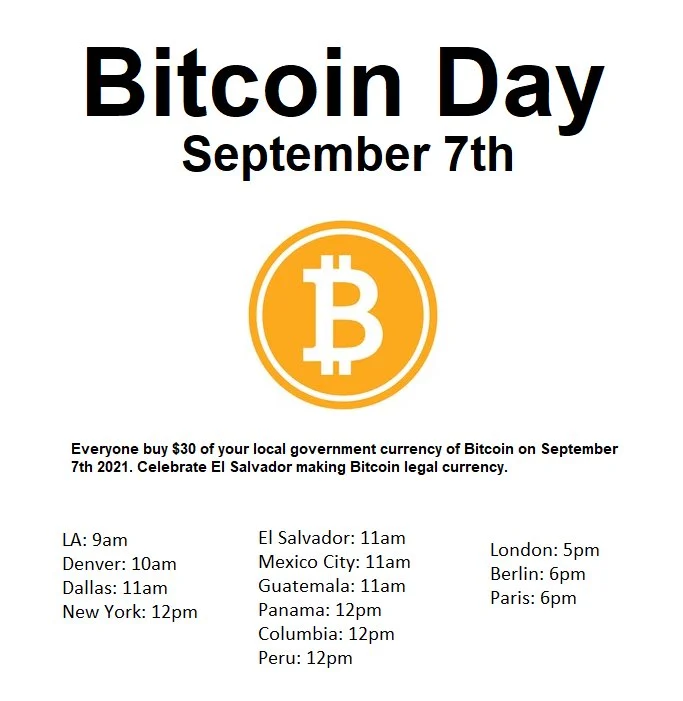
The global financial landscape stands on the precipice of a seismic shift. As the sun rises over San Salvador today, the nation officially becomes the first in history to adopt Bitcoin—a decentralized, digital, peer-to-peer asset—as legal tender. This transition marks a monumental experiment in macroeconomic policy, pitting the traditional fiat-based monetary system against the immutable, algorithmic nature of "hard money."
While the halls of power in Washington, Brussels, and at the International Monetary Fund (IMF) view this development with profound skepticism, a decentralized, global army of retail investors is organizing in solidarity. What began as a spontaneous conversation on a Reddit forum has evolved into a worldwide movement, as the "Bitcoin community" prepares to "stack sats" in a coordinated, symbolic gesture to celebrate the arrival of the Bitcoin Law.
The Chronology of a Grassroots Movement
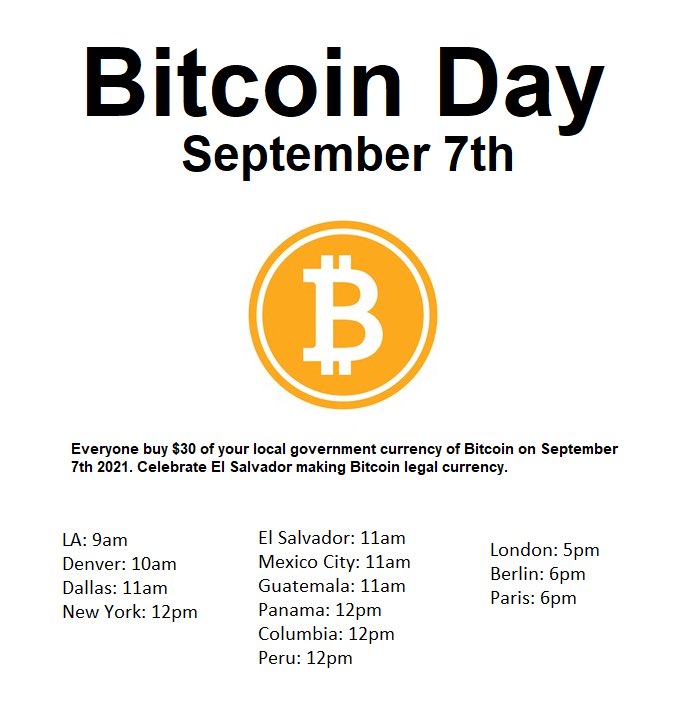
The seeds of this coordinated action were sown in the digital soil of the /r/Bitcoin subreddit. On September 4, 2021, a user posed a simple, provocative question: "So… We all buying $30 worth of Bitcoin on Tuesday?"
At the time, the proposal was merely a suggestion for a collective demonstration of support. However, it struck a nerve. Within hours, the post gained significant traction, eventually amassing over 8,900 upvotes and thousands of comments. The number "$30" was carefully chosen; it is a negligible amount for most individual investors, ensuring that even if the campaign went viral, it would not trigger a massive, artificial price manipulation. The intent was symbolic—a display of solidarity with the citizens of El Salvador rather than a "pump and dump" scheme.
As the idea migrated from Reddit to the hyper-connected ecosystem of "Bitcoin Twitter," it gained velocity. Influencers, meme-makers, and institutional advocates began to amplify the message. By September 6, the sentiment had transcended borders, reaching communities in South Korea, Brazil, and across Europe.
The movement reached a fever pitch when high-profile figures, including MicroStrategy CEO Michael Saylor, began acknowledging the event. The narrative shifted from a small community experiment to a global demonstration of the decentralized ethos that underpins Bitcoin itself.
Supporting Data and Market Sentiment
To understand why this grassroots movement is significant, one must look at the market environment leading up to the implementation of the Bitcoin Law. The crypto markets in early September 2021 were navigating a complex period of consolidation following the volatility of the summer.
Data from platforms like TradingView indicated that market participants were hyper-aware of technical retracement levels. This led to a bifurcated reaction within the community. While many saw the $30 buy-in as a gesture of brotherhood, others viewed it with professional caution. Critics on social media warned that such a coordinated influx of volume could be used by whales to "dump" on unsuspecting retail investors who might be buying at a local top.
"Everyone needs to be aware that this could possibly be leading the sheep to their death," one prominent trader noted in a thread discussing the risks of coordinated buying. "Letting retail buy exactly on the 70.2% retracement to dump on them—this is a classic market maneuver."
Despite these warnings, the enthusiasm was palpable. The debate itself highlighted a core tension in the Bitcoin space: the struggle between the "plebs" (retail users) who view Bitcoin as a tool for liberation and the institutional actors who treat it as a high-growth asset class.
Official Responses and Global Implications
The official response to El Salvador’s Bitcoin Law has been, to put it mildly, polarized. President Nayib Bukele has positioned the move as a necessity for financial inclusion, noting that a large percentage of El Salvador’s population remains unbanked and relies heavily on remittances from abroad. By integrating Bitcoin into the national economy, the government hopes to reduce transaction costs and foster a new wave of technological innovation.
Conversely, global financial institutions have issued stern warnings. The IMF and various credit rating agencies have expressed concerns over the volatility of Bitcoin and the potential impact it could have on the country’s sovereign debt rating. These entities argue that replacing stable, government-backed fiat with a volatile digital asset could destabilize the economy.
However, the "Bitcoiners" view these warnings as evidence that the legacy system is threatened. As Tomer Strolight noted on Twitter, the movement has fostered an unprecedented level of benevolence among strangers across the globe. For many, the $30 purchase is not just about price—it is about validating a thesis that has been building for over a decade: that a borderless, permissionless currency can coexist with, or even surpass, the limitations of traditional state-issued money.
The Role of Institutional Advocates
The participation of Michael Saylor cannot be overlooked. As the CEO of MicroStrategy, a publicly traded company that has aggressively moved its treasury reserves into Bitcoin, Saylor acts as a bridge between the corporate world and the grassroots Bitcoin movement.
When Saylor signals support for events like the El Salvador adoption, he validates the "hodl" culture that keeps the network resilient. His consistent message—that MicroStrategy is not selling, regardless of short-term volatility—provides a stabilizing narrative that counters the fears of the "bear market" skeptics. The fact that the community watches his wallet address and public statements with such intensity underscores the transparency of the Bitcoin network. Unlike the opaque ledgers of central banks, Bitcoin’s movements are recorded for all to see.
Implications for the Future of Money
The implementation of the Bitcoin Law in El Salvador is a "point of no return." Whether the experiment succeeds or struggles in its infancy, the precedent has been set. Other nations in Latin America and beyond are now watching with interest.
- Financial Sovereignty: If El Salvador successfully lowers the cost of remittances, other developing nations with high inflation rates may follow suit.
- Technological Infrastructure: The adoption has forced the development of the Lightning Network and other Layer-2 solutions, proving that Bitcoin can scale to meet the needs of a national economy.
- Global Adoption Curves: The coordinated $30 buy-in demonstrates the power of decentralized social coordination. It proves that Bitcoin does not need a central marketing department or a traditional regulatory framework to grow; it only needs a connected, motivated community.
Conclusion: A Day for the History Books
As we witness the events of September 7, 2021, unfolding, it is clear that we are observing something far larger than a mere policy change. We are witnessing the maturation of a global, decentralized experiment.
The $30 buy-in, while arguably insignificant in terms of total market capitalization, serves as a powerful symbol. It represents a collective vote of confidence in a system that operates outside the reach of central authorities. As the world watches, El Salvador is no longer just a Central American nation; it has become the testing ground for the future of money.
The skeptics will continue to point to charts, retracement levels, and economic risks. The supporters will point to the fundamental principles of censorship resistance, scarcity, and financial sovereignty. Regardless of which side of the argument one falls on, one fact remains undeniable: the status quo has been challenged. The day of legal tender has arrived, and the global financial order will never be the same again.
